
Elderly Outnumber Children Under 5 Worldwide for First Time in History
The world crossed a demographic Rubicon sometime in the five years before 2025, and the data now confirms it: for the first time in recorded history, there are more people aged 65 and older on the planet than children under the age of five.
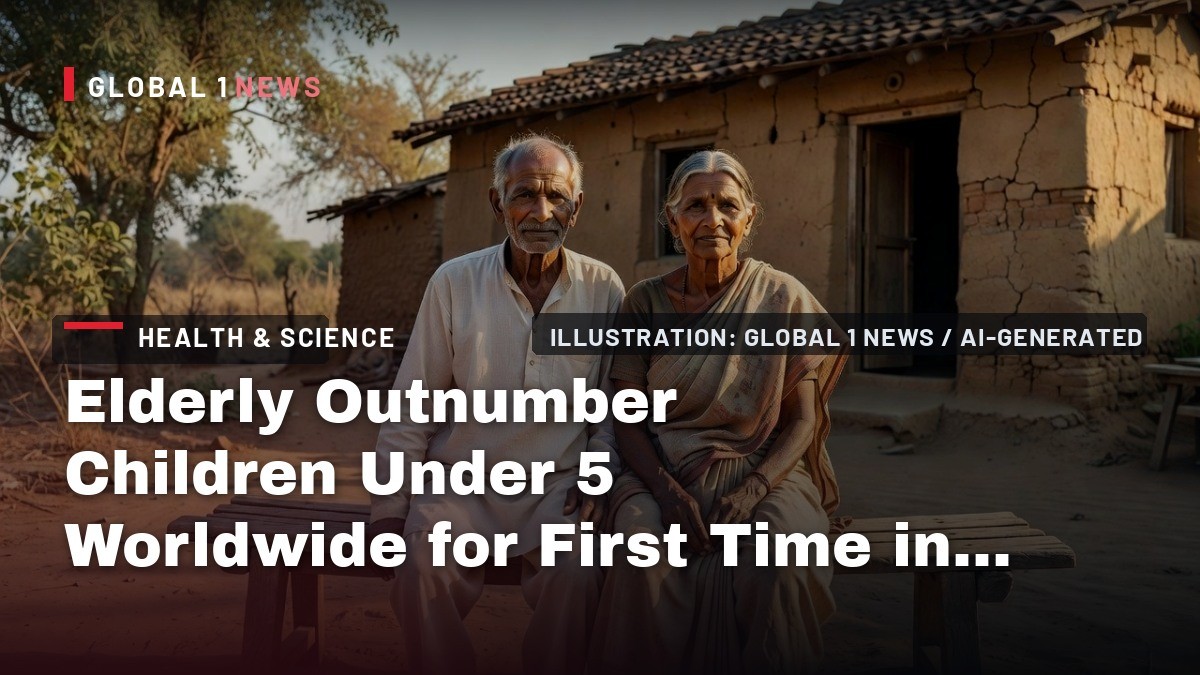
The world crossed a demographic Rubicon sometime in the five years before 2025, and the data now confirms it: for the first time in recorded history, there are more people aged 65 and older on the planet than children under the age of five. The crossover, invisible in real-time but unmistakable in retrospect, marks a fundamental shift in the human condition — one driven by the twin engines of falling birth rates and rising life expectancy. For India, a nation that has long prided itself on its youth, the milestone is not a distant curiosity but a proximate policy challenge, with the UNFPA projecting that the country’s elderly population will double to over 20 per cent of the total by 2050.
A Historic Demographic Flip: The World’s Elderly Now Outnumber Children Under Five — and What It Means for India
New Delhi, Sep 6 2026 — The numbers are stark, and they are official. According to the US Census Bureau’s report, An Aging World: 2025, released on August 31, 2026, and prepared with demographers from the Australian National University, people aged 65 and older now constitute 10.5 per cent of the global population — approximately 852 to 853 million individuals out of a world population of 8.13 billion. That figure has definitively surpassed the global population of children under five, a reversal of the demographic order that has held since the dawn of human record-keeping. The crossover happened sometime in the five years before 2025, visible only in the latest data. This is no statistical quirk; it is humanity’s new baseline.
The Milestone Numbers: A Global Tipping Point
In 2025, the global population of those aged 65 and above stood at roughly 853 million — 10.5 per cent of all humans alive. This cohort has overtaken the under-five population — historically the demographic bedrock of every society. Andrew Scott, an economist at the London Business School who contributed to the report, frames this as a structural change rather than a temporary anomaly. For Indian readers, the context is critical: India’s own trajectory is younger — but accelerating.
The Twin Drivers: Fertility Decline and Longevity Gains
This historic flip is not the result of a single cause but a confluence of two powerful, decades-long trends. The first is the collapse in fertility rates. In 2023, more than 71 per cent of the global population lived in countries at or below the 2.1 births-per-woman replacement level — the threshold needed to keep a population stable without migration. This is a dramatic jump from just 45 per cent a decade earlier. The drivers are well-documented: changing lifestyles, delayed marriages, rising living costs, and better access to family planning. The second driver is the extension of the human lifespan, powered by improvements in medicine, nutrition, sanitation, and public health. The COVID-19 pandemic, which killed millions of people — primarily the elderly — did not reverse this trend, a testament to the underlying resilience of longevity gains.
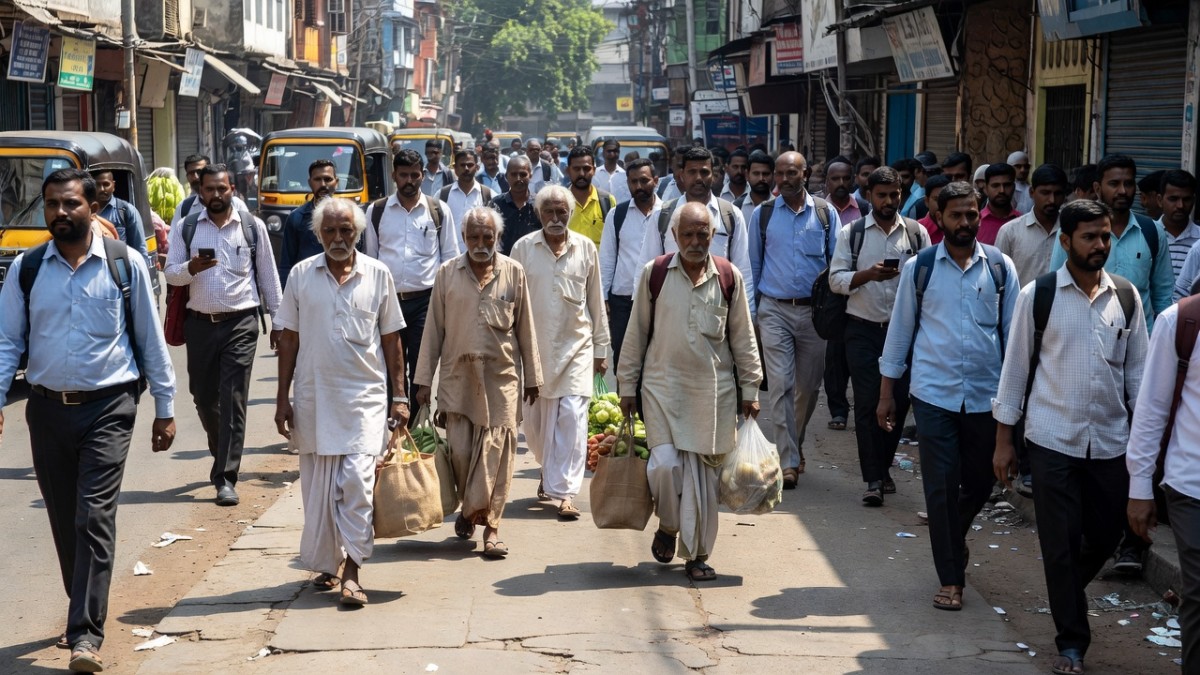
First to Shrink: Russia, Japan, and the New Demographic Order
The report identifies the pioneers of this new reality. Among the world’s most populous countries, Russia was the first to experience both a shrinking population and a greater share of older people, with its population decline beginning in 1996. Japan followed, with its decline starting in 2008. They are the canaries: population decline and aging arrived together. For India, the lesson is clear: the country has not yet reached population decline, but the momentum is shifting — and, as the UNFPA data shows, southern states are already aging far faster than the rest of the country.
Projections to 2060: A World of Two Billion Seniors
The forward-looking data is even more consequential. By 2060, the 65-plus population is projected to nearly double, from about 853 million (10.5 per cent) to approximately 2 billion (19.6 per cent of the global population). That represents a staggering increase of 134.7 per cent between 2025 and 2060. Regionally, the shifts are uneven but profound. Africa’s 65-plus population will more than quadruple, from 60 million to 249 million — a 315 per cent increase — surpassing Europe’s projected 214 million. Latin America and the Caribbean will see a 158 per cent increase. Asia will witness the largest numerical increase, from 487 million in 2025 to 1.24 billion. Europe, already the world’s oldest region, will see its 65-plus share rise from about 21 per cent to nearly 31 per cent by 2060. For India, these global figures underscore a domestic reality: the country’s elderly population is growing at a decadal rate of about 41 per cent, and by 2046, India’s elderly population is likely to surpass its population of children aged 0 to 15.
India’s Aging Trajectory: The UNFPA Warning
The UNFPA India 2023 Ageing Report, released in New Delhi in September 2023, provides the most detailed picture yet of India’s demographic future. Drawing on the 2011 Census, the Health Ministry’s 2017-18 Longitudinal Ageing Survey in India (LASI), Government of India population projections, and World Population Prospects 2022, the report projects that the share of the elderly (60-plus) in India will double to over 20 per cent of the total population by 2050. India’s elderly population is growing at a decadal rate of about 41 per cent — far outstripping general population growth. By 2046, the elderly will outnumber children aged 0 to 15, a milestone that will fundamentally alter the country’s social and economic fabric. The 80-plus population is projected to grow by about 279 per cent between 2022 and 2050, with a "predominance of widowed and highly dependent very old women," according to the report. Southern states, along with Himachal Pradesh and Punjab, already report a higher elderly share than the national average, while Bihar and Uttar Pradesh, with higher fertility, will see rising elderly shares but remain below the national average through 2036.
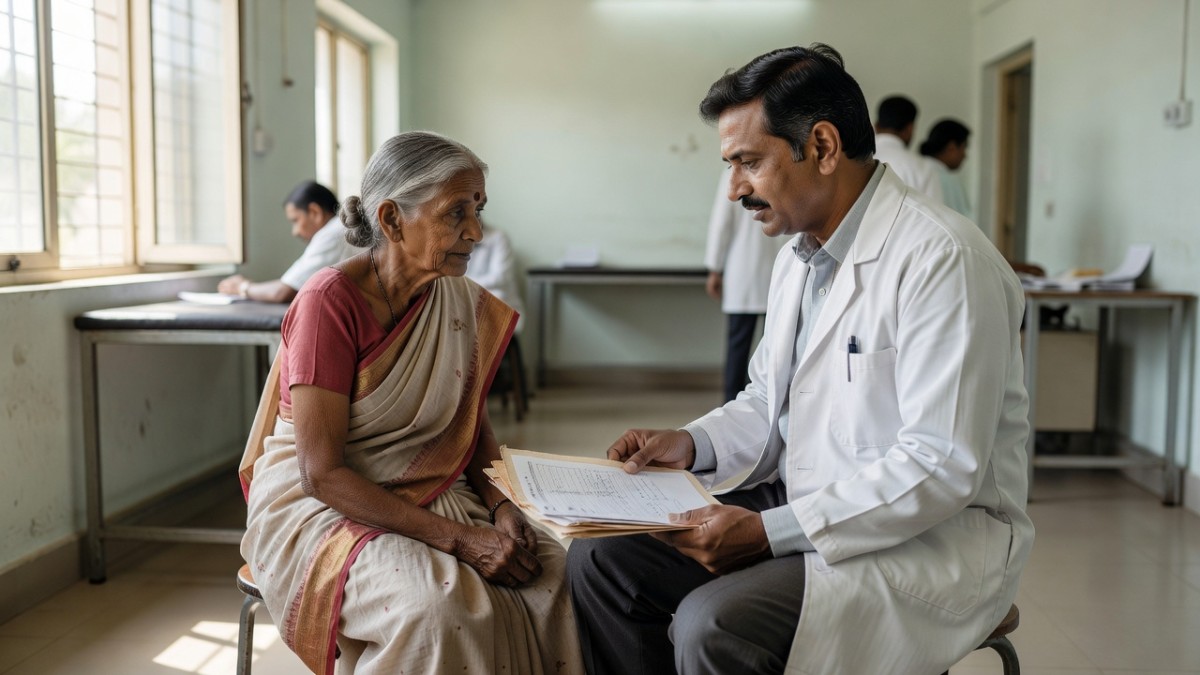
The Gendered and Rural Face of Old Age in India
India’s aging is not a gender-neutral phenomenon. The UNFPA report is unequivocal: poverty is "inherently gendered" in old age. More than 40 per cent of the elderly in India are in the poorest wealth quintile, and about 18.7 per cent live without any income. Older women are more likely to be widowed, living alone, with no income and fewer assets, fully dependent on family. Women at 60 also outlive men — a national average differential of 1.5 years, widening to about four years in Himachal Pradesh and Kerala, where women at 60 can expect 23 and 22 more years respectively. This means that Indian women will spend more years in old age, often in poverty and without support. The old-age dependency ratio varies sharply by region: about 20 in southern India, above the national average; about 17 in western India; and about 13 in the Union Territories and the northeast. This is not one national challenge but several regional ones.
The Policy Agenda for an Aging India
The UNFPA report offers a clear, actionable policy framework, and it is here that Indian policymakers must focus. The recommendations include increasing awareness of schemes for older persons — many of which exist but are underutilized; bringing all old-age homes under regulatory purview to ensure minimum standards of care; facilitating in-situ (at-home) aging with short-term day-care facilities, which would allow the elderly to remain in familiar environments rather than being institutionalized; and encouraging elderly self-help groups and multigenerational households. These are not radical proposals but pragmatic steps that align with India’s existing frameworks, including the National Programme for Health Care of the Elderly (NPHCE) and the broader Ayushman Bharat mission. The data from LASI, which has been instrumental in quantifying the scale of the challenge, must now be translated into state-specific action plans. With southern India's dependency ratio already above the national average, states like Kerala will need to pioneer elder-care models the rest of the country can adapt.
The Bottom Line: An Asset, Not a Burden
The demographic flip is not a catastrophe; it is a triumph. As Andrew Scott of the London Business School frames it, the aging trend reflects one of the greatest achievements of the 20th century — gains in life expectancy meaning fewer infant deaths, fewer parents lost in midlife, and more grandparents meeting grandchildren. The NDTV summary of the US Census report notes that old age is harder for those experiencing old-age poverty and unable to function independently. For India — where more than 40 per cent of the elderly sit in the poorest wealth quintile — this is a lived reality for millions. The policy window is narrow but open. By 2046, the elderly will outnumber children in India. The question is not whether India can afford to care for its elderly, but whether it can afford not to. The data is clear; the time to act is now.
— By Dr. Raj Patel, Staff Writer
This article was produced with AI-assisted research and editorial support. Sources: US Census Bureau, 'An Aging World: 2025'; UNFPA India, 2023 India Ageing Report; NDTV.
What's Your Reaction?
 Like
0
Like
0
 Dislike
0
Dislike
0
 Love
0
Love
0
 Funny
0
Funny
0
 Wow
0
Wow
0
 Sad
0
Sad
0
 Angry
0
Angry
0

India/South Asia Correspondent at Global1.News. Analytical voice with a background in science and health journalism. Based in New Delhi, covering Indian politics, education, healthcare, technology, and policy. Breaks down complex data into clear, actionable reporting.














Comments (0)