
China Targets Fourfold AI Computing Capacity Boost by 2030
China's MIIT has published a five-year plan targeting 9,800 eflops of intelligent computing capacity by 2030, backed by 3.8 trillion yuan in infrastructure spending. The blueprint pushes 100,000-card AI clusters, domestic chips and 6G as Beijing widens its tech race with Washington and Tokyo.

Beijing's New Blueprint Aims for 9,800 Eflops of Intelligent Computing
China's Ministry of Industry and Information Technology has published a five-year plan that would roughly quadruple the country's artificial intelligence computing capacity by 2030, calling for 3.8 trillion yuan (US$532 billion) in cumulative information infrastructure investment through the end of the decade.
The 15th Five-Year Plan (2026-2030) for the information and communication industry, officially released on Monday, sets a national target of 9,800 eflops of intelligent computing capacity - exa floating-point operations per second - and backs the "orderly deployment" of computing clusters built around 10,000 accelerator cards, with the most ambitious facilities using 100,000 cards or more. The blueprint, detailed in a South China Morning Post report, is Beijing's clearest statement yet of how it intends to keep pace in an AI race that Washington and Tokyo are also spending heavily to win.
The Scale of the Ambition, in Numbers
The 2030 target is a step-change from where China stands today. Intelligent computing capacity reached 2,185 eflops by the end of June, up 177 per cent from a year earlier, with 52 intelligent computing facilities each equipped with more than 10,000 accelerator cards, according to MIIT. By the end of July, capacity had climbed to roughly 2,450 eflops, the National Data Administration has said - meaning the country must more than quadruple its current level to hit the 9,800-eflops goal.
Behind the headline number sits an aggressive build-out. MIIT's plan calls for 3.8 trillion yuan in cumulative information infrastructure investment over the 2026-2030 period and outlines 13 major indicators spanning industry development, innovation, green growth, infrastructure and application adoption. China Daily's summary of the blueprint projects the information and communication industry generating 4.1 trillion yuan in revenue by 2030, with telecom business volume growing at an average annual rate of 7 per cent. Demand is compounding at a pace the infrastructure must chase: average daily token usage in China rose from about 100 billion in early 2024 to 140 trillion in March this year, according to National Data Administration figures cited by SCMP.
From 'East Data, West Computing' to 100,000-Card Clusters
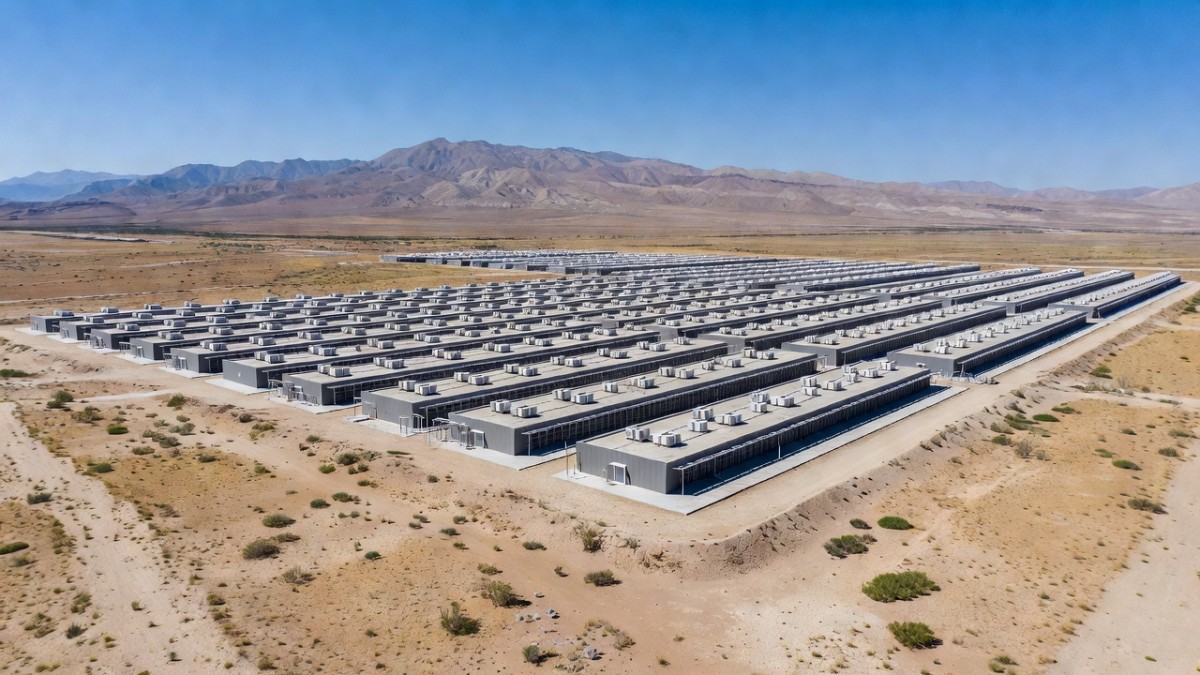
The plan extends the "East Data, West Computing" project launched in 2022, which shifts power-intensive workloads from crowded eastern provinces toward western regions with cheaper land and abundant energy. China has built a network of eight national computing hubs, 10 data-centre clusters and three regions focused on pairing computing facilities with power supplies.
By the end of the first quarter, a government-backed platform had aggregated roughly 316 eflops of intelligent computing from 155 companies and 578 resource pools, including about 720,000 graphics processing units, MIIT said. More than 80 per cent of the country's intelligent computing capacity is concentrated in the eight national hubs, with cities such as Ulanqab in Inner Mongolia turning cheap wind power into a new industrial base for AI.
Domestic Chips Carry More of the Load
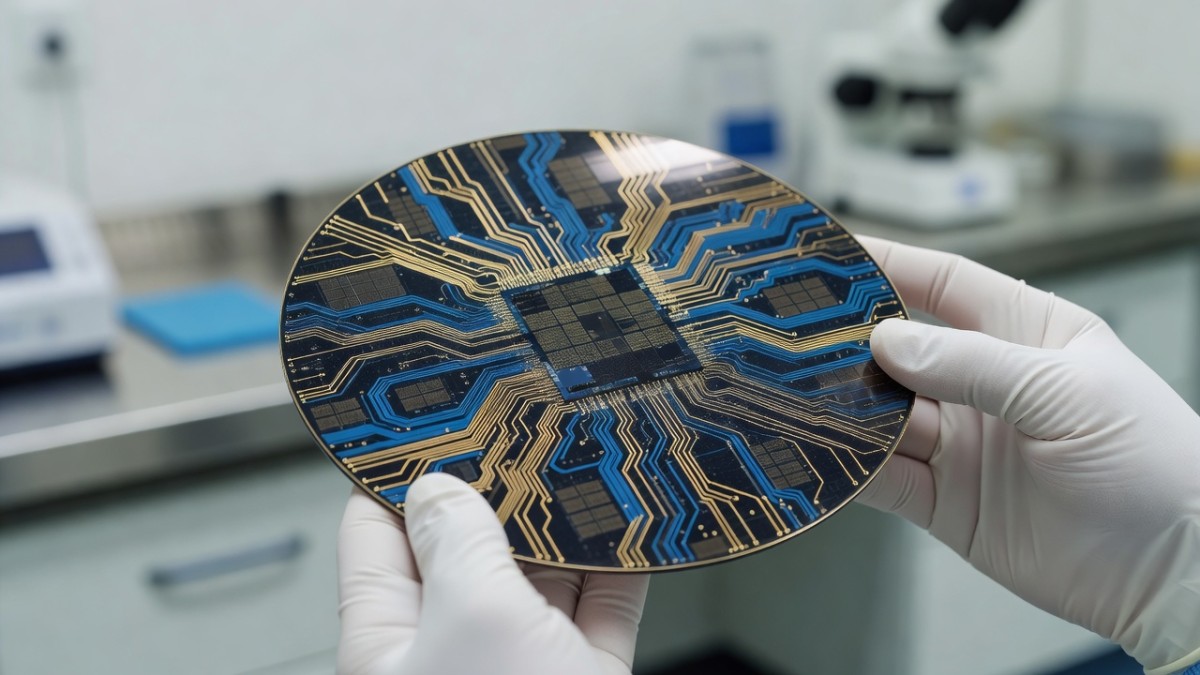
A central theme of the blueprint is resilience: MIIT explicitly calls for adapting the country's computing infrastructure to home-grown chips. Chinese-designed AI chips accounted for 41 per cent of domestic shipments in 2025, according to brokerage Sinolink Securities, though analysts caution that wider adoption is still held back by fragmented software ecosystems and compatibility issues.
The emphasis reflects the export-control environment Beijing is planning around. By pushing cloud operators and telecom carriers toward domestic accelerators at scale, the plan aims to make Chinese AI capacity less dependent on imported hardware - a strategic bet that becomes more consequential as the United States tightens restrictions on advanced chipmaking technology.
6G, eSIMs and Space-Based Computing on the Roadmap
Computing is only half of the plan. MIIT also sets out priorities for the next generation of communications networks, calling for commercial 6G services to be launched "at an appropriate time", deeper integration of 5G with the BeiDou satellite navigation system, and wider use of embedded SIM cards. The blueprint encourages technologies that keep devices connected beyond conventional coverage and backs research into space-based computing. It builds on the "AI + Information Communication" innovation implementation opinion issued in June, which pushed two-way empowerment between artificial intelligence and the telecom sector.
China enters that push from a position of scale. The country had about 5.1 million 5G base stations by the end of June, roughly 69 per cent of the global total, and operators are shifting from raw construction toward 5G-Advanced upgrades - China Mobile's 5G-A network already reaches more than 330 cities. The new plan carries that momentum forward, targeting 50 5G base stations per 10,000 people and 95 per cent 5G user penetration by 2030, alongside 320 million gigabit broadband subscribers. Beijing approved the 6GHz band for 6G trials in May, while the 3GPP standards body has begun work on Release 21, the first global 6G standard, scheduled for finalisation in 2029.
Japan's Sovereign-AI Counterpoint
For Tokyo, China's roadmap sharpens a familiar dilemma: how to stay competitive without matching Beijing's centralised spending power. Japan has answered with a private-sector alliance model. On April 12, SoftBank, NEC, Honda and Sony formally established Japan AI Foundation Model Development, a joint venture aimed at building a domestic foundation model, and the government has pledged up to 1 trillion yen (about US$6.2 billion) over five years to support it, according to Nikkei.
Japan's carriers are making parallel bets on next-generation networks. NTT revised its medium-term strategy in May around an "AI-native" domestic telecom business and expanded data-centre operations, targeting a consolidated EBITA of 4 trillion yen (US$25.4 billion) by 2030. In 6G, Japanese government funding is moving toward commercial implementation: NICT has awarded contracts for all-photonic networking and AI-controlled base stations, and a Ministry of Internal Affairs and Communications programme led by NTT Docomo, NEC and Fujitsu unit 1FINITY is running through fiscal 2029 with goals of doubling device throughput and halving power consumption against current 5G.
The strategic contrast is instructive. China is deploying hyperscale capacity first and asking where efficiency gains come later; Japan is betting that photonics, energy efficiency and a sovereign foundation model will let it leapfrog the cost curve. Both approaches will be tested against the same constraint - the availability and price of advanced chips and materials.
What to Watch For
The immediate question is execution. Quadrupling intelligent computing capacity in four years depends on power, land, cooling and, above all, chips - and the 41 per cent domestic share of shipments suggests the other 59 per cent still carries supply-chain risk. Watch for follow-on MIIT guidance on how the 100,000-card clusters will be procured, and for whether provincial governments crowd into the build-out the way they did with 5G.
On the network side, the race to Release 21 in 2029 will reveal how much of China's 6G ambition becomes standard rather than national infrastructure. In Tokyo, the test is whether the AI foundation model joint venture can convert 1 trillion yen of public support into a credible alternative to American and Chinese models - and whether Japan's efficiency-first network strategy wins the cost war that hyperscale build-outs are now igniting across the Asia-Pacific.
By Kenji Tanaka, Staff Writer
This article was produced with AI-assisted research and editorial support. Sources: South China Morning Post, China Daily, Nikkei Asia.
What's Your Reaction?
 Like
0
Like
0
 Dislike
0
Dislike
0
 Love
0
Love
0
 Funny
0
Funny
0
 Wow
0
Wow
0
 Sad
0
Sad
0
 Angry
0
Angry
0

Japan Correspondent at Global1.News. Tokyo-based voice covering Japanese politics, technology, economy, and culture. Tracks the intersection of tradition and innovation in one of the world's most dynamic societies.















Comments (0)