
Khaby Lame's $975 Million Digital-Twin Deal Reshapes Africa's Creator Economy
On a bright afternoon in Dakar, the story of a boy from the capital who became the most followed creator on Earth reads like a modern fable — except this one ended in a deal worth nearly a billion dollars. Khabane "Khaby" Lame, born in Senegal and raised in Italy, has turned wordless comedy into the most valuable digital brand on the planet.
On a bright afternoon in Dakar, the story of a boy from the capital who became the most followed creator on Earth reads like a modern fable — except this one ended in a deal worth nearly a billion dollars. Khabane "Khaby" Lame, born in Senegal and raised in Italy, has turned wordless comedy into the most valuable digital brand on the planet. In January 2026, he sold his company for US$975 million in an all-stock transaction — and, in the process, authorised the creation of an AI-powered digital twin of himself.
Khaby Lame's $975 Million Digital-Twin Deal Reshapes Africa's Creator Economy
Dakar, Senegal — The same open palms that made Khaby Lame famous — raised in silent, amused disbelief at life's needlessly complicated hacks — now symbolise something far bigger: the moment an African-born creator's identity became a financial asset valued at nearly a billion dollars. From a Quranic school near Dakar to the boardrooms of Hong Kong, his journey has become a case study in what the digital age makes possible, and what it may cost.
From Factory Floor to Global Fame
Khabane "Khaby" Lame was born on 9 March 2000 in Dakar, Senegal, into a family that would soon trade the Atlantic coast for the industrial suburbs of northern Italy. When he was a baby, his family moved to Chivasso, a small town near Turin, where his father found work in a factory and his mother raised the children in a tight-knit Senegalese immigrant community. For two decades, his life followed the familiar arc of the African diaspora in Europe — school, football in the piazzas, and the quiet dignity of working-class life.
That life took a sharp turn in 2020. Khaby lost his factory job during the COVID-19 pandemic, joining millions of young workers suddenly cast adrift by lockdowns and economic shutdowns. Stuck at home in social housing in Turin's suburbs, with time heavy on his hands and a smartphone as his only window to the world, he began filming short videos. He had no production team, no lighting rig, no script — just a deadpan face and a growing frustration with the absurd "life hack" videos cluttering his feed.
What happened next defied every expectation of the creator economy. Within 17 months of posting his first videos, Khaby crossed 100 million TikTok followers — the first creator based in Europe to reach that milestone. By 2026, he commands over 160 million followers on TikTok alone and roughly 350 million across all social platforms, making him the most-followed human on the platform. For context, that is more people than the populations of Senegal, Italy and Spain combined, all watching a young man who rarely says a word.
His rise was not manufactured by algorithms alone. It was built on a universal truth: everyone has felt the quiet exasperation of watching someone overcomplicate a simple task. Khaby simply gave that feeling a face — and a gesture. The factory worker from Chivasso had stumbled upon a comedic formula so pure that it needed no translation, no subtitles, no cultural context. It just needed a camera and a willingness to look perpetually unimpressed.
For young Senegalese watching from Dakar, his ascent carried an extra charge. Here was a boy from their own streets — a child of the same quartiers populaires — who had turned nothing into everything. His success whispered a radical idea: that the digital economy does not care where you were born, only what you can make the world feel. And Khaby Lame could make the world feel seen.

The Silent Comedy That Conquered Every Language
The formula is deceptively simple. A video appears showing someone struggling to peel a banana with a complex contraption, or attempting to open a door with an elaborate sequence of tools. Then the camera cuts to Khaby, his blank, slightly annoyed face filling the frame, as he performs the task with obvious ease — often with a single, dismissive gesture. No dialogue, no sound effects, no explanation. Just the quiet triumph of common sense over needless complexity.
Scholars have been quick to place his work in a proud lineage. Comparisons to silent-film greats Charlie Chaplin and Buster Keaton are not hyperbole; they are apt. Like those early masters, Khaby has revived the comic tradition of mime and burlesque for a generation raised on rapid-fire editing and constant stimulation. His humour is physical, visual and instantaneous — it lands in the gut before the brain has time to process language. In a world fractured by borders and dialects, his silence speaks every tongue.
TikTok's algorithm, which rewards content that is instantly understandable and universally shareable, proved the perfect vehicle for his art. A viewer in Jakarta and a viewer in Johannesburg laugh at the exact same moment, for the exact same reason, without exchanging a single word. His videos rack up billions of views precisely because they require nothing of the audience except attention — and even that feels effortless.
But there is a deeper layer to his signature gesture that many casual fans miss. The open palms, raised in that now-iconic shrug, carry resonance far beyond comedy. In Islamic tradition, the raised open hand is linked to dua — supplication, the act of calling upon God. In many African cultures, too, the open palm signals honesty, openness and the absence of hidden weapons. For a practising Muslim who memorised the entire Quran as a young man, the gesture is not merely a punchline; it is a quiet expression of faith and integrity.
Khaby's religious formation is rarely discussed in Western media, but it is central to who he is. At the age of 14, his parents sent him to a Quranic school near Dakar, where he became a hafiz — one who has committed the entirety of the holy text to memory. That discipline, that capacity for deep focus and internal stillness, is visible in every frame of his work. His comedy is not frantic; it is serene. He does not chase laughs; he waits for them to arrive.
The $975 Million Deal and the Digital Twin
In January 2026, the news broke like a thunderclap across the creator economy. Khaby Lame had sold his company, Step Distinctive Limited, to Rich Sparkle Holdings, a publicly traded Hong Kong firm, in an all-stock transaction valued at US$975 million. The deal made him a controlling shareholder and creative partner in the merged entity, while granting Rich Sparkle exclusive rights to his commercial activities — endorsements, licensing, e-commerce and brand partnerships — for at least 36 months.
The most striking element of the agreement, however, was buried in the fine print. Rich Sparkle would gain rights to his "Face ID, Voice ID and behavioural models" to develop an AI digital twin — a virtual Khaby capable of producing multilingual content, hosting virtual livestreams and powering livestream e-commerce broadcasts simultaneously around the world. The twin would never tire, never age, never demand a break. It would be Khaby Lame, forever, at scale.
Rich Sparkle's projections were staggering. The company said the partnership could generate over US$4 billion in annual sales, leveraging Khaby's global recognition to push products across Asia, Africa, Europe and the Americas. In a statement that captured the audacity of the venture, the firm declared: "This is not just an equity acquisition, but a revolution in the global content e-commerce model." The implication was clear: Khaby was not merely selling his brand; he was selling the template for how celebrity would function in the age of artificial intelligence.
Social media reacted with a mixture of awe and vertigo. "Retired at 25 for $975,000,000," read one widely shared post, capturing the sheer improbability of a young man from a Turin housing project becoming a near-billionaire before his twenty-sixth birthday. Others marvelled at the speed of it all — barely five years from factory redundancy to corporate empire. The deal transformed Khaby from a creator into a conglomerate, a one-man media ecosystem with global reach.
For the African continent, the transaction carried symbolic weight. A Senegalese-born creator had just signed one of the largest deals in the history of the creator economy, out-earning tech founders and Hollywood executives alike. The boy who once stood on factory lines now stood at the helm of a publicly traded company, his face — and his digital replica — poised to appear in billions of transactions worldwide.
A Senegalese Lens: Pride, Faith and Hard Questions
Walking through the streets of Dakar in the weeks after the announcement, one feels the pride before one hears it. Khaby Lame is ours, the sentiment goes — a son of Senegal who proved that the digital world has no borders. For young Africans, his success is proof that the internet is not a Western playground but a territory where African talent can conquer on its own terms. He did not need a Hollywood studio or a European media conglomerate; he needed only his face, his timing and his phone.
Yet the deal also raises questions that many are reluctant to voice. What does it mean for a hafiz — a man who has dedicated his memory to the words of God — to authorise the commercial use of his image in perpetuity? The sacred body and the commercialised digital life now exist in tension. His face will sell products in markets he has never visited, in languages he does not speak, in contexts he cannot control. The man who built his career on silence has now given his voice — or a simulation of it — to a corporation.
Scholars are watching closely. Fanny Georges, a researcher at Université Sorbonne Nouvelle who studies digital identity, has asked pointed questions about what it means to sell your digital self in a world where Black and African bodies were used and profited from for centuries without consent or fair compensation. Is this a triumph of agency — a young African man finally setting the price for his own image? Or is it a new form of exploitation, dressed in the language of equity and partnership?
The questions multiply. Who owns a creator's digital twin once it is sold? Who sets the rules for its use? If the twin says something the real Khaby would never say, who is accountable? If the twin outlives its creator's relevance, can it be retired — or does it live forever, a ghost in the machine of commerce? These are not abstract philosophical puzzles; they are the practical realities of a new economy where identity itself has become a tradeable asset.
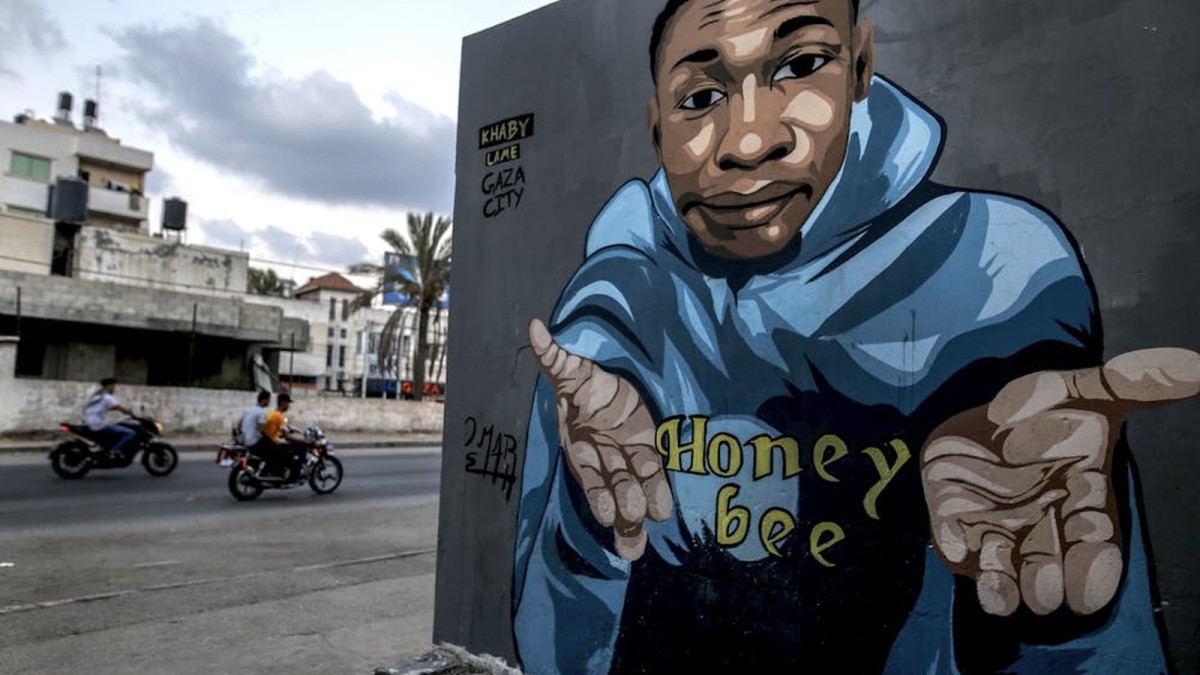
Khaby's global resonance is beyond dispute. In 2021, a mural of his face was painted in Gaza City, a testament to how his wordless comedy transcended even the most fraught political divides. His brand partnerships with Hugo Boss and Binance have shown the range of his commercial appeal, from luxury fashion to cryptocurrency. He is not merely a comedian; he is a cultural touchstone, a symbol of possibility for millions who see themselves in his journey.
Forbes 2026 and the Rising Tide of African Creators
The scale of Khaby's achievement was quantified this year when Forbes released its 2026 Top Creators list. He ranked 15th, with estimated earnings of US$9.9 million a year and 252.1 million followers tracked across platforms. His engagement rate of 4.72 percent — a figure that would make most marketers weep with envy — reflects a connection with his audience that transcends the transactional nature of most influencer relationships. He remains the most-followed human on TikTok as of 2026, a title he has held for years.
But Khaby's significance extends beyond his own numbers. His model — turning raw creative talent into structured intellectual property — offers a blueprint for African creators who have long been told that their audiences are too small, their markets too poor, their languages too niche for global success. He has demonstrated that a Senegalese name and an Italian accent are no barrier to universal appeal. What matters is the quality of the connection, not the geography of the passport.
Across the continent, a wave of digital creators is building global audiences from Lagos to Nairobi to Dakar. Comedians, musicians, chefs and educators are discovering that the internet rewards authenticity over polish, and that African stories, told by African voices, resonate far beyond the continent's borders. The creator economy is becoming one of Africa's most dynamic export sectors — not of raw materials, but of culture, humour and perspective.
The continent's demographic advantage is undeniable. With a median age of under 20 and a mobile-first culture that leapfrogged desktop computing, Africa is uniquely positioned for the next phase of digital content. Livestream e-commerce, already dominant in Asia where platforms like Taobao Live generate billions in sales, is beginning to arrive in African markets. The infrastructure is being built; the creators are ready; the audiences are waiting.
Khaby's deal may well be the catalyst that accelerates this wave. Every young African who sees his face on a billboard or his name in a headline understands, perhaps for the first time, that the ceiling is not where they thought it was. The question is no longer whether African creators can succeed on the global stage. It is whether they can do so on their own terms — and what they are willing to trade for the privilege.
What to Watch For
The coming months will reveal how the digital twin performs in the wild. Will audiences accept a simulated Khaby with the same warmth they reserve for the real one? Will the multilingual content — generated in dozens of languages simultaneously — capture the subtle timing that makes his comedy work? Or will viewers sense something hollow in the replication, a ghost where a person used to be? These are the questions that will determine whether the deal is a triumph or a cautionary tale.
For African markets, the rollout of livestream e-commerce will be a test of readiness. If Khaby's digital twin can sell products to audiences in Dakar, Nairobi and Johannesburg as effortlessly as it does in Jakarta and São Paulo, the implications for African retail are enormous. The continent's informal markets — the bustling boutiques and street stalls that drive so much of its economy — may find themselves competing with a digital salesman who never sleeps.
African creators will study the Khaby playbook with the intensity of scholars examining a sacred text. His journey from factory floor to corporate boardroom offers lessons in branding, audience building and, crucially, the art of the exit. He did not merely build a following; he built an asset. The distinction matters, and the next generation of African creators will be watching to see how he navigates the complexities of his new role.
Governments and regulators, meanwhile, face a new frontier. The questions surrounding AI, likeness rights and consent are no longer theoretical. When a Senegalese-born creator sells his digital twin to a Hong Kong corporation, whose laws apply? Who protects the rights of African creators in international transactions? The legal frameworks are barely embryonic, and the pace of technological change is outstripping the capacity of institutions to respond.
And what of Khaby himself? A young Senegalese Muslim who rarely speaks on camera, whose silence spoke to billions, now finds himself at the centre of a global conversation about the future of identity. His voice — the real one, not the simulation — has been conspicuously absent from the discourse. Perhaps that is fitting. He has always let his actions do the talking, and his actions have spoken volumes.
The durable lesson of his journey is that creative evolution has no ceiling. A boy from Dakar, raised in Italian social housing, became the most watched human on Earth by doing almost nothing — and then turned that nothing into nearly a billion dollars. But the deal also carries a warning: identity now has a price tag, and once it is sold, it cannot be unsold. The question for Khaby — and for every creator who follows him — is whether the price was right.
As the sun sets over the Atlantic, casting its golden light on the shores where Khaby Lame first opened his eyes, one cannot help but feel a swell of pride. A Senegalese boy conquered the world without raising his voice, and in doing so, he raised the aspirations of a continent. The digital twin may sell products in a thousand markets, but the real Khaby — the hafiz, the comedian, the son of Dakar — remains irreplaceable. That is the truth no algorithm can replicate, and no corporation can own.
By Amara Diop, Staff Writer
This article was produced with AI-assisted research and editorial support. Reporting is based on sources cited in the article.
What's Your Reaction?
 Like
0
Like
0
 Dislike
0
Dislike
0
 Love
0
Love
0
 Funny
0
Funny
0
 Wow
0
Wow
0
 Sad
0
Sad
0
 Angry
0
Angry
0

West Africa/Sahel Correspondent at Global1.News. Dakar-based journalist covering politics, security, climate, and development across Francophone and Anglophone West Africa. Tells the stories of a region undergoing profound transformation.












Comments (0)