
Ig Nobel 2026: Cockroach Milk, Buried Underpants and Brazil on the Zurich Stage
There is a particular kind of magic that happens when science makes you laugh first and think second. It is the magic of the Ig Nobel Prizes, that glorious celebration of research that first makes people chuckle, and then makes them ponder.
There is a particular kind of magic that happens when science makes you laugh first and think second. It is the magic of the Ig Nobel Prizes, that glorious celebration of research that first makes people chuckle, and then makes them ponder. And this year, that magic found a new home, one that felt particularly resonant for those of us who follow Latin American science: Zurich, Switzerland, where a Brazilian snake-behavior team was among the honorees and a Mexican researcher shared the economics prize - proof that the strangest questions often carry the most serious public-health weight.
Ig Nobel 2026: Cockroach Milk, Buried Underpants and Brazil on the Zurich Stage
Zurich, Switzerland - September 3, 2026 - The 36th First Annual Ig Nobel Prize ceremony unfolded here on Thursday evening, a webcast affair that marked a historic rupture: after 35 years of paper airplanes and Nobel laureates at Harvard, MIT, and Boston University, the celebration of improbable research crossed the Atlantic for the first time. Ten research teams were honored, but the night belonged as much to geopolitics as to science, with organizers citing visa and travel-safety worries that made the United States, in the words of master of ceremonies Marc Abrahams, "unsafe for our guests."

A 36-Year-Old Science Party Leaves the United States
For more than three decades, the Ig Nobels were as much a Boston tradition as the Red Sox, a rollicking evening where genuine Nobel laureates like Esther Duflo, Abhijit Banerjee, Michel Mayor, and Tim Hunt handed out trophies that resembled a cross between a mushroom and a human foot. The audience, as always, threw paper airplanes with abandon. But the laughter this year carried an undertone of frustration. Marc Abrahams, the master of ceremonies and editor of the Annals of Improbable Research, told the Associated Press that the decision to move was not about novelty but necessity. The United States, he said plainly, had become "unsafe for our guests," a reference to the mounting visa barriers and travel-safety concerns that have made international scientific collaboration increasingly fraught.
Zurich embraced the chaos with Swiss efficiency. The ceremony, webcast to a global audience, kept every beloved tradition intact: the mushroom-foot trophies, the airplane flotilla, the genuine Nobel presence. And the organizers are already planning ahead, with the 2027 ceremony slated for Antwerp, Belgium, as part of a new rotation that will alternate between Zurich and other European cities. It is a quiet revolution in the world of quirky science, a recognition that the pursuit of knowledge - even the silliest kind - must remain open to all who seek it, regardless of passport.
Cockroach Milk: Chemistry With Three Times the Energy of Cow's Milk
Deep in the reproductive tracts of the viviparous cockroach Diploptera punctata lies a substance that defies expectation: milk. Not the liquid we pour on cereal, but a crystalline secretion produced to nourish developing embryos. A team spanning India, France, Japan, Canada, and the United States took home the Chemistry Prize for demonstrating that these milk-protein crystals pack roughly three times the energy density of cow-milk proteins. It is a finding that sounds like the setup for a dystopian food trend, but the underlying biochemistry is genuinely fascinating.
The crystals are remarkably stable and slow to digest, which has led some food researchers to speculate about their potential as a future protein supplement. But let us be honest with ourselves and our readers: we are a long, long way from any cockroach-milk smoothie appearing on supermarket shelves. The research is foundational, a deep dive into how nature has evolved efficient nutrient delivery systems in the most unexpected places. The prize celebrates the sheer audacity of asking what that crystalline goo is made of, and the patience to find out. It is a reminder that the most improbable sources can illuminate basic biological principles, even if the practical application remains a distant, and perhaps mercifully so, prospect.
Buried Underpants and the Hidden Economy of Soil
Franz Bender, Marcel van der Heijden, Atlant Bieri, and Pia Viviani of the Swiss research institute Agroscope did something delightfully simple: they buried 1,000 identical pairs of cotton underpants in more than 25 countries, left them in the dirt for two months, and then dug them up to see what was left. The Soil Science Prize was their reward, and the science behind the spectacle is anything but silly. The rate at which cotton degrades in soil is a direct proxy for microbial activity and overall soil health. More decomposition means more life below ground, which means better conditions for crops, water retention, and carbon storage.
The project, published in Science in 2025, turned a mundane garment into a global citizen-science tool. Farmers, schoolchildren, and researchers across continents participated, digging up their underpants and comparing the tattered remains. The visual is irresistible - who doesn't want to see a pair of underwear half-eaten by soil microbes? - but the message is profound. Healthy soil is the silent engine of food security and climate resilience, and yet it is chronically underfunded and underappreciated. By making soil health visible, literally in the holes in your underwear, this research bridges the gap between laboratory science and public understanding. It is community science at its most accessible, and a powerful argument for investing in the invisible world beneath our feet.
The Snake Prize: A Brazilian Study That Split Science
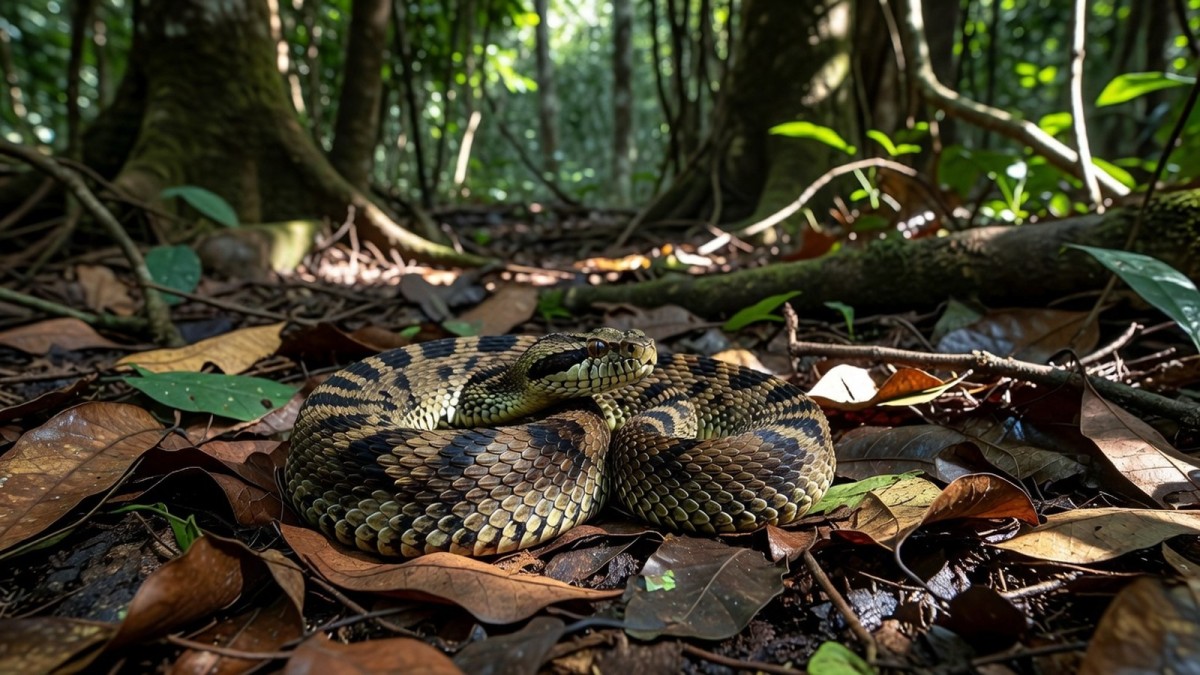
The Biology Prize honored João Miguel Alves-Nunes, Adriano Fellone, Selma Maria Almeida-Santos, Carlos Roberto de Medeiros, Ivan Sazima, and Otavio Augusto Vuolo Marques for a study that sounds like a dare: gently stepping on parts of venomous jararaca pit vipers (Bothrops jararaca) repeatedly, at different temperatures and times of day, to learn what does and does not make a venomous snake bite a human. The team, with deep roots at the Instituto Butantan in São Paulo - Brazil's iconic snake research and antivenom center - was asking a question with enormous real-world stakes. But the path to this prize was not smooth.
The underlying paper, published in Scientific Reports in 2024, was retracted in 2025 after the Butantan Institute's animal ethics committee stated that the approval granted for the research did not cover newborn snakes or the "soft stepping" method. All authors disagreed with the retraction, and they have said so publicly. This is a messy, honest moment in science - and proof that prizes can land in the middle of live controversies rather than safely after them. The question at the heart of the study remains urgent: more than 57,000 snakebites are reported every year in the Americas, with a fatality rate of about 0.6 percent and serious sequelae in more than 3 percent of cases. Brazil's national surveillance system records on average about 27,000 cases a year. The WHO lists snakebite envenoming as a neglected tropical disease, and a regional network, RELAPA, links nine countries - Argentina, Bolivia, Brazil, Colombia, Costa Rica, Ecuador, Mexico, Peru, and Venezuela - operating 13 public laboratories producing antivenoms. Understanding snake behavior is not academic; it saves lives.
Mexico at the Podium: What a Candy Jar Teaches About Power
The Economics Prize went to an international team that includes Rodolfo Mendoza-Denton, a psychology professor at the University of California, Berkeley, and the Mexican member of the group. The research, published in PNAS in 2012, was elegantly simple: people of higher social class are more likely to take candy from a jar meant for children and to engage in other unethical behavior. The team - Paul Piff, Daniel Stancato, Stéphane Côté, Mendoza-Denton, and Dacher Keltner - demonstrated that privilege can corrode empathy, a finding that resonates far beyond the laboratory.
For Latin American audiences, the study lands with particular weight. The region is defined by stark inequality, where the distance between the powerful and the powerless is measured in more than just income. The candy jar experiment is a parable about entitlement, about the quiet ways that advantage justifies itself. But the research does not argue that wealth inevitably corrupts; rather, it suggests that context and social cues shape how privilege expresses itself. Mendoza-Denton's place on the winning roster was a point of pride, a visible reminder that Latin American researchers are contributing to global conversations about power, ethics, and social behavior. The prize is a nudge to examine our own structures, to ask who is reaching for the candy jar in our own societies, and what we might do to build more equitable tables.
From Nose-Blowing to Kissing: The Body's Quiet Mysteries
The Medicine Prize went to the late Dr. Tokuji Unno, honored posthumously for his 1977 aerodynamic study "How to Blow the Nose." It is a delightfully specific title, and the work has surprising relevance to respiratory health. Understanding the fluid dynamics of nose-blowing - how pressure and airflow move through the nasal passages - is a reminder that even the most mundane bodily functions are, at their core, problems of physics with real consequences for respiratory health.
The Biomechanics Prize took a similarly granular look at a universal human behavior: kissing. Matilda Brindle, Catherine Talbot, and Stuart West offered a more precise definition - "non-agonistic interactions involving directed, intraspecific, oral-oral contact with some movement of the lips/mouthparts and no food transfer" - observed in ants, birds, polar bears, and humans. The definition is rigorous enough to satisfy a taxonomist and absurd enough to make you smile. And the Olfaction Prize, honoring research that babies smell wonderful to their parents while teenagers do not, completed a triptych of the body's quiet mysteries. These prizes celebrate the act of looking closely at what we take for granted, of asking not just what we do, but why and how. They remind us that science is not only about the grand cosmos or the subatomic particle, but also about the breath, the kiss, and the scent of a child.
What This Means for Latin America
For Latin America, the 2026 Ig Nobels are more than a curiosity; they are a mirror. The Brazilian snake study, despite its retraction, highlights the region's critical role in tackling neglected tropical diseases. The Butantan Institute, where key team members work, is a global leader in antivenom production, and the RELAPA network of nine countries and 13 public laboratories is a model of regional cooperation. The prize shines a light on the real, life-saving work happening in São Paulo and beyond, even as it acknowledges the ethical complexities that must be navigated with transparency and rigor.
The ceremony also underscores the importance of public trust in science. When researchers communicate with humor and accessibility - as the Ig Nobels do so brilliantly - they build bridges to communities that might otherwise feel alienated from the scientific enterprise. The buried underpants project is a perfect example: it invites ordinary people to participate in data collection, turning soil health into a conversation rather than a lecture. For Latin America, where science budgets are often the first to be cut in economic crises, the Ig Nobels are a reminder that curiosity-driven research has value beyond the immediate application. It builds the intellectual infrastructure for innovation, and it inspires the next generation of scientists. Defending that space, and funding it, is not a luxury; it is a necessity.
The Bottom Line: Laugh, Then Think, Then Fund
The Ig Nobel Prizes are often dismissed as a joke, but they are a joke with a serious purpose. They remind us that science is a human endeavor, full of dead ends, false starts, and glorious accidents. They remind us that the most profound discoveries often begin with a question that seems silly, and that the freedom to ask those questions is precious. The move to Zurich, forced by visa barriers and safety concerns, is a warning: when we close borders to scientists, we close doors to knowledge. The 2027 ceremony in Antwerp will continue the tradition, but the hope is that the United States will one day again be a welcoming home for the world's curious minds.
For Latin American readers, the message is clear. The region's researchers are on global stages, contributing to everything from snakebite prevention to the psychology of inequality. Their work deserves not just applause, but sustained investment. The Ig Nobels teach us to laugh at the absurdity of research, but they also teach us to think deeply about what that research reveals. And then, crucially, they teach us to fund it. Because the next great idea - the one that might save a life, improve a crop, or simply make us understand ourselves a little better - could come from anywhere, and anyone, willing to ask a strange question and chase the answer. In Zurich, under a rain of paper airplanes, that truth was never more evident.
By Elena Vasquez, Staff Writer
This article was produced with AI-assisted research and editorial support. Sources: Improbable Research; Associated Press; PAHO/WHO; Nature (Scientific Reports retraction notice); PNAS; Science.
What's Your Reaction?
 Like
0
Like
0
 Dislike
0
Dislike
0
 Love
0
Love
0
 Funny
0
Funny
0
 Wow
0
Wow
0
 Sad
0
Sad
0
 Angry
0
Angry
0

Latin America Correspondent at Global1.News. Based in Mexico City, covering politics, economics, energy, and culture across the region. Brings an on-the-ground perspective to stories spanning from the Rio Grande to Patagonia.















Comments (0)