
Africa's Mother Tongues Find New Life as Youth Reconnect With Roots and Relatives
In Lagos, a television game show punishes one offence above all others: speaking English. Across the Atlantic, a Canadian teenager wakes before sunrise for a Shona lesson with a teacher 13,000 kilometres away in Zimbabwe. These two scenes, captured in recent days by Africanews and the Associated Press, tell one story: after generations of being pushed aside, Africa's mother tongues are finding new life among the young.
In Lagos, a television game show punishes one offence above all others: speaking English. Across the Atlantic, a Canadian teenager wakes before sunrise for a Shona lesson with a teacher 13,000 kilometres away in Zimbabwe. These two scenes, captured in recent days by Africanews and the Associated Press, tell one story: after generations of being pushed aside, Africa's mother tongues are finding new life among the young.
Africa's Mother Tongues Find New Life as Youth Reconnect With Roots and Relatives
Lagos, Nigeria — The revival is being driven by entertainment, online learning and a new generation's hunger for identity — from the prime-time Yoruba quiz "Masoyinbo" to Shona classes connecting Zimbabwe's diaspora teenagers to home.
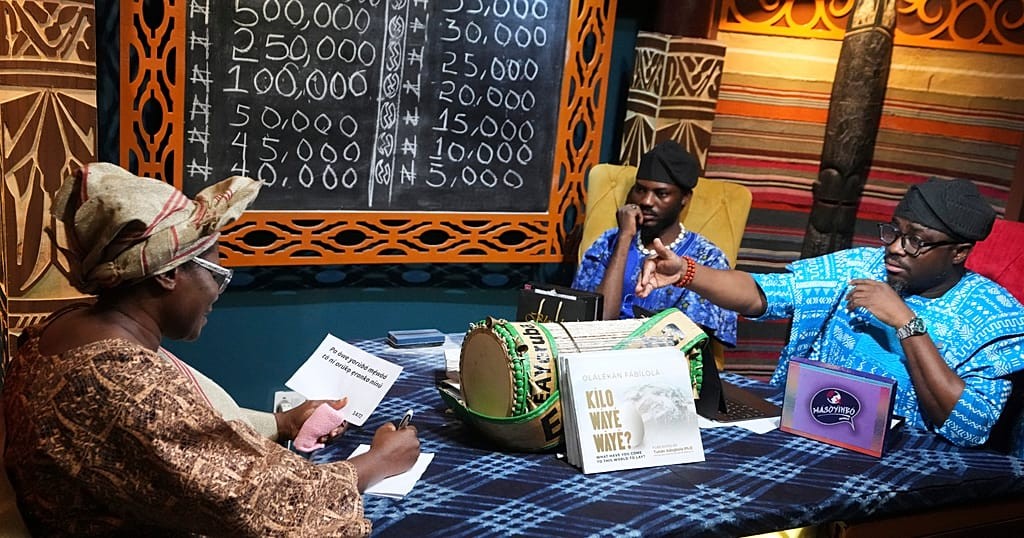
A Lagos Game Show Where English Costs You
The rules are simple, the tension delicious. On "Masoyinbo" — which translates as "Do not speak English" — contestants lose money from their prize pot for every English word that slips past their lips. The show, launched in 2024 by Olalekan Maxwell Fabilola, a Yoruba educator and cultural entrepreneur from Ondo State, has become a phenomenon in Nigeria's commercial capital. Ten progressively difficult questions, answered entirely in Yoruba, determine who walks away with the grand prize of 1 million naira plus a car.
The format is deceptively simple, but the cultural weight is immense. Celebrity guests have included the film stars Funke Akindele, Femi Adebayo and Lateef Adedimeji, alongside the musician Falz and the Fuji icon Saheed Osupa. Their presence signals that Yoruba is not merely a language of the home or the village square, but a tongue worthy of prime-time entertainment and national celebration. When these stars stumble over a word or catch themselves reaching for an English phrase, the audience roars with delight and sympathy in equal measure.
Only two contestants have come close to a perfect round. The first was Ajobiewe, a Yoruba chanter whose mastery of the language's proverbs and poetic forms left the studio spellbound. The second was Saheed Osupa himself, the Fuji artist whose music has long been a vehicle for Yoruba expression. Their near-perfect performances have become legendary among fans of the show, proof that deep linguistic knowledge still thrives in the most unexpected places.
Fabilola, who has spoken openly about funding the show from his own pocket and going into debt to promote Yoruba, sees the moment as ripe for change. "If Masoyinbo had started in maybe like 10 years ago, it wouldn't have been what it is now," he told Africanews. "But we're in the age of cultural resurgence. People want to go back to their roots." His words capture a generation's mood — a hunger for the languages their grandparents spoke, the languages that were once punished in schoolyards and boardrooms.
The live editions of the show have transformed the game into a communal event, drawing crowds who cheer, chant and groan together as contestants navigate the treacherous waters of pure Yoruba. At one such live show, the first car prize was won, a moment of such electric joy that videos of the celebration spread across social media within hours. In a country where English has long been the language of success, Masoyinbo offers a different vision: fluency in one's mother tongue as its own reward.
From Harare to Toronto: Shona Lessons Across 13,000 Kilometres
For Nyashadzashe Machingura, a Zimbabwean student, the pain was quiet but persistent. When her siblings and cousins gathered and slipped into Shona, she felt left out, an outsider in her own family. Her story is echoed across the diaspora, where millions of young Africans grow up hearing their parents' languages but never fully learning to speak them. The distance between generations is measured not in kilometres but in lost words.
Enter Shungu Chidovi, a tutor who left her banking career in January to run ZimbOriginal full-time. What began as a passion project has become a lifeline for families scattered across the globe. ZimbOriginal teaches Shona through storytelling, book clubs and "buddy pairing" exchanges, methods that treat language not as a classroom subject but as a living, breathing connection to culture and kin.
The platform has about two dozen learners spread across Zimbabwe, Canada, Australia, South Africa, Ireland and Scotland, charging around $50 a month for its services. It is a modest operation by global standards, but its impact is profound. Each learner represents a family reconnected, a grandparent who can finally converse with a grandchild, a young person who can claim their heritage without hesitation.
Consider the story of a 15-year-old Canadian girl whose parents once feared she would never speak her mother tongue. Every morning, before the sun rises over Toronto, she logs on to a video call with a teacher in Zimbabwe, 13,000 kilometres away. The lesson is not just about vocabulary and grammar; it is about belonging. Her parents, who watched helplessly as English consumed their daughter's world, now listen with tears in their eyes as she greets them in Shona.
Chidovi's approach recognises that language learning is emotional work. The storytelling sessions draw on Zimbabwe's rich oral traditions, the book clubs explore contemporary Shona literature, and the buddy pairing system connects learners with native speakers their own age. It is education as community-building, a model that could transform how African languages are taught and preserved.
Why Colonial Legacies Left Mother Tongues on the Margins
To understand the current revival, one must understand the damage done. Decades of colonialism pushed African languages to the margins, replacing them with English, French and Portuguese in education, business and government. The message was clear: to succeed, one must abandon one's mother tongue. Generations of Africans internalised this lesson, passing it on to their children with the best of intentions.
Zimbabwe offers a stark example. The country officially recognises 16 mostly Indigenous languages, yet English still dominates education, business and government. A child may grow up speaking Shona or Ndebele at home, but the moment they enter a classroom, they are expected to think, write and dream in a language imported from a distant island. The cognitive cost is real, as is the cultural one.
Believe Mubonderi, a linguistics lecturer at Zimbabwe Open University, explains the mechanism of marginalisation. African languages, he says, were "sidelined", relegated to the home and cultural domain, never exposed or modernised for commerce, science and technology. While English evolved to describe the internet, artificial intelligence and global finance, African languages were frozen in time, their speakers forced to code-switch or abandon them entirely in professional settings.
Mubonderi's warning is stark: "When a language has a very low status, there's a danger that that language eventually becomes endangered." The loss is not merely linguistic. Each language carries a unique way of seeing the world, a repository of proverbs, stories and knowledge accumulated over centuries. When a language dies, it takes an entire universe of meaning with it.
The colonial legacy also created a psychological burden. Many Africans came to view their mother tongues as inferior, suitable only for informal settings. The revival now underway is, in part, a reckoning with that internalised shame — a collective decision that the languages of our ancestors are worthy of pride, not apology.
A Continental Shift: Kiswahili's Rise and the Digital Push
The revival is not confined to individual countries or languages. In 2022, the African Union adopted Kiswahili as an official working language, a landmark decision that recognised the tongue spoken by millions across East Africa and beyond. The same year, the United Nations declared 2022-2032 the International Decade of Indigenous Languages, a global call to action that has given fresh momentum to preservation efforts.
The scale of what is at stake is immense. UNESCO estimates that Africa is home to between 1,500 and 3,000 languages spoken by more than a billion people — roughly a third of the world's languages. This linguistic diversity is one of the continent's greatest assets, yet it faces a steep digital disadvantage. Fewer than 2% of African languages have a meaningful online presence, while only about ten languages dominate the internet ecosystem.
The digital divide is not merely a technical problem; it is an existential threat. If a language cannot be typed, searched or translated online, it risks being left behind in an increasingly digital world. Young Africans, who spend hours each day on their phones, are unlikely to engage with languages that exist only in offline spaces.
The African Union and UNESCO are working to change this, supporting efforts to use artificial intelligence to generate and translate children's books and teacher guides. The goal is to create educational materials in African languages at scale, breaking the cycle where children must learn in languages they do not speak at home. It is an ambitious agenda, but one that recognises the urgency of the moment.
The Kiswahili decision and the UN decade have also created political space for national governments to act. Countries that once treated their Indigenous languages as folkloric curiosities are now developing policies to promote them in schools, media and public life. The momentum is real, even if the implementation remains uneven.
Senegal's Wolof Revival: A Home-Grown Digital Future
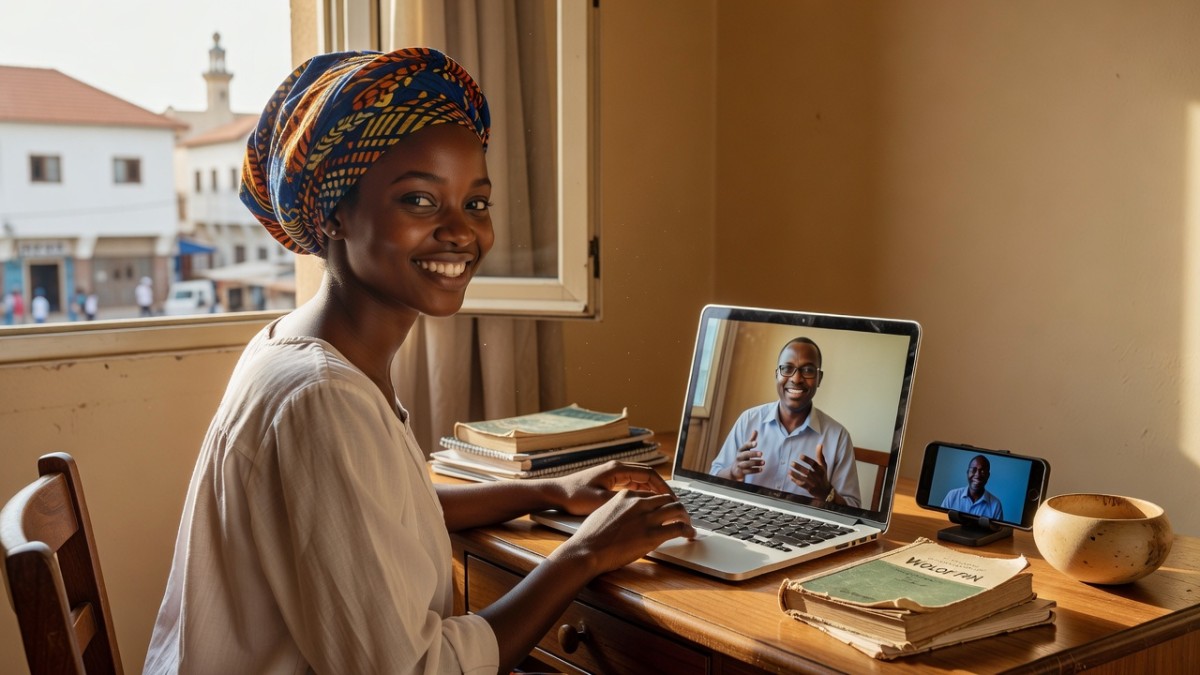
Senegal has its own place in this resurgence. Wolof, the lingua franca spoken across much of the country and beyond, has long been the language of the streets, the markets and the family compound. Now it is entering the classroom. A bilingual education experiment is underway in a growing number of public elementary schools, where children are taught in Wolof so they can learn to read in the language they speak at home.
The logic is simple and well-supported by research: children learn best in their mother tongue. When a Senegalese child first encounters letters and sounds in Wolof, they build a foundation that makes learning French — or any other language — easier later on. The experiment is part of a broader movement across the continent to rethink the language of instruction, moving away from the colonial model toward something more rooted and effective.
Technology is also playing a role. Soynade, a Dakar startup supported by the UNICEF Venture Fund, is building open-source Wolof speech recognition and text-to-speech tools. These technologies could enable Wolof speakers to use voice assistants, dictation software and translation apps in their own language, breaking the digital monopoly of English and French.
The implications extend far beyond Senegal. If Wolof can be successfully digitised, the same approach can be applied to other African languages. The tools being developed in Dakar could one day serve speakers of Yoruba, Shona, Kiswahili and hundreds of other tongues, creating a digital ecosystem that reflects the continent's linguistic diversity.
For Senegalese families, the revival is deeply personal. Many parents who were educated in French, who were punished for speaking Wolof in school, now watch their children learn to read and write in the language of their grandparents. The healing is generational, a repair of the damage done by colonial education policies that sought to sever Africans from their linguistic heritage.
What to Watch For
The momentum behind this revival is coming largely from Africans abroad. As one observer put it, "people of African descent have come to realise we have our own identity which we need to embrace." The diaspora, once seen as a source of cultural dilution, is now driving a return to roots. Tomi Adeshokan, a New Jersey resident, joined Clubhouse during the pandemic just to hear Yoruba and later began formal classes. His story is repeated across the diaspora, where young people are using every tool at their disposal to reclaim what was taken.
The business opportunities are emerging around language teaching, artificial intelligence and streaming. Platforms like ZimbOriginal are proving that African language education can be sustainable, even profitable. Tech startups are racing to build the tools that will make African languages viable in the digital age. Streaming services are beginning to offer content in Indigenous languages, recognising that audiences crave authenticity.
Social media and platforms like Clubhouse and TikTok have become unexpected allies in the revival. Young Africans use these spaces to share language lessons, perform poetry and music in their mother tongues, and connect with others who are on the same journey. The informal, peer-to-peer nature of these platforms makes language learning feel less like homework and more like community.
The resurgence is as much about pride and belonging as about words. When a young Nigerian answers a quiz question in flawless Yoruba, when a Canadian teenager greets her grandmother in Shona, when a Senegalese child reads her first sentence in Wolof, something profound is happening. They are not just learning languages; they are reclaiming identities, healing historical wounds and building bridges between generations.
The road ahead is long. African languages still face enormous challenges, from limited educational resources to the overwhelming dominance of global languages. But the direction is clear. After centuries of being told their languages were worthless, young Africans are answering with a resounding, multilingual chorus: we are here, we speak our mothers' tongues, and we are not going back.
By Amara Diop, Staff Writer
This article was produced with AI-assisted research and editorial support. Reporting is based on sources cited in the article.
What's Your Reaction?
 Like
0
Like
0
 Dislike
0
Dislike
0
 Love
0
Love
0
 Funny
0
Funny
0
 Wow
0
Wow
0
 Sad
0
Sad
0
 Angry
0
Angry
0
West Africa/Sahel Correspondent at Global1.News. Dakar-based journalist covering politics, security, climate, and development across Francophone and Anglophone West Africa. Tells the stories of a region undergoing profound transformation.














Comments (0)