
Kyrgyzstan Reign Supreme in Kok-Boru as World Nomad Games Draw Record 3,000 Athletes
The thunder of hooves, the roar of tens of thousands of fans, and the ancient spirit of the steppe converged on the shores of Lake Issyk-Kul this week as the 6th World Nomad Games thundered to a close in Kyrgyzstan. This was not merely a sporting event; it was a vibrant, pulsating celebration of heritage, strength, and the unbreakable bond between nomadic peoples and their traditions.
The thunder of hooves, the roar of tens of thousands of fans, and the ancient spirit of the steppe converged on the shores of Lake Issyk-Kul this week as the 6th World Nomad Games thundered to a close in Kyrgyzstan. This was not merely a sporting event; it was a vibrant, pulsating celebration of heritage, strength, and the unbreakable bond between nomadic peoples and their traditions. For a sports journalist from South Africa, a nation with its own rich tapestry of indigenous games, the spectacle was both awe-inspiring and deeply familiar.
World Nomad Games 2026: Kyrgyzstan Reigns Supreme in Kok-Boru as Record 3,000 Athletes Celebrate Heritage
Cholpon-Ata, Kyrgyzstan – September 2026 — The final whistle blew on a record-breaking edition of the World Nomad Games, leaving hosts Kyrgyzstan triumphant in the event's most prestigious and ferocious discipline, kok-boru. Over six days, from Aug 31 to Sep 6, more than 3,000 athletes from over 100 nations descended upon the stunning northern shore of Lake Issyk-Kul and the Kyrchyn mountain gorge, competing in 43 traditional sports that showcased the soul of Central Asia's nomadic culture. The sheer scale of participation marked a historic high for the biennial Games, which first began in this very town back in 2014 with just 583 athletes from 19 countries.
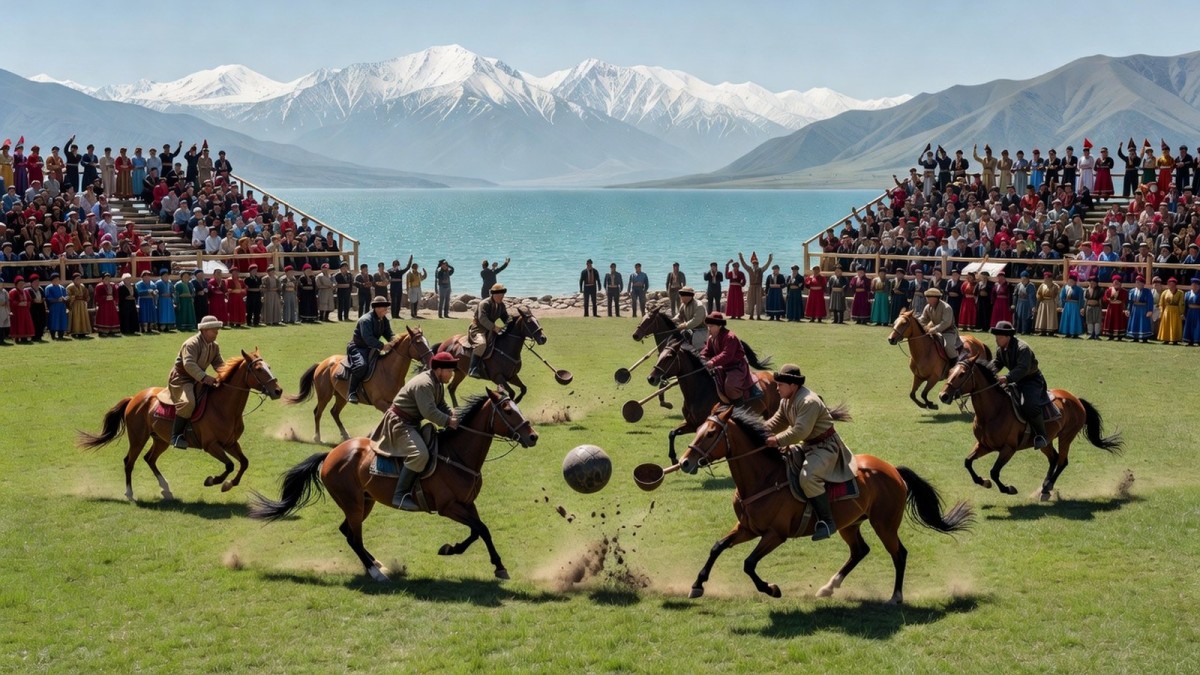
A Final for the Ages: Kyrgyzstan's Kok-Boru Masterclass
The undisputed heart of the Games is kok-boru, a breathtakingly physical horseback contest whose name translates to "gray wolf." In this sport, elite riders battle to scoop a 30-33kg headless goat carcass, or a leather serke, from the field and hurl it into the opponent's kazan, a massive goal cauldron. It is a game of raw power, tactical genius, and incredible horsemanship that draws the largest and most passionate crowds of the entire festival. The atmosphere at the Kok-Boru Arena in Cholpon-Ata on the final Sunday was electric, a cauldron of national pride and sporting tension.
In a final that will be talked about for years, the host nation delivered a performance of absolute dominance, dismantling neighboring Kazakhstan with a resounding 12-0 victory. The third period was a particular showcase of Kyrgyz skill, with Baytegin Omorbekov, Ernazar Koshumbaev, Mirbek Mukashev, and Anarbek uulu Seitbek all finding the back of the kazan to seal a memorable triumph. Kazakhstan, a traditional powerhouse in the sport, had to settle for silver, while Russia claimed the bronze medal. The victory sent the home crowd into raptures, cementing kok-boru's status as the crown jewel of the Games.
Kazakhstan Tops Medal Table, Kyrgyzstan Wins Hearts
While Kyrgyzstan claimed the ultimate prize in the headline sport, the final overall medal table told a story of intense continental rivalry. When the dust settled on Sep 7, it was Kazakhstan that stood atop the leaderboard with an impressive haul of 74 medals, including 32 golds. The hosts, however, were not far behind, amassing a staggering 84 total medals—the most of any nation—with 30 golds, 35 silvers, and 19 bronzes. The distinction was clear: Kazakhstan had more gold medals, but Kyrgyzstan's depth across the 43 disciplines was unmatched, a fact announced by Kyrgyz presidential press secretary Askat Alagozov.
This friendly but fierce competition between the Central Asian neighbors added a compelling narrative to the Games. It underscored the region's deep connection to these sports, where skills passed down through generations are honed to a competitive edge. For the neutral observer, the quality of athleticism on display was staggering, a testament to the fact that these are not just historical reenactments but living, breathing sports with fiercely dedicated athletes. The rivalry ensures that the World Nomad Games remain a pinnacle of sporting achievement, not just a cultural exhibition.
Beyond the Horse: A Tapestry of Traditional Sport
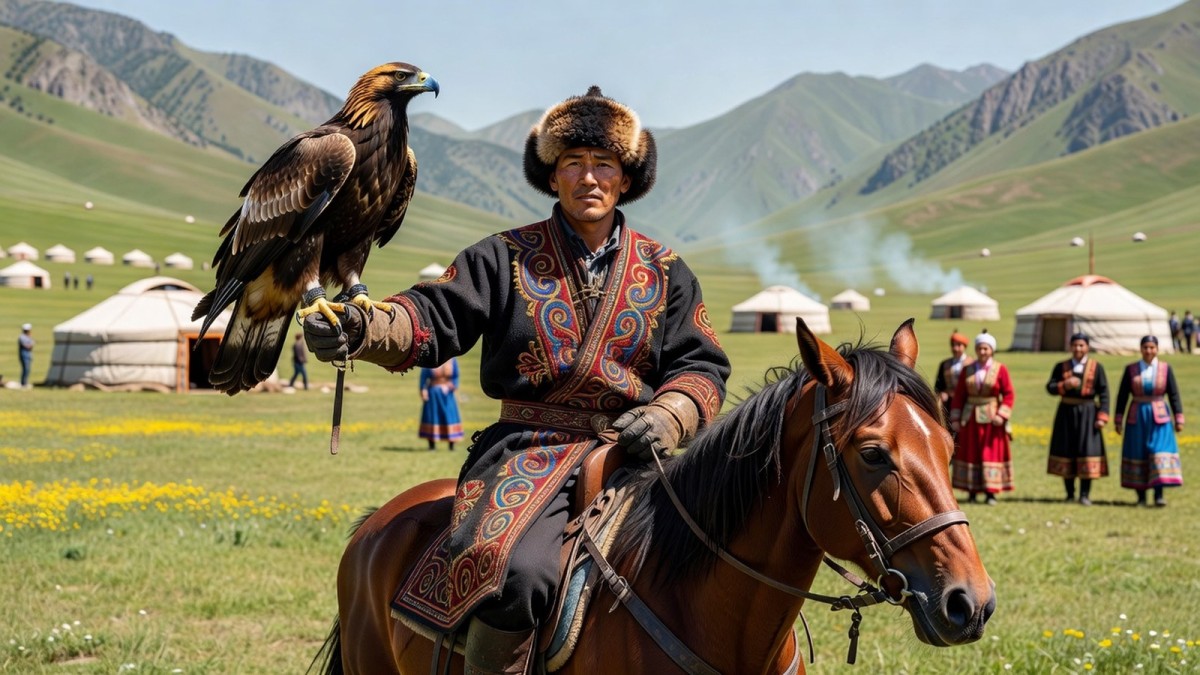
While kok-boru may be the main attraction, the World Nomad Games are a sprawling festival of diverse disciplines that test every facet of nomadic life. The program was a rich mosaic of competition, from the grappling contests of horseback wrestling (er enish) and belt wrestling to the precision of traditional archery. Archers demonstrated incredible skill in events like zhamby atu, where competitors must strike a hanging coin target from a galloping horse, a skill once essential for survival and warfare. The ancient art of falconry and golden-eagle hunting, known as burkut saluu, also drew fascinated crowds, showcasing the profound partnership between hunter and bird of prey.
The Games also celebrated the intellectual side of nomadic culture with a series of strategy board games that have been played for millennia. Games like toguz korgool, mangala, and oware, all members of the mancala family, tested the mental agility of competitors. These games, which involve the strategic sowing and capturing of seeds or stones, are a powerful reminder that nomadic heritage is not solely about physical prowess but also about deep strategic thinking and patience. Their inclusion at the Games elevates them to a global stage, connecting the steppes of Central Asia to a wider family of traditional pastimes.
A South African Perspective: Echoes of Home in the Kyrgyz Steppe
For those of us who follow South Africa's sporting landscape, the World Nomad Games resonate on a deeply familiar frequency. While our nation did not field a team at these Games, the ethos on display in Cholpon-Ata mirrors the spirit of our own Indigenous Games Festival. Since its launch in 2001, the Department of Sport, Arts and Culture has hosted this festival annually during Heritage Month in September, celebrating the diverse traditional sports of our nation. The festival, which moved from national to provincial levels after 2023 to widen participation, is a cornerstone of our cultural preservation, much like the World Nomad Games are for Central Asia.
The connection runs even deeper when you look at the games themselves. South Africa's festival features morabaraba and ncuva, which are, like toguz korgool and mangala, part of the mancala family of strategy board games. To see these intellectual cousins being contested on a world stage in Kyrgyzstan is a powerful validation of the shared heritage of strategy games across cultures. Similarly, our own physical disciplines—from the stick-fighting skills of iintonga to the high-energy jumping of kgati and the strength of dibeke—share a common thread with the nomadic sports of Central Asia: they were born from the daily realities, survival skills, and communal celebrations of our ancestors.
Unity Through Heritage: The Global Appeal of the Games
The 6th World Nomad Games were more than just a competition; they were a powerful statement about the unifying force of cultural heritage. The record participation, with debutant nations from Africa and beyond including Algeria, Burundi, Gambia, Egypt, Cape Verde, Cote d'Ivoire, Uganda, and Ethiopia, signals a growing global appetite for these traditions. The opening ceremony on Aug 31 at the 51,000-seat Bishkek Arena, attended by around 30,000 spectators and coinciding with an SCO anniversary summit, was a spectacular display of this unity. Kyrgyz President Sadyr Japarov officially declared the Games open, setting the stage for a week of extraordinary competition and cultural exchange.
This global expansion is a testament to the vision of the Games' founders, who established the event in 2014 with the explicit goal of preserving and promoting nomadic civilization. By bringing together athletes from over 100 countries, the Games foster a unique dialogue between nations, one that transcends politics and is built on mutual respect for tradition and athletic excellence. For a country like South Africa, which has long used sport as a vehicle for unity and nation-building, this is a powerful and inspiring model. It proves that the language of sport is truly universal, and that our oldest traditions can build the newest bridges.
What to Watch For
As the dust settles on the shores of Lake Issyk-Kul, the nomadic sporting caravan looks ahead to its next destination. The Games are set to travel to Tatarstan for the 2028 edition, promising to introduce these ancient sports to a new audience in the heart of Russia. The standard set in Kyrgyzstan this year—in terms of participation, organization, and sheer sporting drama—will be a tough act to follow. The evolution of the Games will be fascinating to track, particularly how new nations adapt to and embrace sports like kok-boru and toguz korgool.
For South Africa, the 2028 Games present an intriguing opportunity. Could we see a delegation from Mzansi making the journey to Tatarstan to share our own indigenous games and learn from others? The potential for cultural and sporting exchange is immense. The success of the World Nomad Games should also inspire us to continue investing in and celebrating our own Indigenous Games Festival, ensuring that games like morabaraba and jukskei receive the recognition they deserve. The world is clearly hungry for authentic cultural sporting experiences, and South Africa has a wealth of them to offer.
The 6th World Nomad Games have shown that the old ways are not just surviving; they are thriving. They have demonstrated that the skills of the steppe—the horsemanship, the archery, the wrestling, and the strategic mind—are as relevant and captivating today as they were centuries ago. The roar of the crowd in Cholpon-Ata was not just for the victors, but for the enduring spirit of nomadic culture itself. It was a celebration of a living heritage, and a reminder that in a rapidly changing world, our roots remain our greatest source of strength and identity.
This article was produced with AI-assisted research and editorial support. Sources: Al Jazeera English, The Times of Central Asia, Kabar, Outlook India, AZERTAC.
By Dante Williams, Staff Writer
What's Your Reaction?
 Like
0
Like
0
 Dislike
0
Dislike
0
 Love
0
Love
0
 Funny
0
Funny
0
 Wow
0
Wow
0
 Sad
0
Sad
0
 Angry
0
Angry
0

Breaking News and Investigations Correspondent at Global1.News. Based in London, covering global breaking news, security, and investigative stories. Known for digging deeper and connecting the dots across continents.














Comments (0)