
Mali's 'Nightingale of Beledougou' Still Dazzles at 88
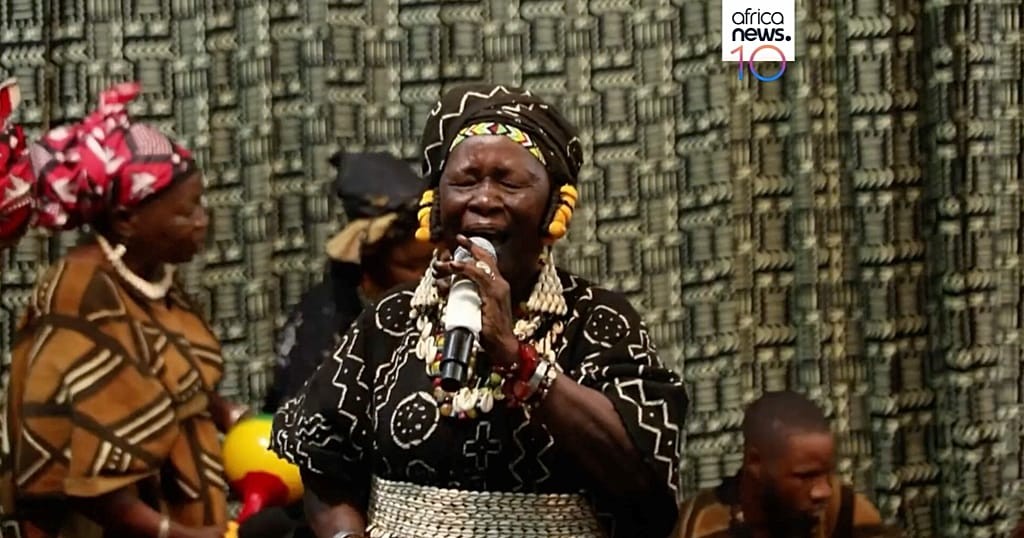
At 88, Mariam Bagayoko still commands the stage the way she always has — barefoot, wrapped in a belt of cowrie shells, spinning like a top and sending the sharp rattle of her calabash cutting through the warm Bamako air.
At 88, Mariam Bagayoko still commands the stage the way she always has — barefoot, wrapped in a belt of cowrie shells, spinning like a top and sending the sharp rattle of her calabash cutting through the warm Bamako air. The Malian singer known across West Africa as the Nightingale of Beledougou recently brought her full force to the Palais de la Culture in Mali's capital, proving that age has done nothing to dim a voice that has carried the traditional songs of her homeland for more than seven decades.
Mali's 'Nightingale of Beledougou' Still Dazzles at 88
Bamako, Mali — When Mariam Bagayoko stepped onto the stage at the Palais de la Culture in mid-August 2026, the crowd rose before she sang a single note. This is the power of an octogenarian keeper of Mali's rural musical heritage — a woman who has spent her long life ensuring that the Bambara traditions of the Beledougou region do not fade into memory. In a fast-modernising world where young musicians increasingly look outward for inspiration, her enduring presence is a reminder that West Africa's deepest artistic wells are still flowing, carried by elders who refuse to let the rhythms of home disappear.
A Voice Born in Beledougou's Countryside
Mariam Bagayoko was born in Kolokani, a town north of Bamako in the Beledougou region of central-western Mali, a land of wide skies, baobab trees and hard-working farming communities. She often says she learned to "sing before I could speak," and those who know her story understand this is not exaggeration but simple truth. Music was the air she breathed from her first moments, the language she reached for before words had formed in her mouth.
As a child, she trailed the village women who pounded shea nuts in large wooden mortars, their rhythmic thumping creating a natural percussion that echoed through the compound. Little Mariam joined their work songs with a small calabash, finding her place in the chorus of women's labour. "At first, nobody paid attention to me," she has recalled. "But little by little, my presence became indispensable." Those early days of singing alongside her elders planted the seeds of a repertoire that would one day make her famous across the continent.
Her father was a musician and performer in traditional koteba theatre troupes, the satirical performance tradition that blends music, dance and storytelling in Bambara culture. He understood the power and the peril of the artist's life. When young Mariam showed exceptional promise, he grew worried — not because he doubted her talent, but because he feared what success might bring. He confessed that she "might be poisoned out of jealousy" if she became successful too quickly, a concern rooted in the very real rivalries that can accompany artistic prominence in close-knit communities.
Despite her father's caution, the pull of the music was too strong. The village melodies she absorbed as a girl — songs of harvest, of love, of the spirits that guard the land — became the foundation of a career that would make her one of Mali's best-known ambassadors of traditional music, carrying the sounds of Beledougou to audiences far beyond the dusty roads of her homeland.
Dancing Above the Balafon at 88
Her recent performance at the Palais de la Culture in Bamako was nothing short of astonishing. She performed barefoot, cinched into a belt of cowrie shells that rattled with every movement, her feet connecting directly with the earth even on a concert stage. The audience watched in wonder as she spun, her knees bending low and springing back with a vigour that defied her years, throwing her head back and forth in the ecstatic movements of traditional Bambara dance.
In her hands, she held the yabara — a calabash filled with dried seeds that serves as a percussion instrument, its sharp rattle cutting through the warm Bamako air like a message from another time. Beside her, musicians played the n'goussoumbala, a large xylophone-like balafon unique to Beledougou, its wooden keys producing a deep, resonant tone that anchors the region's musical identity.
Then came the moment that has become her signature. Mariam Bagayoko climbed onto the wooden keys of the n'goussoumbala itself, dancing atop the instrument while the musicians continued to play beneath her feet. It is a daring move that requires perfect balance and complete trust in her fellow performers — and at 88, she executes it with the same confidence she has shown for decades. The crowd erupted, recognising that they were witnessing something rare: a living legend performing at full power.
Her songs that evening were powerful Bambara melodies evoking moonlit village gatherings, when communities would come together after the day's work to share stories, music and laughter. Each song carried the weight of memory, the texture of a world that still exists in rural Mali but is increasingly distant from the urban centres where young people now live.
Before she began to perform, she clasped her hands behind her back in a gesture of respect to the protective spirits and griots who came before her. This ritual, repeated at every performance, connects her to the invisible lineage of ancestors who guard the tradition she carries. It is a reminder that for artists like Mariam Bagayoko, music is never merely entertainment — it is a sacred responsibility passed down through generations.
Global Honours for a Lifetime of Heritage
In late 2025, the world took formal notice of what West Africa has known for decades. Mariam Bagayoko received a lifetime achievement honour at the Aga Khan Music Awards in London, joining an elite group of artists recognised for their contributions to the world's musical heritage. She was one of 11 final laureates selected from more than 400 candidates across Africa, Asia, the Middle East and Europe — a remarkable distinction that placed her among the finest traditional musicians on the planet.
The awards jury that selected her included Malian superstar Oumou Sangare, herself a powerful voice for Wassoulou traditions, and Catalan master Jordi Savall, the renowned early music specialist who has spent his career championing cross-cultural musical dialogue. Their recognition of Mariam Bagayoko's work speaks to the universal value of what she has spent her life preserving.
The jury praised her for her "passionate and unwavering dedication" to preserving Mali's musical heritage, especially for women and girls. This is a crucial dimension of her legacy — in a region where women's voices have often been marginalised, she has shown that a woman can carry the tradition with as much authority and power as any man. Her success has opened doors for countless young female musicians across West Africa.
For traditional African artists, such international recognition carries profound meaning. It validates not only the individual artist but the entire cultural ecosystem from which they emerge — every village musician who has kept the old songs alive without seeking fame or fortune, and the griots and griottes whose oral traditions have preserved African history for centuries. The honour also sends a message to younger generations: that the music of their grandparents is worthy of the world's highest accolades, and that an 88-year-old Bambara singer honoured on the international stage reframes what success can mean.
Watching the Rhythms of Home Slip Away
Yet for all her honours and achievements, Mariam Bagayoko carries a quiet sadness about the direction of Malian music. She has watched with disappointment as the original Beledougou rhythms have evolved and transformed, often losing their distinctive character in the process. "Today, the n'goussoumbala and the yabara are still present in our music," she says. "But the rhythms of our homeland are no longer there."
The younger generation, she observes, has embraced modernisation and adapted the traditional rhythms to the sounds of other countries. Where once the music of Beledougou was unmistakable, now it blends into a globalised mix that risks losing its particular soul. She notes with evident pain that "during competitions they now only play the rhythms of neighbouring countries" — a sign that the unique musical language of her homeland is being forgotten even by those who should be its custodians.
This is not a rejection of change or innovation — Mariam Bagayoko is no enemy of evolution in music. But she believes that traditional music risks losing its intrinsic value if the younger generation abandons its foundations entirely. The rhythms of Beledougou are not merely patterns of sound; they carry the history, the values and the collective memory of a people. To lose them is to lose something irreplaceable.
Her approach to addressing this concern is characteristically graceful. "It is the artist's privilege to be able to speak out," she says. "Through song, we give lessons without hurting people." Rather than lecturing or scolding the younger generation, she uses her music to remind them of what they possess, to gently guide them back toward the traditions that gave birth to their art.
This is the way of the griot, the traditional West African praise singer and historian who uses music not only to entertain but to educate, to correct, to guide. Mariam Bagayoko embodies this role with the wisdom of her years — understanding that change is inevitable, but that the core of tradition must be preserved if the culture is to survive with its integrity intact.
'Tiebilentie' and a Legacy in Safe Hands
One of Mariam Bagayoko's most significant contributions to preserving Beledougou culture has been her cultural project Tiebilentie, which revived an acrobatic masked dance once reserved for ritual ceremonies. The dance, with its athletic movements and elaborate masks, had been in danger of disappearing entirely before she brought it back to life — introducing it to weddings and celebrations in Mali and abroad, and showing that traditional art can find new life in contemporary contexts without losing its essential character.
Her influence extends far beyond her own performances. "I have trained many young people who have gone on to forge their own paths and are still grateful to me," she says with evident pride. These students have carried her teachings to their own careers, spreading the traditions of Beledougou even as they adapt them to their own artistic visions.
Among her most beloved songs is "Ciwara," a tribute to the courage of farmers that honours the agricultural workers who sustain Malian society. The song connects to the ancient ciwara tradition, in which masked dancers celebrate the mythical antelope that taught humanity to farm. Through this and other compositions, Mariam Bagayoko has kept alive the connection between music and the land, between art and the daily labour that feeds the nation.
At her recent Bamako concert, there was a moment that spoke volumes about the future of this tradition. Her daughter joined her on stage, singing and dancing with the same energy and joy that has defined her mother's career. Then, in a moment that brought the audience to its feet, the daughter climbed onto the balafon to dance, just as her mother has done for decades. The torch was being passed before the crowd's eyes.
Mariam Bagayoko watches this passing of the flame with confidence. "If they don't stray from the path and aren't ashamed of it, the next generation is assured," she says. Her hope rests in the young people who have learned from her, who carry the rhythms of Beledougou in their bodies and voices, who understand that their heritage is not a burden but a gift.
What to Watch For
What comes next for Mariam Bagayoko and the musical traditions of Beledougou? At 88, she shows no signs of slowing down. Her performance at the Palais de la Culture demonstrated that she remains a formidable presence on any stage, capable of commanding attention and inspiring awe. She continues to perform, to teach, and to advocate for the preservation of her homeland's musical heritage.
The wider stakes extend far beyond Mali. Across West Africa, women keepers of heritage are fighting similar battles to preserve traditions that face pressure from globalisation, conflict and rapid social change. In Senegal, we remember the late Yandé Codou Sene, the griotte who sang for President Léopold Sédar Senghor and later collaborated with Youssou N'Dour, carrying the Serer tradition into the modern era. These women — Sene, Bagayoko, and countless others — are the anchors of our continent's cultural memory.
For those of us who grew up in the griot tradition, these elders are living libraries — repositories of songs and stories that contain our history, our values, our very identity as African peoples. When an 88-year-old woman dances on a balafon, she demonstrates that age does not diminish cultural authority, that tradition remains vital and relevant in the 21st century.
The role of family transmission remains crucial: Bagayoko's daughter learning to dance on the balafon is a powerful symbol of how traditions pass between generations. But family alone is not enough — festivals, honours and institutional support are equally essential, and the Aga Khan Music Awards recognition mattered not only for her personally but for the entire ecosystem of traditional African music.
Her performance calls to mind the grandmothers of Senegal who sang the old Wolof songs with the same fierce pride and devotion, and the griots who have preserved our histories through centuries of upheaval. It also speaks to the young people across Africa who are rediscovering their roots, seeking out the elders who hold the keys to our cultural heritage.
An 88-year-old woman dancing on a balafon matters for all of Africa because she proves that our traditions are not relics of the past but living forces that continue to inspire and transform — that age brings not decline but deepening wisdom, and that the rhythms of home can never truly be lost as long as someone remembers them and has the courage to keep singing. Mariam Bagayoko is not just a singer; she is a bridge between worlds, a guardian of memory, a living testament to the enduring power of African music. And as long as she keeps dancing, the spirit of Beledougou will never die.
This article was produced with AI-assisted research and editorial support. Sources: Africanews, AFP, RFI.
By Amara Diop, Staff Writer
What's Your Reaction?
 Like
0
Like
0
 Dislike
0
Dislike
0
 Love
0
Love
0
 Funny
0
Funny
0
 Wow
0
Wow
0
 Sad
0
Sad
0
 Angry
0
Angry
0

West Africa/Sahel Correspondent at Global1.News. Dakar-based journalist covering politics, security, climate, and development across Francophone and Anglophone West Africa. Tells the stories of a region undergoing profound transformation.













Comments (0)