
The very best serenades from Mexico’s Golden Age of Cinema
The Very Best Serenades from Mexico’s Golden Age of Cinema
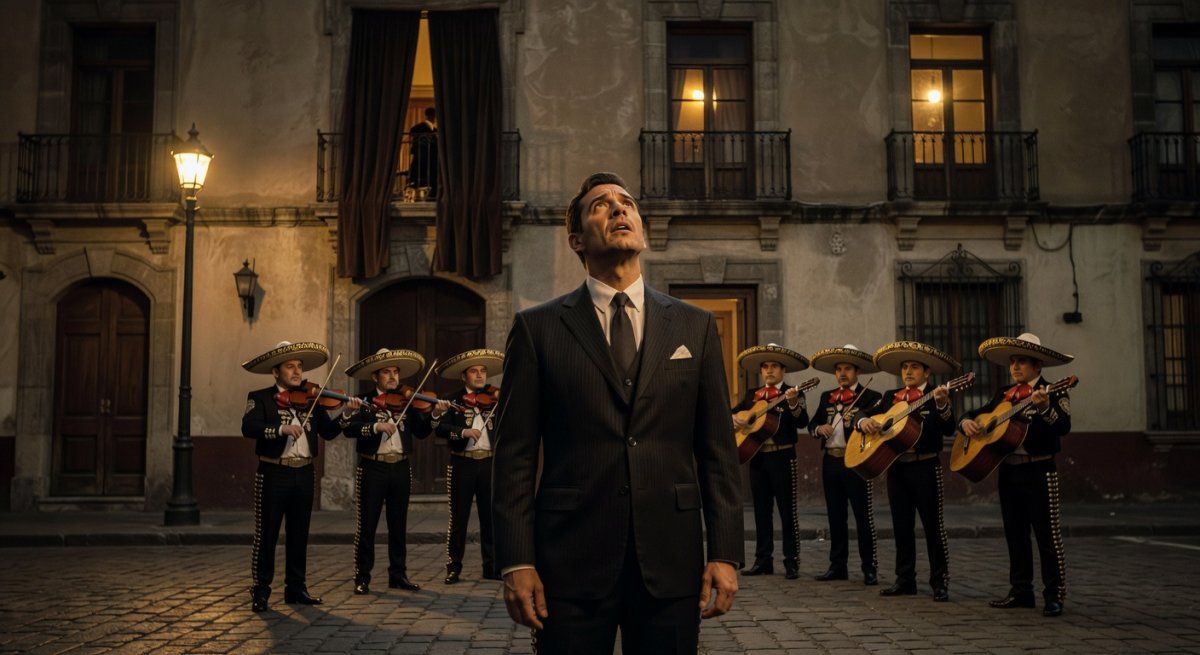
Under the soft glow of a Mexico City streetlamp, a lone figure pauses, mariachi in tow. He gazes upward. A light flickers on. A curtain parts. In that suspended moment, romance becomes theater, and the serenata transforms an ordinary night into legend. This scene, repeated across dozens of films from the 1930s through the 1950s, defined an entire era of Mexican storytelling. Today, as streaming platforms revive these classics for new generations, the serenades of the Golden Age are experiencing a powerful resurgence—one that speaks to our enduring hunger for public declarations of love.
The Golden Age Context: When Cinema Captured the Soul of a Nation
Mexico’s Golden Age of Cinema, spanning roughly 1933 to 1960, produced more than 1,200 feature films and turned the country into the cinematic powerhouse of Latin America. Studios in Mexico City churned out musical dramas, rancheras, and melodramas that reflected post-revolutionary hopes, class tensions, and the deep romanticism embedded in Mexican culture. Serenades were never mere musical interludes; they served as narrative pivots where social barriers dissolved under the power of song.
During this period, radio ownership surged from under 200,000 sets in 1930 to nearly two million by 1950, allowing film soundtracks to leap from screen to household. Songs like “México Lindo y Querido” and “Cielito Lindo” became shared national property. Film historians note that serenade scenes appeared in approximately 40 percent of the top-grossing romantic productions, according to archives at the Cineteca Nacional. These moments were not accidental; directors and composers understood that live music under a balcony mirrored real courtship rituals still practiced in neighborhoods from Guadalajara to Veracruz.
Iconic Serenades That Defined an Era
One of the most unforgettable sequences belongs to Pedro Infante in the 1948 classic Nosotros los pobres. Infante’s character, Pepe el Toro, stands beneath the modest window of his beloved, accompanied by a small conjunto. The camera lingers on his face as he sings “Amorcito Corazón.” The scene lasts nearly four minutes—unusually long for the time—allowing audiences to feel every note of longing. When the balcony door finally opens, the collective sigh in theaters was audible. Contemporary reviews in Excélsior described audiences applauding mid-film.
Jorge Negrete’s performance in Ay, Jalisco, no te rajes! (1941) offers a contrasting style: bold, almost defiant. Negrete, dressed in full charro regalia, leads a full mariachi band down a cobblestone street in Jalisco. His powerful baritone on “Ay, Jalisco, no te rajes” functions less as plea and more as proclamation. Film scholar Dr. Elena Vargas of UNAM points out that Negrete’s serenades embodied post-revolutionary masculinity—strong yet capable of tenderness. “He didn’t beg; he invited the nation to sing along,” Vargas notes.
Another standout is the delicate, almost whispered serenade delivered by Antonio Aguilar in El rayo de Sinaloa (1958). Aguilar’s version of “El Siete Leguas” strips away bombast, focusing instead on quiet intimacy. The camera pulls back to reveal the entire neighborhood listening in, underscoring how serenades belonged to the community, not just the couple.
Cultural Significance and Expert Perspectives
These cinematic moments did more than entertain; they preserved and popularized courtship traditions at a moment when urbanization threatened to erode them. Dr. Carlos Mendoza, a cultural anthropologist at the Universidad Iberoamericana, explains: “The Golden Age serenade on screen gave rural migrants in the capital permission to continue old customs. It said, ‘This is still who we are.’” Mendoza’s research shows that serenata requests in Mexico City increased measurably after major film releases, with local mariachi unions reporting up to a 30 percent spike in bookings during the late 1940s.
Composer Manuel Esperón, who scored many of these films, deliberately wrote melodies that could be sung by ordinary people. His work with Infante and Negrete created a feedback loop: audiences learned the songs in theaters, then requested them in real life. Esperón once told an interviewer that the best compliment he received was hearing his melodies drifting up to a balcony in Coyoacán one warm night in 1952.
Women’s roles in these scenes also merit closer examination. While the woman on the balcony often remained silent, her reaction—surprise mixed with quiet pleasure—signaled agency. Actresses such as María Félix and Miroslava Stern brought subtle resistance and wit to these moments, transforming passive reception into mutual recognition.
Why These Serenades Still Matter Today
In an age of dating apps and private messages, the public vulnerability of a Golden Age serenade feels radical. Yet nostalgia tours and film festivals across Mexico report sold-out screenings of restored prints. Younger viewers, many discovering these films through TikTok clips, cite the emotional directness as refreshing. A 2023 survey by the Mexican Film Institute found that 68 percent of respondents aged 18–35 had watched at least one Golden Age title in the past year, with serenade scenes ranking among the most rewatched moments.
The music itself travels. Contemporary artists like Natalia Lafourcade and Los Tucanes de Tijuana have recorded updated arrangements of these classics, introducing them to global audiences. The serenade, once a strictly local ritual, now echoes across borders through streaming platforms.
Community groups in Mexico City have even revived live serenata nights in historic neighborhoods, using the old films as inspiration. “We’re not copying Hollywood,” says neighborhood organizer Lucía Ramírez. “We’re reclaiming something that was always ours.”
The Golden Age serenades remind us that romance, at its best, is both deeply personal and profoundly communal. They capture a Mexico that dared to sing its feelings from the street to the sky.
This is Rosa Martinez for Global1 News, reporting from Mexico City. 🇲🇽
This article was produced with AI-assisted research and editorial support. Reporting is based on sources cited in the article.
What's Your Reaction?
 Like
0
Like
0
 Dislike
0
Dislike
0
 Love
0
Love
0
 Funny
0
Funny
0
 Wow
0
Wow
0
 Sad
0
Sad
0
 Angry
0
Angry
0

Latin America/Andes Correspondent at Global1.News. Based in Bogota, covering politics, environment, energy, and social movements across the Andean region. Passionate about environmental journalism and communities protecting their land.















Comments (0)