
Tehran Hits US Assets in Gulf After CENTCOM Strike
In a recent i24NEWS English broadcast, Ahmed Khuzai joined Bianca Zanini to examine the sequence of events in which US Central Command confirmed that American military aircraft struck Iranian military infrastructure and technology earlier today, prompting Tehran to launch retaliatory attacks on US assets in the Persian Gulf. The CENTCOM Prelude to Escalation US Central Command,
In a recent i24NEWS English broadcast, Ahmed Khuzai joined Bianca Zanini to examine the sequence of events in which US Central Command confirmed that American military aircraft struck Iranian military infrastructure and technology earlier today, prompting Tehran to launch retaliatory attacks on US assets in the Persian Gulf.
The CENTCOM Prelude to Escalation
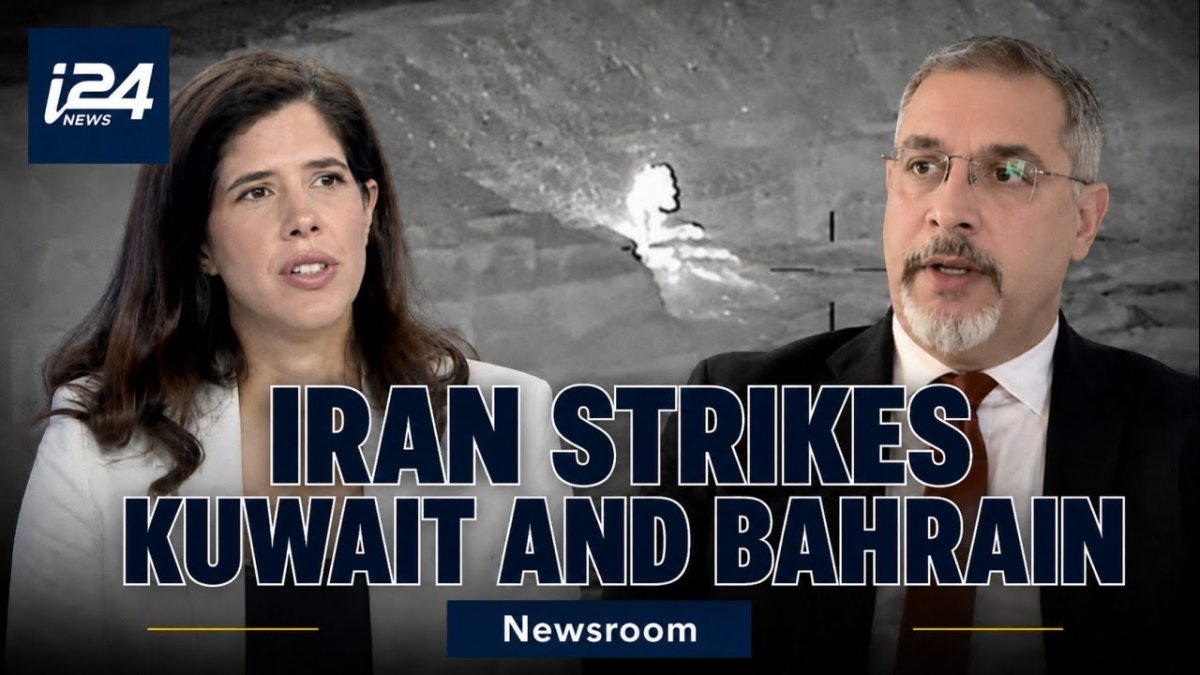
US Central Command, headquartered in Tampa, Florida, issued a statement confirming that American aircraft conducted precision strikes on Iranian military sites near Bandar Abbas and inside the Strait of Hormuz approaches this week. The targets included IRGC missile storage facilities and radar installations that CENTCOM assessed as direct threats to maritime traffic.
Officials at CENTCOM stated the operation responded to increased IRGC activity detected by US surveillance assets over the previous 72 hours. The strikes avoided civilian areas and focused exclusively on hardened military positions linked to the Quds Force.
Israeli defense officials in Tel Aviv monitored the CENTCOM action through secure channels with US Central Command. The IDF assessed that any Iranian retaliation would likely target US naval assets rather than Israeli territory in the immediate term.
Iran's Retaliatory Strikes on US Assets
Tehran responded within hours as IRGC naval units fired anti-ship missiles and drones at US military vessels operating near the Persian Gulf. Iranian state media quoted IRGC commanders confirming strikes against at least two American surface combatants and one logistics support ship positioned south of Bahrain.
The Quds Force released a statement from its Tehran headquarters declaring the attacks a direct response to the CENTCOM operation. Iranian officials named specific locations including waters adjacent to the Strait of Hormuz and approaches to the Bahraini coast where the US 5th Fleet maintains its forward headquarters.
US Central Command later confirmed damage to one vessel and injuries among American personnel, while emphasizing that all targeted Iranian sites had been military in nature. The exchange marked the first direct kinetic clash between US and Iranian forces in the Persian Gulf since 2020.
Implications for Gulf Security

The escalation immediately raised alert levels across Gulf Cooperation Council states. Saudi Arabia increased patrols around its eastern oil terminals at Ras Tanura, while the UAE reinforced air defenses at Al Dhafra Air Base near Abu Dhabi. Both capitals coordinated with US Central Command on shared early-warning protocols.
Maritime traffic through the Strait of Hormuz slowed as commercial operators rerouted tankers away from the northern Persian Gulf. Insurance premiums for vessels transiting the area rose sharply within 24 hours of the Iranian strikes.
Regional analysts noted that sustained conflict in these waters would directly affect energy exports from Kuwait, Qatar, and Iraq, creating immediate economic pressure on governments already managing domestic security concerns tied to Iranian proxy networks.
Impact on Israel's Security Posture
The IDF Home Front Command in Jerusalem raised readiness levels at bases across the country and instructed reservists in northern and southern commands to remain available. Israeli officials assessed that Iran could activate Hezbollah units in southern Lebanon or Palestinian Islamic Jihad cells in Gaza as secondary fronts.
Prime Minister's Office spokespeople in Jerusalem stated that Israel maintains close coordination with US Central Command and the Pentagon. The Mossad and Shin Bet increased monitoring of Iranian Quds Force movements in Syria and Iraq that could affect Israeli interests along the Golan Heights and Jordan Valley.
Defense establishment assessments in Tel Aviv concluded that the Persian Gulf clashes reduce the likelihood of an immediate Iranian nuclear threshold decision but increase the risk of multi-front attrition warfare involving Iranian-backed groups on Israel's borders.
International Reactions and UN Diplomatic Efforts
The United Nations Security Council convened an emergency session in New York later today at the request of several member states. Secretary-General representatives called for immediate de-escalation and offered to host talks between Washington and Tehran through existing back-channel mechanisms.
European Union foreign ministers issued a joint statement from Brussels urging both sides to avoid further strikes on civilian maritime infrastructure. China and Russia called for restraint while criticizing the initial CENTCOM operation during the UN session.
Israeli diplomats at the UN emphasized that any diplomatic outcome must address Iranian missile proliferation and IRGC support for proxy forces threatening the security of Israel and Gulf states alike. The Foreign Ministry in Jerusalem coordinated positions with the US delegation throughout the day.
Broader Regional Dynamics and Future Risks
The direct US-Iran confrontation in the Persian Gulf has shifted calculations for actors across the Middle East. Hezbollah leadership in Beirut faces pressure to demonstrate solidarity with Tehran without triggering a full-scale war with the IDF along the Lebanon-Israel border.
Palestinian Authority officials in Ramallah and Hamas leaders in Gaza City both issued statements supporting the Iranian action while avoiding commitments to immediate military involvement. Egyptian and Jordanian security services increased border monitoring to prevent spillover from Iranian-backed networks.
Israeli security planners in Tel Aviv continue to evaluate whether the current escalation will remain contained to US-Iran naval exchanges or expand into wider regional conflict involving multiple fronts. The coming days will test whether diplomatic channels at the UN can produce a verifiable pause in operations.
By Hannah Berg, Staff WriterThis article was produced with AI-assisted research and editorial support. Reporting is based on sources cited in the article.
What's Your Reaction?
 Like
0
Like
0
 Dislike
0
Dislike
0
 Love
0
Love
0
 Funny
0
Funny
0
 Wow
0
Wow
0
 Sad
0
Sad
0
 Angry
0
Angry
0

Israel Correspondent at Global1.News. Based in Tel Aviv, covering Israeli politics, security, technology, and society. Provides balanced, deeply-sourced reporting on one of the most closely-watched regions in the world.















Comments (0)