
South Korea gains an edge in the rare metals race
South Korea is advancing the redevelopment of the Sangdong tungsten mine in Gangwon Province as part of efforts to secure supplies of critical minerals amid global competition. The project, managed by Almonty Industries through its subsidiary Almonty Korea Tungsten Corporation, targets one of the world’s largest single-mine tungsten deposits and seeks to lessen dependence on Ch
South Korea is advancing the redevelopment of the Sangdong tungsten mine in Gangwon Province as part of efforts to secure supplies of critical minerals amid global competition. The project, managed by Almonty Industries through its subsidiary Almonty Korea Tungsten Corporation, targets one of the world’s largest single-mine tungsten deposits and seeks to lessen dependence on Chinese sources.
The Revival of Sangdong — Korea's Tungsten Giant
The Sangdong mine in Gangwon Province holds reserves of 8.58 million tonnes grading 0.42 percent WO3, supporting an estimated 90-year operational lifespan. Closed in the early 1990s after Chinese price competition made operations unviable, the site remained dormant for approximately 32 years until redevelopment began following Almonty’s acquisition in 2015.
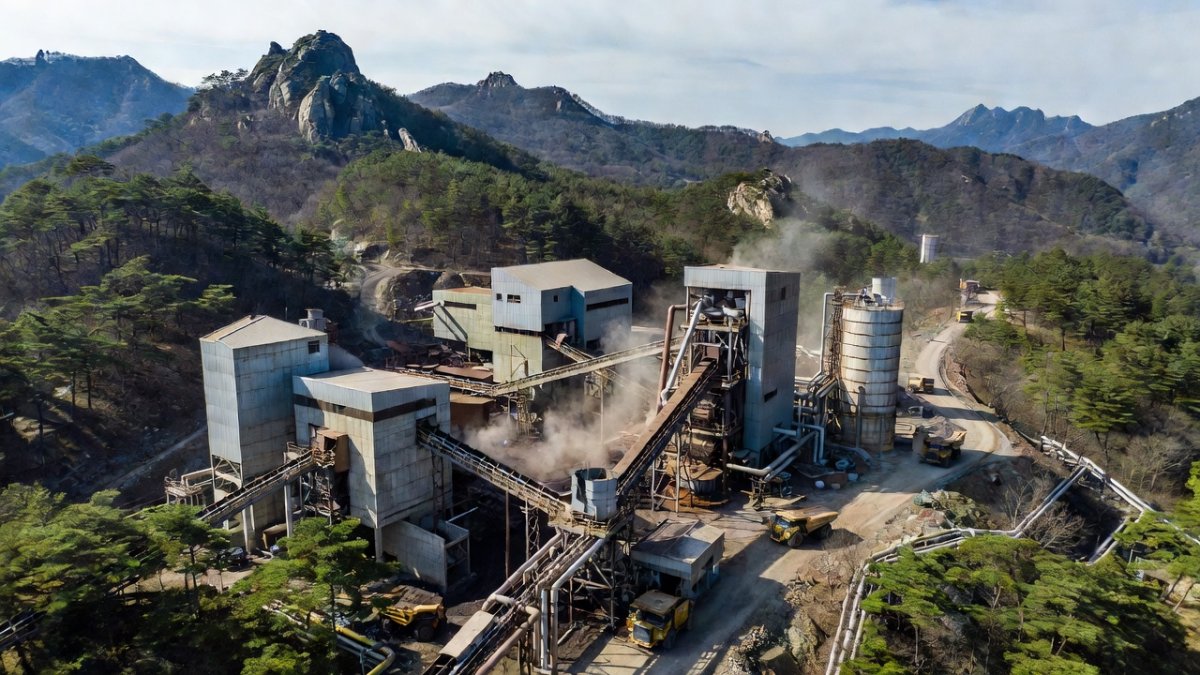
More than $100 million has been invested in the project since that acquisition. Phase 1 commissioning is scheduled for March 2026, with annual processing capacity set at 640,000 tons of ore to yield roughly 2,300 tons of tungsten concentrate. Phase 2, planned for 2027, aims to double throughput to 1.2 million tons per year. At full capacity the mine is projected to meet about 40 percent of global tungsten demand outside China.
South Korean presidents have visited the site at least six times, underscoring its status as a symbol of national industrial ambition. In June 2026 Almonty issued $700 million in notes to finance further ramp-up activities.
Tungsten's Role in Advanced Technology and Defense
Tungsten serves as a key input for semiconductor manufacturing equipment, cutting tools, batteries, and military applications including armor-piercing rounds and missile components. Its high density and melting point make it indispensable in precision industries where material performance directly affects product reliability.
China currently accounts for roughly 80 percent of global tungsten supply. This concentration has prompted downstream manufacturers in multiple countries to seek alternative sources that can provide more stable pricing and delivery schedules.
The Sangdong project’s output targets non-Chinese markets, potentially easing supply constraints for firms that require consistent tungsten availability for long-term production planning.
Japan's Critical Mineral Vulnerability
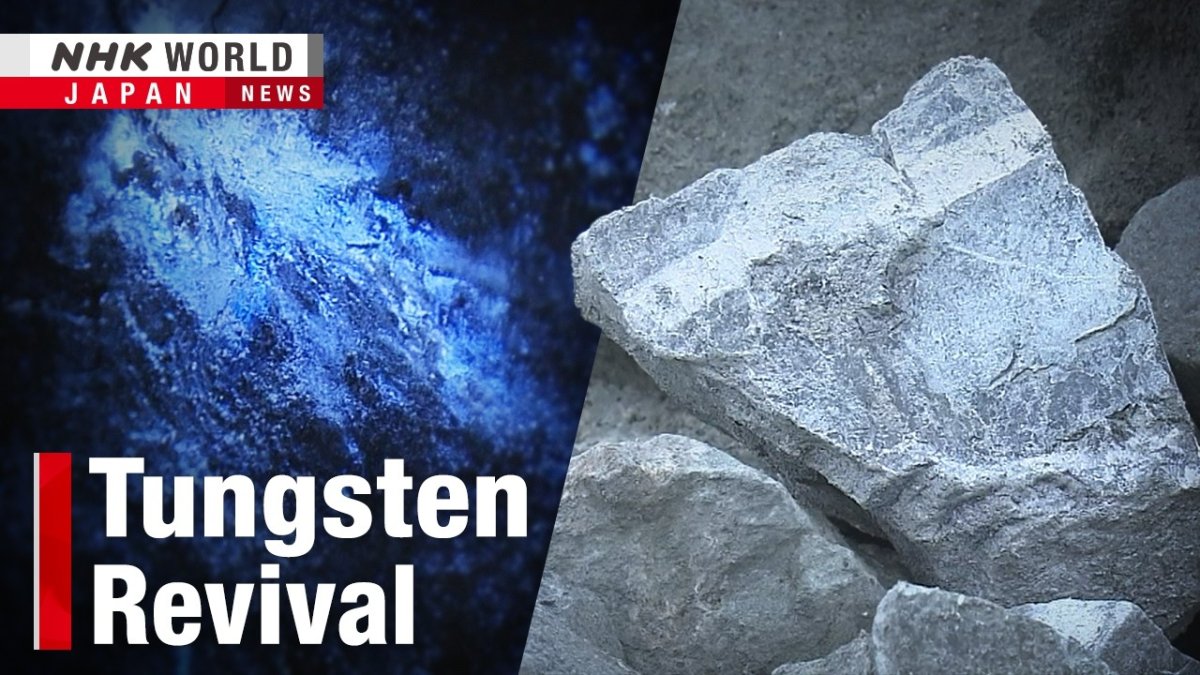
Japan, like South Korea, sources the majority of its rare metals from China, with more than 50 percent of approximately 30 rare metals originating there. In May 2026 China reduced certain tungsten exports to Japan to zero, highlighting the exposure of Japanese supply chains.
Japanese authorities have responded by exploring seafloor mining opportunities near Minamitorishima. At the same time, Japanese and U.S. firms are collaborating on rare earth production initiatives to broaden sourcing options.
These developments illustrate how shifts in Chinese export volumes can accelerate diversification efforts across Northeast Asia, with direct consequences for Japanese technology and defense sectors that depend on stable mineral inputs.
South Korea's Dual Strategy and the Regional Race for Rare Metals
In October 2025 South Korea established the Rare Earth Supply Chain Task Force to coordinate domestic and international measures. The country pursues a dual approach that combines continued engagement with Chinese suppliers and participation in U.S.-led diversification frameworks.
G7 countries have agreed to accelerate efforts to diversify critical minerals supply chains. South Korea’s position allows it to maintain commercial ties with China while aligning with broader allied initiatives aimed at reducing single-source dependence.
This balancing act reflects the practical constraints faced by economies that must secure materials for semiconductors and defense systems without fully severing existing trade relationships.
Expert Perspectives
Analysts note that the Sangdong timeline—Phase 1 in March 2026 followed by Phase 2 in 2027—provides a concrete benchmark for measuring progress in non-Chinese tungsten supply. The 40 percent share of non-Chinese demand targeted at full capacity represents a measurable shift in market structure, though actual delivery volumes will depend on operational performance after commissioning.
Observers also highlight the importance of sustained financing, as evidenced by the $700 million notes issued in June 2026, for maintaining construction and ramp-up schedules. The project’s history of presidential visits underscores political commitment that may help secure continued policy support.
What to Watch For — Phase 2 and Regional Supply Chain Realignment
Attention will focus on whether Phase 2 capacity expansion proceeds on schedule and whether offtake agreements materialize with semiconductor and defense manufacturers seeking alternatives to Chinese tungsten. The NHK WORLD-JAPAN video published on June 25, 2026, documented early stages of this transition and the broader regional context.
Further developments in Japan’s seafloor exploration and U.S.-Japan rare earth partnerships will indicate how quickly alternative supply routes can scale. South Korea’s task force activities and G7 coordination efforts will also shape the pace of supply chain realignment across the region.
These elements together illustrate the incremental nature of critical minerals diversification, where individual mine projects interact with national policies and international agreements to influence long-term availability for advanced technology industries.
By Kenji Tanaka, Staff Writer
This article was produced with AI-assisted research and editorial support. Reporting is based on sources cited in the article.
What's Your Reaction?
 Like
0
Like
0
 Dislike
0
Dislike
0
 Love
0
Love
0
 Funny
0
Funny
0
 Wow
0
Wow
0
 Sad
0
Sad
0
 Angry
0
Angry
0

Japan Correspondent at Global1.News. Tokyo-based voice covering Japanese politics, technology, economy, and culture. Tracks the intersection of tradition and innovation in one of the world's most dynamic societies.













Comments (0)