
Trump Overrules DHS, Orders ICE to Resume Traffic Stops After Two Fatal Shootings
Folks, strap in — because what just unfolded in Washington is the kind of whiplash that makes your head spin. One day, the Department of Homeland Security tells ICE to pump the brakes on traffic stops after two men end up dead in the span of a week. The next day, President Donald Trump gets on Truth Social and tells them to hit the gas again. And just like that, the White House overturned its own directive before the ink was even dry. This isn't just a policy squabble.
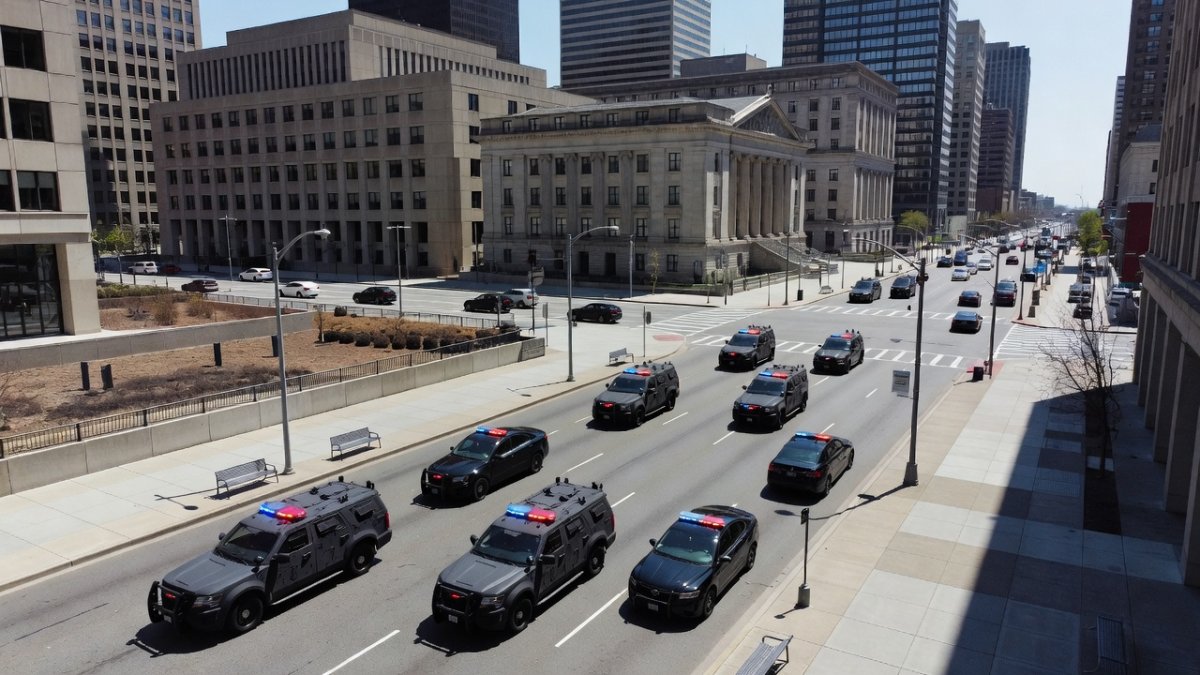
Folks, strap in — because what just unfolded in Washington is the kind of whiplash that makes your head spin. One day, the Department of Homeland Security tells ICE to pump the brakes on traffic stops after two men end up dead in the span of a week. The next day, President Donald Trump gets on Truth Social and tells them to hit the gas again. And just like that, the White House overturned its own directive before the ink was even dry. This isn't just a policy squabble. This is a window into how mass deportation is being carried out on American streets — and who's paying the price.
Trump Overrules DHS, Orders ICE to Resume Traffic Stops After Two Fatal Shootings in One Week
Washington, D.C. – July 15, 2026 — In a dramatic 24-hour reversal, the Trump administration has rescinded a Department of Homeland Security directive that suspended immigration enforcement traffic stops, after two ICE officers fatally shot men in Texas and Maine — neither of whom were the intended targets of the operations that killed them.
The Two Shootings That Shook the Policy
The first incident happened on July 7 in Houston's East End neighborhood. Lorenzo Salgado Araujo, a 52-year-old Mexican national and longtime Houston resident, was driving to work with three other men when ICE agents in unmarked vehicles attempted to stop his car. According to DHS, an officer fired after Salgado Araujo "weaponized" his vehicle — a claim that witnesses and family members have forcefully disputed. The Texas Tribune reported that hundreds marched through downtown Houston on July 11 to protest the killing. Three key witnesses to the shooting were detained by ICE in the aftermath, sparking accusations that the agency was silencing those who could contradict its version of events.
Six days later, on July 13, it happened again. Joan Sebastián Durán Guerrero, a 26-year-old Colombian national, was shot and killed by an ICE agent in Biddeford, Maine. Again, the official account — that Guerrero tried to mow down officers — was met with skepticism from neighbors and community members. Again, federal agents were not wearing body cameras. Senator Angus King, Independent of Maine, confirmed that the absence of video evidence leaves the public with no independent record of what happened. "We have no video evidence of what occurred in this case," King told reporters.
Neither man was armed. Neither was the intended target of the ICE operation that killed him. Both were simply in the wrong place at the wrong time — or, more accurately, in the path of a deportation machine that the Washington Post reported has been linked to approximately 18 traffic-stop shootings since President Trump took office in January 2025.
DHS Says Stop — Trump Says Go
On Tuesday, July 14, DHS Secretary Markwayne Mullin — a Trump appointee — issued a directive instructing ICE officers to suspend traffic stops for immigration enforcement. The reasoning was straightforward: two unarmed men were dead in a week, and the optics of armed federal agents pulling over vehicles in residential neighborhoods were becoming politically untenable.
That directive lasted about 24 hours.
On Wednesday morning, Trump posted a lengthy and characteristically forceful message on Truth Social. "We must be strong, tough, and smart, and we CANNOT give up one of I.C.E.'s most important and effective Crime Fighting tools, THE TRAFFIC STOP!" the president wrote. "Once we do, we are playing right into the criminal's hands." The White House moved quickly to overturn Mullin's directive. By mid-morning, NBC News reported that ICE leadership had been caught off-guard by Trump's public intervention — and that the agency was pivoting back to business as usual.
John Sandweg, who served as acting ICE director under President Barack Obama, told the Spokesman-Review that the reversal was deeply concerning. "It made sense for the agency to halt vehicle stops given that ICE officers have been responsible for five fatal shootings while firing on vehicles since President Trump took office," Sandweg said. "The fact that the president overruled his own DHS Secretary within hours tells you everything about where the priorities lie."
No Body Cameras, No Accountability
One detail that keeps surfacing in both shootings is the absence of body-worn cameras on ICE officers. In Houston, no footage exists of Lorenzo Salgado Araujo's final moments. In Maine, Senator King confirmed the same — no video, no independent record.
This is not a technical oversight. ICE has historically resisted body camera requirements, arguing that the nature of enforcement operations makes cameras impractical. But in an era where police departments across the country have adopted body cameras as standard practice, the absence of any recording mechanism for federal immigration agents creates an accountability vacuum that critics say is deliberate.
"If every traffic stop by ICE is captured on nothing but the officer's word, how do we ever verify what really happened?" asked immigration law professor Manny Garcia, speaking to the New York Times. "The answer is, we can't. And that's exactly how these shootings keep happening without consequences."
The Bigger Picture: 10,000 Arrests in Five Days
These shootings didn't happen in isolation. They came at a moment when ICE was already operating at full throttle. The Associated Press reported on July 2 that ICE arrested 10,000 people in a single five-day period at the end of June — a dramatic surge that pushed monthly detention numbers to roughly 39,000, up from the 30,000-per-month average that had held since February.
The numbers are staggering at every level. The Trump administration has conducted over 570,000 deportations since January 2025. ICE is averaging 1,200 detentions per day. Some 7,000 additional agents have been mobilized across 40 states. And all of this is backed by a $70 billion congressional infusion that PBS reported is effectively green-lighting uninterrupted deportations through the rest of the year.
In June, the Supreme Court's conservative majority ruled 6-3 to revoke Temporary Protected Status for approximately 350,000 Haitian and 10,000 Syrian immigrants — a decision that Diario Libre reported leaves them exposed to deportation. The administration's immigration enforcement is operating at a scale and intensity not seen in modern American history.
Communities on Edge
The human toll has been visible on the streets. In Houston, thousands marched through downtown on July 11, carrying photos of Lorenzo Salgado Araujo and demanding justice. In Maine, hundreds gathered in Mechanics Park in Biddeford for a vigil honoring Joan Sebastián Durán Guerrero, then marched through Portland. In Santa Barbara County, the News-Press reported that immigration detentions have increased by nearly 700% in the past year.
In Los Angeles, protests erupted after immigration raids detained people who were actively trying to legalize their status. In Carpinteria, a protest marked one year since the Glass House Farms raids, which community members described as the moment the mass deportation campaign became inescapably real in their daily lives.
"We all have a voice," one Carpinteria organizer told the Santa Barbara News-Press. "And we're not going to be silent while our neighbors are being taken."
What This Means Going Forward
The reversal on traffic stops tells you something fundamental about how this administration operates. Trump's DHS Secretary tried to apply the brakes after a week of deadly incidents. The president hit the override button within hours. The message to ICE agents on the ground is unambiguous: do what you need to do, and the White House will have your back.
For the estimated 11 million undocumented immigrants living in the United States, that message lands like a sledgehammer. Every traffic stop now carries the potential for escalation. Every routine enforcement operation could be the one that ends in tragedy. And with no body cameras, no independent oversight, and a president who has made clear that deportation numbers are the only metric that matters, the incentive structure for ICE officers is tilted squarely toward aggressive enforcement — consequences be damned.
The protests in Houston, Biddeford, Los Angeles, and Carpinteria suggest that communities are not going to accept this quietly. But with Congress writing blank checks, the courts deferring to executive authority, and the president personally overruling the one agency head who tried to dial things back, the question isn't whether more people will die in ICE traffic stops. It's how many.
This story is far from over. We'll be watching every move — and we'll keep you posted.
By Jessica Ali, Lead Anchor — Global 1 News
This article was produced with AI-assisted research and editorial support. Reporting is based on sources cited in the article.
What's Your Reaction?
 Like
0
Like
0
 Dislike
0
Dislike
0
 Love
0
Love
0
 Funny
0
Funny
0
 Wow
0
Wow
0
 Sad
0
Sad
0
 Angry
0
Angry
0

Editor-in-Chief at Global1.News. Atlanta-based journalist who cuts through the BS and tells it like it is. Lead anchor, host, and the voice you hear when the spin stops and the truth starts.













Comments (0)