
Senegal Government Muzzles Football Federation as World Cup Fallout Deepens
Senegal Government Muzzles Football Federation as World Cup Fallout Deepens
In a dramatic escalation that has gripped the nation, Senegal's government has ordered the country's Football Federation to cease all public communications —” no interviews, no statements, no social media posts —” as tensions explode following the Teranga Lions' early exit from the 2026 World Cup. The directive, handed down on Tuesday, marks an extraordinary intervention by the state into the running of Senegalese football, a sport that pulses through the veins of this West African nation like few other institutions.
The move comes after a week of bitter recriminations, scapegoating, and finger-pointing that has laid bare deep fractures within Senegalese football's leadership. What began as a disappointing but respectable 3-2 loss to Belgium in the Round of 32 has spiraled into a full-blown institutional crisis —” one that now threatens to engulf not just the federation but the government itself.
The World Cup Exit That Sparked the Crisis
Senegal entered the 2026 World Cup with sky-high expectations. The Teranga Lions, champions of Africa, had electrified the continent with their run to the Round of 32. But when they faced Belgium in Seattle, the dream came crashing down. A narrow 3-2 defeat sent Senegal packing earlier than many had hoped, and the post-mortem began almost before the final whistle had blown.
Head coach Pape Thiaw, who had guided Senegal through a turbulent qualifying campaign, was swiftly dismissed by the Football Federation in the immediate aftermath of the defeat. The decision, which many saw as hasty, did little to quell the growing discontent among fans and players alike. Questions swirled: Had the federation done enough to support the team? Were internal divisions undermining performance on the pitch?
Blaming the Doctor: Federation's Controversial Scapegoating
The crisis took a sharp turn when the federation's president publicly blamed the team's long-time physician, Dr. Abdourahmane Fédior, for contributing to "player unease" during the tournament. The accusation —” leveled without apparent evidence —” drew immediate backlash from medical professionals, players' unions, and the Senegalese public.
Dr. Fédior, a respected figure who has served Senegalese football for years, found himself at the center of a political firestorm. The move to scapegoat a medical professional struck many as a desperate attempt to divert attention from the federation's own failures. In a country where football is not merely a sport but a source of national identity and pride, the decision to publicly blame a doctor for on-field performance felt particularly sour.
The Ghost of AFCON: Old Wounds Reopen
Compounding the current crisis are lingering tensions from last year's Africa Cup of Nations, when Senegal was sensationally stripped of its title after initially being declared winner in a chaotic final against Morocco. The unprecedented decision came after Senegal's players briefly walked off the field during the match at the demand of coach Pape Thiaw —” a move that prompted Morocco to claim Senegal had automatically forfeited the contest.
The AFCON controversy remains a raw wound in Senegalese football. Many fans believe the federation failed to adequately fight for the team's title, and the unresolved bitterness from that episode has bled directly into the current crisis. The government's intervention now suggests that patience with the federation's leadership has run out at the highest levels of the state.
Government Steps In: A Gag Order for Football's Leaders
After days of escalating public recriminations, the Senegalese government finally stepped in. The directive was unambiguous: the Football Federation is to refrain from giving interviews, issuing public statements, or posting on social media until further notice. The government stated it would "examine responsibilities and sketch out a plan to move forward."
This is not merely a suggestion —” it is a binding order from the Ministry of Sports, carrying the full weight of the Senegalese state. For a federation that has long operated with considerable autonomy, the gag order represents a stunning loss of face and a clear signal that the government believes the current leadership cannot be trusted to manage the crisis responsibly.
What This Means: A Crossroads for Senegalese Football
This crisis goes far beyond one disappointing World Cup campaign. Senegal has built itself into one of Africa's premier football nations, producing world-class talent like Sadio Mané, Kalidou Koulibaly, and Edouard Mendy. The Teranga Lions are not just a team —” they are a symbol of national pride, unity, and aspiration for a country of 17 million people.
The government's intervention raises profound questions about the future governance of Senegalese football. Will the federation's leadership be replaced entirely? Will new oversight mechanisms be put in place? And crucially, can the damage to Senegal's international reputation be repaired before the next qualifying campaign begins?
For the players, the uncertainty is destabilizing. For the fans, it is heartbreaking. And for the millions of young Senegalese who dream of wearing the national colors, it is a stark reminder that football —” like politics —” is never just a game.
The Broader Picture: Africa's Football Governance Challenge
Senegal's crisis is not happening in isolation. Across the continent, football federations have struggled with governance issues, political interference, and internal conflicts that undermine the development of the sport. From Cameroon to Nigeria to Kenya, the tension between government authority and football autonomy is a recurring theme.
The Confederation of African Football (CAF) has repeatedly warned member associations about political interference, which can lead to suspensions from international competitions. Senegal's situation now places it in a delicate position: cooperate with the government's investigation or risk CAF sanctions. It is a high-stakes balancing act with no easy answers.
Football remains Africa's great unifying force —” a language spoken across borders, ethnicities, and classes. But as Senegal's current crisis demonstrates, the beautiful game is often entangled in very ugly politics. The coming weeks will determine whether this moment becomes a turning point toward reform or just another chapter in a cycle of dysfunction.
This article was informed by reporting from Africanews. For the full video report, watch the embedded coverage above.
—” Amara Diop, reporting from Dakar, Senegal
This article was produced with AI-assisted research and editorial support. Reporting is based on sources cited in the article.
What's Your Reaction?
 Like
0
Like
0
 Dislike
0
Dislike
0
 Love
0
Love
0
 Funny
0
Funny
0
 Wow
0
Wow
0
 Sad
0
Sad
0
 Angry
0
Angry
0
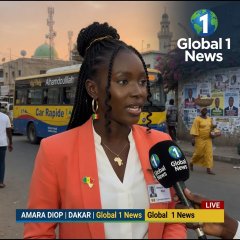
West Africa/Sahel Correspondent at Global1.News. Dakar-based journalist covering politics, security, climate, and development across Francophone and Anglophone West Africa. Tells the stories of a region undergoing profound transformation.










Comments (0)