
TSMC and the New Geopolitics of Chip Manufacturing
TSMC commands 61 percent of the global foundry market with its N3 and upcoming N2 process nodes, while Intel and Samsung pour billions into catching up. Kenji Tanaka reports on the geopolitics behind the worlds most critical manufacturing supply chain.
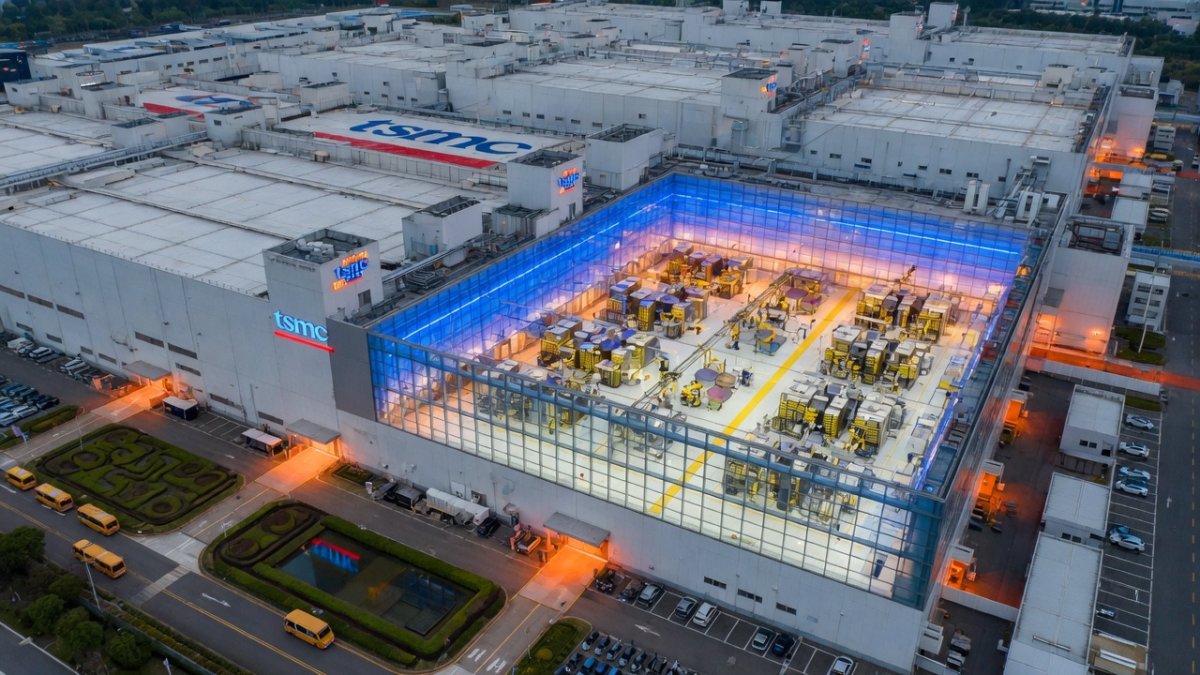
TSMC and the New Geopolitics of Chip Manufacturing
TSMC's dominance of global semiconductor manufacturing is one of the most consequential technological concentrations of the modern era. The company controls over 60 percent of the world's advanced chip production, a fact that has transformed Taiwanese industrial policy into a matter of global economic security.
TSMC's Unmatched Process Technology Leadership
TSMC's N3 process entered volume production in late 2022 with yields exceeding 70 percent. Its N3E variant powers Apple's A17 Pro and M3 series with 18 percent speed gains. N2 risk production begins in 2024 with mass manufacturing in 2025, introducing nanosheet gate-all-around transistors promising 30 percent power reduction.
Strategic Fabs in Arizona and Kumamoto
Arizona's Fab 21 backed by $12 billion begins 4nm production in 2025 transitioning to 3nm by 2027. A second phase adds $25 billion for 2nm. Japan's Kumamoto fab opened February 2024 with $8.6 billion in funding from TSMC, Sony, and the Japanese government, targeting 12nm to 28nm nodes for automotive and image sensors.
The CHIPS Act's Role in Reshaping Manufacturing
The U.S. CHIPS Act allocating $39 billion in grants plus $75 billion in loans subsidizes TSMC's expansion. TSMC drew $6.6 billion in conditional funding for 5nm and 3nm milestones. U.S. fabs run 30 to 50 percent higher than Taiwanese equivalents due to labor and regulatory factors.
Intel's Foundry Ambitions and Samsung's Challenges
Intel targets 18A for 2025 with $45 billion committed to Ohio and Arizona. Intel 4 yields remain below 50 percent for complex chips. Samsung's 3nm GAA process holds under 10 percent of leading-edge wafers with roughly 12 percent total foundry share versus TSMC's 61 percent.
Japan's Semiconductor Strategy
Japan's Renesas reported $9.5 billion revenue in fiscal 2023. Tokyo's $3.5 billion Kumamoto subsidy excludes Chinese partners, positioning Japan as a neutral manufacturing hub. TSMC's lead persists through at least 2027.
— Kenji Tanaka, Technology Correspondent
This article was produced with AI-assisted research and editorial support. Reporting is based on sources cited in the article.
What's Your Reaction?
 Like
1
Like
1
 Dislike
0
Dislike
0
 Love
0
Love
0
 Funny
0
Funny
0
 Wow
0
Wow
0
 Sad
0
Sad
0
 Angry
0
Angry
0

Japan Correspondent at Global1.News. Tokyo-based voice covering Japanese politics, technology, economy, and culture. Tracks the intersection of tradition and innovation in one of the world's most dynamic societies.















Comments (0)