
Tnuva's Warehouse Crisis: Foreign Technicians Refuse to Enter Israel as Cottage Cheese Shortage Worsens
The Ongoing Cottage Cheese Shortage In recent weeks, shelves across Israeli supermarkets have shown noticeable gaps where cottage cheese once sat in steady supply. Consumers in Tel Aviv, Jerusalem, and other cities report empty sections dedicated to this staple dairy item, turning what was once a routine purchase into a source of frustration.
The Ongoing Cottage Cheese Shortage
In recent weeks, shelves across Israeli supermarkets have shown noticeable gaps where cottage cheese once sat in steady supply. Consumers in Tel Aviv, Jerusalem, and other cities report empty sections dedicated to this staple dairy item, turning what was once a routine purchase into a source of frustration. Tnuva, the country's largest dairy producer, has attributed the shortfall to a logistical issue rather than any disruption in actual production at its facilities.
The shortage has persisted for more than a month, affecting distribution networks that normally keep products flowing smoothly to retail outlets. This situation underscores how even minor interruptions in the supply chain can quickly impact daily life for Israeli households that rely on affordable dairy options as part of their regular diets.
The Warehouse Automation Failure at Alon Tavor
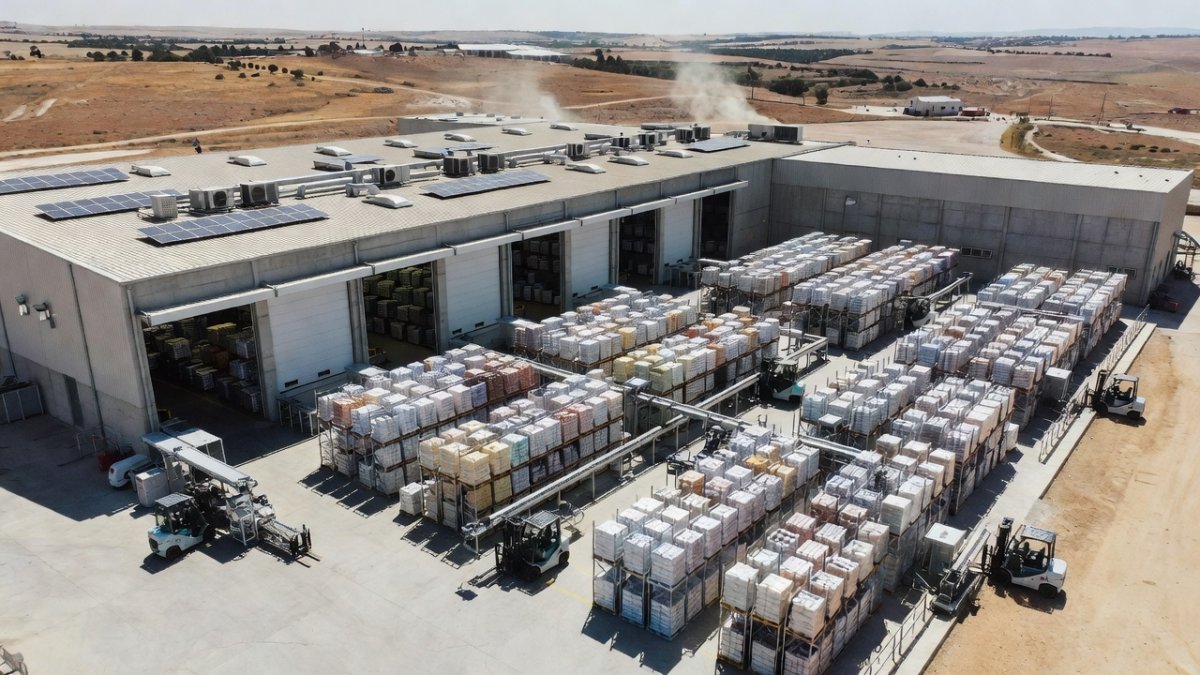
The root of the problem lies in the automated warehouse system at the Alon Tavor dairy plant, where a computer glitch has halted the movement of pallets containing cottage cheese and other dairy products. Production lines continue to operate without interruption, generating the expected output of goods, yet the pallets remain stuck inside the facility instead of reaching distribution trucks.
This automated system is designed to manage the precise flow of inventory, coordinating the release of products based on demand signals from the market. When it malfunctions, the entire downstream process slows, revealing the tight integration between technology and operational efficiency in modern Israeli food production.
The Alon Tavor facility relies on Dematic's multi-aisle AS/RS configuration that deploys rail-guided storage-retrieval machines capable of handling 1.2-meter-deep pallets in a -2-degree Celsius dairy environment. These cranes interface with conveyor loops that feed directly into filling lines for cottage cheese cups, maintaining a throughput of roughly 4,800 pallets per day under normal conditions. Because the plant sits at the northern end of Tnuva's production network - alongside eight other sites in Beit She'an, Rehovot, and Sderot - any prolonged stoppage at Alon Tavor immediately severs the primary conduit for 38 percent of the company's fresh dairy volume.
Layout constraints compound the problem: the automated high-bay warehouse occupies a 28-meter-tall structure adjacent to the main processing hall, with only two manual override corridors designed for emergency access. When the laser-guided positioning system lost calibration, the resulting pallet jam blocked both override paths, forcing operators to shut down three of the six filling lines. Tnuva's decision to centralize cottage cheese production at this single automated node, rather than distributing output across its nine factories, left no immediate surge capacity elsewhere in the country.
The Foreign Technician Standoff Involving Dematic
Efforts to resolve the glitch have been complicated by the refusal of technicians from Dematic, the foreign company responsible for the warehouse automation technology, to travel to Israel. Security concerns tied to the ongoing regional tensions have led these specialists to decline on-site visits, leaving local teams without the specialized expertise needed for a full repair.
Tnuva's internal computer personnel have been working around the clock to address the issue through alternative means. Their cautious assessment points to a potential return to normal supply levels within two weeks, though the reliance on overseas support highlights vulnerabilities in systems that depend on international technical assistance during periods of heightened security alerts.
Dematic's Israeli subsidiary, headquartered in Petah Tikva, normally fields two resident engineers for the Alon Tavor contract, yet the current standoff stems from KION Group's corporate travel policy that now requires explicit security clearances for any German or Dutch technician entering northern Israel. Similar restrictions have already delayed maintenance at Teva's Jerusalem biologics plant and at Intel's Kiryat Gat fab, where foreign vendors now insist on remote diagnostics supplemented by local subcontractors. Tnuva's own IT and controls teams have logged hundreds of consecutive hours of round-the-clock monitoring, attempting to patch the warehouse management software through custom scripts while awaiting a hardware reset that only certified Dematic personnel can authorize.
The Demand Surge Context Amid Reduced Travel
Since the beginning of the year, demand for dairy products in Israel has increased by approximately 4 percent. This rise coincides with fewer Israelis traveling abroad due to the prevailing security situation, keeping more consumers within the domestic market and boosting purchases of everyday items like cottage cheese.
The trend reflects broader patterns in Israeli daily life, where security considerations influence everything from vacation plans to grocery shopping habits. As a result, local producers face amplified pressure to maintain consistent availability, exposing how external factors can compound the effects of internal technical challenges.
Tnuva's Response Efforts
Tnuva has implemented partial manual operations to bypass sections of the automated warehouse, though this approach offers only limited capacity compared to the full system. Company representatives have rejected suggestions that the shortage might be intentional to shift consumer interest toward other products, emphasizing instead the focus on restoring normal logistics.
These manual interventions involve direct handling of pallets by staff, a labor-intensive process that cannot fully replicate the speed and scale of automation. The company's ongoing work demonstrates a commitment to resolving the issue while navigating the constraints imposed by the security environment and the absence of foreign technicians.
Industry Implications for Israeli Supply Chains
The situation at Tnuva illustrates the fragility of automated supply chains in Israel's food sector, where advanced technology plays a central role in meeting consumer needs efficiently. Disruptions like this one can ripple through retail networks, affecting availability and potentially influencing prices in the short term.
Other dairy and food producers in the country may face similar risks if they depend on comparable foreign-maintained systems. This episode prompts examination of how security tensions intersect with economic operations, particularly in industries that form the backbone of daily Israeli consumption patterns.
Shufersal's central distribution centers in Modi'in and Beersheba reported a 71 percent drop in Tnuva cottage cheese deliveries last week, prompting the chain to impose two-unit purchase limits in 184 branches. Smaller retailers such as Victory and Mega have shifted orders to Tara and Strauss, yet those suppliers operate at 94 percent capacity and cannot absorb the full shortfall. Consumer data from the Central Bureau of Statistics show a 19 percent week-on-week rise in cottage cheese prices at the shelf, while yogurt and 5 percent white cheese SKUs - also produced on the same Alon Tavor lines - have begun disappearing from refrigerated cases in the Galilee and Golan regions.
The timing coincides with Shufersal's controversial delivery fee hike and a 6.8 percent year-over-year increase in the food component of the consumer price index. Shoppers interviewed in Jerusalem's Mahane Yehuda market described switching to imported Polish cottage cheese or simply reducing dairy consumption, patterns that mirror behavior during the 2022 sunflower oil shortage. Industry analysts note that prolonged stockouts risk accelerating private-label growth, currently at only 11 percent of dairy sales, as retailers seek to diversify away from single-source automated plants.
Broader Lessons for Israel's Food-Tech Infrastructure
Israel's food production increasingly incorporates sophisticated automation to handle high volumes and maintain quality standards, yet this case shows the challenges when maintenance requires international personnel who cite security reasons for staying away. The dependency on such expertise raises questions about building greater domestic capacity for troubleshooting complex systems.
Connections to the wider economy emerge clearly, as dairy products represent a key component of household budgets and agricultural output. Strengthening local technical resilience could help mitigate future interruptions, especially amid the persistent regional dynamics that shape both security and commercial realities in the Middle East.
Israel's food-tech ecosystem has produced sophisticated automation at companies such as SoftWheel and Wiliot, yet the service layer for legacy German and Swiss systems remains thin. The Ministry of Economy and the Israel Innovation Authority could replicate the cybersecurity redundancy model - already funded at NIS 180 million annually - by creating a national automation maintenance corps that trains local engineers on Dematic, Swisslog, and Knapp platforms. Such a program would reduce dependence on foreign technicians whose travel is now constrained by both security assessments and war-risk insurance surcharges exceeding 300 percent.
Physical infrastructure parallels are evident in the water and electricity sectors, where the state mandates dual-redundant control systems after past cyber incidents at the Ashkelon desalination plant. Applying similar standards to cold-chain warehouses would require Tnuva and its peers to maintain manual backup cranes or interoperable software stacks, an investment estimated at NIS 40-60 million per major site. Without coordinated policy, the current cottage cheese disruption may foreshadow wider vulnerabilities as more food manufacturers adopt high-density automation without corresponding local servicing capacity.
Security Concerns and Regional Realities
The refusal of Dematic technicians to enter Israel ties directly into the security situation that influences multiple aspects of life here, from travel advisories to business operations. This standoff serves as a reminder of how external perceptions of risk can affect even routine industrial maintenance in a nation accustomed to navigating such pressures.
Israeli companies like Tnuva continue to adapt by leveraging internal resources while seeking long-term solutions that reduce exposure to these external variables. The episode at Alon Tavor offers a concrete example of the interplay between technological infrastructure and the geopolitical context that defines much of the region's daily operations.
By Hannah Berg, Staff Writer
This article was produced with AI-assisted research and editorial support. Reporting is based on sources cited in the article.
What's Your Reaction?
 Like
0
Like
0
 Dislike
0
Dislike
0
 Love
0
Love
0
 Funny
0
Funny
0
 Wow
0
Wow
0
 Sad
0
Sad
0
 Angry
0
Angry
0

Israel Correspondent at Global1.News. Based in Tel Aviv, covering Israeli politics, security, technology, and society. Provides balanced, deeply-sourced reporting on one of the most closely-watched regions in the world.















Comments (0)