
US CENTCOM Strikes Iranian Targets on Greater Tunb Island in Wave of Precision Strikes
In the early hours of July 15, 2026, US Central Command executed a coordinated wave of precision strikes against Iranian military infrastructure in the Persian Gulf, marking a significant escalation in regional tensions. The operation targeted coastal defense systems and cruise missile facilities on Greater Tunb Island, while simultaneously deploying autonomous naval drones against Iranian naval assets for the first time in combat.
Geopolitical Context
The Middle East security environment in mid-2026 remains shaped by overlapping conflicts involving Iran, Israel, and several Arab states. Iranian military infrastructure along the Persian Gulf coast continues to support both defensive and power-projection capabilities that directly affect maritime routes.
Israeli forces maintain positions in southern Syria and parts of Lebanon, creating a persistent friction point that influences Iranian calculations and the broader regional balance.
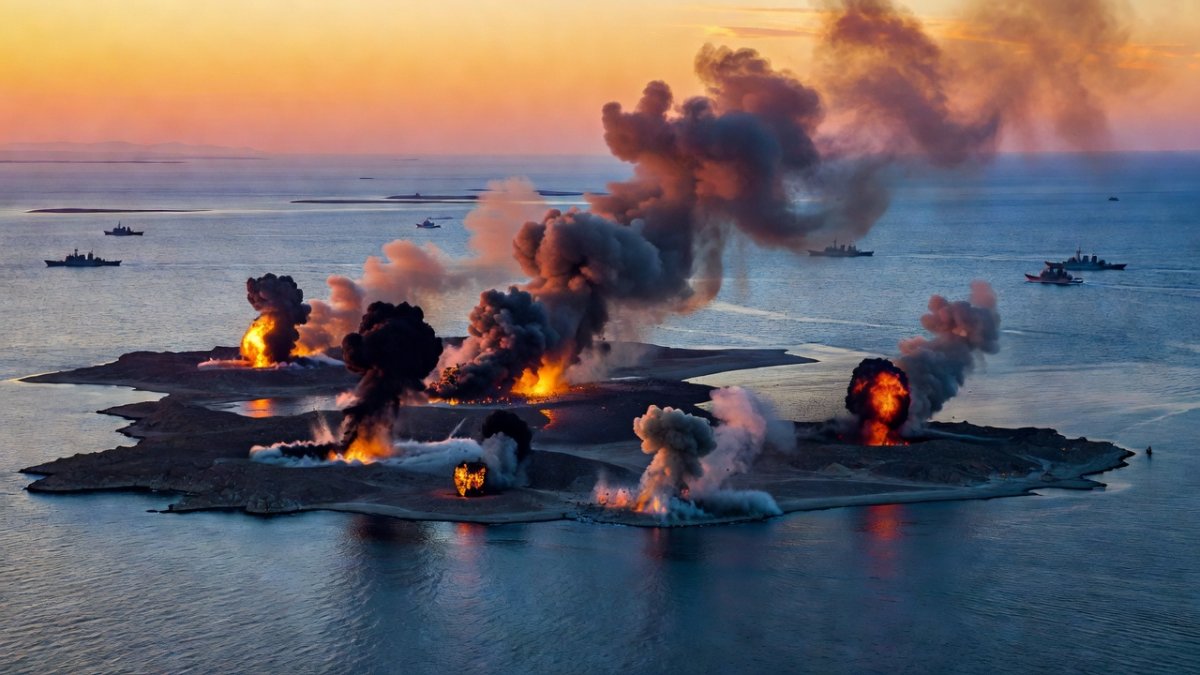
The Strikes: What We Know
On July 15 2026 US Central Command launched a wave of strikes against Iranian military targets. CENTCOM released footage confirming precision munitions struck coastal defense systems and cruise missile storage and launch sites on Greater Tunb Island.
The operation was explicitly framed as further degrading Iran—™s military capabilities in the Persian Gulf theater. No other locations were identified in the verified releases.
Autonomous Warfare: A New Era
US forces employed autonomous sea drones known as Saronic Corsair vessels against Iranian naval targets during the same operation. This marked the first combat deployment of such platforms by American units.
The introduction of these systems reflects a deliberate shift toward unmanned maritime capabilities that reduce risk to personnel while maintaining pressure on Iranian naval infrastructure.
The Strait of Hormuz Factor
Separately, the bulk carrier Luni sank in the Strait of Hormuz after sustaining a hull fracture near Bandar Abbas. All 23 crew members were rescued without reported casualties.
The Strait of Hormuz continues to handle approximately 20 million barrels of oil per day, representing roughly 20 percent of global consumption. Any disruption in this corridor carries immediate consequences for energy markets across Asia and Europe.
Regional Reactions
Iranian authorities have not issued detailed public statements beyond acknowledging the incidents. Neighboring Gulf states have increased maritime surveillance without issuing formal condemnations or endorsements.
Israeli officials remain focused on their positions in southern Syria and Lebanon, where withdrawal demands have been raised in parallel with the US operation.
Strategic Calculus
President Donald Trump stated that the Iranian people want to change the regime but fear being shot or facing violence if they attempt to do so. He separately expressed a desire for Israeli forces to withdraw from southern Syria and parts of Lebanon.
These positions indicate an American preference for calibrated military pressure on Iran combined with diplomatic signaling toward Israel regarding territorial holdings. Iranian leadership must weigh the cost of further escalation against domestic stability concerns.
Regional Implications
The combination of precision strikes, novel drone employment, and the separate maritime incident near Bandar Abbas underscores the interconnected nature of military and energy security in the Persian Gulf. States across the region are recalibrating their force postures and diplomatic channels accordingly.
Continued friction over Israeli positions in Syria and Lebanon adds another layer that could either constrain or accelerate future confrontations depending on how each actor manages escalation thresholds.
By Malik Hassan, Staff Writer
This article was produced with AI-assisted research and editorial support. Reporting is based on sources cited in the article.
What's Your Reaction?
 Like
0
Like
0
 Dislike
0
Dislike
0
 Love
0
Love
0
 Funny
0
Funny
0
 Wow
0
Wow
0
 Sad
0
Sad
0
 Angry
0
Angry
0

Middle East Correspondent at Global1.News. Based in Beirut, covering politics, conflict, energy, and society across the Middle East. Brings context and depth to a region often reduced to headlines.











Comments (0)