
South Korea Local Elections 2026: Ruling Democratic Party Wins Landslide Victory as Seoul Stays with Opposition
South Korea's June 3 local elections have delivered a decisive mandate for President Lee Jae-myung and the ruling Democratic Party (DP), who secured 12 of the 16 key mayoral and gubernatorial races nationwide. Yet the outcome was not without its surprises: the main opposition People Power Party (PPP) outperformed pre-election expectations by retaining the Seoul mayoralty and se
South Korea's June 3 local elections have delivered a decisive mandate for President Lee Jae-myung and the ruling Democratic Party (DP), who secured 12 of the 16 key mayoral and gubernatorial races nationwide. Yet the outcome was not without its surprises: the main opposition People Power Party (PPP) outperformed pre-election expectations by retaining the Seoul mayoralty and securing four seats overall, including a fifth term for incumbent Seoul Mayor Oh Se-hoon — a result that preserves a conservative foothold in the capital.
South Korea Local Elections 2026: Ruling Democratic Party Wins Landslide Victory as Seoul Stays with Opposition
Seoul, South Korea – June 5, 2026 — The Democratic Party of Korea has emerged from the June 3 local elections with a commanding victory across the country, winning 12 of 16 major metropolitan mayoral and gubernatorial contests. The party successfully captured the traditional conservative stronghold of Busan, where DP candidate Jeon Jae-soo defeated the PPP's Park Heong-joon by a narrow margin, and swept key races in Gyeonggi Province, Incheon, and across the Jeolla and Chungcheong regions.
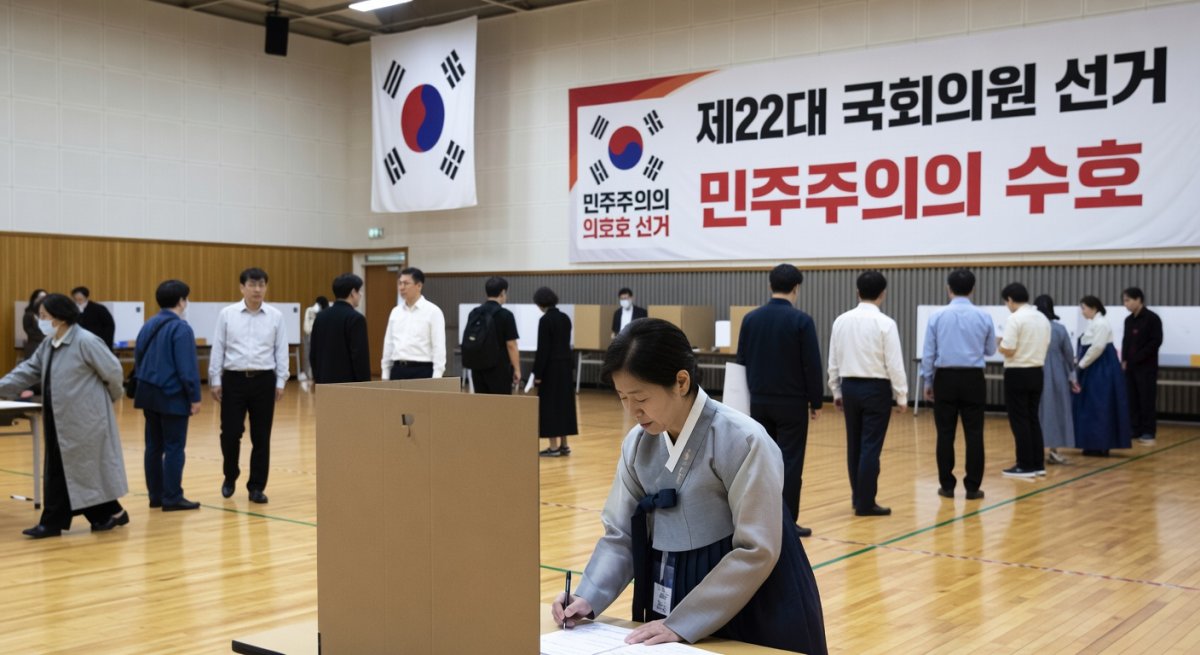
Election Results by the Numbers
The final vote tally, released by the National Election Commission (NEC) on June 4, confirms a resounding victory for the ruling DP at the national level. Of the 16 premier contests for metropolitan mayors and provincial governors, the DP claimed 12, including the symbolic prize of Busan — a city that had been under conservative control and where the PPP had expected to hold. The PPP secured four positions: Seoul Mayor Oh Se-hoon's fifth term, along with the mayoralties of Daegu, Daejeon, and the governorship of North Gyeongsang Province. In the concurrent parliamentary by-elections for 14 National Assembly seats, the DP captured nine, the PPP took four, and an independent won one seat. Thirteen of those 14 seats had previously been held by the DP, meaning the ruling party's net loss of four seats — while minor given its existing majority in the 300-member Assembly — signaled that voters were not prepared to grant the ruling camp unchecked power.
Seoul and the Capital Region: A Tale of Two Outcomes
The Seoul mayoral race proved to be the highest-profile contest of the night. Incumbent Mayor Oh Se-hoon of the PPP secured a fifth term, outperforming pre-election surveys that had suggested a tight race with the DP candidate. Oh's victory in the capital — home to nearly one-fifth of the national population — was a significant bright spot for the opposition. However, beneath the mayoral level, the DP made substantial gains across Seoul's 25 administrative districts, winning 17 district chief posts compared to just eight in the 2022 local elections. In the broader capital region, veteran DP lawmaker Choo Mi-ae won the Gyeonggi Province governorship by a wide margin against PPP candidate Yang Hyang-ja, becoming the first woman to lead a provincial government in South Korean history. In Incheon, DP candidate Park Chan-dae also secured victory.
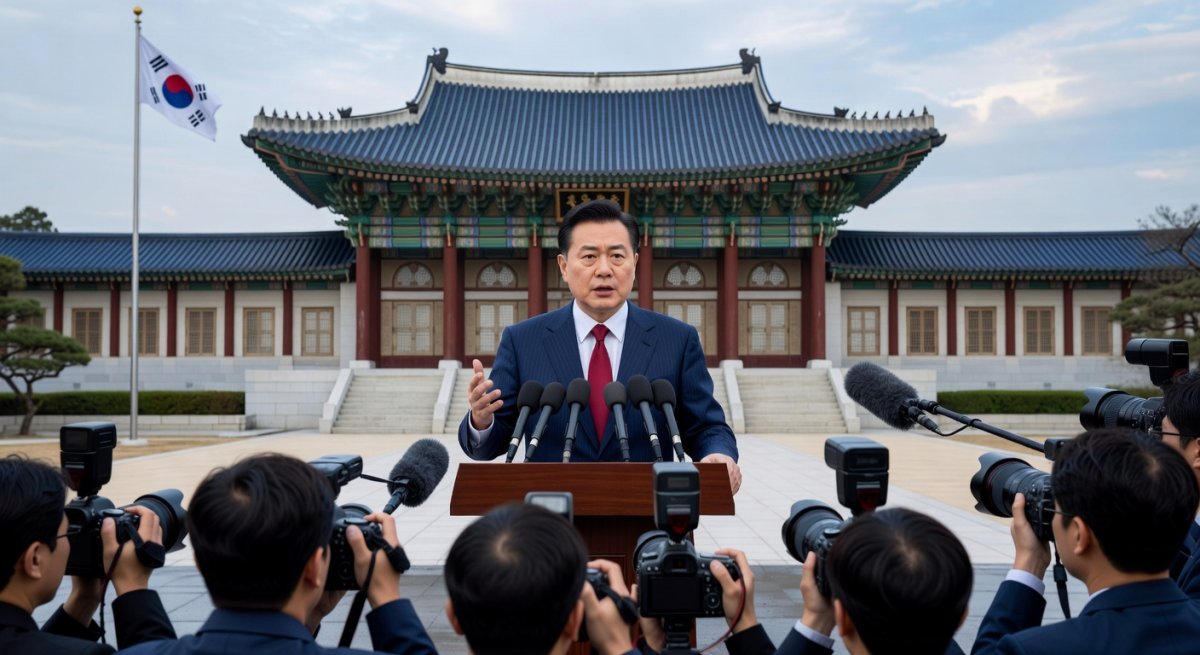
Geopolitical Context: A Mandate for the Lee Administration
These elections were widely regarded as the first nationwide test of President Lee Jae-myung's administration, which marked its first anniversary on June 4. Lee came to power in a snap presidential election following the impeachment and removal of former President Yoon Suk Yeol, who was sentenced to life imprisonment in February 2026 for his botched martial law declaration in December 2024. The DP's campaign strategy centered on framing the election as a judgment on what party leaders called the "remnants of Yoon's insurrectionist forces," while the PPP struggled to articulate a compelling counter-narrative. The results solidify the DP's control over local government — a sharp reversal from the 2022 local elections, when the then-ruling PPP had claimed 12 of 17 major positions just one month after Yoon took office. The turnaround underscores the dramatic shift in South Korea's political landscape over the past four years.
Policy Implications and the Road Ahead
The election outcome strengthens President Lee's hand as he enters the second year of his single five-year term. Speaking at a Cabinet meeting on June 2, Lee signaled his intention to accelerate his agenda, stating: "If we double the speed of state affairs over the next four years and do our best, we can work like it's eight years." Economic management remains the administration's foremost priority. South Korea faces headwinds from the ongoing conflict in the Middle East, which has driven up energy costs, and from persistent US tariff pressures that have weighed on Korea's export-driven economy. Foreign investors sold approximately 16 trillion won (about US$12 billion) of local shares through May. The DP has also signaled renewed focus on industrial transformation centered on artificial intelligence and advanced semiconductor manufacturing. Domestically, judicial reform — particularly the DP's push to strip the prosecution of its right to conduct supplementary investigations — is expected to gain traction. Meanwhile, the PPP has already raised concerns about a potential ruling party-led special counsel bill that could disrupt ongoing legal proceedings involving the president.
Expert Perspectives: What Analysts Are Saying
Political analyst Kim Kwan-ok characterized the result as driven by dual factors: "The public sentiment was in favor of giving a strong mandate to the administration at the start of its term, combined with the underlying voters' judgment on the martial law declaration. Also, the PPP failed to offer a compelling vision or convince voters that it could serve as an effective check on the government, allowing the Democratic Party to benefit by default." The Asan Institute for Policy Studies, a leading Seoul-based think tank, noted in an election brief that the PPP's retention of the Seoul mayoralty provides the opposition with an important institutional platform from which to rebuild ahead of the 2027 presidential election. The Korea Development Institute (KDI) has flagged the importance of policy continuity in the newly DP-controlled local governments, particularly in areas of housing regulation, education reform, and regional economic development.
Ballot Shortage Controversy
The elections were not without procedural controversy. An unprecedented shortage of ballots at 14 polling stations in parts of Seoul prompted the temporary suspension of voting at those locations, with reports of some voters leaving without casting their ballots. The PPP called on the NEC to immediately halt vote counting and consider a revote. The NEC has not yet announced a formal decision on the matter. Voting proceeded at 14,288 polling centers nationwide from 6 a.m. to 6 p.m., with one affected station in Songpa Ward extending hours to 10 p.m. The incident has raised questions about election administration capacity and has been cited by the PPP as evidence of poor management by the DP-controlled NEC.
Looking Ahead
The June 3 local elections have redrawn South Korea's political map, placing 119 of 227 district chief posts under DP control compared to 95 for the PPP, with the remainder going to independents and minor parties. Prime Minister Kim Min-seok has directed government ministries to expand coordination with newly elected local government heads to ensure policy alignment and delivery of regional pledges. For President Lee, the mandate is clear but not unlimited. The DP's loss of four parliamentary by-election seats — while modest — and the PPP's retention of the Seoul mayoralty serve as reminders that the opposition retains a meaningful political foothold. As Lee's administration enters its second year, the challenge will be translating electoral dominance into tangible policy outcomes on economic reform, industrial transformation, and inter-Korean engagement. With the 2027 presidential election now the next major electoral milestone on the horizon, both parties will be scrutinizing local government performance as a bellwether of national political sentiment.
By Prof. David Park, Staff Writer
This article was produced with AI-assisted research and editorial support. Reporting is based on sources cited in the article.
What's Your Reaction?
 Like
0
Like
0
 Dislike
0
Dislike
0
 Love
0
Love
0
 Funny
0
Funny
0
 Wow
0
Wow
0
 Sad
0
Sad
0
 Angry
0
Angry
0

East Asia/Technology Correspondent at Global1.News. Seoul-based voice covering Korean politics, technology, business, and culture. Analyzes how technology and geopolitics intersect across East Asia.














Comments (0)