
SORA Technology Fights Malaria in Africa with AI Drones
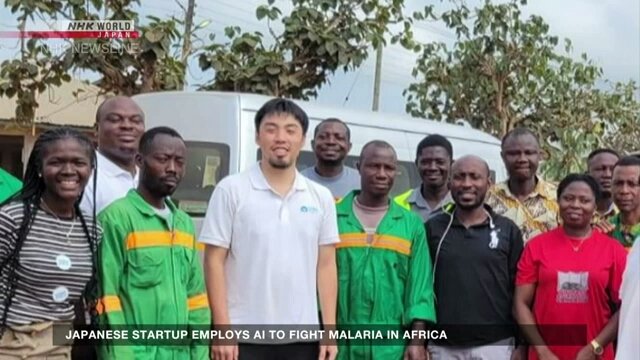
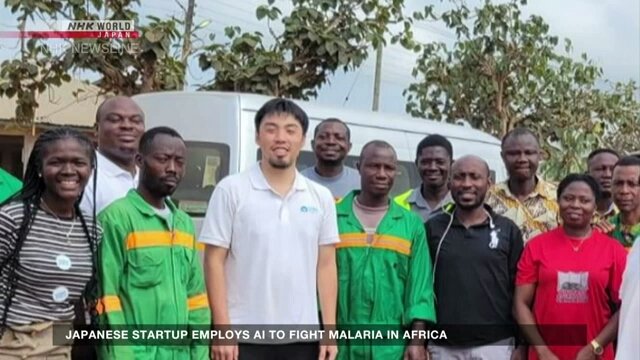
NHK WORLD-JAPAN aired coverage in June 2026 showing fixed-wing drones operated by a Nagoya-based team flying over Mozambican wetlands to locate stagnant water pools. The segment highlighted how SORA Technology Co., Ltd. integrates satellite data with drone imagery and machine-learning models to forecast malaria transmission risks weeks ahead of outbreaks. Company Background and
NHK WORLD-JAPAN aired coverage in June 2026 showing fixed-wing drones operated by a Nagoya-based team flying over Mozambican wetlands to locate stagnant water pools. The segment highlighted how SORA Technology Co., Ltd. integrates satellite data with drone imagery and machine-learning models to forecast malaria transmission risks weeks ahead of outbreaks.
Company Background and Founding Vision
SORA Technology Co., Ltd. was established in 2020 in Nagoya, Japan, by founder and CEO Yosuke Kaneko. The company focuses on remote-sensing solutions for public-health challenges in regions with limited ground infrastructure. From its inception, the firm positioned its work within Japan’s broader technology-export framework, aligning early development activities with METI-supported programs that encourage deep-tech firms to address global development goals.
Participation in the JETRO Global Startup Acceleration Program (GSAP) provided structured access to regulatory guidance and partnership networks in target markets. This program connection enabled the startup to refine its operational model before scaling field activities beyond Japan. The approach reflects elements of Society 5.0 thinking, in which data-driven systems are applied to solve societal issues such as disease prevention rather than solely industrial productivity.
Technical Architecture of the SORA Malaria Control Platform
The SORA Malaria Control platform fuses three data streams: publicly available satellite imagery, high-resolution captures from fixed-wing drones, and AI/ML classification models. Fixed-wing platforms allow coverage of large geographic areas in single flights, an operational requirement when mapping rural districts where road access is limited. Once collected, imagery is processed to identify potential mosquito breeding sites characterized by standing water.
Prediction models then correlate these sites with historical incidence data supplied by partner ministries. The resulting risk maps are shared with national health authorities for targeted larvicide deployment or community outreach. The same sensor suite supports secondary monitoring of cholera indicators and basic environmental variables such as vegetation change and surface-water dynamics. All processing occurs under data-sharing agreements that respect local sovereignty over health information.
Field Operations Across Mozambique and Expansion Plans
Active operations are currently centered in Mozambique, where the platform works in coordination with the Ministry of Health. Flight campaigns have been conducted in provinces with documented high transmission rates. Data outputs feed directly into district-level planning cycles managed by Mozambican health officials and WHO country teams.
Expansion is underway toward at least 14 additional African countries. Each new deployment requires formal agreements with the respective national ministry of health and alignment with WHO technical guidelines on vector surveillance. The phased rollout prioritizes nations already participating in regional malaria-control initiatives, reducing duplication of mapping efforts already underway through conventional ground surveys.
Funding Milestones and International Recognition
Total funding raised stands at approximately $7.3 million. The first close of $4.8 million occurred during the late-seed round, followed by a second close of $2.5 million. Capital has supported drone fleet expansion, model training on additional African datasets, and regulatory navigation in new jurisdictions.
The company received the iF Social Impact Prize, an award that recognizes technology applications addressing measurable social challenges. This external validation has assisted in conversations with multilateral donors and African government procurement offices evaluating drone-based surveillance tools.
Broader Applications Beyond Malaria Surveillance
While malaria remains the primary focus, the underlying sensor and analytics stack extends to cholera monitoring through detection of water-quality anomalies. Environmental and climate-sensing modules capture variables relevant to other vector-borne diseases. These extensions illustrate how a single aerial-data platform can serve multiple public-health verticals without requiring entirely separate hardware investments by partner ministries.
Japanese regulatory experience with drone operations over populated and remote areas has informed safety protocols adapted for African airspace. METI frameworks that emphasize responsible data use and cross-border technology transfer provide a reference point for negotiating data-localization requirements in recipient countries.
Japan’s Strategic Role in Global Health Technology Cooperation
Japan’s global health strategy, articulated through METI and the Ministry of Foreign Affairs, increasingly incorporates digital tools for disease surveillance. SORA Technology’s work exemplifies how Society 5.0 principles—human-centered application of cyber-physical systems—translate into concrete field programs on another continent. JETRO’s GSAP serves as the practical bridge connecting early-stage Nagoya engineering with on-the-ground requirements of WHO and African health ministries.
Supply-chain considerations also matter. Fixed-wing airframes and onboard sensors are sourced through Japanese and allied manufacturers, creating traceable quality standards that ministries of health can audit. This traceability supports long-term maintenance agreements, an important factor when equipment operates in regions with limited local technical capacity.
Continued alignment with METI policy priorities suggests that future iterations of the platform may incorporate additional Japanese sensor technologies or edge-computing modules developed under Society 5.0 research grants. Such incremental upgrades would maintain compatibility with existing WHO data-exchange formats while extending predictive lead times.
By Kenji Tanaka, Staff Writer
This article was produced with AI-assisted research and editorial support. Reporting is based on sources cited in the article.
What's Your Reaction?
 Like
0
Like
0
 Dislike
0
Dislike
0
 Love
0
Love
0
 Funny
0
Funny
0
 Wow
0
Wow
0
 Sad
0
Sad
0
 Angry
0
Angry
0

Japan Correspondent at Global1.News. Tokyo-based voice covering Japanese politics, technology, economy, and culture. Tracks the intersection of tradition and innovation in one of the world's most dynamic societies.












Comments (0)