
Secure America Act Passes House — $70 Billion Heads to Trump's Desk
The Border Funding Standoff Ends With a Hard Win Folks, after four months of political theater and endless finger-pointing, the House finally passed the Secure America Act on June 9, 2026. The 214-212 vote was razor-thin, but it delivered real money where it counts: $70 billion for immigration enforcement through 2029. Here's the thing — this wasn't some bipartisan kumbaya mome
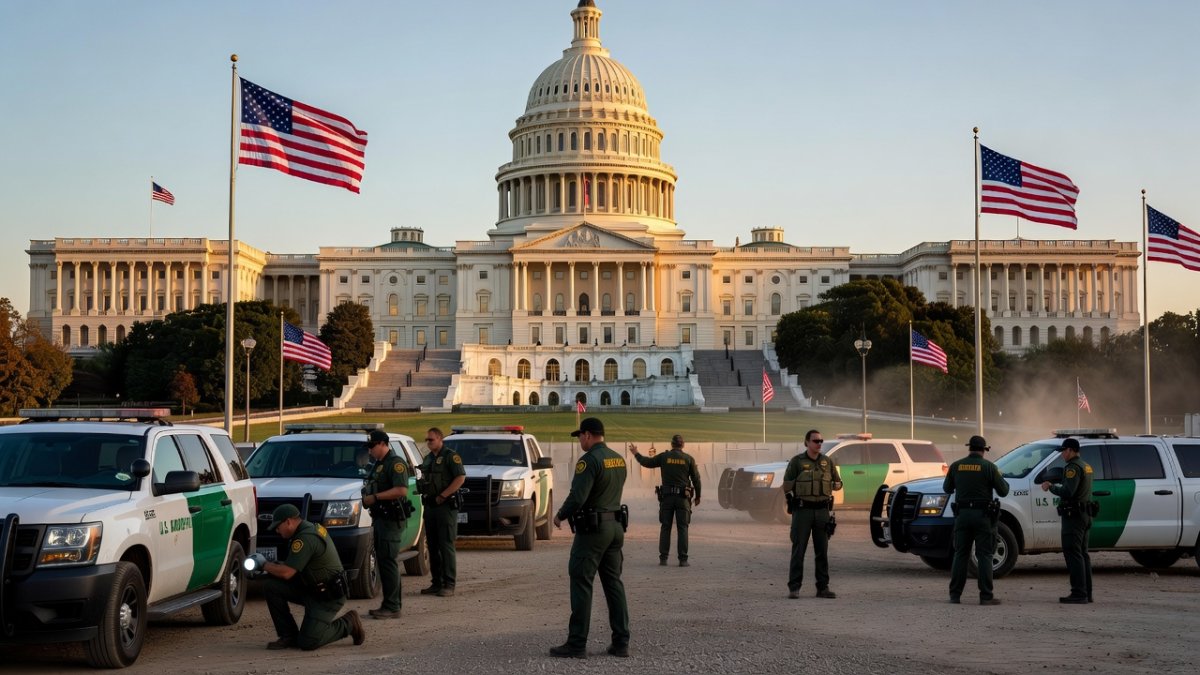
The Border Funding Standoff Ends With a Hard Win
Folks, after four months of political theater and endless finger-pointing, the House finally passed the Secure America Act on June 9, 2026. The 214-212 vote was razor-thin, but it delivered real money where it counts: $70 billion for immigration enforcement through 2029.
Here's the thing — this wasn't some bipartisan kumbaya moment. Every Republican backed it — all 214 of them — while Independent Rep. Kevin Kiley sided with Democrats, making it a 214-212 straight-party vote. President Trump is set to sign it into law on June 10. The White House press release called it a "historic commitment to securing our sovereignty." Meanwhile, the Guardian framed it as "a massive escalation in enforcement spending." Fox News and the NY Post got straight to the point: this is the largest dedicated funding boost for ICE and Border Patrol in years.
Where the $70 Billion Actually Goes
Let me break this down for you. The bill allocates $38 billion to ICE for detention, removal operations, and interior enforcement. Another $26 billion heads to CBP for agents, technology, and barriers along the border. The remaining $5 billion sits in a flexible pool controlled by Homeland Security Secretary Markwayne Mullin, giving him authority to shift resources where surges hit hardest.
This isn't vague promises. The funding runs through 2029, which means sustained hiring, more detention beds, and upgraded surveillance instead of the usual stop-start budgeting that leaves agents hanging. The four-month standoff was over exactly this kind of guaranteed money versus continuing resolutions that kick the can down the road.
The 214-212 Vote and the Lone Crossover
The math tells the real story. Republicans held firm with all 214 members voting yes, Kiley broke with his independent alignment to side with Democrats, and every Democrat voted no. That 214-212 margin shows how little room existed for compromise once leadership drew the lines.
Political games were on full display. Democrats argued the bill lacked sufficient oversight on the $5 billion DHS pool and accused the administration of overreach. Republicans countered that years of record encounters proved the old approach had failed. Kiley's decision to side with Democrats on the final vote drew predictable heat from the right but underscored that border security isn't purely a partisan issue for every member.
What This Means for Actual Enforcement
With $38 billion flowing to ICE, expect expanded removal capacity and faster processing of cases already in the system. The $26 billion for CBP translates to more boots on the ground, better equipment, and continued physical barriers in high-traffic sectors. Secretary Mullin's $5 billion discretionary fund gives the department flexibility to respond to sudden spikes without waiting for Congress to act again.
This ends the uncertainty that plagued operations during the standoff. Agents and officers now have multi-year funding certainty instead of worrying about another shutdown threat or continuing resolution. The result should be measurable increases in interior enforcement and border interdiction through the end of the decade.
Media Narratives and the Spin Cycle
The Guardian immediately labeled the bill an "enforcement explosion" and warned of humanitarian consequences. Fox News and the NY Post highlighted the long-overdue investment in personnel and infrastructure that previous administrations had shortchanged. The White House press release emphasized restored deterrence and accountability after years of record crossings.
Here's the reality behind the headlines: the bill resolves a funding impasse that had stalled operations since February. It doesn't rewrite immigration law, but it gives the agencies tasked with enforcement the resources they have requested for years. The partisan split reveals how deeply divided the two sides remain on whether strong enforcement is even desirable.
What Comes Next After the Signature
Trump signs the bill on June 10, triggering immediate budget execution. DHS will begin obligating funds for hiring, contracts, and technology purchases within weeks. The real test arrives in the coming months as agencies scale operations and report results on removals and encounters.
Watch for legal challenges from advocacy groups and potential attempts in the Senate to attach conditions or oversight measures. The $5 billion pool under Secretary Mullin will likely become a flashpoint, with critics demanding detailed spending plans while supporters argue flexibility is essential for operational success.
What You Can Do
Contact your representatives and demand they track how the $70 billion is spent, especially the $5 billion discretionary pool. Support organizations that provide direct assistance to Border Patrol and ICE agents on the ground. Stay informed through primary government reports rather than filtered media summaries. Hold both parties accountable if the funding gets diverted or delayed in future budget fights. The law is now on the books — make sure it delivers results instead of becoming another unfilled promise.
By Jessica Ali, Global 1 NewsThis article was produced with AI-assisted research and editorial support. Reporting is based on sources cited in the article.
What's Your Reaction?
 Like
0
Like
0
 Dislike
0
Dislike
0
 Love
0
Love
0
 Funny
0
Funny
0
 Wow
0
Wow
0
 Sad
0
Sad
0
 Angry
0
Angry
0

Editor-in-Chief at Global1.News. Atlanta-based journalist who cuts through the BS and tells it like it is. Lead anchor, host, and the voice you hear when the spin stops and the truth starts.















Comments (0)