
Estela de Luz Protest: Human Rights Focus Before World Cup
**Keywords:** Estela de Luz protest, human rights Mexico, missing persons Mexico, Claudia Sheinbaum, World Cup 2026, Amnesty International, migration dignity, USMCA workers, deportations Mexico, environmental justice Mexico The Dawn Action at Estela de Luz Early on Tuesday morning, as the first light touched Paseo de la Reforma, 18 activists formed a human chain around the Este
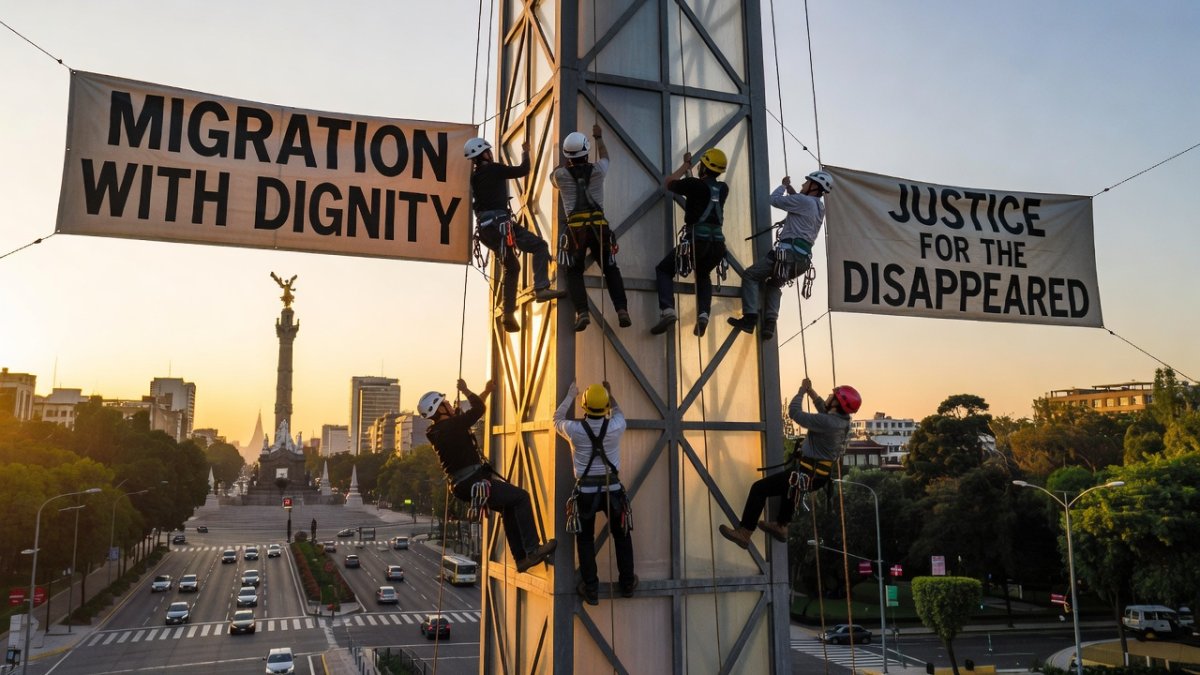
The Dawn Action at Estela de Luz
Early on Tuesday morning, as the first light touched Paseo de la Reforma, 18 activists formed a human chain around the Estela de Luz monument. Seven of them, wearing helmets and harnesses, spent two hours climbing the 104-meter structure to hang banners at about 60 meters high. The messages called for migration with dignity, an end to racism, respect for autonomy, environmental justice, an end to weapons flows, justice for the disappeared, people before commerce, and the reminder that the world is watching.
This quiet yet determined climb brought together representatives from more than one hundred Mexican and U.S. organizations. No roads were closed and traffic flowed normally, allowing everyday commuters and vendors setting up nearby tianguis to witness the action unfold.
More Than One Hundred Voices United
Amnesty International issued a statement noting that the gathering represented networks from both sides of the border. The groups chose the monument, built in 2011 to mark the bicentennial of Mexican independence, because it stands as a symbol of national reflection. Their banners stayed visible for hours, visible to families walking through the area and to workers heading to offices along Reforma.
The action came two days before the World Cup inauguration events scheduled in Mexico City. Organizers stressed that while the government has announced up to 2 billion pesos for mobility projects and plans to deploy 100,000 security officers, urgent social needs remain unaddressed.
The Urgent Reality of More Than 133,000 Missing Persons
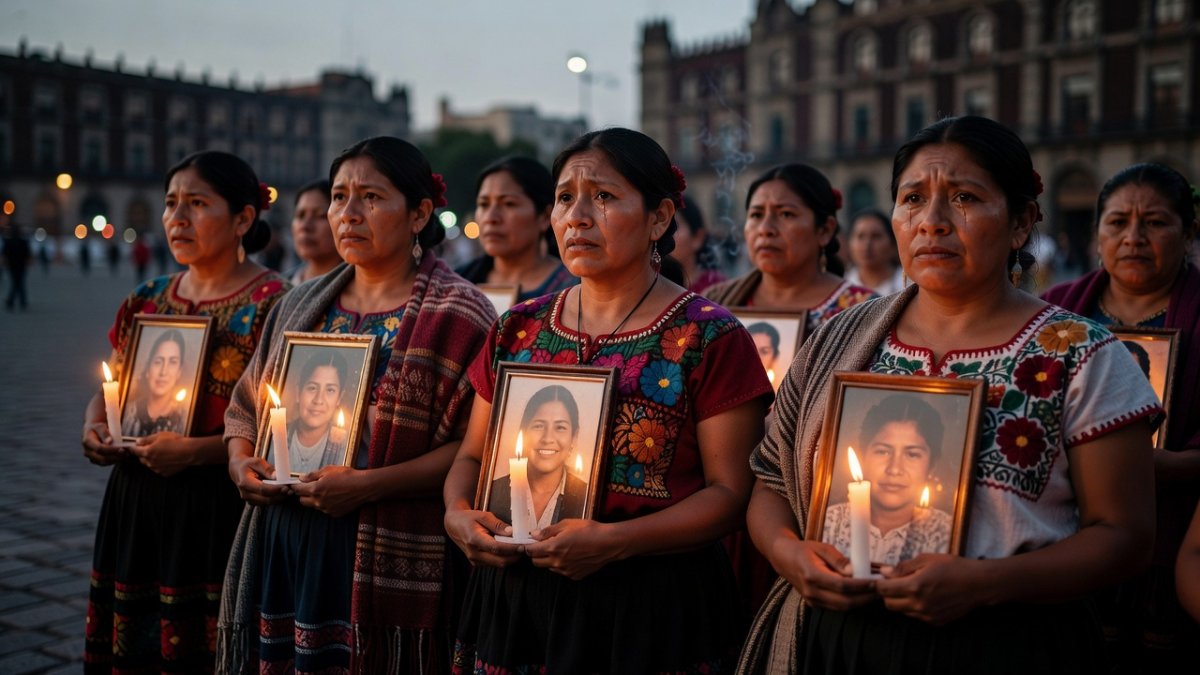
At a press conference held at the base of the monument, activists pointed to the official registry showing more than 133,000 missing persons. This figure touches every region of the country, from colonias in Mexico City to rural ejidos in states across the republic. Families in indigenous communities and small towns continue to search, often without answers, while carrying the weight of uncertainty in daily life.
The call for justice for the disappeared resonates deeply with teachers, healthcare workers, and campesinos who know someone affected. The activists described the situation as urgent and called for concrete steps rather than continued silence.
Migration Raids, Deportations, and Family Ties
The groups also condemned inhumane and criminal raids carried out by Mexico's National Migration Institute and by ICE in the United States. They highlighted the need to protect and reintegrate the more than 190,000 Mexican nationals deported between 2025 and March 2026. These numbers represent parents, siblings, and children whose return often brings new challenges to already stretched households in border communities and interior towns alike.
Many deportees arrive back in neighborhoods where work is scarce and support systems are thin. The activists asked that policies prioritize human dignity over enforcement numbers, a plea that echoes in taquerías, tortillerías, and family gatherings across the country.
USMCA Must Serve Workers and the Land
The coalition reminded leaders that the United States-Mexico-Canada agreement should deliver benefits to workers, the environment, agriculture, and human rights rather than primarily to corporations and billionaires. Farmers in ejidos and small producers in comunidades indígenas feel the effects when trade rules favor large-scale interests over local needs.
Environmental justice and respect for autonomy appeared on the banners because communities living near industrial zones and resource-extraction areas continue to face pollution and displacement. The activists argued that trade policy must be measured by its impact on ordinary households, not only on balance sheets.
World Cup Spotlight and the Sheinbaum Administration
The protest placed the Sheinbaum administration under the same international gaze that will accompany the World Cup. While investments in infrastructure move forward, the groups urged equal attention to the social and environmental problems that affect daily life in colonias and pueblos. They noted that the world will watch not only the sporting events but also whether long-standing issues receive meaningful action.
Organizers said they plan to keep raising these concerns throughout the tournament period. Tuesday's climb marked the third time civil-society members have scaled the Estela de Luz to highlight human rights concerns, showing a pattern of peaceful, visible pressure.
Tags: Estela de Luz, human rights, missing persons, migration, USMCA, World Cup, Sheinbaum, Amnesty International
By Rosa Martinez, Staff Writer
This article was produced with AI-assisted research and editorial support. Reporting is based on sources cited in the article.
What's Your Reaction?
 Like
0
Like
0
 Dislike
0
Dislike
0
 Love
0
Love
0
 Funny
0
Funny
0
 Wow
0
Wow
0
 Sad
0
Sad
0
 Angry
0
Angry
0

Latin America/Andes Correspondent at Global1.News. Based in Bogota, covering politics, environment, energy, and social movements across the Andean region. Passionate about environmental journalism and communities protecting their land.














Comments (0)