
Russia Issues Sweeping Ban on Armenian Imports After Pashinyan's Victory
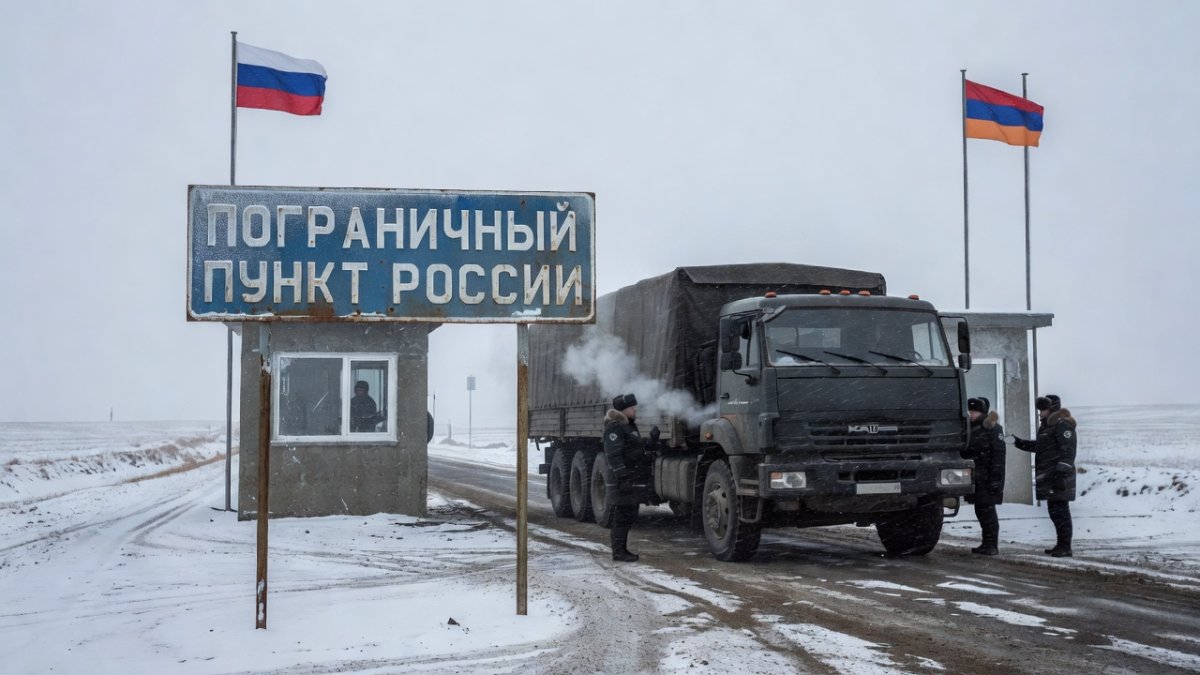
The Announcement of the Import Restrictions Rosselkhoznadzor issued the sweeping ban on Thursday, confirming that restrictions on most food, seeds, flowers, wood and fertilizer from Armenia would begin on Friday. The federal agricultural safety agency tied the decision directly to repeated findings of pests in Armenian shipments since May, including three documented cases of kh
The Announcement of the Import Restrictions
Rosselkhoznadzor issued the sweeping ban on Thursday, confirming that restrictions on most food, seeds, flowers, wood and fertilizer from Armenia would begin on Friday. The federal agricultural safety agency tied the decision directly to repeated findings of pests in Armenian shipments since May, including three documented cases of khapra beetle infestations in dried food products during June alone. Officials stated that the measures would stay in place until Armenian exporters establish a verifiable system for safety and traceability of all goods.
The list of affected products covers fresh and dried fruits, fresh and chilled vegetables, grains, cereals and grain-derived items, along with coffee and cocoa beans. Additional categories include live plants, fresh cut flowers, planting seeds, and plants used in pharmaceuticals and perfumery. Soil, peat, organic fertilizers, timber, lumber, wooden packaging materials, and even insects or live pathogenic bacteria and viruses for research purposes also fall under the embargo.
Rosselkhoznadzor further announced plans to block transit of these same products through Russian territory toward Belarus, Kazakhstan and Kyrgyzstan. These steps extend the impact beyond direct bilateral trade and affect the movement of goods within the Eurasian Economic Union framework that includes all five nations. The agency described Armenian oversight of exports as inefficient and accused Yerevan of creating risks for agricultural and environmental safety across Russia and the wider union.
Confirmed records show the agency has monitored Armenian shipments continuously since May, with the June khapra beetle detections serving as the immediate trigger cited in the Thursday statement. No new inspection data beyond these incidents has been released by Russian authorities at this stage.
Electoral Outcome and Immediate Political Backdrop
Prime Minister Nikol Pashinyan's Civil Contract party secured 49.8 percent of the vote in parliamentary elections held the previous Sunday. International observers and European officials described the contest as a clear test of Yerevan's ongoing reorientation toward Western institutions. The result delivered a parliamentary majority that strengthens Pashinyan's mandate to pursue closer cooperation with Brussels.
Brussels responded promptly by welcoming the outcome and announcing new financial assistance packages together with measures to relax trade barriers for Armenian goods. These steps were presented as support for Armenia's democratic processes and economic diversification efforts. European statements emphasized continued engagement without referencing the Russian restrictions announced days later.
Moscow, in separate remarks, accused Western actors of interference in the Armenian vote and of exerting pressure on pro-Russia opposition groups. Russian officials framed the election results as influenced by external forces seeking to weaken traditional alliances. No specific evidence of such interference was detailed in the public statements issued this week.
The timing of the Rosselkhoznadzor announcement, coming less than a week after the vote tally, has drawn attention from multiple regional observers monitoring shifts in Yerevan's foreign policy alignments. The sequence places the import measures within a period of heightened political sensitivity for both capitals.
Accumulated Economic Measures Since Early 2026
Russian authorities have applied successive restrictions on Armenian products throughout 2026, beginning with earlier prohibitions on fish, certain produce categories, flowers, mineral water and alcoholic beverages. These incremental steps preceded the comprehensive list released on Thursday. Each prior action was justified by Russian agencies on grounds of phytosanitary compliance.
Threats to reduce supplies of discounted energy resources have accompanied the trade limitations, according to statements from Moscow dating back to the first months of 2026. Armenian officials have noted the cumulative effect on export revenues and domestic supply chains without providing quantified loss estimates. The pattern shows a steady expansion of restricted categories over successive months.
Rosselkhoznadzor has maintained that each round of measures addresses documented safety concerns rather than political considerations. Armenian exporters have responded by seeking alternative markets, though the scale of any redirection remains limited by existing logistics and certification requirements within the Eurasian Economic Union.
The latest ban encompasses a broader range of agricultural and forestry inputs than previous actions, effectively halting the majority of Armenia's traditional export flows to Russia and transit partners. Officials in Yerevan have not issued a formal counter-statement detailing immediate mitigation plans as of Thursday.
Regional Security Context Following Nagorno-Karabakh Developments
Relations between Moscow and Yerevan deteriorated after Azerbaijan regained control of Nagorno-Karabakh in 2023. Armenian leaders publicly stated that Russian peacekeepers failed to prevent Baku's military operation, leading to widespread domestic criticism of the security guarantees once provided under CSTO arrangements. These events set the stage for subsequent policy adjustments in Yerevan.
In 2024 Armenia formally froze its participation in the Collective Security Treaty Organization, citing the organization's inaction during the 2023 crisis. CSTO structures, led by Russia, have continued operations without Armenian involvement since that decision. No reactivation talks have been reported in recent months.
Perspectives from CSTO member states emphasize the alliance's continued relevance for collective defense among remaining participants, while Armenian statements highlight the need for diversified security partnerships. EU officials have welcomed Armenia's interest in alternative cooperation frameworks without committing to formal defense arrangements.
The sequence of trade restrictions coincides with this ongoing realignment, though Russian authorities continue to attribute the import measures solely to agricultural safety findings rather than security disputes. Observers in Yerevan interpret the measures as connected to the broader cooling of bilateral ties.
Transit Implications Within the Eurasian Economic Union
The decision to block transit of banned Armenian goods through Russia toward Belarus, Kazakhstan and Kyrgyzstan directly affects internal union trade routes. These three countries remain full members alongside Armenia and Russia, and the restrictions limit the movement of agricultural and forestry products across established corridors.
Rosselkhoznadzor justified the transit prohibition as necessary to prevent any risk of pest introduction into the territories of partner states. No separate consultations with Belarus, Kazakhstan or Kyrgyzstan were referenced in the Thursday announcement. The measure effectively isolates Armenian exports from the wider union market via Russian territory.
Armenian exporters previously relied on these transit paths for shipments destined beyond Russia itself. The new rules require alternative routing that may involve longer distances or additional certification processes not yet established. Union-level mechanisms for dispute resolution on such matters have not been invoked in public statements this week.
Officials in the affected transit countries have not issued coordinated responses as of the latest reports. The restrictions therefore stand as a unilateral Russian action with secondary consequences for the economic union's internal connectivity.

European Union Engagement and Support Measures
Following the Sunday election results, Brussels confirmed expanded financial assistance and steps to ease trade access for Armenian products. These commitments build on existing association agreements and reflect sustained European interest in supporting governance and economic reforms in Yerevan. Specific aid amounts and timelines for barrier reductions remain under discussion.
EU statements have avoided direct commentary on the Russian import ban, focusing instead on positive reinforcement of Armenia's electoral process and reform trajectory. This approach maintains a distinction between political support and immediate responses to bilateral trade disputes involving third parties.
Armenian representatives have welcomed the European gestures as validation of their pivot strategy. At the same time, they continue to navigate obligations under existing Eurasian Economic Union membership while exploring new export opportunities. No formal withdrawal from the union has been proposed.
Perspectives from European capitals stress the importance of maintaining open channels with Yerevan regardless of external pressures. The announced trade facilitation measures are presented as long-term instruments rather than short-term offsets to any single restriction.
Interpretations of Motives and Future Trajectories
While Rosselkhoznadzor presents the measures as responses to verified pest detections, the breadth of the ban and its timing after the Armenian elections invite interpretations that link the actions to political signaling. Such readings remain matters of analysis rather than confirmed operational intent.
Armenian authorities have so far limited public reactions to noting the need for dialogue on technical export standards. This measured stance aligns with efforts to preserve remaining economic links while advancing diversification. CSTO-related grievances continue to shape the broader atmosphere without direct reference in trade statements.
European engagement provides Yerevan with alternative avenues for market access and technical assistance, potentially cushioning some effects of the Russian restrictions over time. The scale of any such offset depends on implementation details still being finalized in Brussels.
Regional analysts note that the current episode fits within a longer pattern of leverage application between traditional partners. Resolution would require either technical agreements on phytosanitary protocols or a political de-escalation that addresses underlying security and alignment differences. No immediate pathway has emerged in statements issued this week.
By Irina Volkov, Staff Writer
This article was produced with AI-assisted research and editorial support. Reporting is based on sources cited in the article.
What's Your Reaction?
 Like
0
Like
0
 Dislike
0
Dislike
0
 Love
0
Love
0
 Funny
0
Funny
0
 Wow
0
Wow
0
 Sad
0
Sad
0
 Angry
0
Angry
0
Russia/Eastern Europe Correspondent at Global1.News. Covering Russian politics, energy, security, and the shifting dynamics of the post-Soviet space. Provides clear-eyed analysis on one of the world's most opaque regions.











Comments (0)