
Monsoon 2026: Uneven Progress Across India as Mumbai Faces Delay, Kerala on Orange Alert
The southwest monsoon of 2026 has delivered an uneven start across India, with Kerala receiving a delayed onset on June 4 — three days behind the climatological normal of June 1 — while the India Meteorological Department (IMD) has issued orange alerts for three central Kerala districts. Mumbai faces a two-to-three-day delay in monsoon arrival, Hyderabad reports infrastructure
The southwest monsoon of 2026 has delivered an uneven start across India, with Kerala receiving a delayed onset on June 4 — three days behind the climatological normal of June 1 — while the India Meteorological Department (IMD) has issued orange alerts for three central Kerala districts. Mumbai faces a two-to-three-day delay in monsoon arrival, Hyderabad reports infrastructure strain from pre-monsoon thundershowers, and Bengaluru stands out as the only major southern city to receive monsoon rains exactly on schedule.
Monsoon 2026: Uneven Progress Across India as Mumbai Faces Delay, Kerala on Orange Alert
New Delhi, India – June 11, 2026 — The southwest monsoon's varied advancement across India presents significant implications for agriculture, urban infrastructure, and public health preparedness in June 2026. The IMD's regional forecasts, satellite-derived rainfall estimates, and ground-level hydrological data all point to a season of contrasts — with some regions experiencing timely relief while others contend with prolonged dry conditions or sudden heavy downpours.
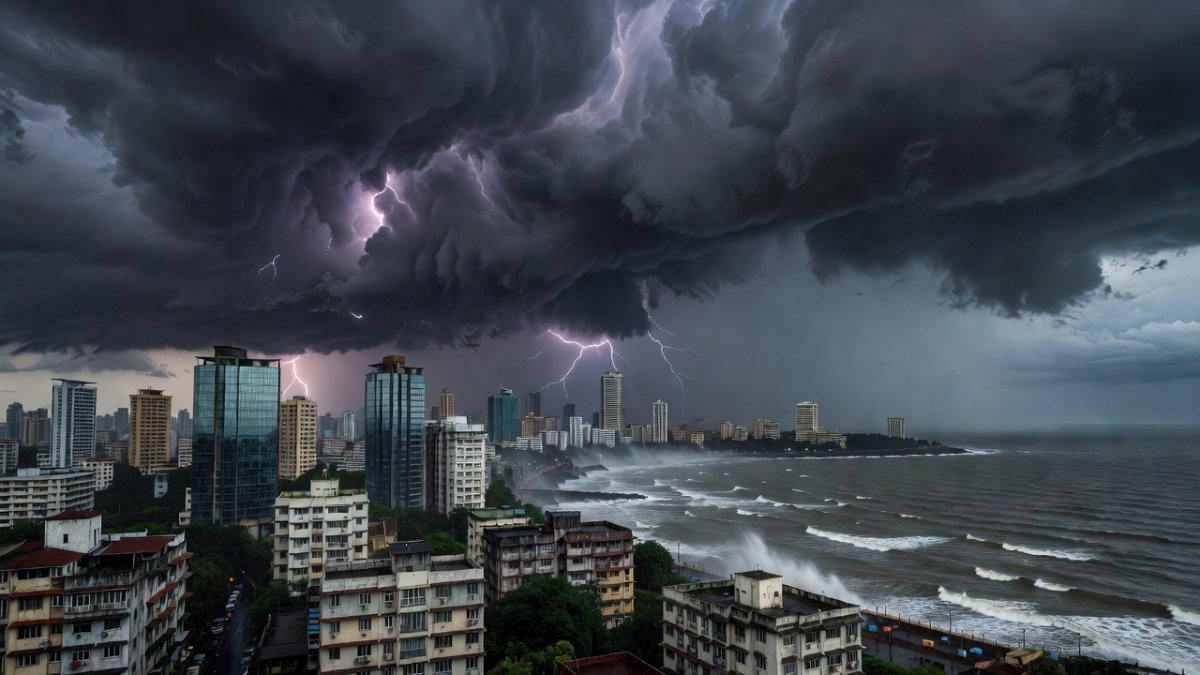
Kerala Receives Delayed Onset With Orange Alerts in Three Districts
The India Meteorological Department confirmed that southwest monsoon 2026 made landfall over Kerala on June 4 — three days behind the traditional June 1 onset date. This aligns with the IMD's pre-season forecast issued in May 2026, which had warned of a probable delay in monsoon onset caused by anomalously warm sea surface temperatures in the eastern Arabian Sea and a weaker-than-expected cross-equatorial flow during the last week of May.
The orange alert now covers Thrissur, Ernakulam, and Idukki districts, where cumulative rainfall is expected to exceed 64.5 mm within a 24-hour window. The Kerala State Disaster Management Authority (KSDMA) confirmed that while no large-scale flooding has been reported as of June 11, the saturated soil conditions in the Western Ghats sections of Idukki district raise the risk of landslides. Authorities have explicitly advised fishermen to avoid venturing into the sea along the Kerala coastline until further notice.
These conditions directly affect agricultural operations in the state's plantation belts. Rubber and spice farmers in Ernakulam district face disrupted tapping and harvesting schedules, while the state's public health machinery is bracing for seasonal increases in vector-borne diseases such as dengue and leptospirosis, which typically peak six to eight weeks after monsoon onset.
Mumbai's Monsoon Delay Puts Urban Drainage Under Scrutiny
Mumbai's monsoon onset has been delayed by two to three days from its normal window, according to IMD regional data. The city's storm-water drainage network — last comprehensively upgraded ahead of the 2025 monsoon season — will face its first major operational test later than anticipated. Low-lying wards in Mumbai Suburban district, including Kurla, Andheri West, and the Mithi river catchment areas, remain the most vulnerable to water-logging once the system advances.
The Brihanmumbai Municipal Corporation (BMC) has confirmed that desilting of major drains is 82 percent complete as of June 10, with priority stretches along the Western Express Highway and the Eastern Express Highway still pending. Urban hydrology experts point out that every day of delay in monsoon onset reduces the buffer required to complete these pending works before the first heavy downpour.

Hyderabad's Pre-Monsoon Showers Expose Infrastructure Gaps
Hyderabad is experiencing a three-day delay in monsoon arrival, accompanied by intense pre-monsoon thundershowers that have already exposed vulnerabilities in the city's storm-water infrastructure. The Greater Hyderabad Municipal Corporation (GHMC) recorded multiple incidents of road subsidence and basement flooding in the last week of May 2026, particularly along the Musi river corridor and in the IT corridor of Gachibowli.
These pre-monsoon events serve as an early warning for what residents can expect once the monsoon fully sets in. Hyderabad's rapid urbanisation over the past decade — with the expansion of the Outer Ring Road corridor and the development of new residential nodes in Kokapet and Narsingi — has outpaced the city's drainage capacity, a challenge that the Telangana state government has acknowledged in its recent Urban Flood Mitigation Project documentation.
Bengaluru Receives On-Time Monsoon Rains, Boosting Agricultural Calendar
In contrast to the delays observed in Mumbai and Hyderabad, Bengaluru received its first monsoon showers precisely on schedule on June 5, 2026. The Karnataka State Natural Disaster Monitoring Centre (KSNDMC) confirmed that the city's reservoirs, including the Cauvery system, stand at 68 percent capacity — providing critical relief to both urban water supply and downstream agricultural districts in Mandya and Mysuru.
This timely arrival supports the kharif sowing calendar for rain-fed crops across southern Karnataka. Farmers in Bengaluru Rural, Ramanagara, and Tumkur districts can proceed with paddy transplantation and ragi sowing without the usual uncertainty associated with delayed monsoon years. The timely onset also reduces pressure on groundwater extraction, which had been running at 15 percent above normal during the pre-monsoon dry spell according to the Central Ground Water Board's June 2026 monitoring data.
Implications for Indian Agriculture and Public Health
The delayed monsoon progress in western and central India carries direct consequences for the 2026 kharif season. Cotton and soybean cultivators in Maharashtra and Telangana now face compressed sowing windows. The IMD's advance warning of delayed onset has allowed state agriculture departments to preposition seeds, fertilizers, and diesel subsidies for irrigation pumps, yet modelling by the Central Research Institute for Dryland Agriculture (CRIDA) suggests that any further westward lag of more than five days could reduce yields by 8 to 12 percent.
Public health departments across Mumbai, Hyderabad, and the orange-alert districts of Kerala are already circulating vector-control advisories. The National Vector Borne Disease Control Programme (NVBDCP) has reported that dengue cases during pre-monsoon months of April-May 2026 were 22 percent higher than the five-year average across Maharashtra and Telangana, indicating that standing water from the monsoon could accelerate transmission cycles. Municipal health officers in Mumbai's F-North Ward and Kerala's Ernakulam district have pre-positioned rapid response teams for leptospirosis prophylaxis.
What IMD's Forecast Means Going Forward
The India Meteorological Department's extended-range forecast suggests that monsoon progression into central and western India will pick up pace during the third week of June, provided the Madden-Julian Oscillation shifts into a favourable phase over the Indian Ocean. The delayed onset does not necessarily predict a below-normal seasonal total — historical data from 2015, 2019, and 2022 show that delayed-onset years can still produce normal or above-normal cumulative rainfall if the monsoon gains momentum in July and August.
However, the compressed timeline for kharif sowing and the heightened risk of urban flooding in Mumbai and Hyderabad demand coordinated preparedness across multiple government agencies — from the Ministry of Agriculture and Farmers' Welfare to the Ministry of Jal Shakti and state-level disaster management authorities.
The Bottom Line
The 2026 monsoon season has begun with a clear message for India's urban planners, agricultural policymakers, and public health officials: climate variability is no longer an abstraction. The three-day onset delay for Kerala, the urban infrastructure stress visible in Hyderabad's pre-monsoon flooding, and Mumbai's race to complete drainage works all point to systemic vulnerabilities that require long-term investment. Bengaluru's timely monsoon arrival offers a template for what functional urban water management can achieve. As the IMD continues to refine its district-level forecasts, state governments must translate this data into actionable flood mitigation, agricultural support, and disease prevention measures — because the monsoon waits for no one.
— By Dr. Raj Patel, Staff Writer
This article was produced with AI-assisted research and editorial support. Reporting is based on sources cited in the article.
What's Your Reaction?
 Like
0
Like
0
 Dislike
0
Dislike
0
 Love
0
Love
0
 Funny
0
Funny
0
 Wow
0
Wow
0
 Sad
0
Sad
0
 Angry
0
Angry
0

India/South Asia Correspondent at Global1.News. Analytical voice with a background in science and health journalism. Based in New Delhi, covering Indian politics, education, healthcare, technology, and policy. Breaks down complex data into clear, actionable reporting.















Comments (0)