
People in Kent told to use water for ‘essential purposes’ only as heatwave causes supply issues
People in Kent Told to Use Water for ‘Essential Purposes’ Only as Heatwave Causes Supply Issues
South East Water has issued an urgent directive to customers across Kent, instructing them to restrict water use to drinking, personal washing and cooking only. The announcement, made late yesterday, comes amid a prolonged heatwave that has placed unprecedented strain on the region’s ageing infrastructure and depleted reservoirs.
The Immediate Directive
The utility confirmed that non-essential activities such as garden watering, car washing and filling paddling pools must cease immediately. “We are experiencing demand levels well above what our network can sustain during this extreme weather,” a company spokesperson stated. Households in Canterbury, Ashford, Folkestone and parts of Medway are among those most affected, with pressure reductions already reported in several districts.
Background to the Crisis
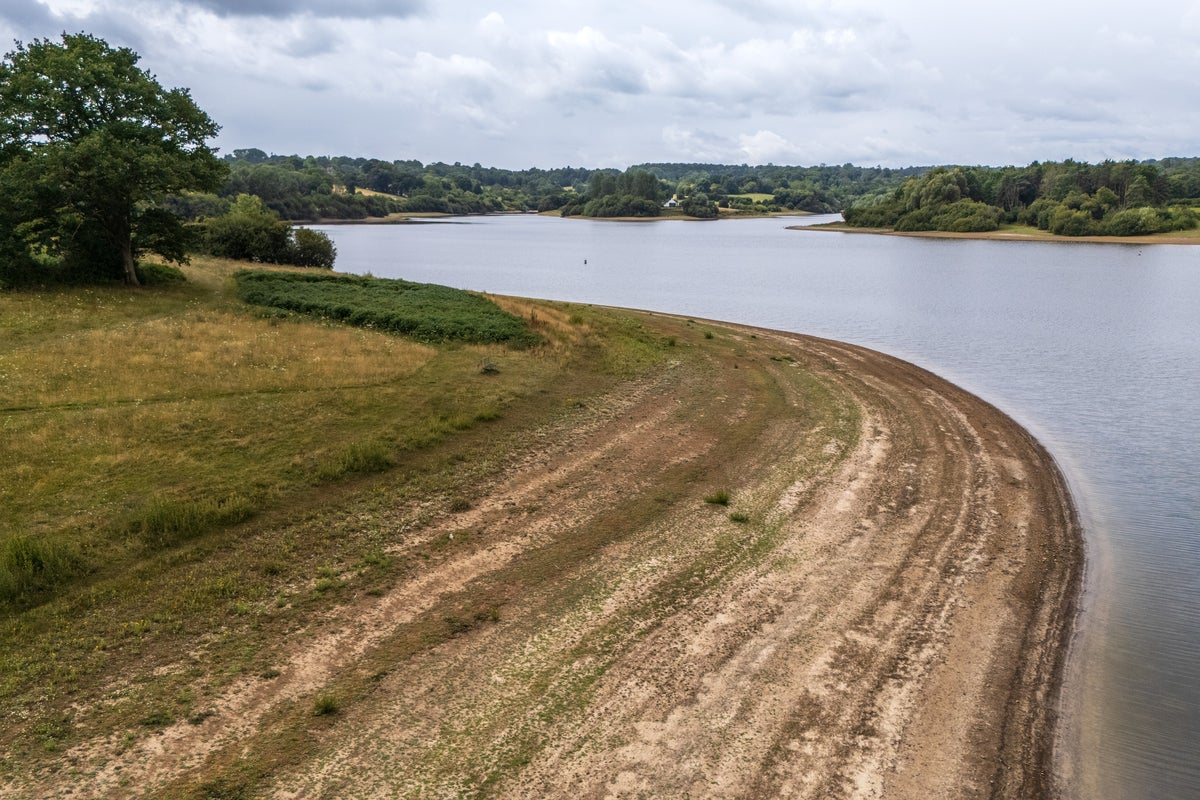
Kent has endured nine consecutive days above 28°C, with temperatures peaking at 33.4°C in Faversham on Tuesday. Such conditions have driven a 35 per cent surge in household consumption compared with the seasonal average. South East Water’s two principal reservoirs, Bewl Water and the expanded reservoir at Ardingly, are now at 62 per cent capacity, their lowest July levels since 2006.
The company’s network, much of which dates to the Victorian era, was not designed for sustained high-volume extraction during heat spikes. Leaks, already running at 18 per cent of supply, have worsened as ground movement from parched soils fractures older mains.
Impact on Households and Businesses
Residents described the restriction as a stark reminder of vulnerability. “We’ve been told not to water the allotment or top up the pond,” said allotment holder Margaret Ellison in Sittingbourne. “It feels like we’re rationing something that should be plentiful.”
Small businesses reliant on water are also feeling the pinch. Car washes in Thanet have closed temporarily, while several garden centres have withdrawn outdoor irrigation systems. Farmers in the Weald, already facing reduced yields from the dry spring, now fear livestock watering may soon be threatened if the situation deteriorates further.
Expert Perspectives on Infrastructure Strain
Dr Helen Carruthers, senior lecturer in water resource management at Imperial College London, argues the episode exposes chronic underinvestment. “We have known for two decades that south-east England faces a structural deficit. Yet leakage reduction targets have been missed repeatedly,” she said. “Demand management must now become as central as new supply infrastructure.”
Environment Agency hydrologist Richard Patel noted that groundwater levels in the North Downs chalk aquifer are 1.8 metres below the July average. “Recharge this winter will need to be exceptional simply to return to normal,” he warned.
Climate Context and Regional Comparisons
The current heatwave forms part of a wider European pattern. France and Germany have issued similar usage warnings, while Spain’s Guadalquivir basin has entered formal drought status. In the UK, the Met Office’s latest attribution study links the intensity of the heat to human-induced climate change, estimating such events are now at least 10 times more likely than in pre-industrial times.
Kent’s predicament mirrors difficulties seen in 2018 and 2022, yet experts observe the recovery window between events has shortened. “We used to treat these as once-in-a-decade shocks,” Dr Carruthers observed. “They are becoming a recurring seasonal pressure.”
Government and Regulatory Response
The Department for Environment, Food and Rural Affairs confirmed it is monitoring the situation closely but has not yet activated national drought measures. Ofwat, the water regulator, has asked South East Water to publish daily demand figures and to accelerate its leakage repair programme. Ministers are understood to be considering temporary relaxation of abstraction licences to allow transfers from less stressed catchments in Sussex.
Practical Advice and Long-Term Adaptation
South East Water has published a tiered usage guide encouraging shorter showers, full loads in dishwashers and the installation of water butts for future non-potable needs. The company is also distributing free aerated shower heads in the worst-affected postcodes.
Longer term, the utility is advancing plans for a new reservoir near Canterbury and a major pipeline from the River Medway. Campaigners, however, insist greater emphasis should be placed on compulsory metering and nature-based solutions such as wetland restoration to improve catchment resilience.
Outlook for the Coming Weeks
Forecasters predict the heatwave will ease slightly by the weekend, yet temperatures are expected to remain above average through August. Should dry conditions persist, further restrictions cannot be ruled out. South East Water has stated it will review the current advice daily and will only lift it once reservoir levels stabilise and demand returns to normal.
The episode underscores a growing national conversation about water security in a warming climate. For Kent residents, the immediate priority remains simple: conserve what remains.
This is Erica Thornton for Global1 News, reporting from London. 🇬🇧
This article was produced with AI-assisted research and editorial support. Reporting is based on sources cited in the article.
What's Your Reaction?
 Like
0
Like
0
 Dislike
0
Dislike
0
 Love
0
Love
0
 Funny
0
Funny
0
 Wow
0
Wow
0
 Sad
0
Sad
0
 Angry
0
Angry
0

US Politics and Policy Correspondent at Global1.News. Based in Washington DC, covering American politics, policy, elections, and the courts. Knows how the system works and tells you what it actually means.















Comments (0)