
Sheinbaum Cancels La Parota Dam for Water in Rural Acapulco
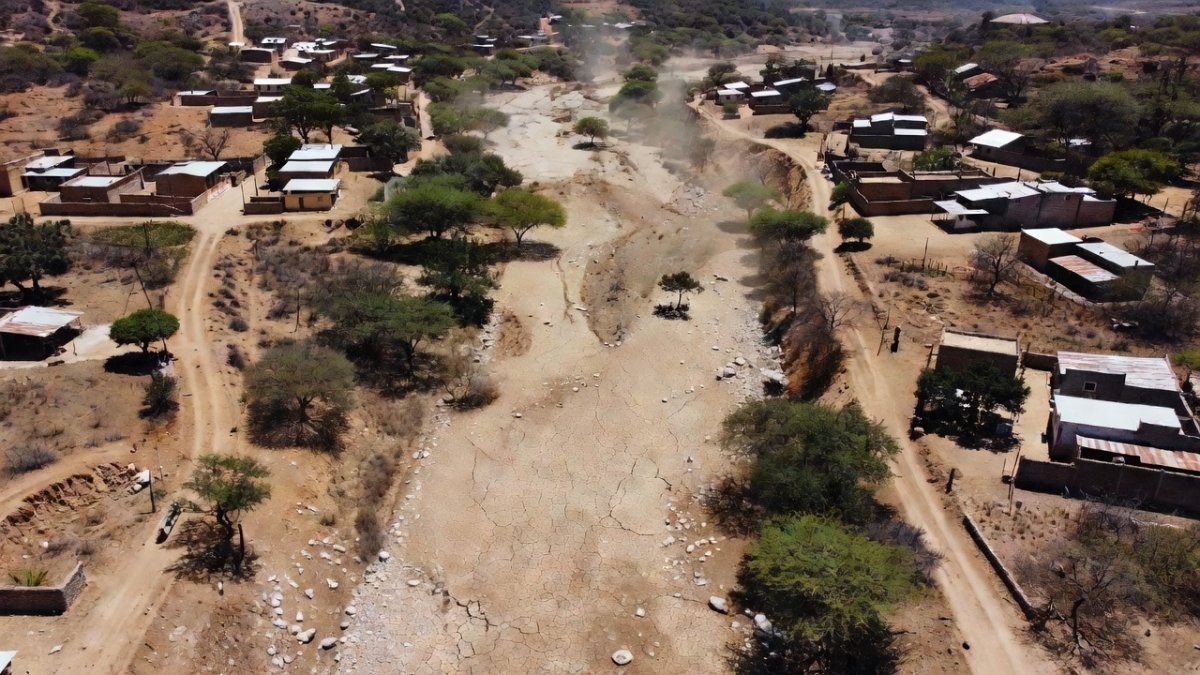
Sheinbaum Ends Two-Decade Dam Project President Claudia Sheinbaum announced on July 27, 2026, that the federal government will not build the La Parota hydroelectric dam. The decision ends a project first proposed more than twenty years ago by the Federal Electricity Commission. Sheinbaum told residents across rural Acapulco that the dam would have flooded between 14,000 and 17,000 hectares and displaced families in five municipalities.
Sheinbaum Ends Two-Decade Dam Project
President Claudia Sheinbaum announced on July 27, 2026, that the federal government will not build the La Parota hydroelectric dam. The decision ends a project first proposed more than twenty years ago by the Federal Electricity Commission. Sheinbaum told residents across rural Acapulco that the dam would have flooded between 14,000 and 17,000 hectares and displaced families in five municipalities.
The La Parota project originated in the early 2000s under the Federal Electricity Commission as part of broader hydroelectric ambitions in Guerrero. Over two decades, it sparked repeated legal challenges from affected ejidos, with courts often citing inadequate consultation and environmental assessments. The Tlachinollan Human Rights Center documented numerous violations, including forced evictions and threats against organizers, framing the struggle as a defense of indigenous and communal land rights. CECOP — the Council of Ejidos and Communities Opposed to the La Parota Dam — emerged as the central voice of resistance, coordinating protests, blockades, and appeals to international bodies. Their activism highlighted how the reservoir would submerge fertile valleys essential for maize, livestock, and fishing, threatening the cultural fabric of riverside settlements.
Despite federal pressure, communities maintained unity through assemblies that rejected compensation offers seen as insufficient for generational losses. The cancellation reflects the Sheinbaum administration’s focus on projects that respect community agreements. Officials cited unresolved land issues with ejidatarios and comuneros as the main reason the dam could not move forward.
Long Opposition by Local Communities
The Council of Ejidos and Communities Opposed to the La Parota Dam, known as CECOP, led resistance for two decades. Ejidatarios and comuneros argued that the reservoir would destroy farmland and water sources vital to their livelihoods. In June 2026, CECOP spokesman Guadalupe Delgado del Carmen stated that communities would continue watching the promised water works.
Tragedy struck the movement in 2025 with the assassination of longtime CECOP leader Marco Antonio Suastegui Munoz, a killing widely viewed as tied to his vocal opposition. Tlachinollan investigators linked the murder to patterns of intimidation against land defenders in Guerrero, prompting calls for federal protection protocols. The loss galvanized younger activists who vowed to sustain the fight through legal and community channels.
Human rights documentation by Tlachinollan revealed systemic issues, including arbitrary detentions and surveillance of CECOP members during key protest periods. These reports underscored the high personal costs borne by families defending ancestral territories against large infrastructure schemes. Despite the loss of Suastegui, new representatives kept the organization active and maintained pressure on federal authorities through legal channels and community assemblies.
Alternative Water Plan Takes Shape
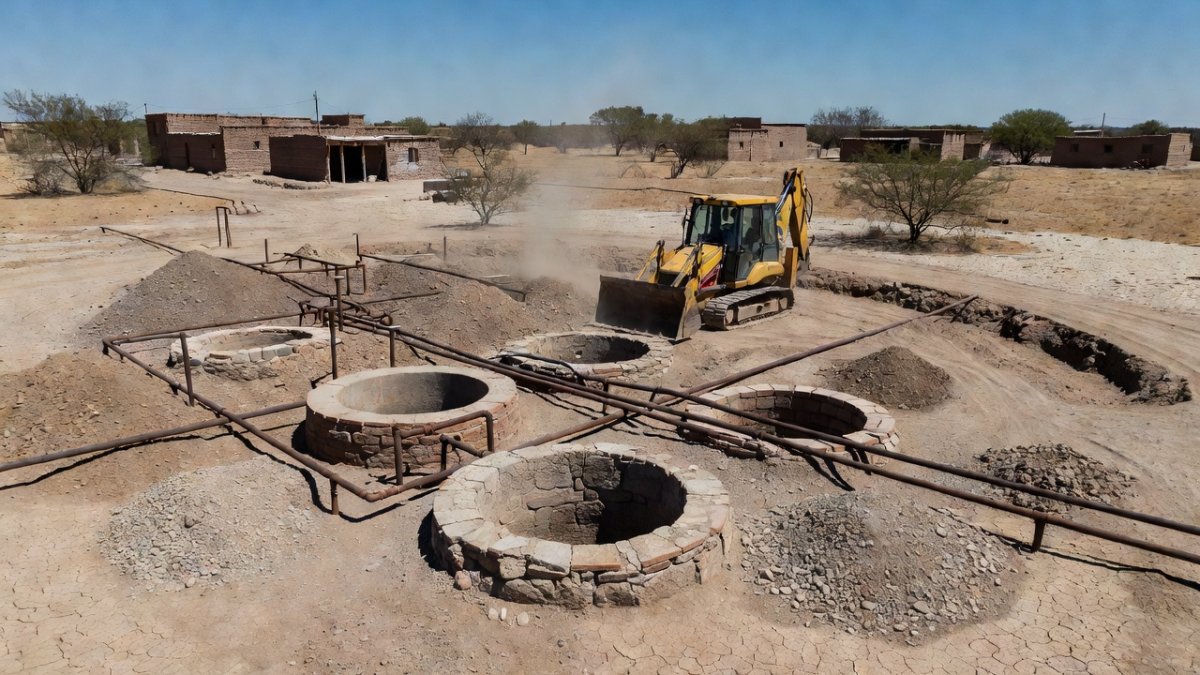
Instead of the dam, the government will build three radial wells along the Papagayo River. The wells sit on tall towers designed to stay above flood levels and draw water through underground collection systems. Additional work includes rehabilitating aqueducts, repairing pumping stations, constructing elevated tanks, and replacing leaking pipes.
Radial wells differ fundamentally from conventional dams by avoiding surface reservoirs altogether. Engineers sink vertical shafts into the riverbed aquifer, then extend horizontal collection pipes that capture water without altering river flow or flooding adjacent lands. This approach requires far less land acquisition and preserves the natural sediment transport that sustains downstream ecosystems.
Crews have already invested 91 million pesos in preparatory infrastructure, including watershed cleanup that removes debris and invasive vegetation choking the Papagayo. Dredging operations deepen channels to boost natural recharge rates, a scale of intervention designed to serve thousands of rural households rather than industrial users.
These measures form part of the January 2025 federal program “Acapulco Transforms with You,” created after Hurricanes Otis and John. Crews have already begun cleaning the Papagayo River and dredging sediment to increase river capacity. Replacement of drinking water lines will start in the Renacimiento neighborhood in upper Acapulco.
Impact on Families in Rural Guerrero
Residents of colonias and ejidos along the Papagayo River worry that new infrastructure will mainly serve beachfront hotels rather than their own homes. Many families still lack reliable water years after the hurricanes damaged their wells and pipes.
Ejidatarios in communities like San Marcos express deep skepticism, recalling past promises where water allocations favored tourism zones over agricultural needs. Comuneros fear the radial wells could be diverted through new pipelines to coastal resorts, leaving inland villages with intermittent supply during dry seasons.
Yet many residents also voice cautious hope. Steady access could enable second crop cycles of beans and sorghum, reducing migration pressures on young people who currently seek work in northern states or the United States. Livestock owners note that reliable troughs would cut losses during prolonged droughts exacerbated by climate shifts.
Campesinos in Juan R. Escudero, San Marcos, and Tecoanapa say steady water access would let them plant second crops and keep livestock healthy. Without it, young people continue leaving for work in other states or across the border.
Acapulco Recovery and Local Economy
Hotel occupancy in Acapulco now stands near 78 percent as the city rebuilds from the Category 5 Hurricane Otis in October 2023 and Hurricane John in 2024. Reliable water supply supports both tourism jobs and the daily needs of families who never left the area.
The 91 million pesos already allocated for rural water lines and tanks directly bolsters local businesses that depend on consistent household demand. Restaurants, small farms supplying hotels, and construction crews all benefit when families remain in place rather than relocating due to water scarcity.
Tourism operators report that post-hurricane recovery hinges on visible infrastructure progress. Elevated tanks and repaired aqueducts reassure visitors that basic services will not collapse during future storms, helping sustain the 78 percent occupancy rate that keeps thousands employed in the service sector.
State and federal crews coordinate the river cleanup while local governments track progress on the radial wells. Officials emphasize that the works remain in early phases and will be phased in over the coming months.
Looking Ahead for Mexican Rural Communities
The shift from large dams to smaller, community-scale water projects marks a change in how the Sheinbaum administration approaches development in southern Mexico. Families in Guerrero hope the new plan delivers water without repeating the land conflicts of the past.
This approach aligns with Fourth Transformation principles that prioritize community consent over top-down megaprojects. Unlike the AMLO-era initiatives such as Dos Bocas refinery or the Tren Maya, which faced criticism for limited local input, the radial wells model emphasizes ejido assemblies and phased implementation to avoid displacement.
Environmentally, avoiding the flooding of 15,000 hectares protects the Papagayo River’s biodiversity, including fish spawning grounds and riparian forests vital after Hurricanes Otis and John. The less invasive wells support Mexico’s climate adaptation goals by maintaining natural flood buffers and reducing vulnerability to extreme weather.
CECOP representatives say they will monitor every stage of construction to ensure rural neighborhoods receive their share of the supply. For now, residents continue daily life in the colonias, waiting for the pumps and tanks that could finally bring steady water to their homes.
By Rosa Martinez, Staff Writer
This article was produced with AI-assisted research and editorial support. Reporting is based on sources cited in the article.
What's Your Reaction?
 Like
0
Like
0
 Dislike
0
Dislike
0
 Love
0
Love
0
 Funny
0
Funny
0
 Wow
0
Wow
0
 Sad
0
Sad
0
 Angry
0
Angry
0

Latin America/Andes Correspondent at Global1.News. Based in Bogota, covering politics, environment, energy, and social movements across the Andean region. Passionate about environmental journalism and communities protecting their land.














Comments (0)