
California residents evacuated due to chemical tank threat return home but fears remain
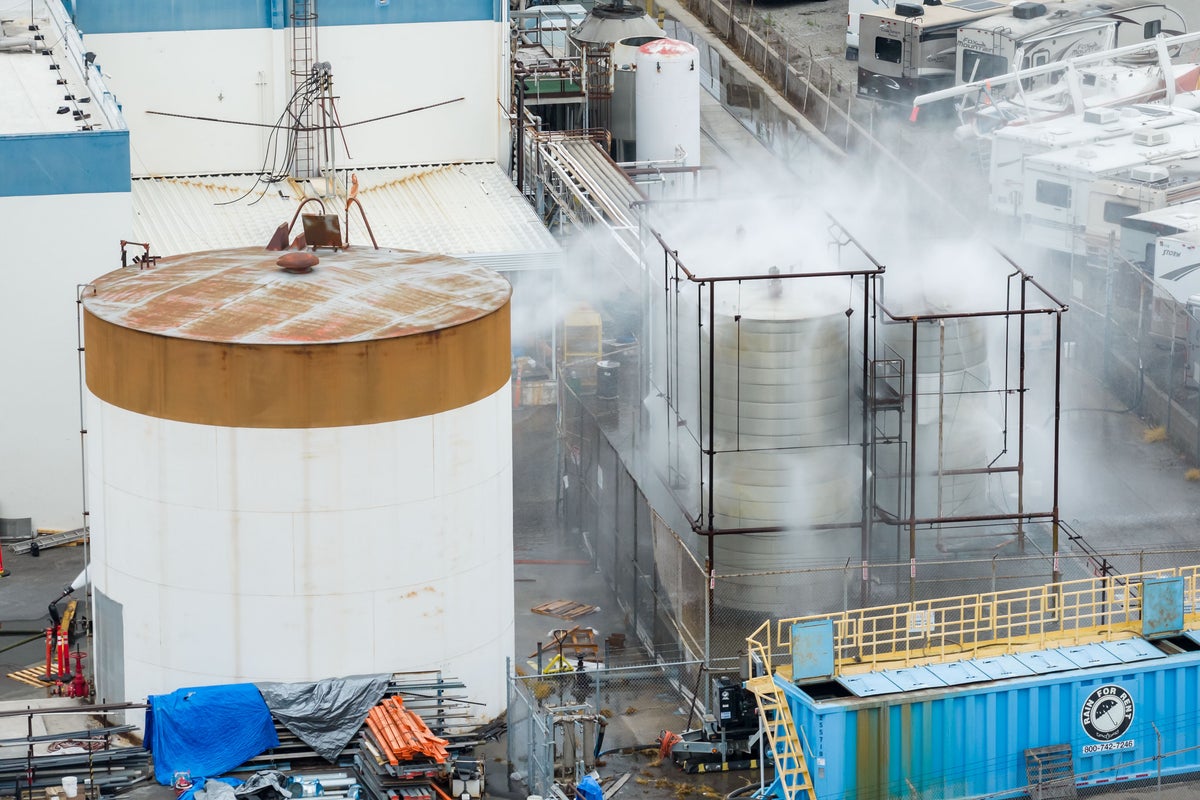
California Residents Return Home After Chemical Tank Overheating Scare, Yet Fears Linger
Category: Breaking News
Residents of several neighbourhoods in southern Los Angeles County began trickling back to their homes yesterday evening after authorities lifted an evacuation order prompted by an overheating chemical storage tank at an industrial facility. The incident, which unfolded over the weekend near the ports of Los Angeles and Long Beach, forced the temporary displacement of more than 2,800 people within a two-mile radius. While officials declared the immediate hazard contained, local anxiety persists over potential long-term health risks and the adequacy of industrial oversight in one of America’s busiest logistics corridors.
The Incident and Rapid Response
The trouble began late on Friday when operators at a chemical distribution terminal detected a sharp temperature rise in a 50,000-gallon tank containing a concentrated solution of sodium hypochlorite, commonly used in water treatment and industrial cleaning. Cooling systems had failed amid an unexpected spike in ambient temperatures, pushing the solution toward a critical decomposition threshold. Fire crews and hazardous-materials teams from the Los Angeles County Fire Department established a perimeter within hours, shutting down nearby rail lines and the 710 freeway for several stretches.
By Saturday morning, evacuation orders extended to parts of Carson, Wilmington and the western edge of Long Beach. Shelters opened at local high schools, though many families opted to stay with relatives further inland. Air-monitoring stations recorded no off-site release of chlorine gas, the principal concern, but wind patterns remained a variable that kept emergency planners on edge through the night.
Return and Lingering Uncertainty
By Sunday afternoon, with temperatures stabilised and redundant cooling restored, the evacuation zone was reduced and then fully rescinded. Residents began unlocking doors and checking on pets left behind. Yet conversations on neighbourhood social-media groups revealed widespread scepticism. One Carson mother of three described the relief of returning tempered by the knowledge that her children’s school lies barely 800 metres from the facility fence line.
Local hospitals reported a modest uptick in residents seeking reassurance over respiratory symptoms, though physicians stressed that no confirmed exposure cases had materialised. Still, the psychological residue of evacuation orders remains palpable in a region already sensitised by previous industrial incidents, including a 2021 hydrogen fluoride leak at a different site that prompted similar but smaller-scale measures.
Regulatory and Environmental Context
California’s industrial safety regime, administered jointly by the state’s Department of Toxic Substances Control and federal OSHA, mandates rigorous temperature-monitoring protocols for reactive chemicals. Investigators are now examining whether maintenance lapses or an undetected sensor fault allowed the sodium hypochlorite tank to approach its 40-degree Celsius danger threshold. Preliminary findings point to a failed secondary chiller unit that had not undergone its scheduled inspection since March.
Environmental advocates have seized on the episode to renew calls for stricter buffer zones around chemical terminals. The ports of Los Angeles and Long Beach together handle roughly 40 per cent of all containerised imports to the United States; the concentration of hazardous-materials storage within such a densely populated coastal plain has long drawn criticism from groups such as the California Environmental Justice Alliance.
Expert Perspectives on Risk and Resilience
Dr Eleanor Ramirez, a chemical engineer at the University of California, Irvine, who specialises in process safety, noted that sodium hypochlorite decomposition can accelerate rapidly once initiated, releasing oxygen and heat in a self-sustaining reaction. “The absence of a release this time is fortunate,” she told Global1 News, “but it underscores how thin the margin can be when cooling redundancy is compromised.”
Community-health researcher Dr Marcus Hale emphasised cumulative exposure concerns. “Even without a major leak, repeated low-level incidents erode trust and may contribute to chronic stress-related conditions in fenceline communities,” he observed. Hale’s team has documented elevated asthma rates in zip codes adjacent to the port complex, though direct causation remains difficult to isolate from diesel particulates and other pollutants.
Industry representatives countered that the swift shutdown demonstrated effective safeguards. A spokesperson for the Western States Petroleum Association highlighted the facility’s voluntary participation in the Responsible Care programme, which requires third-party audits every three years. Critics, however, point out that participation remains voluntary and that enforcement funding for state inspectors has declined in real terms over the past decade.
Broader Implications for Infrastructure and Policy
The episode arrives amid heightened scrutiny of supply-chain vulnerabilities. With global shipping patterns still adjusting after pandemic disruptions, chemical throughput at the ports has risen sharply. Analysts warn that ageing infrastructure, coupled with increasingly extreme heat events linked to climate change, could multiply the frequency of such near-misses.
State legislators in Sacramento have already signalled intent to introduce new requirements for real-time public data feeds from chemical-facility sensors. Assembly member Luz Rivas, whose district includes parts of the San Fernando Valley but who has championed port-adjacent communities, described the incident as “a wake-up call that cannot be ignored.” Federal lawmakers, meanwhile, are reviewing whether existing risk-management plans under the EPA’s Clean Air Act sufficiently address temperature excursions rather than solely focusing on containment failures.
Insurance markets may also respond. Several carriers have begun inserting heat-stress clauses into industrial policies along the Pacific coast, potentially raising premiums for facilities that cannot demonstrate robust thermal-management redundancies. Local property values, already under pressure from rising flood-insurance costs, could face additional headwinds if perceptions of chemical risk intensify.
Community Voices and the Path Forward
Back in Carson, a hastily convened town-hall meeting on Monday evening drew standing-room attendance. Residents pressed county supervisors for clearer evacuation maps and improved multilingual alert systems; many noted that Spanish- and Tagalog-speaking households received delayed notifications. Officials pledged to publish a full incident report within 30 days and to conduct unannounced inspections of all high-hazard tanks in the South Bay within the next quarter.
For now, life has resumed its rhythm: children returned to classrooms, commuters navigated reopened freeway ramps, and the chemical terminal resumed limited operations under enhanced monitoring. Yet the episode has crystallised a broader debate over how modern industrial society balances economic necessity with the right of nearby residents to feel secure in their own homes. In southern California’s vast logistics landscape, that balance remains delicate and, for many, still unconvincing.
This is Erica Thornton for Global1 News, reporting from London. 🇬🇧
This article was produced with AI-assisted research and editorial support. Reporting is based on sources cited in the article.
What's Your Reaction?
 Like
0
Like
0
 Dislike
0
Dislike
0
 Love
0
Love
0
 Funny
0
Funny
0
 Wow
0
Wow
0
 Sad
0
Sad
0
 Angry
0
Angry
0

US Politics and Policy Correspondent at Global1.News. Based in Washington DC, covering American politics, policy, elections, and the courts. Knows how the system works and tells you what it actually means.













Comments (0)