
Parts of Western Siberia and the Ural Mountains Issue First Missile Alert Since 2022 Invasion
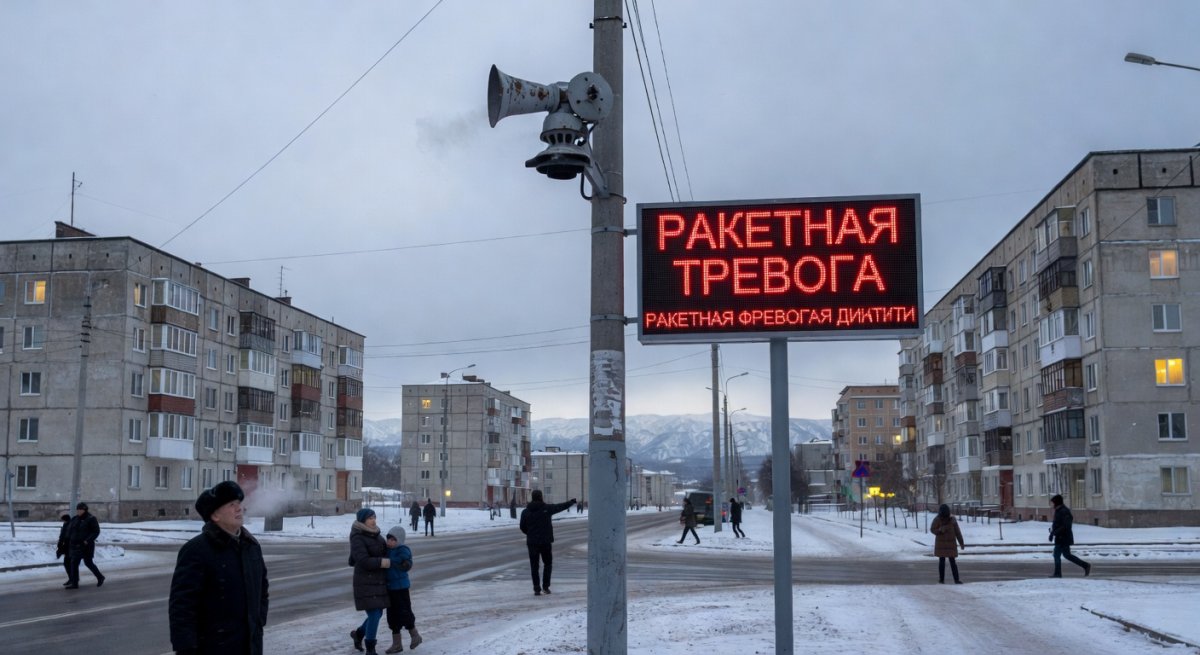
On Friday afternoon, all six regions of Russia’s Ural Federal District activated their first missile-alert systems since the 2022 full-scale invasion of Ukraine. Regional officials confirmed the alerts covered the entire district, marking an unprecedented extension of wartime precautions into an area previously considered well beyond the conflict’s reach. This development immediately raises questions about the evolving geography of the war and the security of Russia’s industrial and resource heartland.
The alerts were issued without reported strikes or immediate follow-up incidents, yet their mere activation carries symbolic weight. For more than three years, such warnings had been confined largely to border oblasts near Ukraine. Their sudden appearance across the Urals signals that Russian authorities now view even distant rear areas as potentially vulnerable.
Scope of the Alerts and Official Response
Regional administrations in the Ural Federal District coordinated the simultaneous issuance of alerts through local emergency-notification channels. The measure applied uniformly across the district’s six constituent regions, indicating a centralized decision rather than isolated local action. Officials described the step as precautionary, without disclosing specific intelligence that prompted it. The absence of accompanying details about the nature of any detected threat underscores the limited public information released by authorities. Residents were instructed to remain indoors and avoid open areas until the alert was lifted later the same day. No casualties or material damage have been reported in connection with the event.Historical Context of Air-Raid Warnings Inside Russia
Since February 2022, missile and drone alerts inside Russia have followed a clear geographic pattern. Warnings were initially concentrated in regions directly adjacent to Ukraine, such as Belgorod and Kursk. Over time, occasional alerts reached deeper into central Russia, yet the Urals remained untouched until now. The district’s location, roughly 1,500 kilometers from the nearest Ukrainian-controlled territory, had placed it outside the practical range of most Ukrainian strike systems employed earlier in the conflict. This record of relative immunity shaped public expectations in the Urals. Local populations had grown accustomed to viewing the region as a strategic rear, hosting defense plants, energy infrastructure, and transportation hubs without direct exposure to hostilities. Friday’s alerts therefore represent a psychological threshold crossed for millions of residents.Strategic and Industrial Significance of the Ural District
The Ural Federal District forms a critical pillar of Russia’s defense-industrial base. Major production facilities for armored vehicles, munitions, and aerospace components are concentrated there, alongside extensive energy extraction and processing operations. Any perceived threat to these assets carries immediate implications for Russia’s ability to sustain prolonged military operations. Placing the entire district under alert also highlights logistical challenges. The vast distances involved complicate rapid civil-defense responses and strain communication networks that were not designed for frequent wartime use. Friday’s episode tested these systems at scale for the first time since 2022.Implications for Russia’s Rear-Area Security Calculus
The activation of alerts so far from the front lines suggests Russian planners are reassessing assumptions about Ukrainian long-range strike capabilities. Even without confirmed attacks, the decision to issue warnings publicly indicates heightened sensitivity to potential over-the-horizon threats. This shift could reflect improved Ukrainian drone ranges, new Western-supplied systems, or simply a more conservative risk threshold adopted by Russian authorities. Broader consequences may include accelerated dispersal of critical production lines and increased investment in air-defense coverage for the interior. Such measures would further strain already stretched military resources and budgets.What Happens Next
Authorities have given no indication of whether similar alerts will become routine in the Urals or whether Friday’s event was an isolated precaution. Continued monitoring of Ukrainian strike patterns and Russian air-defense deployments will determine whether the district’s previous sense of insulation has permanently eroded. Observers will also watch for any corresponding adjustments in civil-defense protocols or industrial relocation plans.By Irina Volkov, Staff Writer
This article was produced with AI-assisted research and editorial support. Reporting is based on sources cited in the article.
What's Your Reaction?
 Like
0
Like
0
 Dislike
0
Dislike
0
 Love
0
Love
0
 Funny
0
Funny
0
 Wow
0
Wow
0
 Sad
0
Sad
0
 Angry
0
Angry
0

Irina Volkov
Russia/Eastern Europe Correspondent at Global1.News. Covering Russian politics, energy, security, and the shifting dynamics of the post-Soviet space. Provides clear-eyed analysis on one of the world's most opaque regions.















Comments (0)