
Guadalajara Water Crisis Spurs Citizen Monitoring Network
**Meta Description:** Residents in Guadalajara colonias join forces with ITESO scientists to test tap water as Jalisco plans a 20-billion-peso overhaul of the aging system, demanding transparency from SIAPA. Neighbors Take Charge in Guadalajara's Water Struggle Across the bustling colonias of Guadalajara, families are coming together in a way that feels deeply rooted in Mexican
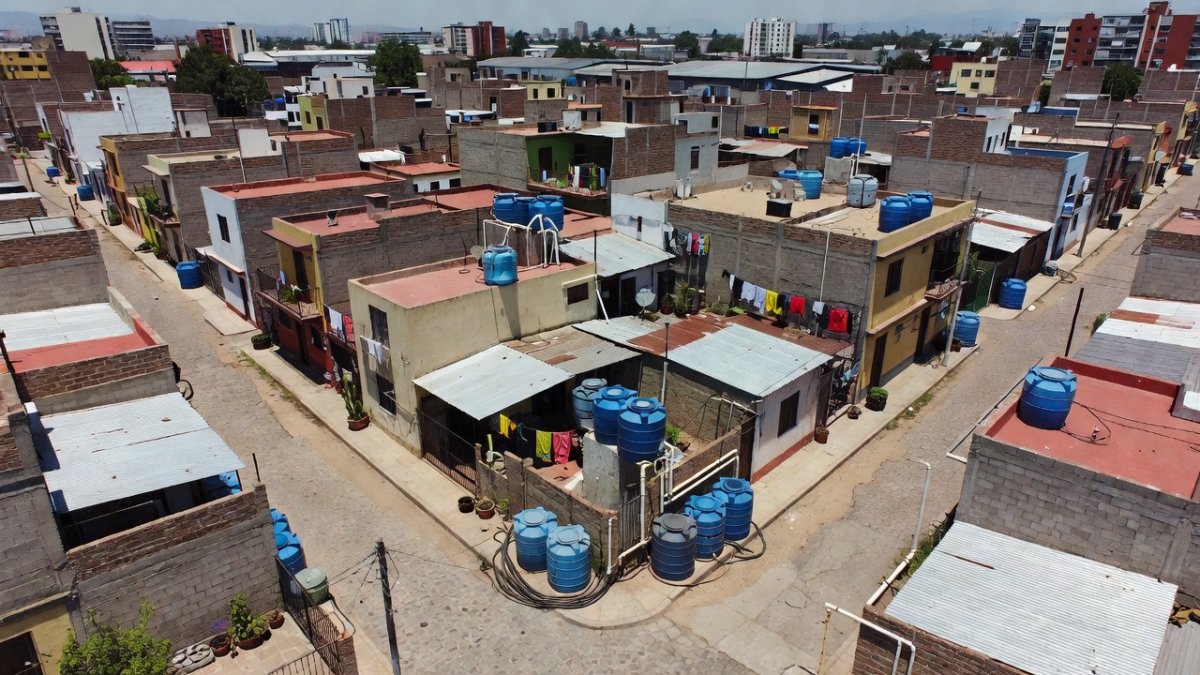
Neighbors Take Charge in Guadalajara's Water Struggle
Across the bustling colonias of Guadalajara, families are coming together in a way that feels deeply rooted in Mexican community spirit. As the Jalisco government prepares plans to spend more than 20 billion pesos on overhauling the city's aging water system, everyday residents have started their own monitoring efforts. Working hand in hand with university scientists from ITESO, neighborhood volunteers have collected hundreds of water samples and documented health concerns that affect real households.
This citizen-led network brings warmth and determination to a challenge that touches kitchens, schools, and small businesses throughout Mexico's second-largest metropolitan area. People are no longer waiting passively; they are organizing to protect their families and neighbors.
From March to Movement: The "Mas Agua, Menos Mundial" Protest
Four months ago, hundreds of residents marched through the city center under the banner "Mas Agua, Menos Mundial." They carried bottles filled with murky tap water, a simple yet powerful symbol of daily struggles. Children joined in, smashing a piñata shaped like the face of Jalisco Gov. Pablo Lemus, while chants called for accountability from SIAPA, the metropolitan water utility.
The energy of that day echoed through the streets like a traditional tianguis gathering, where voices rise together for the common good. What began as a protest has grown into sustained campaigns known as "The SIAPA We Want" and "Corrupt SIAPA," showing how Mexican communities turn moments of frustration into organized action.
Building a Network of Water Monitors
The movement soon evolved into practical work on the ground. Neighborhood volunteers received training to become water monitors, collecting hundreds of samples across the Guadalajara metropolitan area. This effort receives support from the Mexican Institute for Community Development (IMDEC) and academics at ITESO University, creating a bridge between scientific knowledge and lived experience in the colonias.
Volunteers like those in rural communities and urban neighborhoods alike have walked block by block, checking what comes out of the taps that serve families, teachers, and small business owners. Their work highlights the strength of comunitario traditions, where neighbors look out for one another without waiting for distant offices to act.
Findings from 184 Samples Across 90 Neighborhoods
The coalition's latest report examines 184 samples gathered in 90 neighborhoods between March and June. According to the citizen coalition, 93 percent of samples showed no detectable residual chlorine, the disinfectant meant to protect against microbial contamination. Community monitoring also detected lead, mercury, nitrates, fluorides, and coliform bacteria in some samples.
These results come directly from the volunteers' careful collection and analysis alongside ITESO scientists. For families in the colonias, the numbers represent more than data; they reflect worries about children's health and the daily routines that depend on safe water for cooking and cleaning.
Delivering a Collective Complaint with 1,500 Signatures
Representatives of more than 30 neighborhood organizations, universities, environmental groups, and labor unions recently delivered a technical report and petition to Jalisco's health protection agency COPRISJAL, as well as federal health authorities and Mexico's National Institute of Public Health. The collective complaint carries more than 1,500 signatures, a clear show of united voices.
Diego Rico of the Metropolitan Neighborhood Water Monitoring Network explained the reason behind the effort: "We began these monitoring efforts because there is no official information from SIAPA, there is no transparency and we do not know what the water we are receiving contains." His words capture the quiet resolve found in many Mexican households facing similar uncertainties.
Looking Ahead with Community Strength
As Jalisco moves forward with its infrastructure plans, the citizen network continues to grow. The focus remains on transparency and independent testing that can serve all residents, from those in bustling urban colonias to families in surrounding areas. This story of Guadalajara's water reflects broader themes across Mexico, where communities draw on cultural ties and mutual support to seek better outcomes for everyone.
By staying connected through IMDEC, ITESO, and local groups, these volunteers remind us that real change often starts at the neighborhood level. Their work offers hope that clearer information and safer water can reach every taquería, school, and home that depends on it.
Tags: Guadalajara water crisis, SIAPA, citizen monitoring, Jalisco, ITESO, COPRISJAL, Pablo Lemus, IMDEC, water quality, colonias
By Rosa Martinez, Staff Writer
This article was produced with AI-assisted research and editorial support. Reporting is based on sources cited in the article.
What's Your Reaction?
 Like
0
Like
0
 Dislike
0
Dislike
0
 Love
0
Love
0
 Funny
0
Funny
0
 Wow
0
Wow
0
 Sad
0
Sad
0
 Angry
0
Angry
0
Latin America/Andes Correspondent at Global1.News. Based in Bogota, covering politics, environment, energy, and social movements across the Andean region. Passionate about environmental journalism and communities protecting their land.












Comments (0)