
OpenAI Files for IPO: AI Giant Goes to Wall Street
OpenAI Goes to Wall Street: The AI Giant Just Filed for Its IPO — And This Changes Everything Folks, if you thought the AI boom was big before, buckle up. Because OpenAI just did what everyone speculated about for years but nobody knew when it would actually happen. On June 8, 2026, the company behind ChatGPT, GPT-5, and arguably the most transformative technology of our lifeti
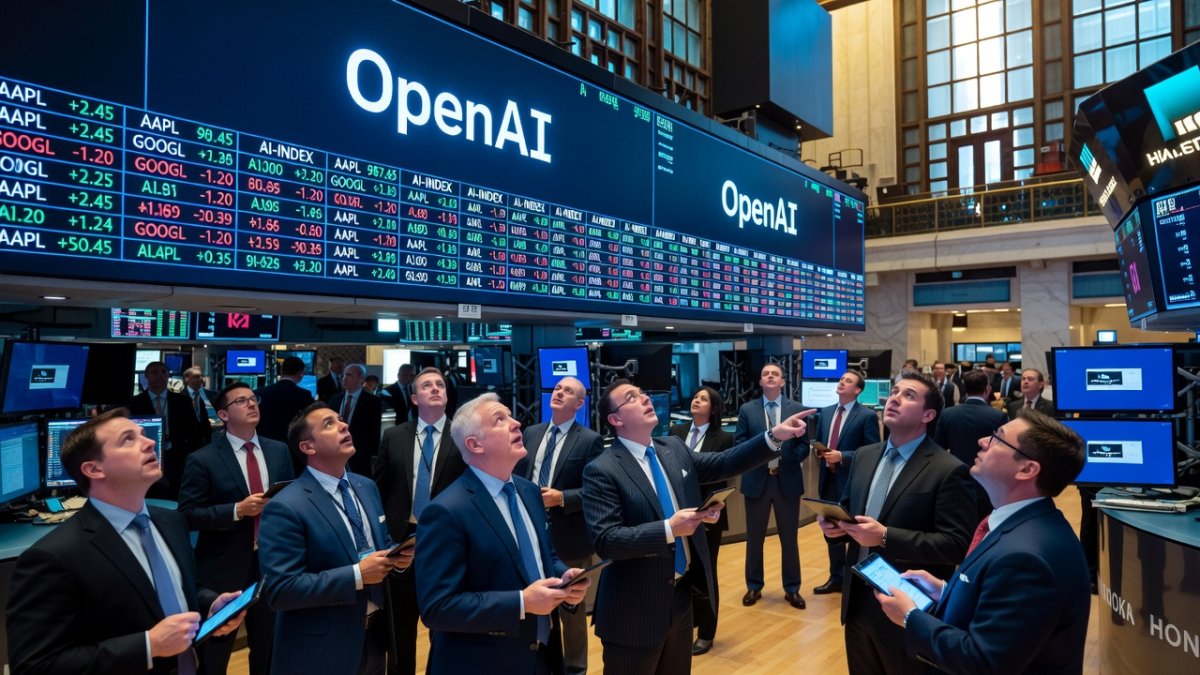
OpenAI Goes to Wall Street: The AI Giant Just Filed for Its IPO — And This Changes Everything
Folks, if you thought the AI boom was big before, buckle up. Because OpenAI just did what everyone speculated about for years but nobody knew when it would actually happen. On June 8, 2026, the company behind ChatGPT, GPT-5, and arguably the most transformative technology of our lifetime quietly — well, not so quietly — filed a confidential S-1 registration statement with the U.S. Securities and Exchange Commission.
That's right. OpenAI is going public.
And the timing? Perfectly chaotic. Because this comes just one week after Anthropic — OpenAI's biggest rival — filed for its own IPO on June 1. We are officially watching the biggest AI IPO race in history unfold in real time, and Wall Street is absolutely salivating.
What Actually Happened: The Confidential Filing
Let me cut through the jargon for you. A "confidential S-1" means OpenAI has submitted its financials, business model, risk factors, and growth strategy to the SEC — but those details aren't public yet. The JOBS Act allows companies with under $1 billion in revenue to file confidentially, which lets them test the waters without the scrutiny of public disclosure until they're ready.
Here's what we do know. According to Bloomberg and CNBC, OpenAI is working with Goldman Sachs and Morgan Stanley as the lead underwriters for the offering. That's the A-team of Wall Street banking. When the two most powerful investment banks in the world sign on to take your company public, you know this isn't a small play.
The company confirmed the filing in a brief blog post — unusually sparse for an organization that typically loves to hype its announcements. But the message was clear: OpenAI is moving toward a public listing, and CEO Sam Altman has told staff he expects the IPO to happen within the next year, with a potential fall 2026 debut on the table.
The Numbers Are Staggering
Let's talk about the valuation question, because that's what everybody really wants to know.
OpenAI raised $110 billion in February 2026 at a $730 billion valuation — with participation from Amazon ($50 billion), SoftBank ($30 billion), and Nvidia ($30 billion). Yes, you read that right. A single fundraising round larger than the GDP of most countries.
But the IPO valuation is expected to be even higher. Reuters reported as early as October 2025 that the company was laying groundwork for a valuation of up to $1 trillion. More recent estimates from analysts put the number closer to $850 billion to $900 billion. Either way, we're talking about potentially the largest technology IPO in history.
And the revenue numbers tell the story of why. OpenAI crossed $12 billion in annualized recurring revenue by mid-2025 — a milestone that took enterprise software giants like Salesforce and Oracle more than a decade to reach. By 2026, that number is tracking toward $15 to $18 billion. ChatGPT alone has over 400 million monthly active users. GPT-5 enterprise API usage has exploded across healthcare, finance, legal, and education sectors.
Let me put this in perspective. OpenAI was a nonprofit research lab in 2015. Ten years later, it's on track to be one of the most valuable public companies on Earth. That's not a growth story — that's a meteor.
Why Now? The AI Arms Race Is Driving Everything
You might be asking: Why go public now? OpenAI has access to private capital, massive revenue, and arguably the most dominant product in AI. Why deal with the headache of quarterly earnings calls and shareholder pressure?
Simple: the AI infrastructure race is insanely expensive, and it's only getting more expensive.
Training the next generation of AI models — GPT-6, multimodal reasoning systems, AI agents that can autonomously execute complex tasks — requires data centers that cost tens of billions of dollars to build. We're talking about facilities that consume as much electricity as small cities. Nvidia's next-generation chips alone cost tens of thousands of dollars each, and you need tens of thousands of them.
Altman has been clear about this. He's described the path forward as requiring "hundreds of billions" in infrastructure investment. An IPO gives OpenAI access to public market capital — pension funds, mutual funds, retail investors — to fund that buildout without diluting existing shareholders through endless private rounds.
And then there's the competitive pressure. Anthropic filed its S-1 on June 1. If Anthropic hits the public market first, it locks in institutional investors, attention, and capital that OpenAI would rather capture itself. The IPO race isn't just about money — it's about signaling who the market leader is.
What This Means for Investors
For retail investors — regular people like you and me — an OpenAI IPO is one of the most anticipated events in market history. The last time a tech company generated this level of pre-IPO hype was... well, maybe never. Not Facebook. Not Uber. Not even Google in 2004.
OpenAI is different because AI isn't a product category — it's becoming the infrastructure layer for the entire economy. Companies don't "use AI" anymore; they run on it. OpenAI's API powers everything from medical diagnostics in rural hospitals to code generation at Fortune 500 companies to personalized tutoring platforms used by millions of students.
But here's where I put on my skeptical hat for a second, because you know I always do.
The valuation is enormous — potentially $1 trillion for a company that was losing money for years and only recently became profitable on an operational basis. The competitive landscape is fierce: Anthropic, Google DeepMind, Meta's open-source Llama models, and a growing ecosystem of specialized AI startups are all fighting for the same customers. And the regulatory environment is uncertain — governments around the world are still figuring out how to regulate AI, and new rules could impact OpenAI's business model.
Add to that the unusual corporate structure. OpenAI started as a nonprofit, created a capped-profit arm (OpenAI LP), and has been restructuring behind the scenes to make the IPO viable. The details of that restructuring — how much control the nonprofit retains, how profits are distributed — will be critical for investors to understand before buying in.
The Bigger Picture: AI Capitalism Comes of Age
Here's what I think is the real story here, folks. And I mean this.
The OpenAI IPO isn't just a financial event. It's the moment AI transitions from a research project to a fully mature industrial sector. When OpenAI lists on the Nasdaq — likely under a ticker everyone will remember — it marks the point where artificial intelligence stops being a speculative curiosity and starts being a fundamental pillar of the global economy, just like oil, banking, and telecommunications before it.
Think about what that means. The same technology that writes your emails, generates your code, answers your customer service questions, and helps your doctor diagnose diseases is now going to be traded on the public markets alongside Apple, Microsoft, and Amazon. AI is becoming not just a tool you use — but an asset you can own.
And the race is on. Anthropic filed first. OpenAI filed second. SpaceX — yes, Elon Musk's SpaceX — is reportedly preparing for its own $1.75 trillion IPO, with COO Gwynne Shotwell in the spotlight as the steady hand preparing the company for its public debut. The 2026 IPO pipeline is absolutely stacked with AI and tech giants, and the market is going to have to absorb all of them.
Some analysts are already warning about "AI IPO fatigue" — too many big tech offerings crowding each other out. But here's my take: when the companies are this fundamentally transformative, the market finds room. The question isn't whether investors want OpenAI stock. It's what price they're willing to pay.
What Happens Next
The confidential filing means we won't see OpenAI's full financial prospectus for a few weeks or even months. The SEC will review the S-1, request changes, and then OpenAI will publicly file an amended version before setting a price range and launching the roadshow.
Timeline expectations: late summer to fall 2026 is the most likely window for the actual IPO. If Anthropic pushes hard for an earlier listing, that could accelerate OpenAI's timeline.
Underwriters Goldman Sachs and Morgan Stanley will begin reaching out to institutional investors — pension funds, hedge funds, asset managers — in the coming weeks to gauge demand. If the early indications are anything like the private market enthusiasm, this IPO will be significantly oversubscribed.
What You Can Do Right Now
If you're fired up about this — and I know some of you are — here's what matters:
First, don't fall for pre-IPO hype scams. There are already fake "OpenAI pre-IPO shares" being peddled online. OpenAI is not offering shares to retail investors before the listing. If someone is selling you "pre-IPO OpenAI stock," it's a scam. Period.
Second, follow the SEC filings. Once OpenAI files its public S-1/A amendment, the full financial details will be available on sec.gov. Read them. Don't just buy the hype — understand the business.
Third, watch the AI IPO pipeline. Anthropic, OpenAI, and potentially SpaceX are all heading to market. The order they list, the valuations they command, and the post-IPO performance will tell us a lot about how investors really value AI companies.
And fourth — stay vigilant. Because whenever there's this much money, this much hype, and this much transformative potential in one place, there's always somebody trying to take advantage of the chaos.
I'm Jessica Ali, and this is Global 1 News. We're watching this story every step of the way — because the future of AI isn't being built in a lab anymore. It's being built on Wall Street. And you deserve to know exactly what that means for your money, your career, and your world.
Stay sharp out there, folks. The machines are coming to the market.
By Jessica Ali, Staff Writer
This article was produced with AI-assisted research and editorial support. Reporting is based on sources cited in the article.
What's Your Reaction?
 Like
0
Like
0
 Dislike
0
Dislike
0
 Love
0
Love
0
 Funny
0
Funny
0
 Wow
0
Wow
0
 Sad
0
Sad
0
 Angry
0
Angry
0

Editor-in-Chief at Global1.News. Atlanta-based journalist who cuts through the BS and tells it like it is. Lead anchor, host, and the voice you hear when the spin stops and the truth starts.














Comments (0)