
Korat Community Mourns Princess Bajrakitiyabha, Plans Pilgrimage to Bangkok to Pay Respects
Her Royal Highness Princess Bajrakitiyabha Narendiradebyavati passed away at 7:48pm on Thursday, June 11, 2026, at the age of 47, the Royal Household Bureau announced on Friday morning. In Nakhon Ratchasima province, known locally as Korat, residents broke down in tears upon hearing the news, embracing portraits of the princess and preparing to travel to Bangkok to pay their fi
Her Royal Highness Princess Bajrakitiyabha Narendiradebyavati passed away at 7:48pm on Thursday, June 11, 2026, at the age of 47, the Royal Household Bureau announced on Friday morning. In Nakhon Ratchasima province, known locally as Korat, residents broke down in tears upon hearing the news, embracing portraits of the princess and preparing to travel to Bangkok to pay their final respects at the Grand Palace. This passing marks the most significant royal loss in Thailand since the death of King Bhumibol Adulyadej in 2016, and communities across the nation are responding with a profound sense of shared grief.
Korat Community Mourns Princess Bajrakitiyabha, Plans Pilgrimage to Bangkok to Pay Final Respects
Bangkok, Thailand — The Royal Household Bureau announced on the morning of June 12, 2026, that Her Royal Highness Princess Bajrakitiyabha Narendiradebyavati had passed away the previous evening at 7:48pm on June 11, 2026, at the age of 47. This announcement reached communities across Thailand on a Friday morning, prompting immediate gatherings at temples and community centres from Bangkok to the provinces. The bureau confirmed that His Majesty King Maha Vajiralongkorn had ordered funeral rites conducted with the highest royal honours, reflecting the princess's position as the eldest child of the King.
Residents in every region learned that her body now lies in state at Phiman Rattaya Hall within the Grand Palace, a site of deep historical significance for Thai royal ceremonies. The timing of the announcement, coming just hours after her passing, allowed government agencies and local authorities to begin coordinating memorial activities without delay. This structured response mirrors the careful protocols followed during previous royal transitions, ensuring that public expressions of grief remain orderly and respectful.
The news spread rapidly through official channels and community networks, reaching rural villages where the princess had once visited in person. Many Thais recalled her role in connecting the central government with distant communities, a bridge that now feels especially meaningful during this period of mourning. The announcement itself carried the weight of finality, yet it also invited the nation to honour her memory through traditional Buddhist practices of reflection and merit-making.
Her Service as Thailand's Ambassador and Legal Scholar
Princess Bajrakitiyabha served as Thailand's ambassador to Austria from 2012 to 2014, representing the kingdom in diplomatic circles in Vienna while advancing bilateral ties with European nations. During this period she also earned a PhD in law from Sukhothai Thammathirat Open University, an institution known for providing accessible education to working professionals across Thailand. Her academic achievement underscored a lifelong commitment to legal knowledge that she later applied in public service.
She worked as a prosecutor in the Ministry of Justice, where she focused on justice reform initiatives that aimed to improve access to fair legal processes for ordinary citizens. Colleagues in the ministry noted her particular attention to cases involving women and youth, areas where she advocated for stronger protections and rehabilitation programmes. These efforts aligned with broader national goals of strengthening the rule of law while respecting Thai cultural values of compassion and community harmony.

Her charitable projects extended these principles into practical action, reaching rural villages across all regions of Thailand through targeted support for education, health, and women's empowerment. In the Isaan region especially, her initiatives helped local groups establish community learning centres that continue to operate today. The combination of diplomatic experience, legal scholarship, and grassroots work created a distinctive legacy that many Thais now reflect upon with gratitude.
The Extended Health Struggle Beginning in December 2022
Princess Bajrakitiyabha was admitted to King Chulalongkorn Memorial Hospital on December 15, 2022, after losing consciousness due to a heart condition that required immediate and sustained medical attention. The hospital, one of Thailand's leading medical institutions located in central Bangkok, provided intensive care under the supervision of royal physicians for more than three years. Throughout this period, updates from the Royal Household Bureau kept the public informed while respecting the family's privacy.
On May 21, 2026, her condition deteriorated when an abdominal infection stemming from colon inflammation led to complications including low blood pressure, irregular heartbeat, and abnormal blood clotting. Medical teams at the hospital responded with round-the-clock interventions, yet the cumulative effects of these issues proved insurmountable despite every available treatment. The princess passed away peacefully in the presence of her medical team on June 11, 2026.
This prolonged health journey touched many Thais who had followed reports of her resilience with quiet hope. The fact that she remained under care at King Chulalongkorn Memorial Hospital for such an extended time highlighted both the severity of her condition and the dedication of the medical staff. In Buddhist tradition, such endurance is often viewed as an example of acceptance and inner strength, qualities that now form part of the national remembrance.
Grief and Remembrance in Nakhon Ratchasima Province
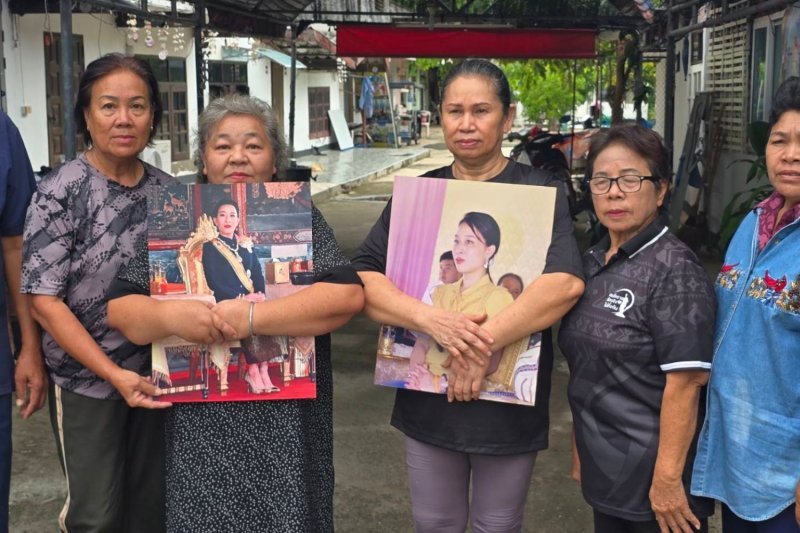
Residents of Nakhon Ratchasima, also known as Korat, broke down in tears upon hearing the news on Friday morning, with many embracing portraits of the princess at local community centres. Elderly resident Supaporn, aged 72, expressed the shared sentiment when she said she had always hoped the princess would recover and felt deep gratitude for everything she had done for the country and its people. Her words echoed across the province as families gathered to share memories of the princess's visits to the Isaan region.
Groups in Nakhon Ratchasima began preparing immediately to travel to Bangkok to pay respects at the Grand Palace, a journey that many viewed as both a duty and an act of personal devotion. Local temples opened their doors for candle-lighting ceremonies and flower offerings, providing spaces where residents could perform merit-making rituals in keeping with Thai Buddhist practice. These gatherings brought together people of all ages, from schoolchildren to village elders, in a collective expression of loss.
The princess's connection to the Isaan region ran deep through her charitable work, which had supported rural development projects in provinces including Nakhon Ratchasima. Residents recalled specific initiatives that improved access to education and healthcare in remote villages, efforts that demonstrated her understanding of the challenges faced by communities far from the capital. This regional bond now intensifies the sense of personal loss felt across the northeast.
National Memorials and the Comparison to 2016
This passing marks the most significant royal loss in Thailand since the death of King Bhumibol Adulyadej in 2016, prompting communities in every province to organize memorials at temples and public spaces. Government statements confirmed that entertainment and sporting events may continue, allowing the nation to balance mourning with the practical needs of daily life. The measured approach reflects lessons learned from previous periods of national grief while honouring the princess's own emphasis on community resilience.
Temples across Thailand have become central gathering points where citizens light candles and offer flowers in quiet tribute. These acts of devotion connect individual sorrow to the broader Buddhist understanding of impermanence, offering comfort through shared ritual. Provincial authorities have worked with the Ministry of Culture to ensure that memorial activities remain accessible to all, including those in remote areas who cannot travel to Bangkok.
The princess's ability to bridge Bangkok and rural communities gives this national response a distinctive character. Her work in justice reform and women's rights continues to influence ongoing programmes, providing a living legacy that many officials and community leaders now cite as motivation to carry her initiatives forward. The scale of public mourning across provinces demonstrates how deeply her contributions reached into everyday Thai life.
Funeral Arrangements and Enduring Cultural Significance
His Majesty the King has directed that funeral rites for Princess Bajrakitiyabha proceed with the highest royal honours, beginning with her body lying in state at Phiman Rattaya Hall in the Grand Palace. This location holds particular importance in Thai royal tradition, serving as the site for ceremonies that allow the public to pay final respects over an extended period. Preparations involve coordination between the Royal Household Bureau and relevant government agencies to manage the expected flow of mourners.
The arrangements also include traditional Buddhist elements such as chanting sessions and merit-making ceremonies that will continue for the prescribed duration. These rites provide a structured framework for the nation to process its grief while affirming the continuity of Thai cultural and spiritual practices. Many families in rural areas plan to participate through local temple events that mirror the central observances in Bangkok.
Her legacy as a figure who combined royal duty with direct engagement in rural communities ensures that discussions of her contributions will continue long after the formal mourning period. The princess's work in the Ministry of Justice and her diplomatic service abroad remain reference points for current efforts in legal reform and international relations. In this way, the national response extends beyond immediate sorrow to a renewed appreciation of her role in strengthening connections between Thailand's diverse regions.
By Ann Srisawat, Staff Writer
This article was produced with AI-assisted research and editorial support. Reporting is based on sources cited in the article.
What's Your Reaction?
 Like
0
Like
0
 Dislike
0
Dislike
0
 Love
0
Love
0
 Funny
0
Funny
0
 Wow
0
Wow
0
 Sad
0
Sad
0
 Angry
0
Angry
0

Southeast Asia Correspondent at Global1.News. Based in Bangkok, covering Thai and Southeast Asian politics, economy, technology, and culture. Deep regional perspective on one of the world's most dynamic regions.














Comments (0)