
Oh Se-hoon's Fifth Term Victory Signals Resilience in Seoul's Conservative Stronghold
Oh Se-hoon's Fifth Term Victory Signals Resilience in Seoul's Conservative Stronghold Electoral Mechanics of the Narrow Win The June 3 contest unfolded with unexpected volatility, as Oh Se-hoon overcame a substantial overnight deficit to secure victory by roughly 60,000 votes, equivalent to a one percent margin. Exit polls had uniformly projected defeat for the incumbent, yet l
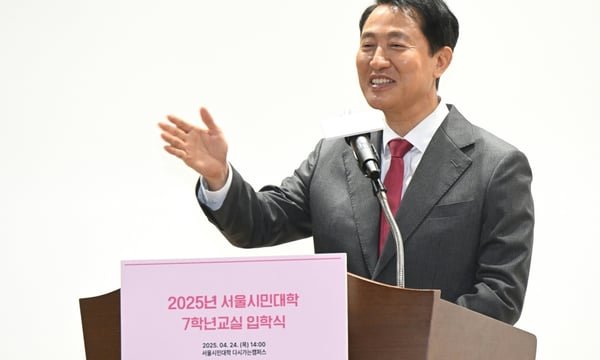
Electoral Mechanics of the Narrow Win
The June 3 contest unfolded with unexpected volatility, as Oh Se-hoon overcame a substantial overnight deficit to secure victory by roughly 60,000 votes, equivalent to a one percent margin. Exit polls had uniformly projected defeat for the incumbent, yet late-counted ballots from key districts shifted the outcome. This razor-thin result underscores the fragmented nature of Seoul's electorate, where turnout patterns in affluent Gangnam districts proved decisive against broader progressive mobilization across the city.
Seoul's municipal voting system, characterized by single-member wards and proportional representation elements, amplified small swings in voter preference. Oh's campaign benefited from concentrated support in areas with higher property ownership, where concerns over housing policy and urban development outweighed national dissatisfaction with conservative governance. The narrow margin highlights how localized administrative achievements can offset national headwinds in Korea's capital, where daily commutes and real estate pressures shape voter priorities more than abstract ideological appeals.
Comparative turnout data from previous cycles reveal that low participation in progressive strongholds, such as parts of Gwanak and Nowon, contributed to the reversal. This dynamic illustrates the mechanics of urban electoral geography in Korea, where Seoul functions as a microcosm of national polarization yet retains pockets of conservative continuity rooted in economic self-interest rather than partisan loyalty.
Oh's Political Biography and Independent Streak
Oh Se-hoon's trajectory from environmental lawyer in the 1990s to political entrant in 2000 as a legislator for the conservative party reflects a deliberate pivot toward urban policy expertise. Elected mayor in 2006 at age 45, he became the youngest individual to hold the post, implementing initiatives that culminated in UNESCO's 2010 designation of Seoul as a Creative City of Design. These early accomplishments established a record centered on cultural infrastructure rather than traditional security-focused conservatism.
The 2010-2011 crisis over the free school lunch ordinance exposed Oh's willingness to stake personal political capital on principle. His decision to call a referendum and pledge resignation, followed by an emotional August 2011 press conference involving public kowtowing, marked a departure from conventional party discipline. Although the referendum failed due to low turnout and prompted his resignation, this episode cemented an image of autonomy within conservative ranks that persisted through subsequent setbacks.
Following a hiatus from 2012 to 2016 that included advisory roles on urban policy in Peru and Rwanda, Oh endured repeated electoral defeats in 2016, 2019, and 2020. His 2021 by-election triumph, amid the aftermath of Park Won-soon's suicide and associated scandals, demonstrated an ability to capitalize on voter fatigue with the Democratic Party without full alignment to party machinery. This nonconsecutive path to a fifth term distinguishes Oh as a figure whose career emphasizes personal branding over institutional embedding.
Strategic Distancing from PPP
Oh's pre-election rhetoric explicitly conditioned his candidacy on reforms within the People Power Party, including demands to sever connections with Yoon Suk-yeol following the failed self-coup attempt. By labeling himself a rational conservative and criticizing the party's insufficient evolution, Oh positioned his campaign as independent of national conservative failures. This maneuver appealed to moderate Seoul voters wary of association with recent governance crises.
The strategy resonated in a context where the Democratic Party maintains a commanding National Assembly majority under the Lee Jae-myung administration. Oh framed his re-election bid as essential to preserving Seoul as the final conservative bastion, thereby elevating municipal governance above partisan loyalty. Such positioning allowed him to attract crossover support from independents disillusioned by both major parties' extremes.
Historical patterns in Korean conservatism show that leaders who cultivate distance from party orthodoxy often sustain longer careers in local office. Oh's approach mirrors earlier instances where Seoul mayors leveraged administrative visibility to transcend national scandals, reinforcing the capital's role as a testing ground for pragmatic rather than ideological conservatism.
Seoul's Governance and Administrative Record
During his prior terms, Oh prioritized urban design and international branding, evidenced by the 2010 UNESCO recognition that enhanced Seoul's global profile. These efforts translated into tangible improvements in public spaces and cultural amenities that continue to influence daily life for residents navigating the city's dense infrastructure. His focus on creative industries aligned with chaebol-driven economic strategies, fostering partnerships that integrated design principles into commercial development.
Criticism arising from the October 2022 Itaewon tragedy, during which Oh was abroad in Europe, tested his administrative accountability. Public censure highlighted vulnerabilities in crisis management for a mayor overseeing a metropolis of nearly ten million. Yet subsequent recovery measures, including enhanced safety protocols, demonstrated an adaptive governance style that prioritized incremental reform over symbolic gestures.
Oh's record also encompasses inter-Korean dimensions through Seoul's role in hosting cultural exchanges and economic forums that indirectly support engagement policies. In daily urban contexts, initiatives around housing affordability and transportation have addressed resident concerns amid rising living costs, positioning the mayoralty as a direct interface between national policy and local realities.
Implications for Inter-Korean Policy
Seoul's municipal authority intersects with inter-Korean relations through cultural diplomacy and border-region coordination, areas where Oh has historically emphasized pragmatic engagement over confrontation. His re-election sustains a counter-narrative to the Lee Jae-myung administration's Assembly dominance, potentially moderating national approaches by showcasing successful local models of cross-border economic cooperation.
Regional security dynamics benefit from Seoul's status as a hub for think-tank activity and public discourse on unification scenarios. Oh's independent streak may encourage selective collaboration with progressive national initiatives on humanitarian projects, reflecting Korea's broader pattern where local leaders influence the tone of inter-Korean dialogue without formal authority over foreign policy.
Daily life in Seoul incorporates these implications through tourism initiatives and educational programs that normalize engagement with the North. The mayor's continued tenure thus provides institutional continuity for civil society actors advocating measured steps toward reconciliation, counterbalancing Assembly-level polarization.
Conservative Renewal Prospects
Oh's victory offers a template for conservative renewal by demonstrating that electoral success can derive from administrative competence rather than alignment with discredited national figures. His self-description as a rational conservative signals an attempt to redefine the party's image away from recent authoritarian associations toward technocratic governance focused on urban challenges.
Within the broader conservative ecosystem, Seoul's example may inspire similar distancing strategies among regional leaders seeking to rebuild public trust. The narrow margin, however, cautions against overinterpreting this as a mandate for wholesale party transformation, instead highlighting the need for sustained local-level innovation to regain national ground.
Chaebol dynamics further shape renewal prospects, as Oh's emphasis on design and creative sectors aligns with corporate interests in Seoul's economy. This convergence could facilitate policy experimentation that revitalizes conservative appeal among younger professionals, provided it addresses everyday concerns like employment stability amid economic transitions.
Seoul as Counterweight to National Government
With the Democratic Party holding a massive National Assembly majority, Seoul under Oh functions as an institutional counterweight that preserves conservative influence at the municipal level. This arrangement echoes Korea's historical federal-like tensions, where the capital's resources and visibility enable resistance to centralized policy directions on issues ranging from taxation to development regulations.
Administrative autonomy in areas such as public transportation and environmental planning allows Seoul to implement measures that diverge from national priorities, affecting residents' daily commutes and quality of life. Oh's framing of the city as the last conservative bastion amplifies this role, positioning municipal decisions as symbolic affirmations of alternative governance philosophies.
Inter-Korean and regional security considerations gain nuance through this dynamic, as Seoul's policies on cultural events and economic forums can subtly influence public sentiment without challenging Assembly authority directly. The result is a layered political landscape where local victories sustain ideological diversity amid national consolidation.
Comparative Analysis with Previous Conservative Leaders in Korea
Unlike earlier conservative presidents whose tenures were defined by national security doctrines and chaebol alliances, Oh Se-hoon has cultivated a profile anchored in municipal innovation and selective autonomy. His nonconsecutive terms parallel the career arcs of certain regional governors who survived national party upheavals by emphasizing local deliverables over ideological purity.
Comparisons with predecessors reveal Oh's distinctive navigation of media scrutiny, from the 2011 referendum episode to post-Itaewon accountability pressures. Where prior leaders often relied on party machinery for rehabilitation, Oh's repeated comebacks underscore the growing importance of personal networks and international advisory experience in sustaining conservative relevance.
In the context of inter-Korean relations and urban daily life, Oh's approach diverges from the more centralized strategies of past figures by integrating Seoul-specific initiatives that foster incremental engagement. This evolution suggests a maturation within Korean conservatism, where mayoral leadership increasingly serves as a laboratory for adapting traditional values to contemporary metropolitan realities.
By Prof. David Park, Staff WriterThis article was produced with AI-assisted research and editorial support. Reporting is based on sources cited in the article.
What's Your Reaction?
 Like
0
Like
0
 Dislike
0
Dislike
0
 Love
0
Love
0
 Funny
0
Funny
0
 Wow
0
Wow
0
 Sad
0
Sad
0
 Angry
0
Angry
0

East Asia/Technology Correspondent at Global1.News. Seoul-based voice covering Korean politics, technology, business, and culture. Analyzes how technology and geopolitics intersect across East Asia.














Comments (0)