
NASA's $30 Million Swift Boost Mission Races Against Solar-Driven Orbital Decay to Rescue 22-Year Gamma-Ray Observatory
NASA has committed $30 million to the Swift Boost mission launching June 30, 2026, to intercept the Neil Gehrels Swift Observatory at 360 km altitude before it reaches the 300 km point of no return by October 2026. The observatory, operational since its November 2004 launch, now faces a 90 percent probability of uncontrolled reentry by late 2026 after instruments were shut down
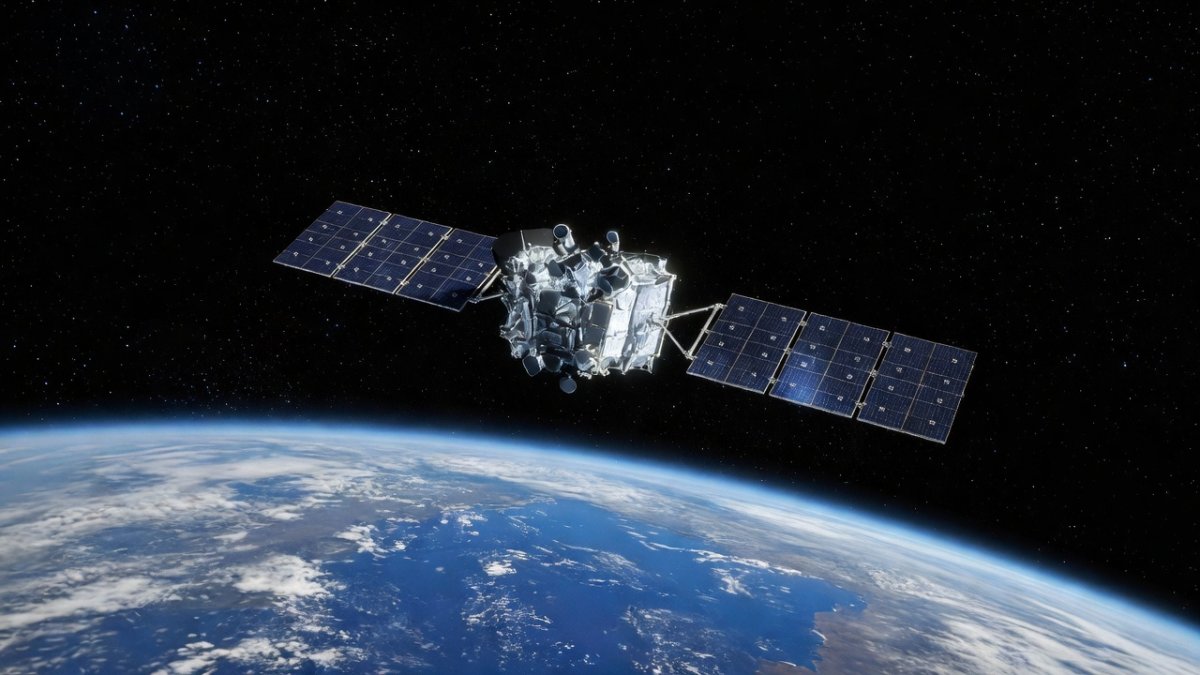
NASA has committed $30 million to the Swift Boost mission launching June 30, 2026, to intercept the Neil Gehrels Swift Observatory at 360 km altitude before it reaches the 300 km point of no return by October 2026. The observatory, operational since its November 2004 launch, now faces a 90 percent probability of uncontrolled reentry by late 2026 after instruments were shut down in February 2026. This emergency intervention marks the first U.S. attempt at orbital capture and reboost.
NASA's $30 Million Swift Boost Mission Races Against Solar-Driven Orbital Decay to Rescue 22-Year Gamma-Ray Observatory
New Delhi – June 29, 2026 — NASA launches the Swift Boost rescue craft Link on June 30, 2026, from Kwajalein Atoll aboard a Pegasus XL rocket to capture and raise the Neil Gehrels Swift Observatory from its current 360 km altitude back to 600 km. The Arizona startup Katalyst Space Technologies secured the $30 million contract in September 2025 and completed the nine-month development cycle for the refrigerator-sized Link spacecraft. If successful, Swift will resume gamma-ray burst observations by September 2026 after 22 years of continuous data collection that included the 2022 detection of the Brightest Of All Time burst.
The Swift Telescope's 22-Year Legacy
The Neil Gehrels Swift Observatory launched in November 2004 and operated for 22 years at an initial 600 km altitude, detecting thousands of gamma-ray bursts that reshaped understanding of the early universe. In 2022 the spacecraft recorded the BOAT event, the brightest gamma-ray burst ever observed, providing data that confirmed extreme relativistic jet physics. Scientific instruments remained active until February 2026, when NASA shut them down to conserve power as atmospheric drag lowered the orbit to 360 km, or 224 miles. This record of sustained high-energy astrophysics directly parallels India's AstroSat mission, launched from Sriharikota in Andhra Pradesh in 2015, which continues multi-wavelength observations from the same orbital regime and trains Indian astronomers at institutions in Bengaluru and Pune.
A $30 Million Rescue: How Swift Boost Works
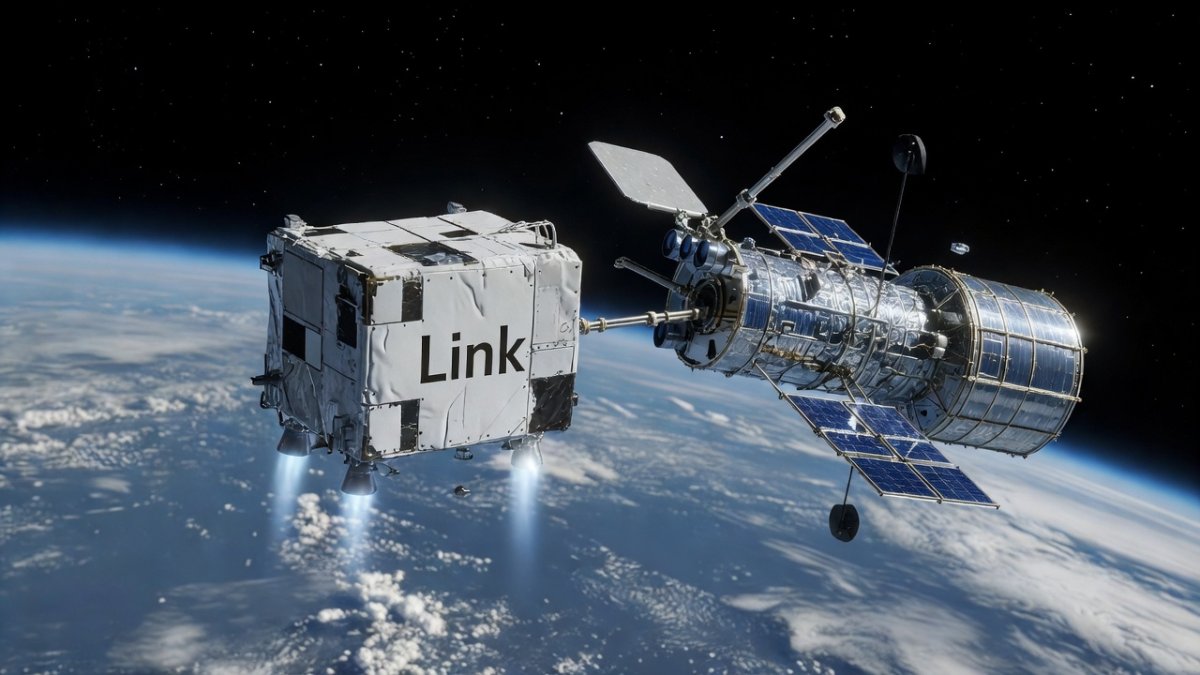
Katalyst Space Technologies won the $30 million contract in September 2025 and built the Link spacecraft to the size of a kitchen refrigerator for a June 30, 2026, launch on Pegasus XL from Kwajalein Atoll. The vehicle requires approximately one month to rendezvous and capture Swift, followed by two months of propulsion burns to restore the observatory to its original 600 km altitude. NASA Astrophysics Division director Shawn Domagal-Goldman stated that Swift was not just any spacecraft, underscoring the mission's technical precision. The timeline allows Swift to resume operations by September 2026. India's ISRO has studied similar docking technologies at its Bengaluru headquarters for the upcoming Gaganyaan humanspace flight program, with potential applications at the Sriharikota launch complex for future servicing missions.
The Atmospheric Drag Crisis
Intense solar activity since 2024 increased atmospheric density and accelerated orbital decay, dropping Swift from 600 km to 360 km. NASA projects the point of no return at 300 km by October 2026, after which 90 percent of uncontrolled reentry scenarios occur by late 2026. The February 2026 instrument shutdown ended all observations, eliminating Swift's contribution to gamma-ray burst alerts. This solar-driven decay pattern affects all low-Earth orbit assets and has prompted ISRO to adjust orbital maintenance schedules for satellites operated from the Satish Dhawan Space Centre in Sriharikota, Andhra Pradesh, as part of India's broader space situational awareness investments.
What This Means for India's Space Programme
India's space sector, centered in Bengaluru and coordinated through ISRO, can draw direct engineering lessons from the Swift Boost timeline and capture sequence for its own satellite servicing roadmap. The $30 million cost and nine-month development cycle highlight efficient public-private partnerships that mirror India's recent expansion of contracts with private firms in Hyderabad and Chennai for small satellite buses. Successful reboost to 600 km would extend Swift's life by years, demonstrating economic value that aligns with India's National Space Policy goals of maximizing returns on assets launched from Sriharikota. Gaganyaan crewed missions planned for 2026-2027 will test similar rendezvous capabilities, positioning Indian engineers to adapt Link-style docking mechanisms for the proposed Bharatiya Space Station. These developments strengthen India's position in the global space economy while supporting astronomy programs at universities in Mumbai and Kolkata that rely on international data streams like those Swift previously supplied.
Global Precedent and Future Implications
China performed the only prior orbital capture and reboost mission in 2022, establishing a benchmark that the United States now seeks to match with the June 30, 2026, Pegasus XL launch. The Swift Boost effort tests autonomous capture technology at scale and sets cost and schedule standards for future servicing operations. Policy analysts in New Delhi note that such missions reduce space debris risks and support sustainable orbital operations, directly informing India's participation in international space traffic management discussions. Extended Swift operations through September 2026 and beyond would maintain continuous gamma-ray monitoring that complements data from Indian ground-based telescopes in the Himalayas and Ladakh, reinforcing collaborative science frameworks between ISRO and global agencies.
The Bottom Line
The $30 million Swift Boost mission launching June 30, 2026, from Kwajalein Atoll represents a calculated investment to preserve 22 years of gamma-ray astronomy and avert a 90 percent reentry probability by late 2026. By restoring the observatory to 600 km altitude within three months, NASA and Katalyst Space Technologies establish a repeatable model for satellite life extension. For India, the mission supplies concrete technical and policy references that accelerate ISRO's orbital servicing capabilities from Bengaluru and Sriharikota, ensuring the nation's growing space infrastructure remains competitive and sustainable amid rising solar activity and orbital congestion.
— By Dr. Raj Patel, Staff Writer
This article was produced with AI-assisted research and editorial support. Reporting is based on sources cited in the article.
What's Your Reaction?
 Like
0
Like
0
 Dislike
0
Dislike
0
 Love
0
Love
0
 Funny
0
Funny
0
 Wow
0
Wow
0
 Sad
0
Sad
0
 Angry
0
Angry
0

Caribbean Correspondent at Global1.News. Based in Port of Spain, Trinidad, covering Caribbean politics, economy, energy, climate, and culture. Amplifying the voices and stories of the Caribbean region.















Comments (0)