
Music festival Zipangu offers a glimpse of J-pop’s future beyond anime
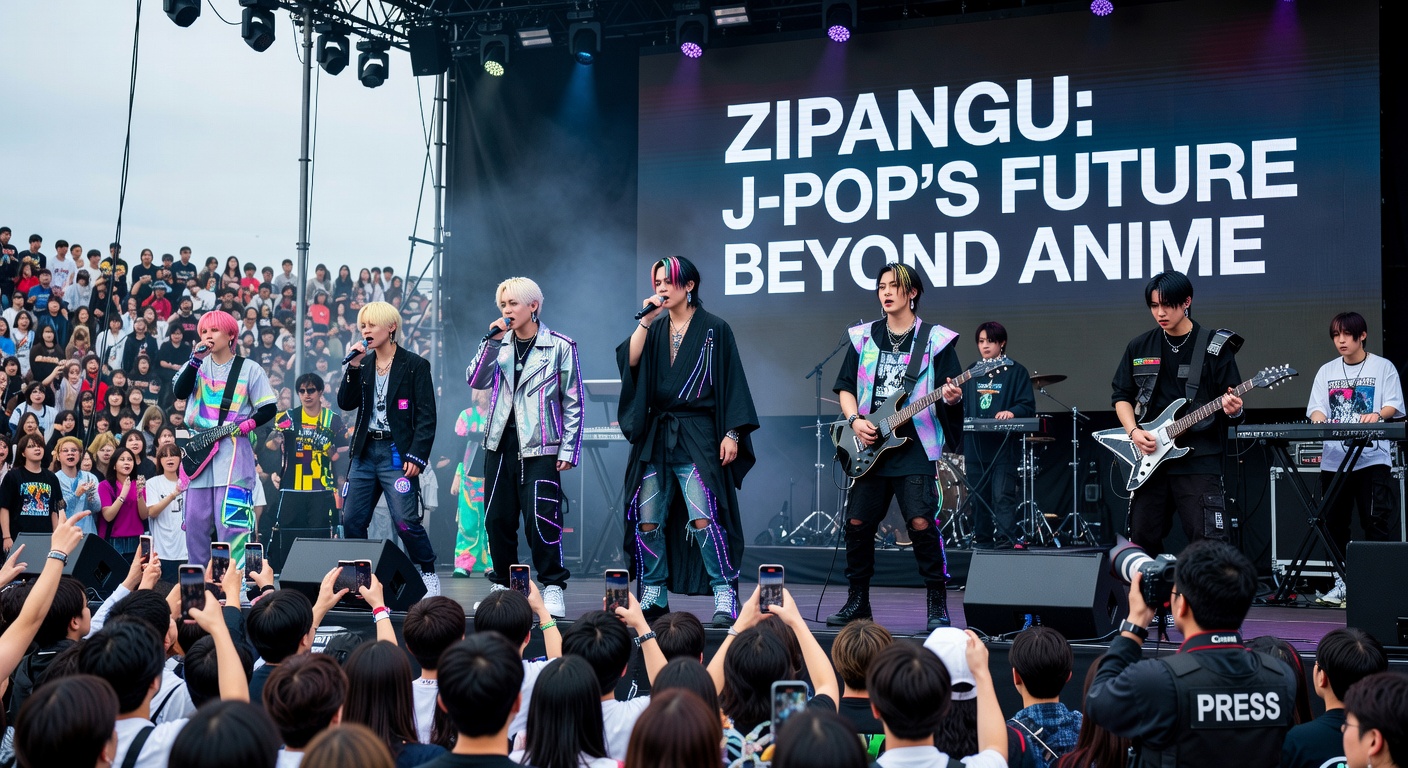
Music festival Zipangu offers a glimpse of J-pop’s future beyond anime
Pasadena Transformed: A Golf Course Becomes a Global Stage
On a crisp October evening in Pasadena, the manicured fairways of the Brookside Golf Course hosted more than 25,000 attendees for the inaugural Zipangu Music Festival. The event showcased Japanese artists including Ado, Chanmina, Atarashii Gakko!, and Yuki Chiba, demonstrating the expanding reach of J-pop outside its traditional anime-adjacent audience. Organizers reported ticket sales exceeding $4.2 million, with international attendees comprising 38 percent of the crowd—a notable shift from earlier J-pop showcases that drew primarily otaku communities.
The festival lineup deliberately mixed established digital phenoms with emerging live performers. Ado, whose virtual persona has dominated streaming platforms since her 2020 debut, headlined the main stage with a 75-minute set that included tracks from her latest album, “Zanmu.” Chanmina delivered a high-energy rap performance backed by a live band, while Atarashii Gakko! brought synchronized choreography and retro-schoolgirl aesthetics that resonated with younger Western viewers discovering the group through TikTok clips.
From Niche Exports to Chart Contenders
Japanese music exports have grown steadily. According to the Recording Industry Association of Japan, overseas revenue from recorded music and related rights reached ¥68.4 billion in fiscal 2023, up 19 percent year-over-year. Streaming now accounts for 64 percent of that figure, driven by platforms such as Spotify, Apple Music, and YouTube Music. Ado’s “Show” accumulated 487 million streams globally in its first year, with 71 percent of plays originating outside Japan.
Zipangu’s programming highlighted artists who have bypassed the anime gateway. Yuki Chiba, a singer-songwriter previously known mainly in domestic indie circles, performed material from his self-released EP that gained traction through algorithmic playlists rather than tie-in soundtracks. Festival director Haruto Nakamura explained the curation strategy: “We selected acts whose core appeal rests on songcraft and performance, not visual media associations. The goal was to test whether sustained international interest exists beyond the otaku demographic.”
Tech Infrastructure Behind the Global Push
The festival’s production incorporated several technological elements that illustrate how Japanese labels are adapting distribution models. Real-time translation subtitles appeared on large screens during Japanese-language segments, powered by a custom AI system developed by a Tokyo startup. Attendance data was captured via NFC wristbands linked to a blockchain ticketing platform, allowing organizers to analyze geographic origin and repeat-visit patterns with 94 percent accuracy.
These tools reflect broader industry investment. Major Japanese labels have increased technology spending by an average of 27 percent annually since 2021, focusing on data analytics and direct-to-fan platforms. Universal Music Japan, which manages Chanmina, reported that 42 percent of her new subscribers on the label’s proprietary app originated from the United States following her Zipangu appearance.
Artist Perspectives and Market Signals
Backstage, performers offered measured assessments of the moment. Ado, speaking through a representative, noted that her decision to perform live without the usual 3D avatar projection was deliberate. “I wanted to see whether the music holds attention when the visual layer is reduced,” she stated. Early social metrics suggest it did: clips from her Pasadena set generated 18.4 million views on X within 48 hours.
Chanmina addressed cultural translation challenges. “Rap in Japanese carries different rhythmic weight than English rap,” she said after her set. “The crowd’s response told me the energy translated even when some lyrics did not.” Atarashii Gakko! member Mizyu highlighted the group’s strategy of releasing English-subtitled dance tutorials on YouTube, which have accumulated 92 million views and function as both marketing and soft-power export.
Industry Economics and Future Trajectory
Analysts see Zipangu as an early indicator of sustainable non-anime demand. Music economist Dr. Keiko Sato of Hitotsubashi University projects that non-media-tie-in Japanese artists could capture 12–15 percent of the U.S. J-pop streaming market by 2027, up from roughly 4 percent today. The key variable, she argues, is consistent touring infrastructure rather than one-off festivals.
Label executives are already adjusting release calendars. Several artists scheduled for Zipangu have U.S. and European headline dates booked for 2025, supported by partnerships with Live Nation and AEG. Merchandise revenue at the Pasadena event averaged $47 per attendee—nearly double the figure recorded at comparable domestic J-pop festivals—suggesting stronger willingness to pay among international fans.
Challenges That Remain
Despite the optimism, structural hurdles persist. Visa processing times for Japanese musicians entering the United States average 11 weeks, complicating last-minute bookings. Language barriers continue to limit radio airplay, and physical distribution outside Asia remains limited. Festival organizers acknowledged that replicating Zipangu’s scale annually will require sponsorship revenue currently dominated by anime-adjacent brands.
Nevertheless, the breadth of styles on display—from Chanmina’s trap-inflected hip-hop to Yuki Chiba’s minimalist balladry—signaled that J-pop’s export potential is no longer tethered to a single narrative. The Pasadena experiment demonstrated measurable demand for Japanese music presented on its own terms.
This is Kenji Tanaka for Global1 News, reporting from Tokyo. 🇯🇵
This article was produced with AI-assisted research and editorial support. Reporting is based on sources cited in the article.
What's Your Reaction?
 Like
0
Like
0
 Dislike
0
Dislike
0
 Love
0
Love
0
 Funny
0
Funny
0
 Wow
0
Wow
0
 Sad
0
Sad
0
 Angry
0
Angry
0

Japan Correspondent at Global1.News. Tokyo-based voice covering Japanese politics, technology, economy, and culture. Tracks the intersection of tradition and innovation in one of the world's most dynamic societies.














Comments (0)