
Montreal shooter's 'anti-women' manifesto reflects growing warnings from CSIS, experts say
The Shooting in Côte-des-Neiges The violent incident that unfolded Monday in Montreal's Côte-des-Neiges neighbourhood left a police officer and a civilian dead, while the suspect also perished in the exchange of gunfire. Authorities identified the shooter the following day as 25-year-old Seth Scott Hatfield, originally from Lethbridge, Alberta. The event has drawn renewed atten
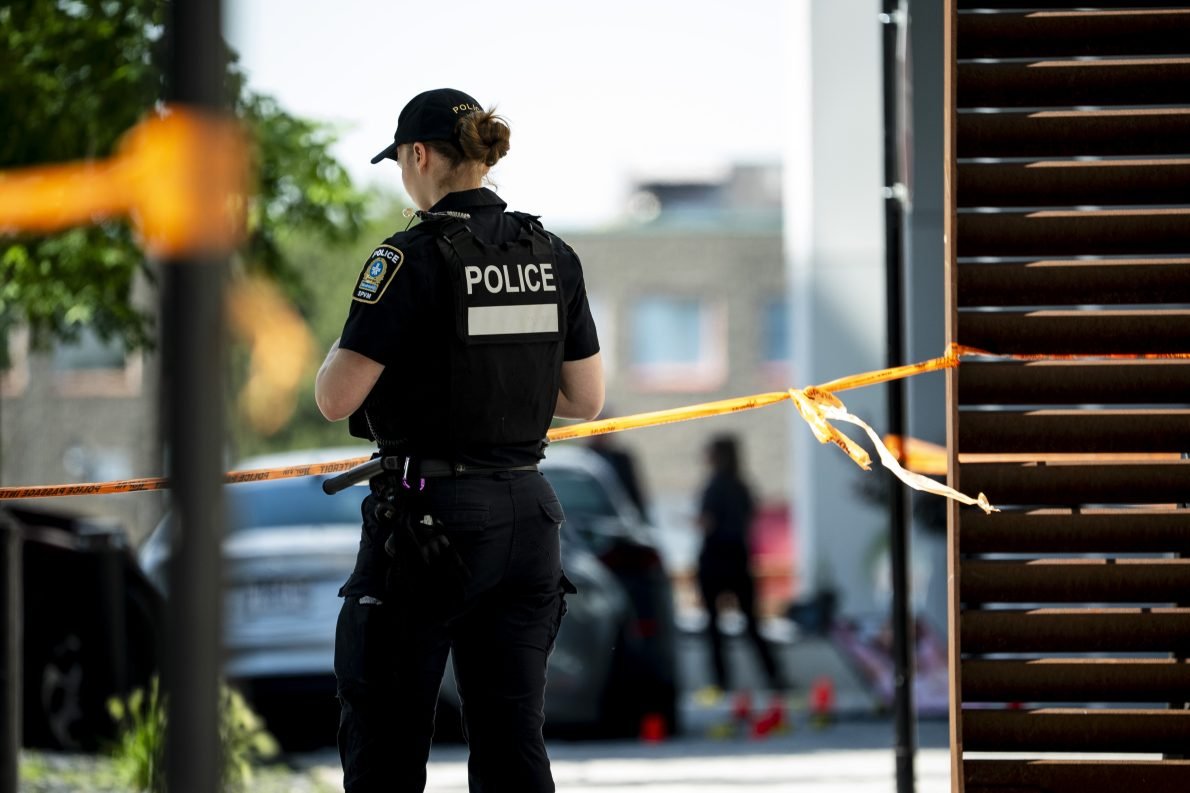
The Shooting in Côte-des-Neiges
The violent incident that unfolded Monday in Montreal's Côte-des-Neiges neighbourhood left a police officer and a civilian dead, while the suspect also perished in the exchange of gunfire. Authorities identified the shooter the following day as 25-year-old Seth Scott Hatfield, originally from Lethbridge, Alberta. The event has drawn renewed attention to the evolving nature of ideologically motivated violent extremism in Canada.
Local residents described scenes of confusion as emergency services responded to the area. Police forces from the Service de police de la Ville de Montréal worked alongside federal partners to secure the scene and begin their investigation. The tragedy has prompted discussions about public safety measures in urban centres across the country.
Details from the Recovered Manifesto
A 104-page document attributed to Hatfield outlines a range of grievances centred on what the author termed the "hypergamy state." The text calls for violent revolution against perceived elites, including bankers, corporate executives, politicians and individuals involved in the pornography industry. While the document does not explicitly use the word "incel," it repeatedly references "involuntary loneliness" and feelings of being "deprived of intimacy."
Experts who reviewed the material noted its inconsistent ideological framework. Stephanie Carvin, associate professor at Carleton University and former national security analyst, observed that the writing blends elements from both far-left and far-right perspectives. She identified anti-women sentiment as the clearest recurring theme throughout the pages.
The manifesto expresses particular contempt for women who, according to the author, pursue the most physically attractive partners. It also directs hostility toward men perceived as favoured in social and romantic hierarchies. Such language aligns with patterns seen in earlier cases of gendered violence in Canada.
Connections to Incel and Male Supremacist Movements
Researchers have drawn parallels between the Montreal manifesto and earlier writings associated with incel-aligned attacks. Jillian Sunderland, a PhD candidate at the University of Toronto studying these movements, pointed to similarities with the 2018 Toronto van attack that claimed 11 lives. Both documents frame personal grievances through the lens of perceived sexual deprivation and societal injustice.
The concept of "hypergamy" featured prominently in the recovered text, defined by the author as women's selective pursuit of physically attractive males. This framing echoes online communities that promote narratives of male victimhood and resentment toward women's autonomy. Such ideas have circulated in digital spaces for years, crossing provincial boundaries from Alberta to Quebec.
Canadian authorities have tracked the spread of these ideologies through various online platforms. The manifesto obtained by Global News illustrates how personal frustrations can merge with broader calls for upheaval, creating a volatile mix that security agencies continue to monitor.
CSIS Assessments and National Security Concerns
The timing of the shooting coincides with heightened scrutiny from the Canadian Security Intelligence Service. Senior CSIS officials recently testified before parliamentary committees that anti-feminist ideologies are becoming increasingly relevant to Canada's national security landscape. They warned that such beliefs can contribute to radicalisation and violent extremism.
These assessments reflect a broader shift in how ideologically motivated violent extremism is understood. Rather than fitting neatly into traditional categories, the ideas expressed in the manifesto cross ideological lines, complicating detection and prevention efforts. Parliamentarians have noted that this evolution poses new challenges for intelligence and law enforcement agencies operating from Ottawa to regional detachments.
Public Safety Canada and the RCMP have both highlighted the need for updated approaches to countering these threats. The case from Montreal underscores how online narratives can influence individuals in different parts of the country, from the Prairies to major urban centres in Quebec.
House of Commons Report on Anti-Feminist Ideology
The shooting occurred shortly after the House of Commons Standing Committee on the Status of Women released its report examining anti-feminist ideology. Committee members documented how such beliefs are spreading among young men and boys, contributing to real-world harms against women. The study paid particular attention to the "manosphere," an online network of influencers who attribute young men's isolation to feminism and women's growing independence.
More recent trends within these spaces, including the "looksmaxxing" phenomenon, have gained traction among certain audiences. The committee's findings emphasised the need for coordinated responses across federal and provincial jurisdictions to address the underlying factors driving radicalisation.
MPs from multiple parties participated in the study, reflecting a shared recognition that these issues affect communities nationwide. The report serves as a reminder of Parliament's role in examining emerging threats to social cohesion and public safety.
Implications for Canadian Society and Policy
This incident raises important questions about how Canada addresses gendered violence and extremism within its borders. The combination of personal grievances and ideological language in the manifesto highlights the difficulty of identifying potential threats before they escalate. Federal agencies continue to work with provincial partners to develop prevention strategies that respect Canada's traditions of fairness and inclusion.
Discussions around these events also touch on broader issues such as mental health support, online regulation and community resilience. While the manifesto does not represent a coherent political programme, its anti-women core aligns with patterns that security experts have flagged as requiring sustained attention.
Canadians have long valued evidence-based approaches to public safety. The Montreal case will likely inform ongoing debates in the House of Commons and Senate about resources for countering ideologically motivated violence. Continued analysis by academics and practitioners will help shape responses that balance security needs with civil liberties.
Tags: Montreal shooting, CSIS, incel ideology, anti-feminism, national security, House of Commons, gendered violence, extremism
By Alex Thompson, Staff Writer
This article was produced with AI-assisted research and editorial support. Reporting is based on sources cited in the article.
What's Your Reaction?
 Like
0
Like
0
 Dislike
0
Dislike
0
 Love
0
Love
0
 Funny
0
Funny
0
 Wow
0
Wow
0
 Sad
0
Sad
0
 Angry
0
Angry
0
Canada Correspondent at Global1.News. Based in Toronto, covering Canadian politics, energy, trade, and US-Canada relations. Provides the Canadian perspective on North American and global affairs.












Comments (0)