
UK Red Heat Warning: Record 40C Temperatures Expected
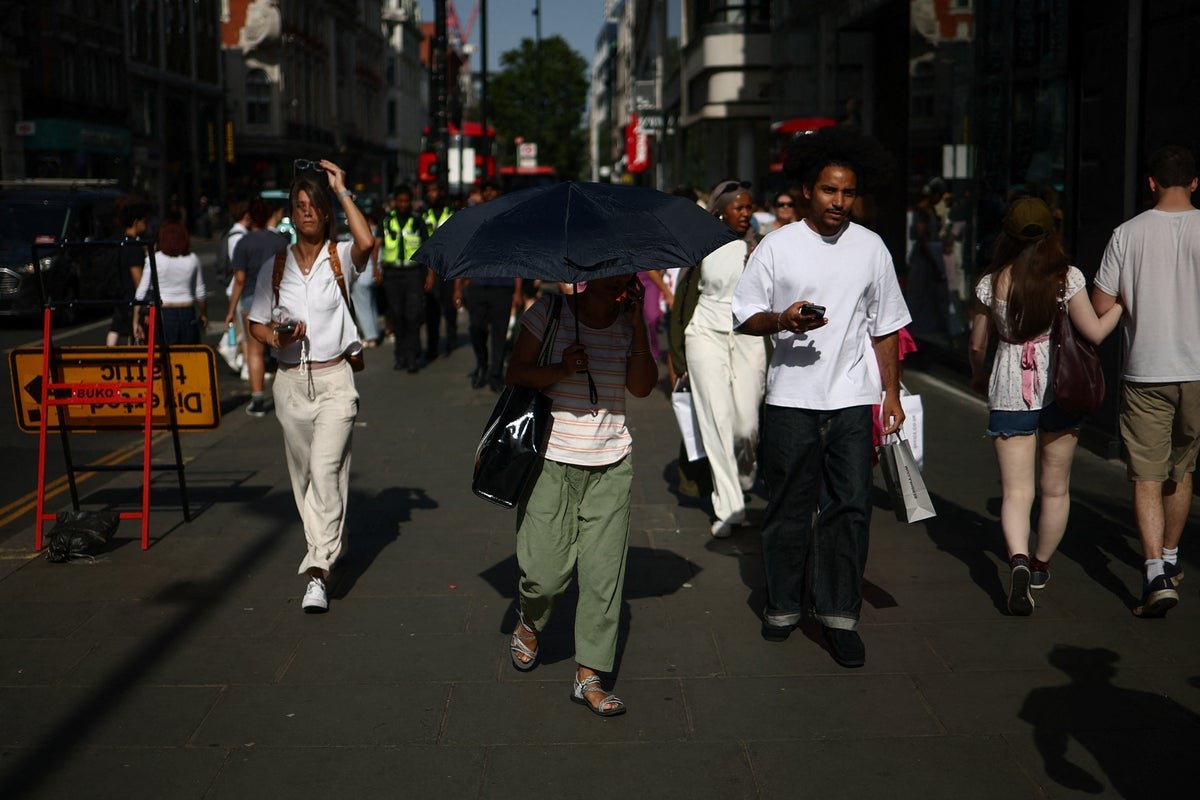
Britain Braces for Record-Breaking Heat as Rare Red Warning Takes Effect The Met Office has issued a rare red weather warning for extreme heat, covering a vast stretch from London to Swansea and from Somerset to Birmingham, with temperatures expected to reach between 38C and 40C in parts of England and Wales. A heat-dome settling over western Europe is driving these conditions,
Britain Braces for Record-Breaking Heat as Rare Red Warning Takes Effect
The Met Office has issued a rare red weather warning for extreme heat, covering a vast stretch from London to Swansea and from Somerset to Birmingham, with temperatures expected to reach between 38C and 40C in parts of England and Wales. A heat-dome settling over western Europe is driving these conditions, accompanied by high humidity that will keep nights uncomfortably warm and limit the body's ability to recover. The warning runs from 9am on Wednesday until 9pm on Thursday, placing millions of Britons under the highest level of alert for heat-related risks to life.
The Cancellation of the LSE Climate Event
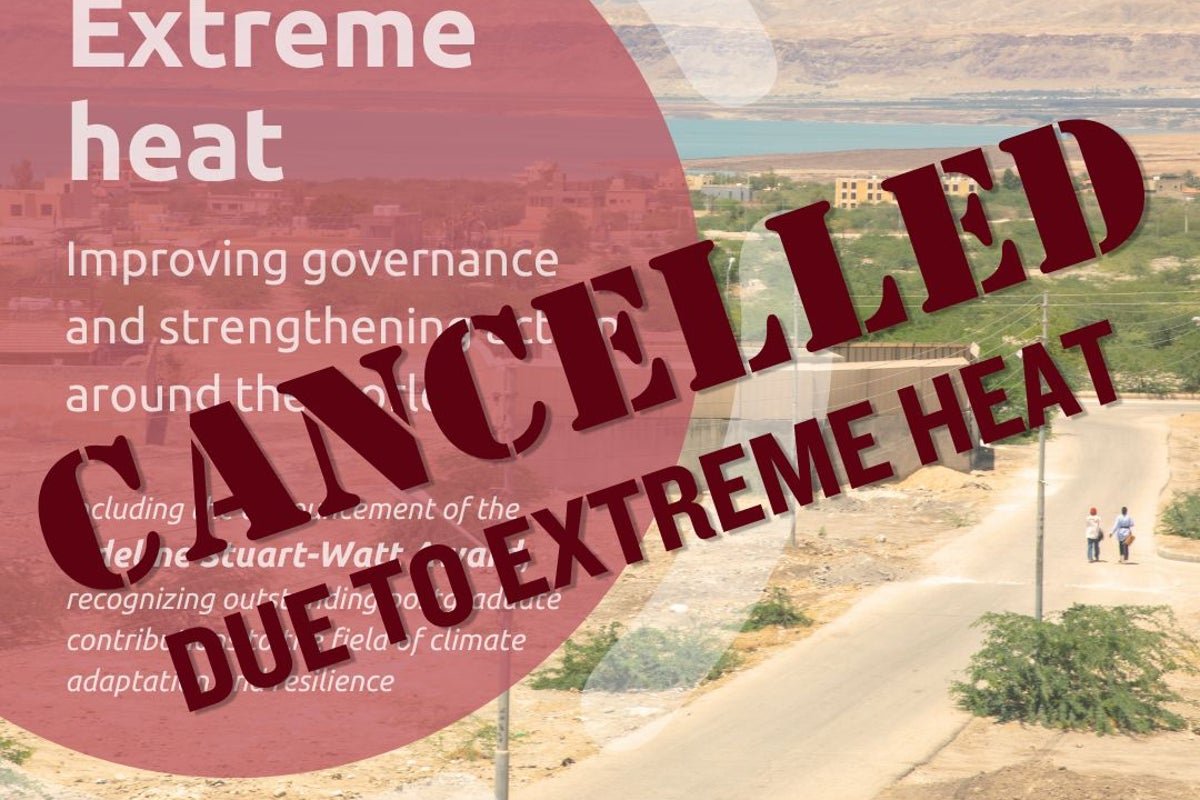
Extreme heat in London has led to the cancellation of a climate event on the topic of extreme heat. The event, which was set to take place on Wednesday at the Shaw Library at the London School of Economics as part of Climate Action Week, was cancelled after the Met Office issued a red weather warning for Greater London. An area stretching from London to Swansea and Somerset to Birmingham will now be covered by a red alert from 9am on Wednesday until 9pm on Thursday. The event titled 'Extreme Heat: Improving governance and strengthening action around the world' was organised by the Grantham Research Institute on Climate Change and the Environment.
"The event venue, like most buildings in London, does not have any cooling mechanisms in place, and we cannot risk the wellbeing of speakers or guests by subjecting everyone to very unpleasant indoor conditions in addition to hot journeys to the venue," wrote the Zurich Climate Resilience Alliance in a post on social media on Tuesday. This decision underscores the immediate practical limits facing even the most prominent institutions when infrastructure fails to match the scale of emerging climate threats. The irony of cancelling a discussion on extreme heat governance because of extreme heat itself highlights how quickly theoretical debates can collide with operational realities in the capital.
The Zurich Climate Resilience Alliance further noted that the magnitude of future impacts from extreme heat will largely depend on global mitigation efforts, local heat governance, and response plans. Cities like London have unique potential to adapt to changing heat risks through effective risk management at multiple levels, connecting policies and incentives, and strengthening community adaptation capacity. Yet the cancellation demonstrates that such adaptation remains aspirational rather than embedded in everyday institutional practice.
Government Response: The Whitehall COBR Meeting
In response to the extreme weather the government said it held a COBR meeting on Tuesday morning. A COBR meeting was held on Tuesday morning in response to the heatwave engulfing the UK, the Government said. "We are working across Government and with devolved and local partners to respond to the severe heatwave," a Government spokesperson said. "As part of this response, the Cabinet Office held an official level COBR meeting on Tuesday morning, and will continue to closely monitor the situation. As well as being uncomfortable, the red weather alerts indicate that the heat poses a risk to life."
The convening of COBR signals the level of inter-agency coordination now required when temperatures push beyond historical norms. Officials from across Whitehall are drawing on lessons from previous emergencies to align messaging and resource allocation. Involvement of devolved administrations ensures that responses in Scotland, Wales and Northern Ireland can be tailored while maintaining consistency on core public safety messages.
Coordination extends to local partners who will implement measures on the ground, from emergency services to public health teams. The Government has emphasised that the red alerts mark a threshold where heat moves from discomfort to direct threat, requiring sustained monitoring through Thursday evening. This approach reflects an attempt to balance central direction with the flexibility needed across different regions.
Transport Disruption and School Closures
Network Rail has advised passengers travelling to, from or within the red weather warning areas on Wednesday and Thursday to only travel if "absolutely necessary". Extreme temperatures mean rail companies need to run fewer trains and more slowly to keep services safe. The highest temperature recorded in the UK on Tuesday was 34.6C in Wisley in Surrey, the Met Office has said, providing a clear indication of the conditions already affecting infrastructure.
The extreme heat has also forced hundreds of schools to send children home early, while children at some schools have been told they can wear PE kit rather than full school uniform. These measures aim to reduce exposure during peak hours when indoor environments become difficult to manage without adequate ventilation or cooling. Parents and local authorities are being asked to make alternative arrangements at short notice.
Reduced rail services will compound pressure on other forms of transport, particularly in the red warning zone stretching from London to Swansea. Network Rail's guidance reflects engineering constraints that limit safe operating speeds once rails expand under sustained high temperatures. Schools closing early or relaxing uniform rules illustrate how daily routines across the country are being reshaped by the same meteorological pattern.
Hosepipe Bans Across Southern England
Hosepipe bans have been enforced in Kent, Sussex, Surrey, Hampshire and Berkshire as South East Water manages increased demand due to the heatwave. The restrictions come as households and businesses turn to outdoor water use at rates that strain supply networks already operating near capacity. South East Water has cited the need to protect supplies for essential purposes while the red warning remains in force.
Residents in these counties face limits on garden watering and car washing, measures that have become familiar in recent summers yet arrive earlier and with greater intensity this week. The bans reflect both the immediate surge in demand and longer-term concerns about reservoir levels following drier periods. Enforcement will rely on public compliance rather than widespread monitoring.
Local councils in the affected areas are coordinating with the water company to communicate the restrictions clearly and to encourage voluntary conservation. The geographic spread from Kent through to Berkshire shows how the heatwave is affecting a broad swathe of southern England simultaneously, placing uniform pressure on multiple supply zones.
Health Warnings from the UK Health Security Agency
The UK Health Security Agency (UKHSA) has warned that this will lead to a rise in deaths, particularly among those aged 65 and over or with health conditions and that it will impact people's ability to work. The amber heat alert is in place on Tuesday for the East Midlands, East of England, London and the South East, the South West, Wales and the West Midlands. High humidity and very warm nights will make overnight recovery harder, increasing cumulative strain on vulnerable groups.
NHS services are expected to face additional demand as heat-related illness rises, particularly among older populations and those with pre-existing conditions. The UKHSA has stressed that the combination of daytime peaks and limited night-time relief creates a prolonged period of physiological stress. Employers are being urged to adjust working patterns where possible to protect staff.
Public health messaging is focusing on hydration, avoiding unnecessary outdoor activity during peak hours, and checking on neighbours who may be isolated. The amber alerts covering large parts of England and Wales indicate that the health risks extend well beyond the red warning zone itself. This layered alert system aims to prompt graduated responses from both individuals and health providers.
Wildfire Risk as Mediterranean "Fire Weather" Arrives
Mediterranean-style "fire weather" will push the guardians of some of England's largest forests to their limits if blazes break out, a senior adviser has warned. Rob Gazzard, who advises the Forestry Commission on wildfires, said "extreme scenarios are going to be very challenging" to deal with for the organisation. He said around 97%-99% of wildfires were "roughly under a hectare", contained by firefighters, a lack of fuel and weather conditions.
Some fires are larger, such as the Fylingdales Moor and Langdale blaze last year. At its peak, the conflagration affected 25 square kilometres - almost 10 square miles - of moorland and forestry in North Yorkshire. "If we had multiple ones of those, it becomes a capacity issue," Mr Gazzard said. "Finally, we have these extreme wildfire scenarios, July 19 2022, Mediterranean weather - the same fire weather as Spain and Portugal, which we're going to be experiencing this week. And those extreme scenarios are going to be very challenging to us."
The Forestry Commission is monitoring fuel loads and weather forecasts closely as the heat-dome settles. While most incidents remain small, the potential for simultaneous large fires across multiple regions would stretch existing resources. The precedent of last year's North Yorkshire blaze serves as a reminder that rapid escalation remains possible under Mediterranean-style conditions.
Consumer Behaviour: Supermarkets and Retailers Prepare for a Heatwave
Supermarkets are preparing for sales of ice, barbecue meat and beer to soar as the UK experiences extreme heat. Tesco is predicting a 60% increase in sales of ice, a 48% increase in sales of ice cream and ice lollies, and a 44% spike in sales of barbecue meat. A Tesco spokesman said: "With temperatures soaring across the country this week, combined with people watching the football, we're forecasting a large increase in sales of ice cream and lollies, ice and barbecue meat. Encouragingly, we are also expecting an over 72% increase in sales of sun cream this week compared to last week as Brits look to protect their skin from the sun."
Aldi, which has re-stocked its shelves with its previously sold-out collapsible pet pool and freezable chew toys, is also predicting it will sell one million burgers this week - a 50% jump on last week. It is also preparing for a 30% surge in beer sales and to sell more than 500,000 bottles of its Lacura Sun Cream - an 80% week-on-week increase. Retailers are adjusting stock levels and staffing to meet the anticipated demand surge.
Currys said it had seen an almost 1,500 per cent increase in customers searching for fans on its website compared with last weekend. The sharp rise in online interest reflects households seeking immediate relief measures as indoor temperatures climb. Retail data across these categories provides a real-time indicator of how consumer priorities shift under sustained heat.
The Climate Adaptation Question: What Britain's Infrastructure Reveals
A spokesperson for Practical Action told The Independent: "If the UK is struggling to cope, then it's really important we take climate change seriously and learn from what is happening around the world." The cancellation at the London School of Economics and the absence of cooling in most London buildings illustrate gaps that extend far beyond any single venue. These shortcomings affect daily operations across public and private sectors alike.
The Zurich Climate Resilience Alliance has emphasised that cities like London possess unique potential to adapt through effective risk management at multiple levels. Yet the current heatwave reveals how slowly that potential is being realised in physical infrastructure. Building standards, transport engineering and public health planning all require accelerated alignment with projected temperature increases.
Practical Action's call to learn from international experience underscores the need for Britain to move beyond reactive measures. The combination of red warnings, COBR coordination and widespread service adjustments shows that adaptation must now encompass both immediate response and long-term redesign of the built environment. Without such steps, future heat events will continue to expose the same vulnerabilities.
By Erica Thornton, Staff WriterThis article was produced with AI-assisted research and editorial support. Reporting is based on sources cited in the article.
What's Your Reaction?
 Like
0
Like
0
 Dislike
0
Dislike
0
 Love
0
Love
0
 Funny
0
Funny
0
 Wow
0
Wow
0
 Sad
0
Sad
0
 Angry
0
Angry
0

US Politics and Policy Correspondent at Global1.News. Based in Washington DC, covering American politics, policy, elections, and the courts. Knows how the system works and tells you what it actually means.













Comments (0)