
Magnitude 7.8 Earthquake Devastates Sarangani in Mindanao
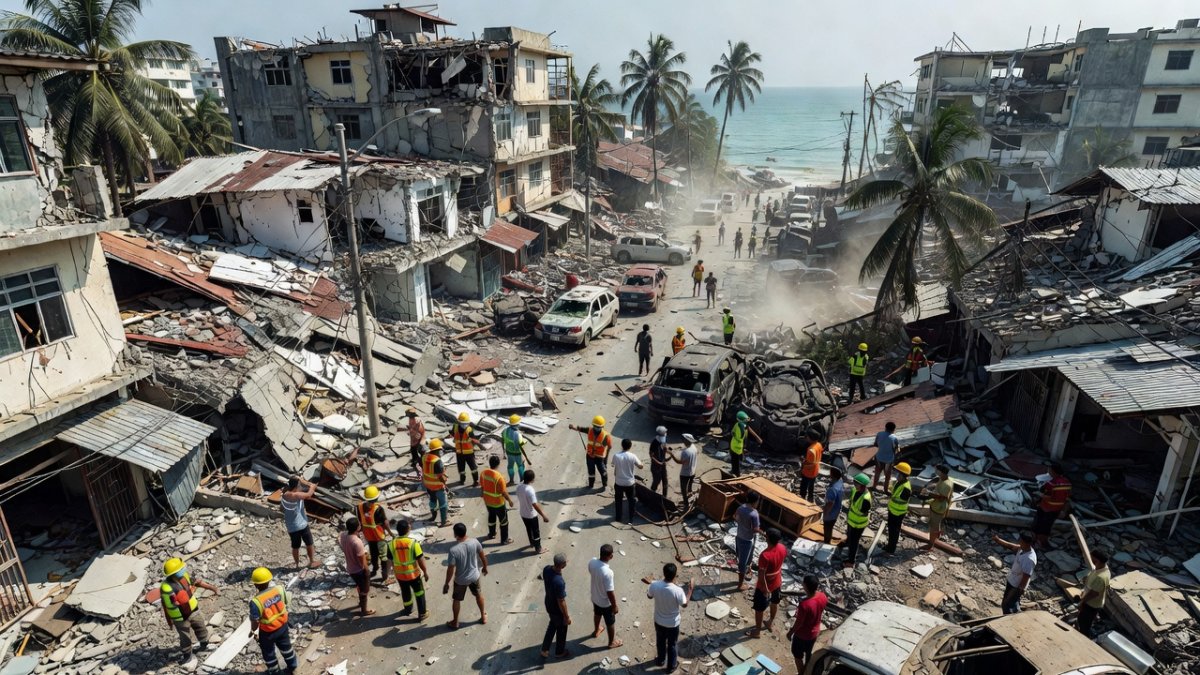
The Earthquake Rocks Mindanao The ground shook violently for nearly two minutes across parts of Mindanao on the morning of June 8, 2026, when a magnitude 7.8 earthquake struck off Sarangani province. The quake originated from movement along the Cotabato Trench, the same fault system tied to past disasters in the region. Residents in General Santos City and nearby provinces felt
The Earthquake Rocks Mindanao
The ground shook violently for nearly two minutes across parts of Mindanao on the morning of June 8, 2026, when a magnitude 7.8 earthquake struck off Sarangani province. The quake originated from movement along the Cotabato Trench, the same fault system tied to past disasters in the region.
Residents in General Santos City and nearby provinces felt the powerful tremors early in the day. Many rushed out of homes and workplaces as walls cracked and objects fell. The shaking reached coastal communities in Regions 9, 11, 12, and the Bangsamoro Autonomous Region in Muslim Mindanao, leaving families startled and searching for safety.
Tragic Loss of Life in Affected Areas
At least 15 people have been confirmed dead as of 5 p.m. on June 8. In General Santos City, 11 lives were lost and 142 others suffered wounds and fractures from falling debris and collapsing structures. Two deaths were recorded in Tupi, South Cotabato, where one person was struck by debris and another suffered cardiac arrest during the intense shaking.
These losses hit ordinary households hard. Families in barangays near the coast now grieve while trying to secure their remaining loved ones. The sudden deaths remind communities of how quickly daily routines can turn into tragedy, especially for workers and students caught in the moment.
Tsunami Alerts Prompt Mass Evacuations
Phivolcs issued tsunami warnings after detecting waves in six areas including Sarangani, Davao Occidental, Tawi-Tawi, Sulu, Basilan, Zamboanga del Sur, Zamboanga Sibugay, Sultan Kudarat, and South Cotabato. First waves were expected between 7:37 a.m. and 9:37 a.m., sending coastal residents scrambling to higher ground.
In Kalamansig, Sultan Kudarat, entire coastal communities moved inland following the alerts. The Philippine Coast Guard suspended watercraft operations in Davao Occidental, keeping fishermen and traders on shore. Governor Yshmael Sali of Tawi-Tawi ordered all schools closed, while Cotabato City Mayor Bruce Matabalao suspended classes across all 37 barangays to protect students and staff.
President Ferdinand Marcos Jr. urged immediate action through a whole-of-government approach. He told affected kababayans to heed the warnings and move to higher ground without delay. Civil Defense Undersecretary Harold Cabreros confirmed that evacuation operations were ongoing across the hardest-hit regions.
Leaders Mobilize Rescue and Relief Efforts
The Armed Forces of the Philippines deployed units from the 10th Infantry Division and 6th Infantry Division to support search, rescue, and relief work. Palace Press Officer Claire Castro stated that government funds are sufficient to sustain these operations in the coming days.
Bangsamoro Chief Minister Abdulrauf Macacua sent engineers to inspect buildings at the BARMM capitol for safety. Coast Guard spokesperson Commodore Noemi Cayabyab reminded fishermen to follow all advisories and stay away from the water until conditions stabilize. These coordinated steps aim to limit further harm to families already displaced.
Damage to Infrastructure and Daily Disruptions
Buildings sustained visible damage, including parts of the KCC mall in General Santos City. In T'boli, South Cotabato, a massive landslide sent 20,000 tons of soil and rocks cascading down a hillside beside Lake Holon. Classes remain suspended in multiple provinces, affecting thousands of students and their parents who must rearrange work and childcare.
Phivolcs seismology chief Winchelle Sevilla linked the event to activity along the Cotabato Trench. The Office of Civil Defense has identified Regions 9, 11, 12, and BARMM as the most affected zones, where power outages and road blockages now complicate daily movement for tricycle drivers, sari-sari store owners, and market vendors.
Communities Unite in Bayanihan Amid Crisis
Despite the fear and loss, the spirit of bayanihan has surfaced quickly in affected barangays. Neighbors help one another carry belongings to evacuation centers, share food supplies, and check on elderly kapitbahay who live alone. This traditional practice of communal support remains central to how Mindanao communities face disasters together.
Local government units work alongside residents to set up temporary shelters and distribute aid. The response reflects the same resilience seen in past crises, where families, farmers, and workers pull together rather than wait for outside help. As aftershocks continue, this collective effort offers hope that affected communities will rebuild step by step.
By Bella Reyes, Staff WriterThis article was produced with AI-assisted research and editorial support. Reporting is based on sources cited in the article.
What's Your Reaction?
 Like
0
Like
0
 Dislike
0
Dislike
0
 Love
0
Love
0
 Funny
0
Funny
0
 Wow
0
Wow
0
 Sad
0
Sad
0
 Angry
0
Angry
0

Philippines/Southeast Asia Correspondent at Global1.News. Manila-based journalist covering Philippine politics, environment, maritime security, and social issues. Passionate about marine conservation and the communities protecting the Philippines' natural heritage.













Comments (0)