
Board of Peace Scales Gaza Reconstruction to Rafah Pilot
The Board of Peace has dramatically scaled back its ambitious plans for Gaza reconstruction, moving from a comprehensive blueprint to a modest pilot camp near Rafah that remains largely undeveloped according to recent satellite assessments. Ongoing Israeli military operations have stalled even this limited effort, with no permanent structures in place and training for the proposed stabilization force yet to begin.
The Board of Peace has dramatically scaled back its ambitious plans for Gaza reconstruction, moving from a comprehensive blueprint to a modest pilot camp near Rafah that remains largely undeveloped according to recent satellite assessments. Ongoing Israeli military operations have stalled even this limited effort, with no permanent structures in place and training for the proposed stabilization force yet to begin. This shift underscores mounting challenges for post-ceasefire stabilization amid Israel's upcoming elections.
Board of Peace Scales Gaza Reconstruction to Rafah Pilot
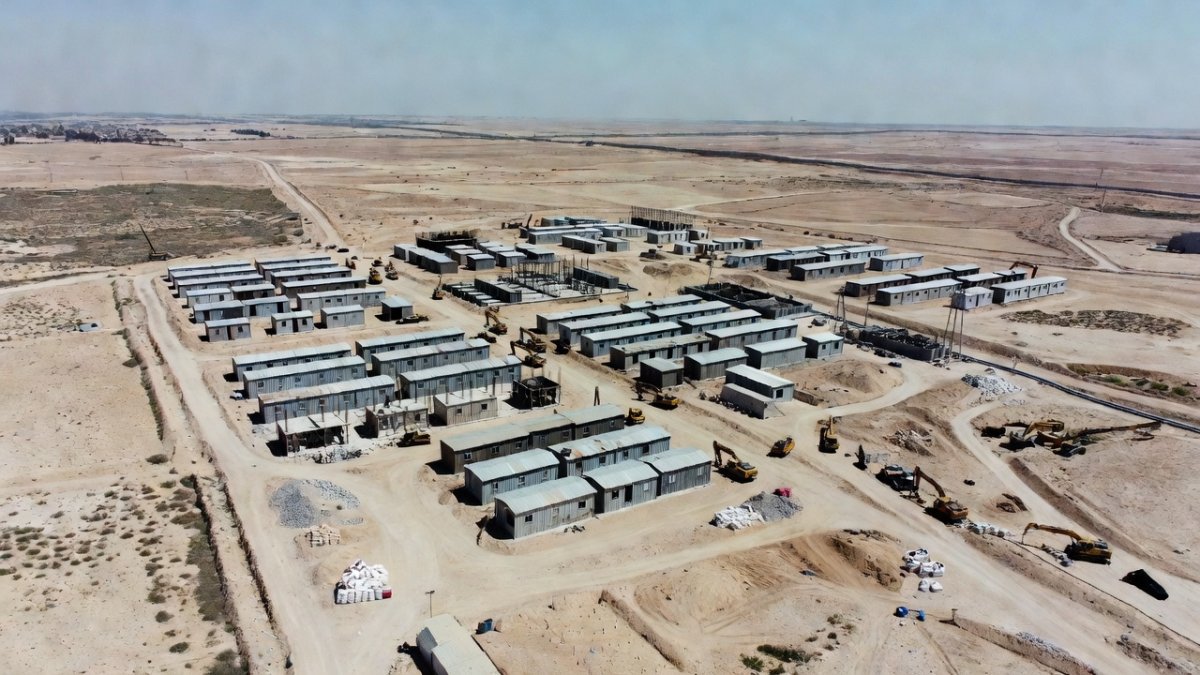
Jerusalem, Israel — In a recent i24NEWS English report, the Board of Peace has shifted from its January 2026 Gaza-wide reconstruction blueprint to a limited pilot camp near Rafah, with satellite imagery confirming only ground disturbance at the site and no permanent structures in place.
The Original Ambitious Vision
The Board of Peace unveiled its plan earlier this year to restore water systems, electricity grids, sewage networks, hospitals, and housing across all of Gaza within 100 days following the October ceasefire. The initiative formed part of the ceasefire agreement that led to the Board's inauguration in January 2026 under U.S. auspices. Israeli officials in the Prime Minister's Office initially welcomed the framework as a potential stabilizer for southern border communities near Sderot and the Gaza envelope.
Foreign Ministry spokespeople in Jerusalem noted that the plan required full Israeli security coordination through the Kerem Shalom crossing and IDF oversight of all material inflows. The original scope envisioned rebuilding infrastructure for 2.3 million residents, with explicit linkages to deradicalization programs monitored by Shin Bet.
Current Status of the Pilot Project
The scaled-back effort now centers on a single camp near Rafah designed to house tens of thousands of displaced Palestinians in portable housing units. A logistics base near the Kerem Shalom crossing is nearing completion, yet construction of the camp itself remains stalled according to the latest satellite assessments. Training for the proposed Palestinian police force has not begun, and no permanent facilities stand at the Rafah location.
Board of Peace officials confirmed the pilot includes a Palestinian civil administration and a vetted police force alongside the International Stabilization Force. Only a small number of officers from Morocco and Kosovo have arrived in Israel to form the initial kernel of that force, with the full contingent projected at approximately 5,000 personnel drawn from Morocco, Kosovo, Albania, and Kazakhstan.
Israeli Operations Impacting Progress
Israel has continued targeted military operations in Gaza despite the October ceasefire, with IDF units conducting raids in northern Gaza and along the Netzarim corridor. These actions have blocked the movement of construction materials and personnel required for even the limited Rafah pilot. Defense Ministry sources in Tel Aviv stated that operations target remaining Hamas infrastructure and will persist until threat levels drop below operational thresholds.
Israeli Defense Forces have maintained a sustained presence along the Netzarim corridor since the ceasefire, with the 98th Division conducting targeted raids in Jabalia and Beit Hanoun. Defense Minister Yoav Gallant has cited intelligence indicating that Hamas battalions under commanders such as Iyad Mughniyeh continue to regroup near the corridor. The Netzarim corridor, which bisects Gaza and controls access between central and southern sectors, has directly constrained the Rafah pilot zone, where Egyptian and Qatari-funded projects require secure overland routes. IDF Spokesperson Rear Admiral Daniel Hagari stated operations remain "limited and precise," yet Palestinian officials in Rafah report that supply convoys have been delayed by an average of 11 days due to corridor inspections, forcing the UN's Gaza Reconstruction Mechanism to reroute materials through Kerem Shalom.
Western diplomats monitoring from the U.S. Embassy in Jerusalem assess that meaningful reconstruction cannot advance until after Israel's October 27 elections. The ongoing operations have also delayed the arrival of additional International Stabilization Force contingents at the logistics base near Kerem Shalom.
Implications for the Upcoming Elections
The scaling back of the Board of Peace plan has become a flashpoint in the campaign leading to the October 27 vote. Prime Minister Benjamin Netanyahu's Likud party has emphasized security-first sequencing, arguing that reconstruction must follow complete demilitarization verified by the IDF and Mossad. Opposition figures in the Knesset have criticized the government for allowing the pilot to stall while displaced Israelis remain in temporary housing in the Gaza envelope region.
Yesh Atid leader Yair Lapid has accused the government of prioritizing military control over diplomatic progress. National Unity chairman Benny Gantz has called for a phased IDF withdrawal tied to verified demilitarization benchmarks monitored by Egyptian intelligence. Recent polling by the Israel Democracy Institute shows 47 percent of Jewish Israeli respondents support conditioning reconstruction aid on Hamas disarmament, while 38 percent favor accelerating projects to reduce humanitarian pressure. Former Prime Minister Ehud Olmert publicly described the proposed camp as a "concentration camp," a characterization rejected by Board of Peace officials.
International Stabilization Force Developments
The International Stabilization Force remains at roughly one-quarter of its originally envisioned strength. Moroccan and Kosovar officers currently in Israel are undergoing coordination briefings with IDF Southern Command at the Kerem Shalom logistics base. Albanian and Kazakh contributions are scheduled for later phases but have not yet received final Israeli security clearances.
U.S. officials have denied that the reduction constitutes a formal scaling back, instead describing the Rafah pilot as an initial phase. European diplomats in Brussels have expressed concern that the smaller force lacks the capacity to secure even the limited camp against potential Hamas interference from nearby areas in southern Gaza.
Palestinian Leadership Responses
Palestinian Authority Foreign Minister Varsen Aghabekian objected to any use of withheld Palestinian tax revenues to fund the Rafah project, insisting that such funds belong to the PA treasury in Ramallah. The PA has refused to endorse the pilot without explicit guarantees that Israeli operations will cease and that reconstruction will extend beyond the single camp.
Hamas representatives discussed possible disarmament during recent Cairo talks, yet Egyptian mediators reported no concrete progress while Israeli military operations continue in Gaza. PA security officials in the West Bank have declined to participate in police force training until the political framework receives broader Arab and international backing.

Broader Regional Dynamics
Arab states including Morocco and Jordan have signaled conditional support for the International Stabilization Force but have tied further commitments to visible Israeli withdrawal from active combat zones. The United Nations has called for immediate resumption of full-scale reconstruction, while the European Union has linked any additional funding to verifiable ceasefire compliance by all parties.
Jordan and Egypt have voiced concrete security concerns over any reconstruction framework that fails to address weapons flows. King Abdullah II has warned that instability in Gaza could affect Jordan's border security, while Egyptian President Abdel Fattah el-Sisi has restricted dual-use materials at the Rafah crossing. The UAE and Bahraini officials privately urge Israel to ease corridor restrictions to preserve Abraham Accords momentum. Morocco has signaled through Foreign Minister Nasser Bourita that reconstruction must include visible Arab involvement. UN Secretary-General António Guterres has called for an immediate expansion of the pilot zone, while EU foreign policy chief Josep Borrell has linked further aid disbursements to verifiable Israeli facilitation. Saudi Arabia's ongoing normalization talks remain sensitive to these dynamics, with Riyadh indicating that visible progress on Gaza reconstruction would be a prerequisite for any public advancement.
For Israeli residents in Ashkelon and communities near the Gaza border, the stalled pilot underscores ongoing uncertainty about when normal cross-border trade and movement might resume. Regional analysts in Tel Aviv note that the limited scope of the current plan reduces immediate pressure on Hamas while leaving core infrastructure challenges in Gaza unaddressed for the foreseeable future.
By Hannah Berg, Staff Writer
This article was produced with AI-assisted research and editorial support. Reporting is based on sources cited in the article.
What's Your Reaction?
 Like
0
Like
0
 Dislike
0
Dislike
0
 Love
0
Love
0
 Funny
0
Funny
0
 Wow
0
Wow
0
 Sad
0
Sad
0
 Angry
0
Angry
0
Israel Correspondent at Global1.News. Based in Tel Aviv, covering Israeli politics, security, technology, and society. Provides balanced, deeply-sourced reporting on one of the most closely-watched regions in the world.












Comments (0)