
Mexico Missing Crisis Shadows 2026 World Cup in Guadalajara
Keywords: Mexico disappeared, Guadalajara World Cup, Jalisco missing persons, Claudia Sheinbaum, Comisión Nacional de Búsqueda, CJNG, Estadio Akron, human rights Mexico, CNTE protests, Panini posters, SCJN rulings, mass graves The DW News documentary “In the shadow of the World Cup,” released June 23, 2026, opens with quiet scenes of families walking dusty roads outside Guadala
The DW News documentary “In the shadow of the World Cup,” released June 23, 2026, opens with quiet scenes of families walking dusty roads outside Guadalajara with shovels and GPS devices. It captures the daily reality of ordinary Mexican households torn apart by forced disappearances while the nation prepares to co-host the tournament with the United States and Canada beginning June 11. The film follows mothers and fathers who refuse to wait for official answers that never arrive.
Guadalajara, the proud capital of Jalisco, will welcome the world to Estadio Akron for several matches. Yet beneath the banners and new paint lies a deeper story of loss that touches every neighborhood from the tianguis markets to the rural ejidos. The documentary shows how the upcoming games have intensified both hope and heartbreak for families who have spent years searching for their loved ones.
Residents here speak of the contrast between the polished image presented to visitors and the raw truth lived by thousands. Children grow up without parents, spouses cook meals for empty chairs, and entire communities carry the weight of absence. This is the Mexico that the World Cup spotlight cannot fully hide.
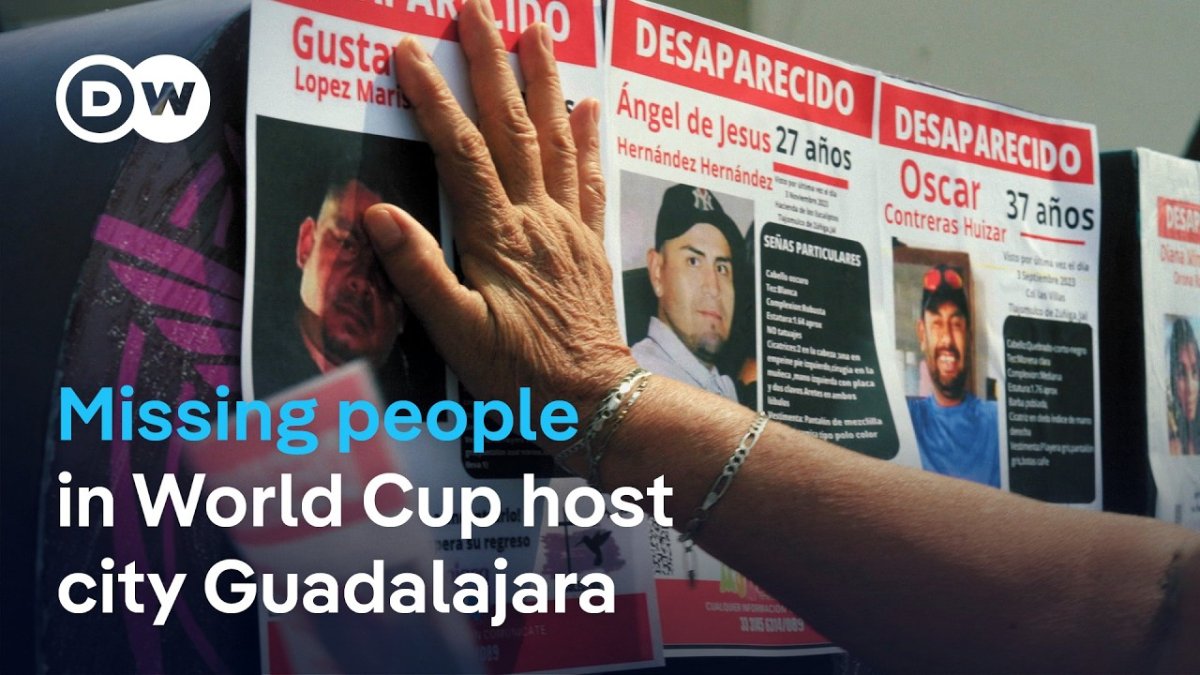
In the Shadow of the World Cup: Guadalajara Families Search for the Disappeared Guadalajara, Jalisco – June 2026 —
The Crisis by the Numbers
Since the start of Mexico’s drug war in 2006, more than 135,000 people have been reported missing across the country. Official records from the Comisión Nacional de Búsqueda confirm that the figure has climbed steadily each year, with Jalisco ranking among the states with the highest numbers. The majority of cases involve ordinary citizens caught between criminal groups and inadequate state responses.
Analysts at Mexican universities note that the 100,000 mark was crossed years ago, yet the total has now surpassed 135,000. Each disappearance leaves behind extended families who must reorganize their lives around uncertainty. In Guadalajara alone, local collectives maintain lists that grow longer every month.
The numbers represent real people: fathers who left for work and never returned, daughters who vanished after a night out, and young men taken from their neighborhoods. Government data shows that many cases cluster around areas controlled by the Cártel Jalisco Nueva Generación, known as CJNG.
International observers have repeatedly called on Mexico to improve its counting methods and investigation protocols. Despite the creation of the Comisión Nacional de Búsqueda, families report that progress remains slow and uneven. The human cost continues to mount with every passing year.
Statistics from the Secretaría de Gobernación reveal that only a small percentage of cases result in any resolution. This reality forces communities to develop their own systems of memory and search that operate outside official channels.
The scale of loss affects every layer of Mexican society, from rural campesinos to urban workers. In Jalisco the impact is especially visible because the state hosts major international events while still struggling with the legacy of violence that began in 2006.
Families Take Matters Into Their Own Hands
Miguel has searched for his daughter Yessenia since her abduction in 2022. Every weekend he drives the roads near Guadalajara with printed flyers and a small team of volunteers. He coordinates locations through WhatsApp groups that connect families across Jalisco and neighboring states.
Yessenia’s case remains open with no arrests. Miguel visits the local IMSS clinic regularly for support with the anxiety that affects his remaining children. He says the government’s Comisión Nacional de Búsqueda has offered little concrete help despite repeated visits to their offices.
Hector organizes nighttime searches with other families using GPS devices and basic tools. They focus on areas where remains have been discovered in the past. These outings often last until dawn and require careful coordination to avoid dangerous zones controlled by CJNG.
Ernesto coaches youth soccer teams in neighborhoods where the cartel maintains strong influence. He uses the games to talk with parents about safety and to keep the memory of missing children alive among the next generation. His teams wear jerseys that sometimes carry small ribbons in remembrance.
These families share meals and stories after long days of searching. Their networks have become vital sources of emotional support in a country where official institutions have not delivered consistent results since the drug war began in 2006.
Women often lead the most visible efforts, drawing on traditions of community organizing that stretch back generations in Mexican culture. They maintain altars in public plazas and organize marches that draw attention to cases the authorities have set aside.
Soccer Stickers for the Disappeared
A creative campaign modeled after Panini sticker albums has spread through Guadalajara. Families print cards featuring missing loved ones wearing Mexico national team jerseys. The stickers circulate at markets and youth games, turning everyday conversations into acts of remembrance.
City workers have been observed removing posters and stickers from public spaces in the weeks leading up to the World Cup. Officials claim the removals are part of routine cleaning, yet families see a deliberate effort to present a sanitized image to international visitors.
The campaign began in small neighborhoods and quickly gained support from local artists and teachers. It allows younger residents to learn names and faces they might otherwise never encounter. Schools in several districts have incorporated the stickers into art projects.
Residents note that the same streets cleared of posters still display World Cup banners and tourism promotions. This contrast highlights the tension between economic ambitions and the unresolved pain of thousands of families.
Activists have documented the removals with photographs and shared them on social media. The images show how quickly the visual reminders of the disappeared can vanish when authorities decide an area needs polishing.
Despite the obstacles, the sticker project continues because it gives families a tangible way to keep stories alive. It connects the love of soccer, central to Mexican culture, with the demand for justice that has persisted for two decades.
Government Response Under Scrutiny
President Claudia Sheinbaum has stated there is “no risk” to fans attending matches in Guadalajara. Her administration points to increased security measures and new funding for the Comisión Nacional de Búsqueda. Families, however, question whether these measures address the root causes of disappearances.
The Suprema Corte de Justicia de la Nación has issued rulings requiring better investigation of forced disappearances. Implementation has been slow, leaving many cases from 2006 onward unresolved. Legal advocates continue to push for faster compliance with the court decisions.
The Comisión Nacional de Búsqueda was created to centralize efforts, yet families report that its staff often lack resources and local knowledge. In Jalisco, coordination with state authorities remains inconsistent according to multiple collectives.
Sheinbaum’s government has emphasized tourism and investment tied to the World Cup. Critics argue that this focus diverts attention from the daily reality faced by families in neighborhoods far from the stadium lights.
Local officials in Guadalajara have promised transparency, but concrete results for individual cases remain rare. The gap between official statements and lived experience continues to widen for those still searching.
International human rights groups have called for independent monitoring during the tournament period. They note that previous large events in Mexico have sometimes led to temporary improvements that faded once attention moved elsewhere.
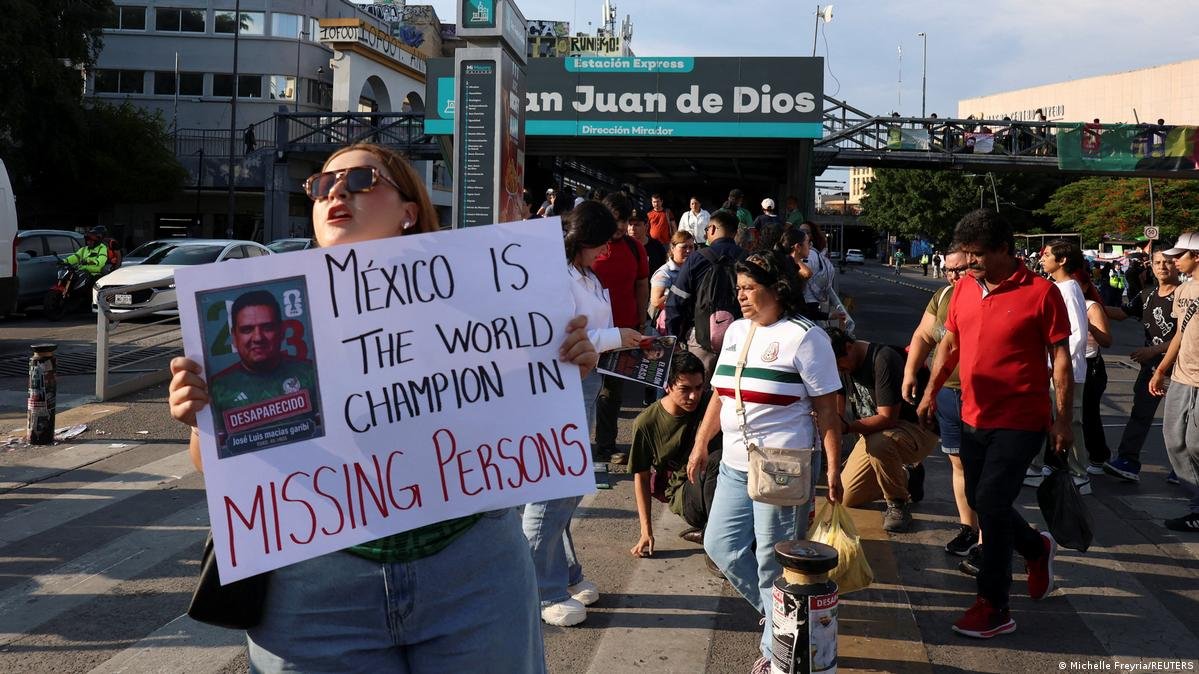
A City Polished for the World
The Guardia Nacional maintains visible patrols in tourist zones and around Estadio Akron. Outside these areas, however, families report that security remains limited and that criminal groups continue to operate with relative freedom in many parts of Jalisco.
In December 2025, El País reported the discovery of more than 500 bags containing human remains within ten miles of the stadium. The findings shocked residents and renewed calls for a full accounting of mass graves in the region.
Teachers from the CNTE union have staged protests outside the stadium to highlight both education funding and the broader crisis of disappearances. Their demonstrations draw attention to how public resources are allocated during the World Cup preparations.
Construction crews work around the clock to improve roads and facilities near the venue. At the same time, families continue their searches in nearby fields and ravines that receive far less official attention.
The contrast between the gleaming stadium and the surrounding communities underscores the uneven development that has characterized Jalisco for years. Ordinary residents feel the weight of this disparity most acutely.
Local businesses hope the tournament will bring economic benefits, yet many acknowledge that the benefits may not reach the families most affected by violence. The polished surface hides ongoing struggles that predate the World Cup announcement.
Human Toll on Mexican Communities
Campesinos in the countryside surrounding Guadalajara have lost sons and daughters to disappearances that often go unreported in national media. Their small farms suffer when entire families must dedicate time to searches instead of planting and harvesting.
Tianguis vendors in central Guadalajara keep photos of missing relatives at their stalls. These informal markets serve as gathering points where news travels quickly and support networks form naturally among neighbors.
The IMSS has expanded mental health services to address trauma among children who have grown up with a parent or sibling missing. Counselors report increased anxiety and difficulty concentrating in schools across Jalisco.
Young people in CJNG-controlled neighborhoods learn early to avoid certain streets and times of day. Coaches like Ernesto try to create safe spaces through sports, yet the underlying risks remain constant for many families.
Women who head households after a disappearance often face economic hardship on top of emotional pain. Community kitchens and mutual aid groups have become essential for survival in several districts.
The cultural fabric of Jalisco, built on strong family ties and communal celebrations, shows visible strain. Yet residents continue to find ways to honor the missing through music, prayer, and public remembrance events that keep hope alive.
Conclusion - What Comes Next
As the World Cup approaches, families in Guadalajara continue their searches with the same determination that has sustained them for years. They hope the international attention will finally bring meaningful action from authorities at every level.
The lessons from two decades of disappearances point to the need for stronger institutions and genuine accountability. Mexican communities have shown remarkable resilience, but they cannot carry this burden alone.
Looking beyond June 2026, the demand for truth and justice remains unchanged. The voices of families will continue to echo through the stadium stands and the quiet streets alike until every missing person is accounted for.
Ordinary Mexicans have always placed family and community at the center of their lives. That strength will guide the next chapter of this long search for answers and healing.
By Rosa Martinez, Staff WriterThis article was produced with AI-assisted research and editorial support. Reporting is based on sources cited in the article.
What's Your Reaction?
 Like
0
Like
0
 Dislike
0
Dislike
0
 Love
0
Love
0
 Funny
0
Funny
0
 Wow
0
Wow
0
 Sad
0
Sad
0
 Angry
0
Angry
0
Latin America/Andes Correspondent at Global1.News. Based in Bogota, covering politics, environment, energy, and social movements across the Andean region. Passionate about environmental journalism and communities protecting their land.









Comments (0)