
Marcos, Takaichi upgrade PH-Japan ties to top diplomatic tier in Tokyo summit
Marcos, Takaichi upgrade PH-Japan ties to top diplomatic tier in Tokyo summit
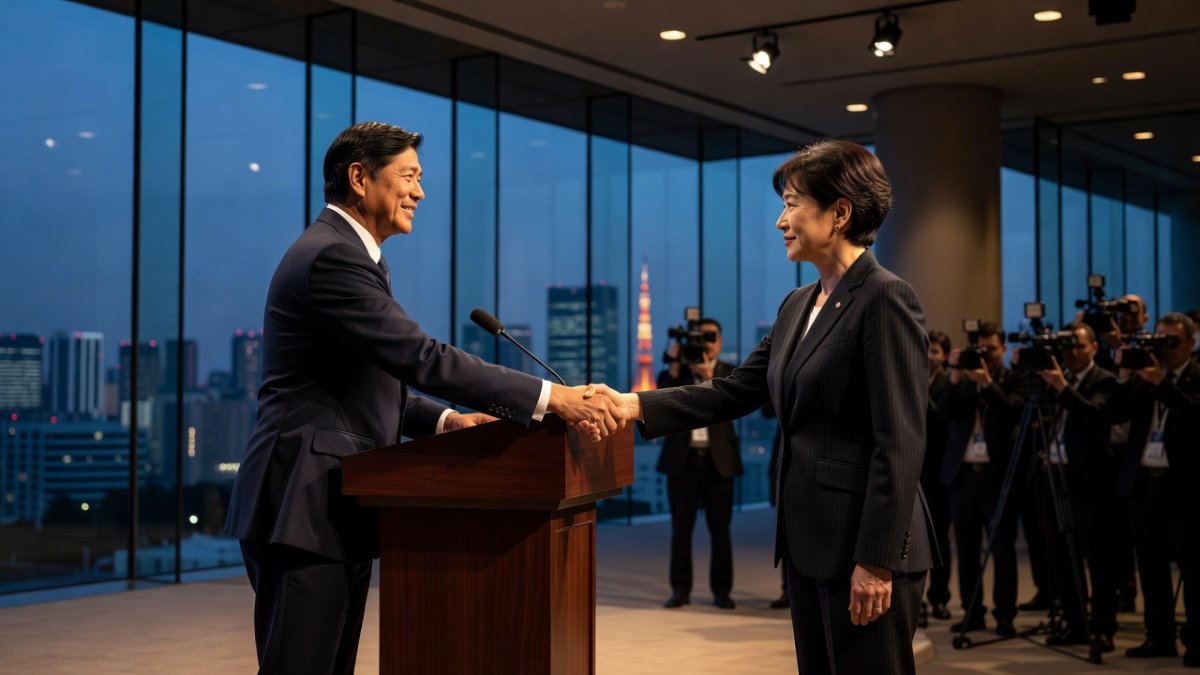
TOKYO — President Ferdinand Marcos Jr. and Japanese Prime Minister Sanae Takaichi on Thursday elevated Philippine-Japan relations to a comprehensive strategic partnership, the highest tier of bilateral diplomacy, during a summit that locked in deeper security and economic commitments amid intensifying regional tensions.
Historic Upgrade Signals Shared Resolve
The two leaders signed a joint statement that formally raises the relationship from a strategic partnership established in 2015 to the comprehensive level, matching the status Japan holds with only a handful of nations including Australia and India. The move comes as Manila confronts repeated Chinese coast guard incursions in the West Philippine Sea and Tokyo seeks reliable democratic partners to safeguard sea lanes vital to its energy imports.
Marcos described the upgrade as a “natural evolution” rooted in shared democratic values and mutual respect for sovereignty. “We are not merely neighbors across the sea; we are partners committed to a rules-based order that protects the rights of all nations, big or small,” he told reporters after the signing ceremony at the Kantei.
Security Pillar: From Training to Interoperability
Under the new framework, Japan will expand its transfer of defense equipment and technology to the Philippines, building on the 2023 agreement that delivered air surveillance radars and small patrol vessels. The two sides agreed to begin negotiations on a reciprocal access agreement that would allow Japanese Self-Defense Forces and Philippine troops to conduct joint exercises on each other’s territory with streamlined legal procedures.
Defense officials disclosed that Japan will fund an additional ¥12 billion (approximately $80 million) in maritime domain awareness projects for the Philippine Coast Guard over the next three years. These funds will support construction of forward operating bases in Palawan and upgrades to the Philippine Navy’s communication systems, directly addressing capability gaps exposed during last year’s confrontations at Second Thomas Shoal.
Prime Minister Takaichi, whose administration has accelerated Japan’s defense spending to 2 percent of GDP, emphasized the partnership’s role in deterring unilateral changes to the status quo. “Any attempt to undermine the freedom of navigation in the South China Sea threatens Japan’s economic lifeline,” she stated. “Our comprehensive strategic partnership will ensure that the Philippines does not stand alone.”
Economic and Development Cooperation Deepens
Beyond security, the summit produced concrete economic deliverables. Japan committed to financing 14 new infrastructure projects worth $3.8 billion through the Japan International Cooperation Agency, including the long-delayed Mindanao railway and port expansion in Subic Bay. These projects are expected to create 45,000 direct jobs and integrate more Filipino small and medium enterprises into regional supply chains.
Trade figures released by the Department of Trade and Industry show bilateral trade reached $23.4 billion in 2023, with Japan remaining the Philippines’ second-largest investor after the United States. The new partnership includes a digital economy memorandum that will facilitate Japanese investment in semiconductor assembly and data centers, sectors the Marcos administration has identified as priorities for moving the country up the value chain.
Regional Context and Strategic Timing
The timing of the upgrade carries clear geopolitical weight. With the United States, Japan, Australia, and the Philippines already coordinating through the Quad-plus framework on maritime security, Tokyo’s decision to grant Manila comprehensive status strengthens the network of middle powers resisting Chinese assertiveness. Analysts note that the Philippines now joins an elite group of Japan’s diplomatic partners that receive both advanced defense technology and large-scale development assistance.
Former Philippine Foreign Affairs Secretary Albert del Rosario, speaking from Manila, welcomed the development. “This is not about containing any one country; it is about preserving the international order that has allowed smaller nations like ours to prosper,” he said. “Japan has consistently respected Philippine sovereignty since the post-war period, and this partnership reflects that long-standing trust.”
Expert Perspectives on Long-Term Implications
University of the Philippines professor and security analyst Aries Arugay observed that the comprehensive strategic partnership marks the first time Japan has embedded economic and defense cooperation so tightly with a Southeast Asian nation. “The Philippines gains predictable access to Japanese technology and financing at a moment when U.S. political cycles create uncertainty,” Arugay noted. “For Japan, this relationship offers a democratic foothold in the region that shares its concerns over freedom of navigation.”
At the same time, Arugay cautioned that Manila must maintain strategic autonomy. “Diversifying partners is wise, but the Philippines should ensure that all agreements remain transparent and aligned with the Constitution’s prohibition on foreign bases,” he added.
Japanese business groups also expressed optimism. The Japan External Trade Organization reported that 68 Japanese firms have expressed interest in expanding operations in the Philippines following the summit, citing improved political stability and the new legal protections for investments under the comprehensive partnership.
Domestic Political Resonance in Manila
Back in the Philippines, the announcement received broad support across the political spectrum, with Senate President Juan Miguel Zubiri calling it “a victory for Philippine diplomacy.” Opposition figures, however, urged the administration to publish the full text of the agreements promptly to allow public scrutiny.
Civil society organizations focused on maritime rights hailed the security provisions while stressing the need for accountability. “We welcome any assistance that helps our fishermen and coast guard operate safely,” said Abigail Binay of the Atin Ito coalition. “But we must never allow foreign partners to dictate how we defend our sovereignty.”
The upgrade also carries symbolic weight for Marcos, who has sought to reposition the Philippines as a reliable democratic partner after years of perceived alignment with Beijing under his predecessor. Tokyo’s willingness to grant the highest diplomatic status provides international validation of that shift.
Looking Ahead: Institutionalizing the Partnership
Both governments agreed to establish a bilateral Comprehensive Strategic Partnership Council that will meet annually at the foreign minister level and every two years at the leaders’ level. Working groups on cybersecurity, climate resilience, and supply-chain security will begin operations within six months.
Marcos is scheduled to address the Japanese Diet on Friday before returning to Manila, where he is expected to brief the Cabinet and legislative leaders on the outcomes. The first projects under the new framework are slated to break ground in the second quarter of 2025.
As the leaders concluded their joint press conference, Takaichi underscored the enduring nature of the bond. “Our two peoples share a commitment to peace, democracy, and the rule of law,” she said. “Today we have given that commitment institutional strength that will endure for generations.”
Marcos echoed the sentiment, adding that the Philippines views Japan not only as an economic partner but as a fellow defender of democratic principles in a region facing authoritarian pressures. The comprehensive strategic partnership, he concluded, represents “a promise kept to future generations that the Philippines will never again stand isolated when its sovereignty is challenged.”
This is Bella Reyes for Global1 News, reporting from Manila. 🇵🇭
This article was produced with AI-assisted research and editorial support. Reporting is based on sources cited in the article.
What's Your Reaction?
 Like
0
Like
0
 Dislike
0
Dislike
0
 Love
0
Love
0
 Funny
0
Funny
0
 Wow
0
Wow
0
 Sad
0
Sad
0
 Angry
0
Angry
0

Philippines/Southeast Asia Correspondent at Global1.News. Manila-based journalist covering Philippine politics, environment, maritime security, and social issues. Passionate about marine conservation and the communities protecting the Philippines' natural heritage.














Comments (0)