
Koizumi vs Beijing: Japan's Defence Minister Rejects 'New Militarism' Claims at Shangri-La Dialogue
Koizumi vs Beijing: Japan's Defence Minister Rejects 'New Militarism' Claims at Shangri-La Dialogue The Exchange at the Shangri-La Dialogue At the Shangri-La Dialogue in Singapore, Japan's Defence Minister Shinjiro Koizumi directly addressed Beijing's accusations of "new militarism." He pointed to China's nuclear arsenal and strategic bombers as the true source of regional conc
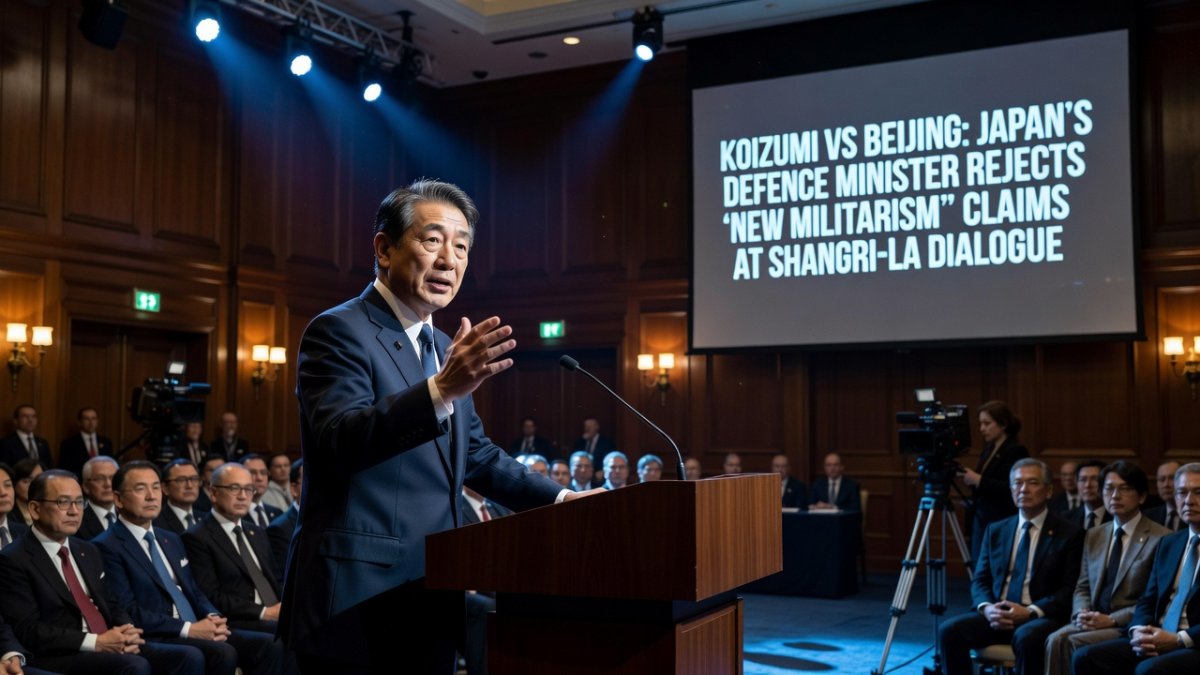
Koizumi vs Beijing: Japan's Defence Minister Rejects 'New Militarism' Claims at Shangri-La Dialogue
The Exchange at the Shangri-La Dialogue
At the Shangri-La Dialogue in Singapore, Japan's Defence Minister Shinjiro Koizumi directly addressed Beijing's accusations of "new militarism." He pointed to China's nuclear arsenal and strategic bombers as the true source of regional concern. Koizumi stressed that Japan maintains neither of these capabilities and framed its defense updates as a transparent effort to address shared security challenges.
Details of Japan's Military Expansion
Under Prime Minister Sanae Takaichi, who assumed office in October 2025, Japan has recorded twelve consecutive years of rising defense budgets. The cabinet-approved figure for the current fiscal year exceeds 9 trillion yen, advancing the goal of allocating 2 percent of GDP to military spending. Planned acquisitions include surface-to-ship missiles and unmanned systems for land and maritime domains, alongside revisions to export rules for defense equipment and key security documents scheduled for completion by the end of the year.
China's Position and Historical Context
China's Ministry of National Defense spokesman Jiang Bin warned ahead of the Singapore meeting that a "remilitarised Japan" required collective containment. Beijing has repeatedly cited Japan's wartime invasion of China as the basis for its concerns. The exchange at the dialogue also touched on demands for further apologies to victims in China, South Korea, and Southeast Asia, an issue that has persisted since Junichiro Koizumi's earlier statements as prime minister.
Implications for China-Japan Relations
The direct rebuttal by Shinjiro Koizumi signals a more assertive Japanese posture toward Beijing's narrative. While Koizumi left open channels for dialogue, the contrast between Japan's emphasis on transparency and China's critique of insufficient accountability is likely to sustain friction. The November 2025 exchange over potential Japanese responses to a Taiwan contingency has already heightened sensitivities, and continued budget growth may prompt Beijing to adjust its own diplomatic and military planning.
Domestic Divisions Within Japan
Prime Minister Takaichi's initiatives, including consideration of changes to Article 9 of the constitution, have sparked significant internal debate. Large-scale anti-war demonstrations have occurred in multiple cities, reflecting public anxiety over any departure from postwar pacifist principles. These divisions could influence the pace and scope of future defense legislation.
Broader Regional Security Considerations
Officials from other Asian states that experienced Japanese occupation during World War Two attended the dialogue. Koizumi's assurances of continued engagement and transparency aim to address lingering regional reservations. The outcome of Japan's security document revisions and expanded defense cooperation will shape how Southeast Asian capitals assess the balance between deterrence and stability in the coming years.
By Prof. Marcus Chen, Staff WriterThis article was produced with AI-assisted research and editorial support. Reporting is based on sources cited in the article.
What's Your Reaction?
 Like
0
Like
0
 Dislike
0
Dislike
0
 Love
0
Love
0
 Funny
0
Funny
0
 Wow
0
Wow
0
 Sad
0
Sad
0
 Angry
0
Angry
0

World Politics Analyst at Global1.News. Based in Beijing, covering US-China relations, global trade, and geopolitical strategy. Brings deep analytical perspective to the power dynamics shaping international affairs.















Comments (0)