
China's Ethnic Unity Law Targets Global Critics Abroad
China’s Ethnic Unity Law, effective July 2026, introduces an extraterritorial clause allowing Beijing to target foreign nationals and institutions for undermining ethnic unity. This formalizes previous informal pressures on universities and diaspora communities. The law promotes social harmony but enforces Mandarin education and central control in regions like Tibet, Xinjiang, and Inner Mongolia, impacting cultural expressions and overseas dissent including social media and academic work.
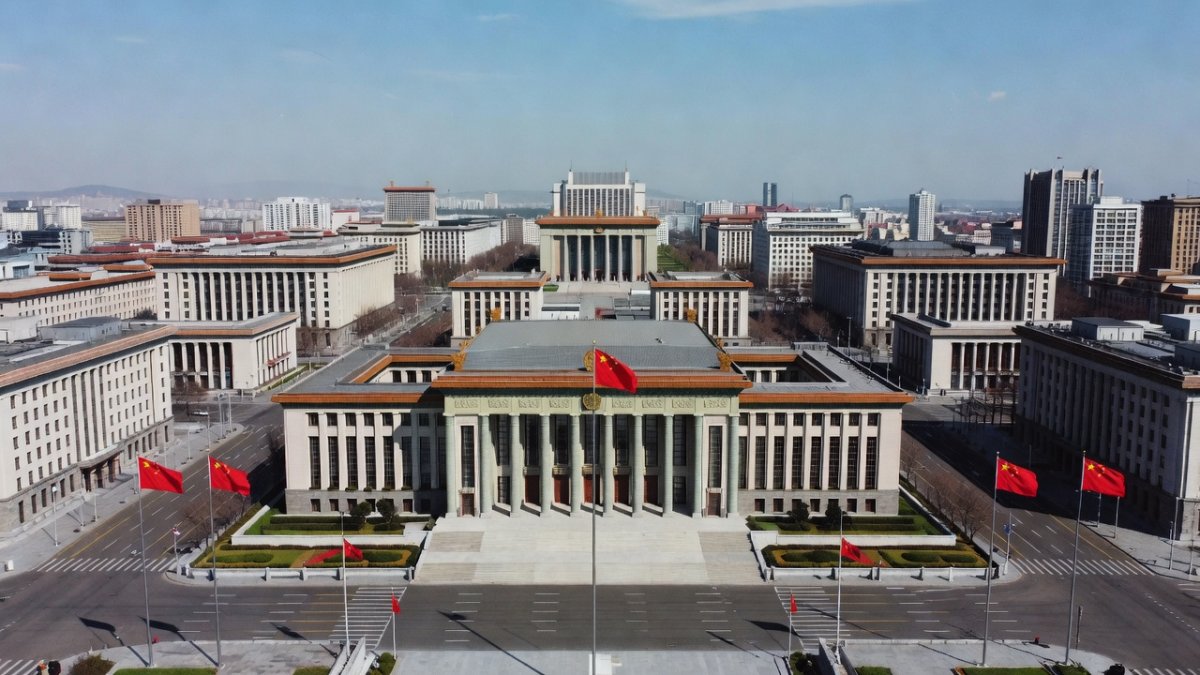
China’s Ethnic Unity Law, set to take effect in July 2026, introduces an explicit extraterritorial clause that allows Beijing to pursue foreign nationals and institutions for actions deemed to undermine ethnic unity. This provision formalises practices previously conducted through informal pressure and transforms long-standing policy preferences into enforceable legal obligations that reach beyond China’s borders. The measure signals a decisive shift in how the Chinese state manages both domestic minorities and overseas dissent.
China Ethnic Unity Law Targets Global Critics
Beijing, China — Article 63 of the Ethnic Unity Law grants Chinese authorities explicit authority to take action against organisations and individuals located outside China who are deemed to undermine ethnic unity or create division. The provision supplies a formal legal basis for measures previously conducted through informal channels, such as pressure on foreign universities or surveillance of diaspora communities. Critics note that the language is broad enough to encompass social media posts, academic work or advocacy conducted entirely abroad.
Stated Purpose versus Real Implications
The Ethnic Unity Law, scheduled to come into force on 1 July 2026, is presented by Chinese authorities as a measure to foster cohesion among the country's 56 recognised ethnic groups. Official statements emphasise goals of social harmony and a shared national identity. In practice, the legislation reinforces central control over regions with histories of distinct cultural expression, including Tibet, Xinjiang and Inner Mongolia. It mandates Mandarin instruction from before kindergarten through the end of secondary school, replacing earlier arrangements that permitted substantial portions of the curriculum in Tibetan, Uyghur or Mongolian. This shift aligns with long-term state objectives of linguistic and cultural standardisation rather than accommodation of minority practices.
Article 63 and Extraterritorial Jurisdiction
Article 63 of the law grants Chinese authorities explicit authority to take action against organisations and individuals located outside China who are deemed to undermine ethnic unity or create division. The provision supplies a formal legal basis for measures previously conducted through informal channels, such as pressure on foreign universities or surveillance of diaspora communities. Critics note that the language is broad enough to encompass social media posts, academic work or advocacy conducted entirely abroad. The case of Zhang Yadi, a 23-year-old student known as Tara, illustrates the potential reach: her online messages supporting Tibetan rights while studying in France and the United Kingdom are believed to have resulted in her detention upon return to China.
Article 63’s long-arm mechanism differs markedly from the targeted sanctions architecture of the US Global Magnitsky Act and the EU’s 2020 human rights sanctions regime. Whereas those instruments require documented gross violations and rely on asset freezes and visa bans coordinated through public designations, Article 63 authorises Chinese courts to impose civil and criminal liability on foreign entities for broadly defined “undermining of ethnic unity.” The Ministry of Foreign Affairs has already issued interpretive notes framing overseas academic commentary as potential “splittist propaganda,” while the Ministry of Commerce has signalled that trade-remedy investigations could be triggered against universities or publishers hosting such activity.
Beijing’s operational toolkit builds on two decades of precedent. Since 2000, the Ministry of Public Security has routinely requested Interpol Red Notices for Uyghur and Tibetan activists; at least 18 such notices were issued between 2015 and 2022. Parallel bilateral police cooperation agreements with Thailand, Nepal and several EU member states have enabled the rendition of dissidents without formal extradition. Article 63 now supplies domestic statutory cover for these practices, converting informal pressure into enforceable judgments that Chinese embassies can cite when demanding content removal from foreign platforms.
The Sinicisation Campaign under Xi Jinping
The new statute forms part of a wider policy trajectory that began in the late 2000s and has intensified under Xi Jinping. Successive directives have promoted the integration of minority populations into a Han-centric national framework, with Xi frequently invoking the metaphor of ethnic groups “hugging tightly like pomegranate seeds.” The Ethnic Unity Law codifies earlier administrative practices into statute, extending requirements for Mandarin dominance into education and public life. Reports from PEN America and the Southern Mongolian Human Rights Information Center document the progressive removal of Mongolian-language material from online platforms, indicating that enforcement mechanisms are already active in digital spaces.
The shift from Jiang Zemin’s “Three Represents” to Xi Jinping’s “pomegranate seed” metaphor marks a decisive centralisation of ethnic policy. Jiang’s 2000 formulation still allowed limited cultural autonomy within the market-reform framework; Xi’s 2014 Central Ethnic Work Conference replaced that tolerance with an explicit assimilation mandate. The 14th Five-Year Plan (2021–2025) codifies this turn by allocating 12 billion yuan for Mandarin-medium boarding schools in minority regions and requiring all ethnic-affairs bureaus to report directly to the Central Commission for Ethnic Affairs rather than provincial governments.
Documented implementation reveals the policy’s reach. Between 2017 and 2022, the Xinjiang Production and Construction Corps expanded its network of re-education facilities to hold more than one million detainees, according to leaked internal records examined by UN rapporteurs. In Inner Mongolia the 2020 language protests drew 300,000 participants before the Ministry of Education imposed Mandarin-only textbooks. In Tibet, the 2016–2019 demolition of monastic settlements at Larung Gar and Yarchen Gar displaced an estimated 15,000 monks and nuns, actions justified under the same “Sinicisation” rubric now embedded in the Ethnic Unity Law.
International Reactions and Diplomatic Tensions
European parliamentarians have responded swiftly, issuing a letter urging member states to review extradition treaties with China. The letter warns that application of the law to European citizens could produce severe consequences for EU-China relations. Rights organisations, including Amnesty International, have highlighted the risk that the legislation will further constrain space for minority-language education and cultural preservation inside China while simultaneously deterring overseas advocacy. These statements reflect growing European concern that Beijing’s domestic security framework is being projected outward, complicating cooperation on trade, technology and climate issues.
The European Parliament’s warning letter, coordinated by the Subcommittee on Human Rights and the China Delegation, invoked the EU’s 2021 treaty suspension clause under Article 28 of the EU-China Comprehensive Agreement on Investment. Signatories included 42 MEPs across EPP, S&D and Renew groups; the letter explicitly tied CAI ratification to reversal of Article 63 and closure of Xinjiang facilities. Because the agreement still awaits formal review by the European Council, any member state can now cite human-rights conditionality to block provisional application indefinitely.
Most ASEAN and Global South capitals have remained silent. Indonesia, Malaysia and Pakistan each host BRI projects exceeding $20 billion; their governments have cited “non-interference” principles enshrined in the 1955 Bandung Declaration. BRICS expansion talks further incentivise restraint: Beijing has conditioned new member accession on avoidance of public criticism of its ethnic policies, a stance tacitly accepted by South Africa and Brazil.
Human Impact on Overseas Critics and Minorities
Exiled Tibetans, Uyghurs and Mongolians now confront an additional layer of legal uncertainty. Activities once viewed as protected speech in democratic jurisdictions may be classified as violations under Article 63. Zhang Yadi’s trajectory—from editing an online platform on Tibetan rights in France to facing detention—demonstrates how personal expressions of solidarity can trigger enforcement actions. Similar patterns have been reported among Uyghur activists and Hong Kong pro-democracy figures, where bounties and transnational pressure have already been employed. The law formalises these approaches, potentially reducing the protective effect of physical distance.
Strategic Implications for EU-China Relations
Beijing’s decision to codify extraterritorial provisions occurs at a moment when the European Union is reassessing its economic dependence on China. Member states must weigh the benefits of continued market access against the political costs of appearing to tolerate legal claims over their own residents. For China, the law advances domestic consolidation objectives while testing the willingness of foreign governments to defend diaspora communities. Second-order effects may include reduced academic exchanges, heightened scrutiny of Chinese students abroad, and accelerated diversification of supply chains away from regions associated with minority-rights controversies. ASEAN and Global South partners will observe whether European pushback produces tangible policy shifts or remains rhetorical.
The EU’s proposed Anti-Coercion Instrument directly targets the enforcement tools Article 63 would enable. Draft Article 8 permits the Commission to impose tariffs or investment screening within 60 days of documented economic retaliation, a mechanism explicitly modelled on responses to Chinese sanctions against Lithuania in 2021. Analysts at CSIS and MERICS project that invocation of this instrument would raise the political cost of enforcing Article 63 against European universities or companies, potentially freezing further BRI financing in Central and Eastern Europe.
China’s Global South outreach nevertheless continues. BRICS expansion to include Egypt, Ethiopia and Iran in 2024 was presented as evidence that Western human-rights pressure can be bypassed. Yet the same outreach now encounters legal friction: several African states have begun inserting “non-extradition for political offences” clauses into new bilateral treaties with Beijing, a quiet hedge against Article 63’s extraterritorial reach.
Official Defense and Broader Context
Deputy Justice Minister Hu Weilie has rejected accusations of long-arm jurisdiction, describing the provision as legitimate, lawful and necessary. Chinese state media frame the legislation as a defensive response to external interference rather than an offensive instrument. This rhetorical posture aligns with Beijing’s broader narrative that questions of ethnic governance remain internal affairs. The absence of detailed enforcement regulations at the time of promulgation leaves room for flexible interpretation by security organs, a pattern observed in previous national-security statutes.
Future of Minority Rights in China
As implementation proceeds, observers expect further contraction of institutional space for minority-language instruction and cultural organisations inside China. Overseas advocates may adopt more cautious public postures or relocate activities to jurisdictions with stronger legal protections. The law therefore contributes to a dual dynamic: accelerated cultural assimilation domestically and heightened friction internationally. Whether these outcomes strengthen or ultimately complicate China’s strategic position will depend on the reactions of key partners and the resilience of minority networks operating across borders.
By Prof. Marcus Chen, Staff Writer
This article was produced with AI-assisted research and editorial support. Reporting is based on sources cited in the article.
What's Your Reaction?
 Like
0
Like
0
 Dislike
0
Dislike
0
 Love
0
Love
0
 Funny
0
Funny
0
 Wow
0
Wow
0
 Sad
0
Sad
0
 Angry
0
Angry
0

World Politics Analyst at Global1.News. Based in Beijing, covering US-China relations, global trade, and geopolitical strategy. Brings deep analytical perspective to the power dynamics shaping international affairs.















Comments (0)