
Israeli Strikes Kill 11 in Gaza as Ceasefire Violations Mount
Israeli strikes on Tuesday killed at least 11 Palestinians including Jabalia police chief Col. Mohammed Marwan Salem and several officers, along with displaced civilians and a child in Rafah. The attacks on civil police infrastructure and tent camps housing displaced families highlight systematic ceasefire violations since October 10, 2025, with 1,108 killed and 3,578 injured in that period. Overall since October 2023, Gaza has seen over 73,000 deaths, 173,000 injuries, and 90% infrastructure destruction. Israeli ministers have openly discussed further military outposts amid international silence. The strikes threaten any prospect of recovery or stable governance in the devastated territory. (378 chars)
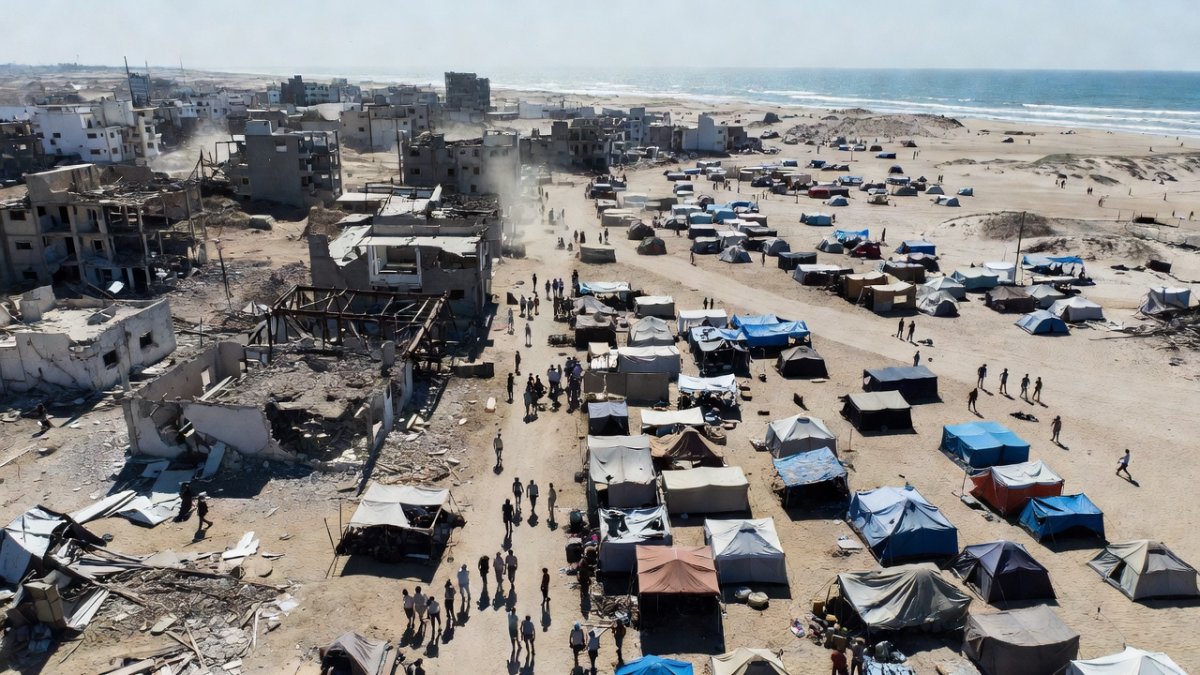
Israeli Strikes Kill Senior Police Officer and Displaced Families Across Gaza
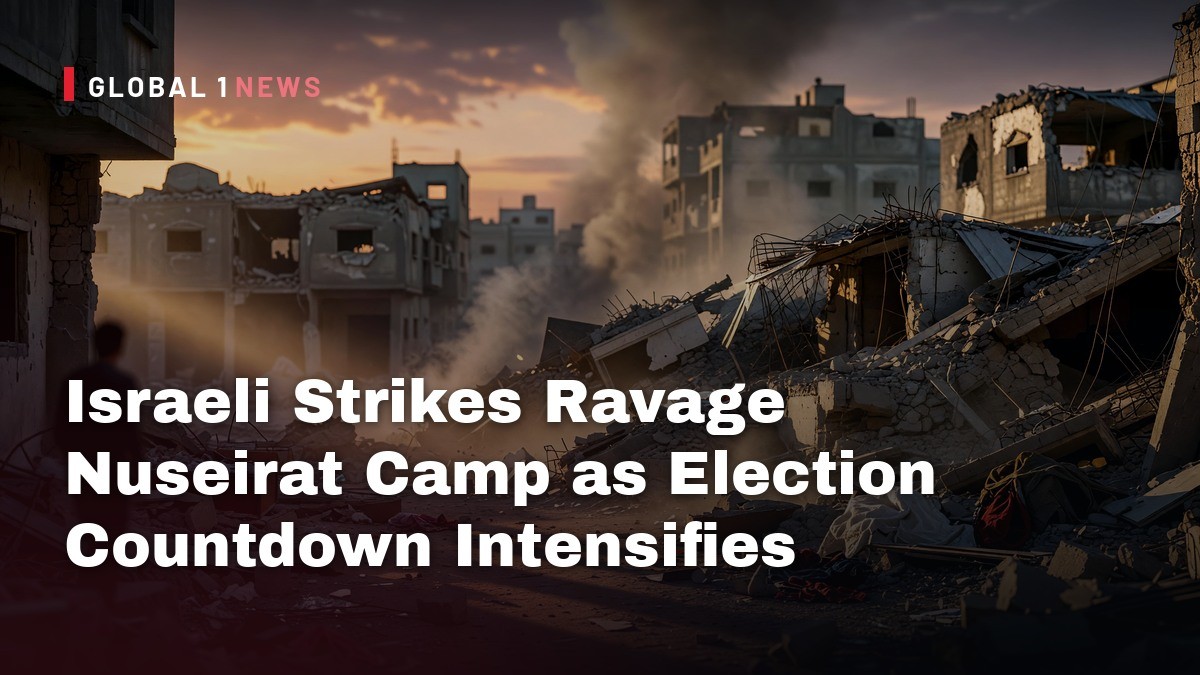
Tuesday’s wave of Israeli attacks across the Gaza Strip claimed at least eleven Palestinian lives, including the director of the Jabalia refugee camp police station, Col. Mohammed Marwan Salem. The strikes, carried out by drones and artillery, hit areas crowded with displaced families living in makeshift tents, highlighting the persistent danger faced by civilians more than two months after a fragile ceasefire took effect on October 10, 2025.
According to the Gaza Interior Ministry, Col. Salem and several police officers were killed when an Israeli drone targeted a police post near Jabalia. The post was located in an area filled with tents sheltering thousands of Palestinians displaced by earlier fighting. Seven bodies were transferred to Al-Shifa Medical Complex and the American field hospital following a separate strike near Shadia School in the Al-Falouja area west of Jabalia. Two more Palestinians died when Israeli forces shelled a tent southwest of Gaza City. In Khan Younis, a drone strike on a tent near Tayba Towers killed one person and wounded three others. In Rafah’s Al-Mawasi area, Israeli gunfire killed a child identified as Moataz Abu Shaar.
These incidents occurred within a single day, illustrating the fragmented yet relentless nature of ongoing military operations. Medical sources confirmed that most of the victims were civilians, many of them internally displaced persons who had already lost their homes in previous rounds of destruction. The targeting of a police station responsible for maintaining basic order in one of Gaza’s most densely populated refugee camps raises serious questions about the distinction between military and civilian targets.
Attacking Civil Police Infrastructure
The killing of Col. Mohammed Marwan Salem and his colleagues represents more than a tactical strike. The Jabalia police station has long served as a vital civil institution, managing traffic, responding to domestic disputes, and ensuring a degree of public safety in a community that has endured repeated displacement. Palestinian officials argue that deliberately targeting such infrastructure undermines the already fragile capacity of local authorities to provide essential services to a traumatized population.
Gaza’s Interior Ministry issued a statement condemning the attack as a clear violation of international humanitarian law. “These police officers were not combatants,” a ministry spokesperson told local journalists. “They were civil servants trying to bring a measure of normalcy to people living under tents.” Human rights monitors have previously documented similar strikes on civil defense workers, municipal employees, and traffic police throughout the conflict, noting a pattern that appears designed to erode the administrative backbone of Palestinian society in Gaza.
By removing experienced officers like Col. Salem, the attacks further weaken the already overstretched institutions responsible for coordinating aid distribution, managing refugee flows, and preventing chaos in overcrowded displacement zones. Residents of Jabalia described the loss as both personal and communal, with many families now left without the limited protection that local police once provided.
The Human Cost Behind the Numbers
Beyond the immediate casualties, Tuesday’s violence struck at the heart of families already pushed to the edge of survival. Many of those killed were living in tents after being forced from their homes multiple times since October 2023. The strike near Shadia School, for example, occurred in an area where families had sought what they believed was relative safety after fleeing earlier bombardment in eastern Jabalia.
The death of young Moataz Abu Shaar in Al-Mawasi adds to the devastating toll on Gaza’s children. Medical staff at local clinics reported that the boy was shot while playing near a tent his family had erected after repeated evacuation orders. His relatives, speaking to Palestinian journalists, described him as a quiet child who had already survived two previous displacements. Stories like Moataz’s are repeated across Gaza, where parents struggle to shield their children from both physical danger and the psychological trauma of constant fear.
Displaced women interviewed near Khan Younis spoke of the terror that accompanies every drone sound overhead. “We sleep in shifts so someone is always watching the sky,” one mother said. “But there is nowhere left to run.” The tents, often made from plastic sheeting and scavenged materials, offer almost no protection against modern munitions. International aid organizations have repeatedly warned that the concentration of civilians in such makeshift camps creates conditions ripe for mass casualties.
Systematic Undermining of the Ceasefire
The latest killings come amid what Palestinian officials describe as systematic Israeli violations of the ceasefire agreement that began on October 10, 2025. Since that date, at least 1,108 Palestinians have been killed and 3,578 injured, according to Gaza health authorities. The truce, brokered with international involvement, was meant to halt hostilities and allow for reconstruction planning. Instead, it has been punctuated by near-daily strikes, incursions, and targeted assassinations.
Israeli officials have justified many of these actions as responses to alleged threats, yet independent monitors have found that a significant proportion of victims were civilians, including children, women, and non-combatants. The pattern suggests that while large-scale ground operations may have paused, the military campaign continues through more limited but lethal means. Palestinian leaders argue that such persistent violations render the ceasefire largely meaningless for those living under constant threat.
A Landscape of Unprecedented Destruction
The human toll cannot be separated from the physical annihilation of Gaza. Since October 2023, more than 73,000 Palestinians have been killed and over 173,000 injured. According to United Nations assessments, approximately 90 percent of the territory’s infrastructure has been damaged or completely destroyed. Homes, schools, hospitals, water treatment plants, and agricultural land have been reduced to rubble across much of the Strip.
This level of devastation has pushed Gaza’s 2.3 million residents into what humanitarian organizations describe as a permanent state of emergency. Clean water remains scarce, electricity is available for only a few hours each day in the best of circumstances, and the health system has largely collapsed. The destruction of police stations, municipal buildings, and civil defense facilities only compounds the difficulty of providing even the most basic governance and emergency response.
Israeli National Security Minister Itamar Katz recently boasted about the extent of Gaza’s destruction in public remarks, announcing plans to establish three new military outposts in the territory. Such statements have deepened Palestinian fears that the goal is not simply security but long-term territorial control and demographic engineering.
International Response and the Weight of Silence
Despite the scale of suffering, major world powers have offered little more than routine calls for restraint. The United States, which played a key role in negotiating the October ceasefire, has largely avoided public criticism of the continued strikes. European Union statements have expressed concern over civilian casualties but stopped short of demanding accountability or concrete enforcement mechanisms for the truce.
At the United Nations, several Arab and non-aligned countries have pushed for stronger language and possible referral to international courts, yet veto powers and geopolitical calculations have prevented meaningful action. Palestinian human rights organizations continue to document violations and submit evidence to the International Criminal Court, but the process remains slow while daily deaths continue.
Inside Gaza, many residents express a bitter sense of abandonment. “The world watches our funerals on television and then moves on to other news,” said one Jabalia resident who lost two cousins in Tuesday’s strikes. Local journalists and civil society groups have appealed directly to global public opinion, hoping that sustained coverage of individual stories might eventually generate pressure for change.
What Lies Ahead for Gaza
The events of this week underscore the precariousness of any future for Gaza. With infrastructure in ruins, civil institutions under repeated attack, and a ceasefire that exists more on paper than in practice, the prospects for meaningful recovery remain distant. Families continue to bury loved ones while wondering where they will find shelter when winter arrives.
Reconstruction cannot begin in earnest while strikes continue and military outposts are being planned on Palestinian land. Palestinian officials and analysts warn that without a genuine halt to hostilities and an internationally guaranteed political horizon, Gaza risks sliding into even deeper chaos. The targeting of police officers who represent the last vestiges of civil authority suggests a strategy aimed at making organized Palestinian life nearly impossible.
Yet amid the grief, Palestinian society continues to show remarkable resilience. Community initiatives, volunteer networks, and extended families work daily to fill the gaps left by destroyed institutions. Doctors at Al-Shifa and other remaining facilities treat the wounded with dwindling supplies, while teachers hold makeshift classes under tents. These acts of sumud, or steadfastness, represent the determination of a people who refuse to disappear despite overwhelming odds.
The coming weeks will prove critical. If the international community fails to enforce the ceasefire and hold all parties accountable, the death toll will continue to climb. For the families of Col. Mohammed Marwan Salem, Moataz Abu Shaar, and the other victims of Tuesday’s attacks, justice and safety remain painfully out of reach. Their losses add to a tragedy that has already scarred generations and will shape the future of Palestine for decades to come.
By Fatima Al-Rashid, Staff Writer
This article was produced with AI-assisted research and editorial support. Reporting is based on sources cited in the article.
What's Your Reaction?
 Like
0
Like
0
 Dislike
0
Dislike
0
 Love
0
Love
0
 Funny
0
Funny
0
 Wow
0
Wow
0
 Sad
0
Sad
0
 Angry
0
Angry
0
Gulf/MENA Correspondent at Global1.News. Based in Doha, covering Gulf politics, energy markets, diplomacy, and development across the Middle East and North Africa. Tracks the economic transformation of the Gulf states.












Comments (0)