
Katz Vows Indefinite Military Presence in Gaza, Lebanon,...
In a recent i24NEWS report, Defense Minister Israel Katz addressed graduating combat officers and outlined Israel's plans to maintain positions in Gaza, Lebanon, and Syria without any fixed withdrawal schedule. The statements came amid an announced US-Iran agreement aimed at ending the West Asia conflict, yet Israeli forces continue operations across multiple fronts. Katz Vows
In a recent i24NEWS report, Defense Minister Israel Katz addressed graduating combat officers and outlined Israel's plans to maintain positions in Gaza, Lebanon, and Syria without any fixed withdrawal schedule. The statements came amid an announced US-Iran agreement aimed at ending the West Asia conflict, yet Israeli forces continue operations across multiple fronts.
Katz Vows Indefinite Military Presence Across Gaza, Lebanon and Syria as Israel Quietly Extends Lifeline to Syrian Druze
Jerusalem, Israel —
Katz's Indefinite Stay Announcement and Its Strategic Significance
Defense Minister Israel Katz stated on June 15, 2026, during a combat officers' course graduation ceremony that Israeli forces would remain in security zones in Gaza, Lebanon, and Syria indefinitely. Katz repeated the position on June 25, 2026, confirming no timetable existed for withdrawal from any of the three areas. The IDF maintains these zones to prevent rocket fire into northern Israel and to block weapons smuggling routes from Syria into Lebanon.
These positions directly support Shin Bet operations monitoring Hezbollah movements near the Lebanese border and Iranian Revolutionary Guard activities in southern Syria. Katz's remarks followed the US-brokered ceasefire of October 2025, which has faced repeated violations including cross-border incidents near Metula and Kiryat Shmona. The indefinite presence allows the IDF to conduct ongoing patrols and establish buffer areas that reduce immediate threats to Israeli communities in the Galilee and Golan Heights.
The policy aligns with assessments from the Prime Minister's Office that rapid withdrawals would recreate the security vacuum that preceded the October 2025 fighting. Military planners in Tel Aviv view the zones as essential for protecting the northern border after Hezbollah's 2024-2025 escalation and for disrupting supply lines that previously reached Hamas in Gaza.
Internal Israeli Political Dynamics
Prime Minister Benjamin Netanyahu's coalition has faced pressure from right-wing parties demanding permanent security control over Gaza border areas. Katz's statements reflect this internal consensus, with several Knesset members from the Likud and Religious Zionism parties publicly endorsing extended IDF deployments. The Foreign Ministry has coordinated messaging to emphasize that withdrawals would only occur after verified demilitarization by Hamas and Hezbollah.
Coalition partners have tied support for the government's budget to continued operations in the security zones. Netanyahu's office has avoided setting deadlines, citing ongoing threats from Iranian-backed groups operating near the Syrian-Israeli border. This approach maintains unity among parties that opposed earlier withdrawal proposals during the 2025 ceasefire negotiations.
Opposition figures in the Knesset have questioned the long-term costs of indefinite deployments, yet polls conducted in Jerusalem show majority support among Israeli voters for maintaining the current positions until threats subside. The IDF General Staff continues to brief the security cabinet on weekly developments in all three theaters.
US-Israel Tensions Over the Peace Plan and Settlements
The Wall Street Journal reported that Katz indicated Israel would not leave Gaza and would build settlements, directly contradicting elements of the US multiphase peace plan. Katz later clarified that the government has no intention of establishing settlements in the Gaza Strip, attempting to reduce friction with Washington. The US and Iran announced an agreement to end the West Asia conflict, yet Israeli officials signaled they would maintain the military presence regardless.
US officials have pressed the Foreign Ministry in Jerusalem for clearer withdrawal timelines, while Israeli diplomats have responded that security conditions on the ground must first improve. The October 2025 ceasefire remains under strain, with violations reported near the Gaza perimeter fence and in southern Lebanon. Katz's initial comments created diplomatic friction that required follow-up calls between the Prime Minister's Office and the White House.
Israeli negotiators have insisted that any final agreement must include verifiable guarantees against rearmament by Hamas in Gaza and Hezbollah in Lebanon. The gap between the US-brokered framework and Israel's security requirements continues to shape discussions at the Foreign Ministry.

The Syrian Druze Humanitarian Situation and Israel's Quiet Aid
Israel has quietly transferred humanitarian aid valued at 2 million shekels to the Druze community in Sweida, Syria, including food packages, medical equipment, and trauma supplies ordered by Foreign Minister Gideon Sa'ar. The aid responds to deadly clashes in July 2025 between Druze militias and Bedouin tribes that left hundreds killed in the southern Syrian province. Israel also conducted airstrikes on Damascus in July 2025 after attacks on Druze villages.
Approximately 152,000 Druze live in Israel and the Golan Heights, maintaining family and community ties across the border. Katz announced a pilot program allowing 40 Syrian Druze workers to enter the Golan Heights for agricultural work, providing limited economic support to the community. The Druze in Sweida have formed a de facto autonomous governing body that coordinates local security and services.
These measures reflect Israel's long-standing relationship with the Druze minority, including those serving in the IDF and Border Police. Cross-border contacts have increased since the July 2025 violence, with Israeli medical teams treating some injured Druze patients near the Golan Heights frontier. The aid transfers occur alongside routine IDF patrols in the area.
Regional Implications for Iran, Hezbollah, and the Ceasefire
Iranian-backed militias in Syria have faced restrictions on movement due to the IDF's continued presence in the security zone near the Golan Heights. Hezbollah has been forced to limit operations near the Lebanese-Israeli border, reducing its ability to resupply positions south of the Litani River. The October 2025 ceasefire has held in name only, with both sides reporting violations on a near-weekly basis.
The US-Iran agreement has not altered Israel's operational posture in any of the three areas. Mossad assessments indicate that Iranian Revolutionary Guard units continue attempts to establish new supply routes through Syria despite the Israeli buffer. Katz's statements serve as a deterrent signal to both Tehran and its proxies that Israel will not accept a return to pre-2025 conditions.
Lebanese authorities have requested clarification on Israeli withdrawal plans, yet the IDF has maintained checkpoints and observation posts along the border. The situation in Gaza remains linked to developments in the north, with Hamas attempting to exploit any perceived Israeli distraction from southern Lebanon.

Analysis and What Comes Next
Israel's dual approach of indefinite military presence combined with targeted humanitarian engagement toward the Syrian Druze illustrates a broader strategy of managing multiple borders through both force and selective cooperation. The policy prioritizes preventing Iranian entrenchment near the Golan Heights while preserving channels with minority communities that share security concerns with Israel.
Future developments will depend on whether the US-Iran agreement produces concrete reductions in militia activity near the Israeli frontiers. The IDF will likely expand the Druze worker pilot if the initial group completes its agricultural assignments without incident. Coalition dynamics in Jerusalem will continue to influence the absence of withdrawal timelines.
Security officials in Tel Aviv expect ongoing low-level violations of the October 2025 ceasefire, requiring sustained IDF deployments. The combination of buffer zones and quiet aid to Sweida represents Israel's effort to shape outcomes on its northern and eastern borders without triggering wider escalation.
By Hannah Berg, Staff WriterThis article was produced with AI-assisted research and editorial support. Reporting is based on sources cited in the article.
What's Your Reaction?
 Like
0
Like
0
 Dislike
0
Dislike
0
 Love
0
Love
0
 Funny
0
Funny
0
 Wow
0
Wow
0
 Sad
0
Sad
0
 Angry
0
Angry
0
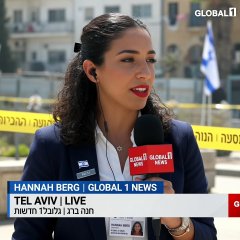
Israel Correspondent at Global1.News. Based in Tel Aviv, covering Israeli politics, security, technology, and society. Provides balanced, deeply-sourced reporting on one of the most closely-watched regions in the world.












Comments (0)