
Dr Nagham Nawzat: The Yazidi Doctor Healing Survivors of Islamic State Captivity
The 2014 IS Offensive in Sinjar The events of 3 August 2014 marked a turning point for the Yazidi community in northern Iraq. Islamic State militants launched a coordinated assault on Sinjar, entering homes and separating families in a matter of hours. Shireen, then 19 and preparing for a high school examination, was taken directly from her residence along with thousands of oth
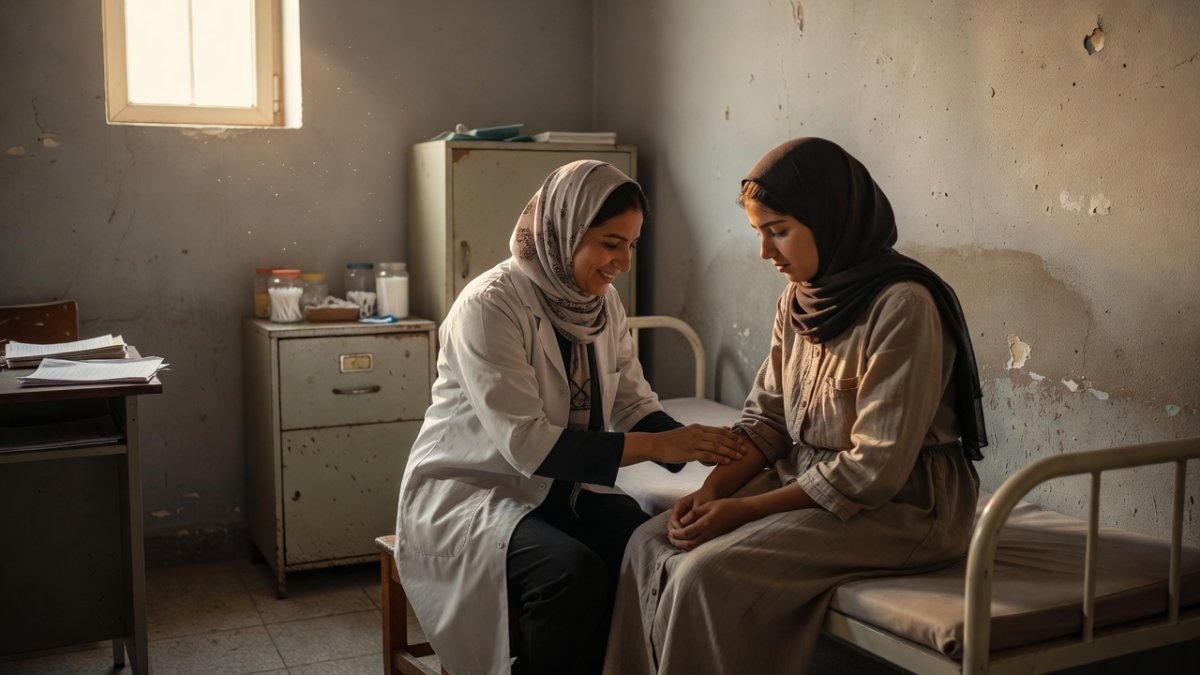
The 2014 IS Offensive in Sinjar
The events of 3 August 2014 marked a turning point for the Yazidi community in northern Iraq. Islamic State militants launched a coordinated assault on Sinjar, entering homes and separating families in a matter of hours. Shireen, then 19 and preparing for a high school examination, was taken directly from her residence along with thousands of others. The scale of the operation reflected a systematic campaign targeting the religious minority across the Sinjar region and surrounding areas.
Reports compiled after the offensive documented at least 12,000 Yazidis killed or kidnapped during the broader seizure of nearly one third of Iraqi territory by Islamic State forces. The United Nations has classified these actions as an ongoing genocide against the Yazidi people, citing the deliberate intent to eradicate their religious and cultural presence. Entire villages were emptied, and survivors were dispersed across multiple locations under militant control.
The offensive disrupted daily life in Sinjar in profound ways, with families losing contact immediately and many never reuniting. Historical tensions in the region, combined with the sudden advance of Islamic State, left communities with little time to organize resistance or escape routes. The resulting displacement stretched into the Kurdish region of Iraq, where many sought safety in cities such as Duhok.
Context from local accounts highlights how the attack exploited existing vulnerabilities in minority protections under Iraqi governance structures. The genocide classification by the United Nations underscores the international recognition of the targeted nature of the violence, distinguishing it from general conflict casualties. This period set the stage for the prolonged captivity experienced by many Yazidi women and girls.
Life in Captivity
Shireen’s account illustrates the immediate commodification of Yazidi women following capture. After being taken from Sinjar, she was sold as a sex slave to an Islamic State militant in Tal Afar within weeks. Three months later she was transferred again to Abu Omar in Mosul, becoming his third wife alongside two Iraqi women who resided separately. The militant expressed affection verbally, yet the reality involved repeated rape that Shireen described as destroying her life.
Forced conversion formed a core element of the captivity experience. Yazidis revere Melek Tawwus, known as the Peacock Angel, as the foremost of seven angels emanating from their god Yasdan. Captors insisted this figure was the devil and compelled Shireen and others to adopt Islam under threat. Daily existence was confined to household labor, with Shireen required to cook, wash dishes, and clean without any opportunity to step outside, even into the garden, due to constant guards at the entrance.
Additional Yazidi girls were later brought into the same household, including a six-year-old tasked with cleaning and a ten-year-old subjected to the same environment. Shireen attempted to intervene during instances of abuse directed at the younger girls, but her efforts were ignored. The presence of the other wives introduced further violence, as they would beat her during joint gatherings despite living apart from the main house.
These patterns of sale, isolation, and layered abuse were reported across numerous Yazidi survivors, reflecting a structured system of control imposed by Islamic State. The combination of physical confinement, religious coercion, and sexual violence created conditions that extended for more than two years in Shireen’s case. Local cultural emphasis on family and community made such prolonged separation especially devastating for those affected.
The Path to Liberation
Shireen’s release occurred in 2016 during the Iraqi military campaign to retake Mosul from Islamic State control. After more than two years in captivity, she returned to areas under Kurdish regional authority and sought medical attention in Duhok. The transition from enforced isolation to freedom brought immediate recognition of the psychological damage sustained during that period.
Depression and recurring nightmares that blocked sleep became persistent challenges for Shireen following her liberation. She had lost her uncle and many friends to Islamic State actions, while her father and one sister remained missing since their capture in 2014. The absence of closure regarding these family members compounded the sense of ongoing loss expressed in her reflections on the buried remains of loved ones.
Upon arrival in Duhok, Shireen underwent an initial physical examination that quickly expanded into emotional support. The process of recounting experiences formed part of the early recovery steps, though the full toll of captivity manifested in both physical and mental health effects. Iraqi forces’ advance into Mosul provided the immediate mechanism for her release, yet reintegration required sustained attention beyond the moment of freedom.
The broader context of liberation efforts involved coordination between Iraqi and Kurdish forces, with many women returning through similar military operations in 2016. For survivors like Shireen, the shift from Mosul back to the Kurdish region highlighted contrasts in security and available services. The missing family members continued to represent unresolved aspects of the 2014 offensive that extended well beyond individual releases.
Dr Nagham Nawzat: A Yazidi Doctor's Mission
Dr Nagham Nawzat was born in 1976 in Mosul to a Yazidi family and pursued medicine from an early age. Her decision to specialize in gynaecology stemmed from a longstanding interest in women’s health issues and a desire to provide practical support within her community. She completed her degree at Mosul’s Medical College in 2002, equipping her with the clinical foundation to address reproductive and general health concerns.
From the outset of her training, Nawzat focused on educating women about healthcare options and offering direct assistance. This orientation aligned with observed needs in Yazidi society, where access to specialized care had historically been limited. Her background in Mosul placed her in proximity to the events of 2014, prompting a shift toward supporting those displaced into the Duhok area.
By 2015, Nawzat had chosen to dedicate her skills to survivors of Islamic State captivity. She volunteered her time to deliver both medical examinations and psychological first response, recognizing that physical health checks alone would not address the full impact of captivity. Her approach emphasized listening to individual accounts while reinforcing the resilience already demonstrated by the women.
Within the Yazidi community in Duhok, Nawzat gained recognition for consistent availability and culturally attuned care. Director Hussein al-Qaidi of the Kidnapped Affairs department noted her role in supporting more than half of the 2,023 women liberated by July 2018. This level of engagement reflected a sustained commitment that extended across multiple years of returning survivors.
The Duhok Survivors' Centre
The Duhok Survivors’ Centre operates as the sole facility in Iraq dedicated specifically to addressing gender-based violence. Established with funding from the United Nations Population Fund, it provides a structured environment where survivors receive integrated medical and psychological services. Nawzat joined the centre in 2015 and has contributed through regular volunteer shifts focused on Yazidi women returning from captivity.
Initial contact at the centre follows a post-traumatic medical protocol common in Iraq, beginning with a comprehensive physical assessment. This step is followed by extended conversations in which survivors describe their experiences, fears, and immediate concerns. Nawzat positions herself as a consistent listener, offering reinforcement that acknowledges the strength required to endure and escape such conditions.
The centre’s model accommodates the volume of cases documented by the Kurdistan Regional Government, with Nawzat directly assisting an estimated 1,200 women. Services remain available without charge to those referred through official channels, ensuring that financial barriers do not prevent access. The facility’s specialization allows staff to maintain continuity of care across physical recovery and emotional processing.
Daily operations reflect the realities of displacement in the Kurdish region, where many families have resettled after losing homes in Sinjar. The centre coordinates with local authorities to track liberated individuals and schedule follow-up visits. This infrastructure has become essential for addressing the concentrated needs arising from the 2014 events and subsequent releases.
A Legacy of Courage
In March 2016, Dr Nagham Nawzat received the International Women of Courage Award from then-Secretary of State John Kerry. The recognition highlighted her provision of psychological support to traumatized Yazidi survivors and her efforts to counter gender-based violence in the aftermath of Islamic State control. The award drew attention to the scale of individual commitment required to respond to thousands of cases.
Shireen, who visited the centre shortly after her 2016 release, credited Nawzat with providing both medical attention and personal encouragement. She recalled being told she was brave during their first extended conversation, an affirmation that contributed to her continued presence and recovery. Such interactions illustrate the relational dimension of the support offered at the Duhok facility.
The broader context of Nawzat’s work intersects with ongoing efforts by the Kurdistan Regional Government to document and assist kidnapped individuals. As of July 2018, official figures recorded 2,023 liberated Yazidi women, with Nawzat’s direct involvement reaching more than half that total. This contribution operates within a landscape where many survivors continue to navigate missing relatives and lasting health effects.
Recognition through the International Women of Courage Award placed local medical responses within an international framework of acknowledgment for those addressing conflict-related violence. Nawzat’s trajectory from Mosul medical training to sustained volunteer service in Duhok demonstrates one pathway for professionals responding to community needs. The centre continues to function as a focal point for these efforts amid the wider recovery process in northern Iraq.
By Fatima Al-Rashid, Staff WriterThis article was produced with AI-assisted research and editorial support. Reporting is based on sources cited in the article.
What's Your Reaction?
 Like
0
Like
0
 Dislike
0
Dislike
0
 Love
0
Love
0
 Funny
0
Funny
0
 Wow
0
Wow
0
 Sad
0
Sad
0
 Angry
0
Angry
0

Gulf/MENA Correspondent at Global1.News. Based in Doha, covering Gulf politics, energy markets, diplomacy, and development across the Middle East and North Africa. Tracks the economic transformation of the Gulf states.










Comments (0)