
Japan's AI Nursing Robots Target Elderly Care Crisis
Japan's Demographic Challenge and the 2025 Problem Japan faces an unprecedented aging population where approximately 29 percent of citizens are aged 65 or older, the highest proportion globally. All individuals born between 1947 and 1949 reached age 75 or above by the end of 2024, marking the so-called 2025 problem. Record-low births of 720,988 newborns in 2024, according to he
Japan's Demographic Challenge and the 2025 Problem
Japan faces an unprecedented aging population where approximately 29 percent of citizens are aged 65 or older, the highest proportion globally. All individuals born between 1947 and 1949 reached age 75 or above by the end of 2024, marking the so-called 2025 problem. Record-low births of 720,988 newborns in 2024, according to health ministry data, compound the pressure on care systems.
This demographic shift directly strains the nursing sector, which currently records 4.25 job openings per applicant compared with the national average of 1.22. Only 57,000 foreign caregivers work in Japan, representing less than 3 percent of the total nursing workforce. These figures highlight structural gaps that technology initiatives seek to address through gradual integration rather than immediate replacement of human staff.
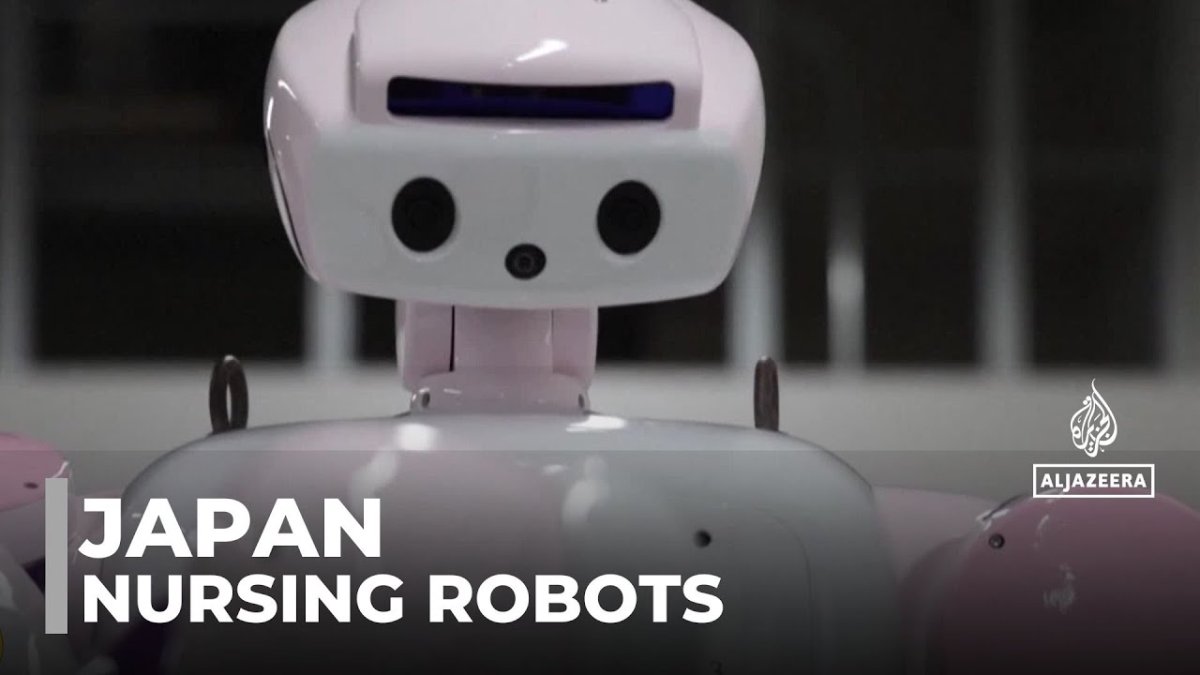
Development of the AIREC Humanoid Nursing Robot
AIREC, a 150-kilogram humanoid nursing robot, is under development at Waseda University under Professor Shigeki Sugano, who also serves as President of the Robotics Society of Japan. The project receives government funding and focuses on tasks such as turning patients to prevent bedsores and changing diapers. These functions target physically demanding aspects of care that contribute to staff shortages.
Current prototypes remain in laboratory testing phases. The development team expects readiness for real-world use by 2030, with an initial estimated cost of around 10 million yen, equivalent to approximately 7,000 US dollars. No accelerated deployment timeline has been confirmed, and further refinements in safety protocols and regulatory approvals are anticipated before broader adoption.
Existing AI Caregiving Technologies in Nursing Homes
AI-powered caregiving tools already operate in selected Japanese nursing homes. These include mobility assistance devices and monitoring systems that track resident movement and vital signs. Such technologies demonstrate incremental progress in integrating robotics into daily care routines without displacing core human oversight.
Facilities report measured improvements in routine monitoring efficiency, yet full-scale humanoid systems like AIREC require additional validation for complex physical interactions. The transition from current assistive devices to advanced humanoids illustrates a phased approach aligned with Japan’s technology ecosystem.
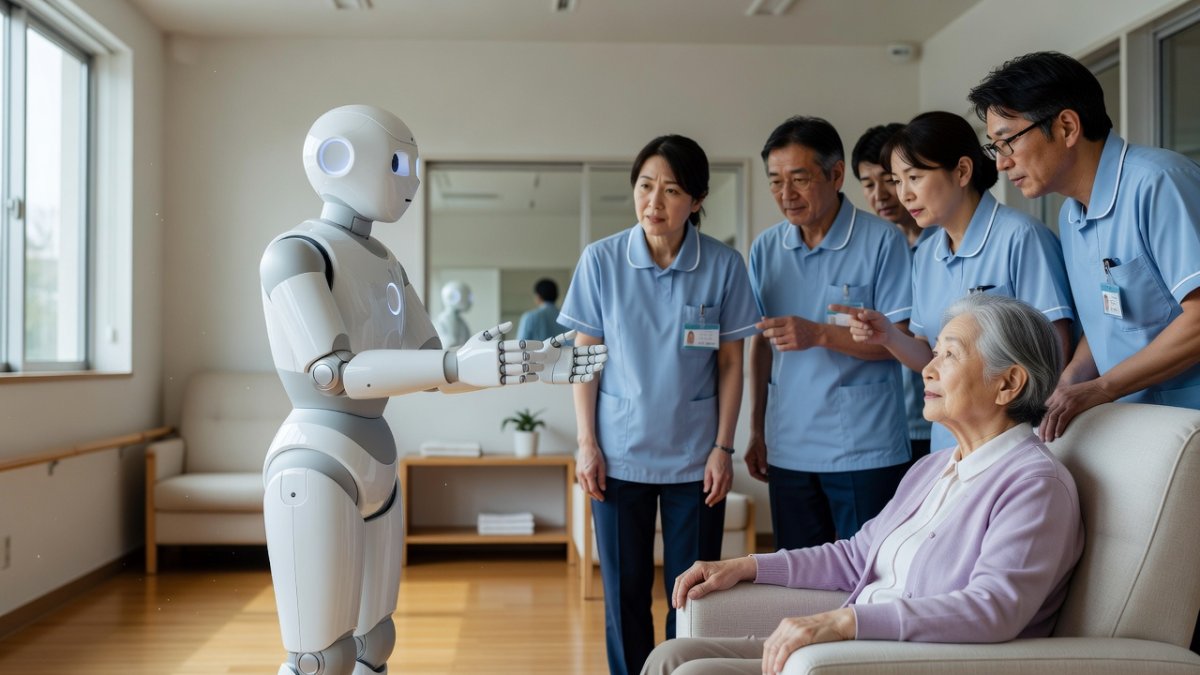
Government Policies Supporting Robotic Innovation
Japan’s Society 5.0 initiative, coordinated across ministries including METI, promotes human-centric technological solutions to social challenges. METI’s robot revolution policy specifically encourages development of care robotics to sustain workforce productivity amid demographic decline. These frameworks connect directly to corporate Japan’s semiconductor strategy and Digital Agency efforts to standardize data infrastructure for AI applications.
Policy documents emphasize pilot programs and iterative testing rather than immediate nationwide rollout. International comparisons within the Asia Pacific region show similar interest in robotics, yet Japan’s combination of high elderly ratios and established research institutions positions it as a testing ground for these systems.
Perspectives from Care Professionals on Implementation
Takaki Ito, a caregiver at the Zenkoukai elderly care facility, has expressed cautious optimism regarding emerging robotic tools. His comments reflect broader sentiment among practitioners who welcome support for repetitive physical tasks while stressing the irreplaceable value of human empathy in caregiving relationships.
Interviews with facility staff indicate that robots could reduce physical strain on workers, potentially improving retention rates in a sector facing chronic vacancies. However, concerns remain about training requirements, maintenance costs, and ensuring seamless collaboration between machines and human teams.
Regional Context and Asia Pacific Implications
Japan’s experience with AI nursing robots offers reference points for neighboring Asia Pacific economies confronting parallel aging trends. METI-supported projects align with regional semiconductor supply chains that underpin robotic hardware development. Cross-border collaboration through MOFA channels may facilitate technology transfer while respecting differing regulatory environments.
Analysts note that successful deployment in Japan could influence standards for safety certification and ethical AI use in elder care across the region. The emphasis remains on complementary roles for technology rather than wholesale substitution of human caregivers.
Outlook for Integration by 2030
Development milestones for AIREC continue to advance under Waseda University leadership with sustained government backing. The 2030 target for initial real-world applications depends on ongoing refinements in sensor accuracy, mobility, and user interface design. NHK WORLD-JAPAN coverage at https://www.youtube.com/watch?v=wa3H6BCaweQ provides additional visual context on prototype demonstrations.
Japan’s approach prioritizes measured progress that balances technological capability with societal acceptance. Continued monitoring of workforce data and pilot outcomes will determine the extent to which humanoid robots alleviate pressures from the 2025 problem and beyond.
By Kenji Tanaka, Staff Writer
This article was produced with AI-assisted research and editorial support. Reporting is based on sources cited in the article.
What's Your Reaction?
 Like
0
Like
0
 Dislike
0
Dislike
0
 Love
0
Love
0
 Funny
0
Funny
0
 Wow
0
Wow
0
 Sad
0
Sad
0
 Angry
0
Angry
0

Japan Correspondent at Global1.News. Tokyo-based voice covering Japanese politics, technology, economy, and culture. Tracks the intersection of tradition and innovation in one of the world's most dynamic societies.















Comments (0)