
Japan Launches Noetra AI Consortium with $6.1B Funding
Japan announced 387.3 billion yen in subsidies for the Noetra consortium comprising SoftBank, Sony, NEC, Honda and AIST to develop a sovereign multimodal foundation model for physical AI. Noetra President Hironobu Tanba cited data security risks of foreign LLMs. The initiative targets 10.5 trillion yen in physical AI investment by 2040.
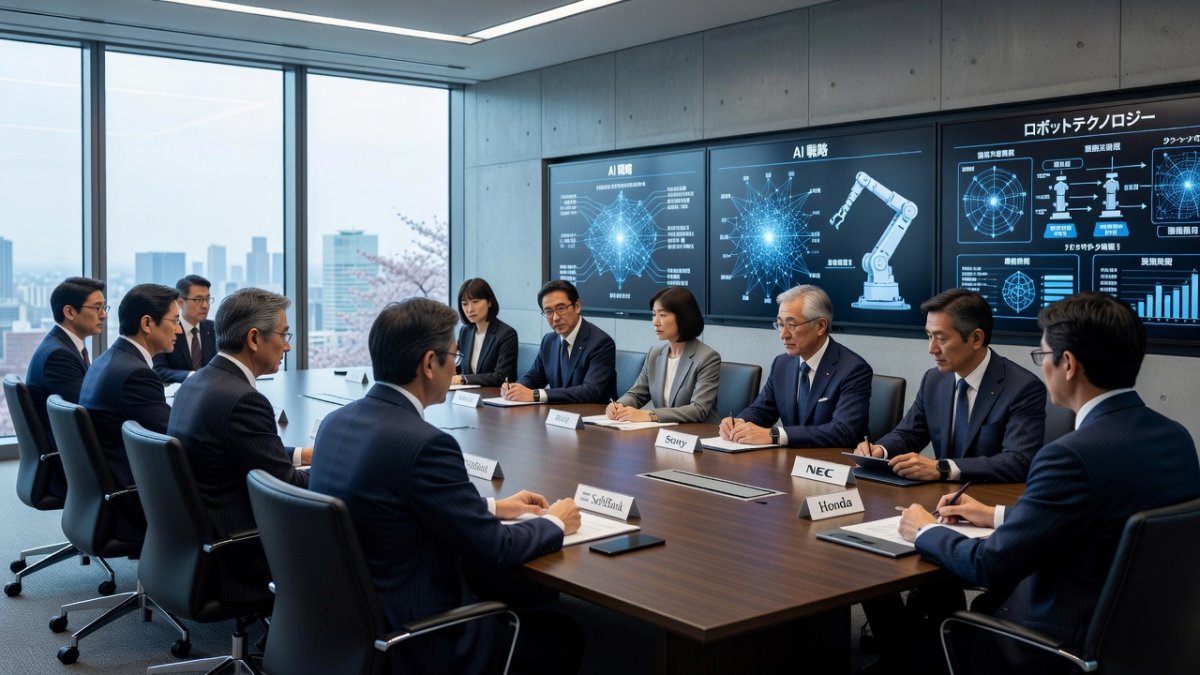
Japan Mobilizes Industry to Challenge US and Chinese AI Dominance
Japan has taken a decisive step toward technological sovereignty in artificial intelligence by launching a major national consortium to develop its own foundation models. The government announced substantial financial backing for Noetra, a collaborative effort involving some of the country’s most prominent corporations and research institutions.
Tags: Noetra, sovereign AI, Japan AI strategy, multimodal foundation model, SoftBank, AIST, physical AI, Sakana AI, Preferred Networks
Tokyo, Japan — Japan has launched a sweeping national initiative to assert technological independence in artificial intelligence through the newly formed Noetra consortium.
Noetra Consortium Brings Together Tech and Industrial Giants
The newly formed Noetra consortium unites SoftBank Corp., Sony, NEC and Honda in partnership with the National Institute of Advanced Industrial Science and Technology (AIST). This alliance represents a rare collaboration across telecommunications, consumer electronics, heavy industry and automotive sectors, all focused on creating a homegrown Japanese large-scale AI model.
Noetra aims to build a multimodal foundation model capable of processing diverse data types including text, images, video, audio and physical properties. The project was selected under the New Energy and Industrial Technology Development Organization’s (NEDO) “Development of Multimodal Foundation Models for AI Robots and Physical AI” program.
The consortium plans to expand participation to approximately 40 companies spanning manufacturing and non-manufacturing sectors, including automotive, electronics, logistics, telecommunications, information technology and finance. This broad industry involvement is intended to ensure the resulting AI system addresses real-world Japanese industrial and societal needs.
The collaboration between SoftBank, Sony, NEC, and Honda within the Noetra consortium represents a historically significant alignment of Japanese corporate power. While Japan has previously seen industry-academia-government partnerships, such as those under the Fifth Generation Computer Systems project in the 1980s, the breadth and depth of this particular alliance is largely unprecedented in the AI era. SoftBank brings its massive data infrastructure and experience with large-scale computing through its investments in Arm and its own AI initiatives. Sony contributes world-leading expertise in sensor technology, robotics (through Aibo and entertainment systems), and multimodal signal processing. NEC offers deep specialization in biometric recognition, secure systems, and industrial AI applications. Honda, meanwhile, supplies advanced robotics knowledge from its ASIMO and E2-DR projects as well as real-world automotive and mobility data. This combination creates a vertically integrated stack that few other nations can match domestically. According to industry analysts, cross-sectoral consortia of this scale have been rare in Japan since the VLSI Research Project of the late 1970s, making Noetra a potential turning point in Japanese industrial policy.
The partnership with the National Institute of Advanced Industrial Science and Technology (AIST) adds crucial scientific credibility and access to public research infrastructure. AIST has been quietly building capabilities in robotics, cyber-physical systems, and human-robot interaction for over two decades. Its inclusion ensures that Noetra’s multimodal foundation model will be developed with rigorous scientific methodology rather than purely commercial objectives. AIST’s facilities, including its supercomputing resources and robotics testbeds, will likely serve as neutral ground for experimentation. However, significant challenges remain in cross-industry collaboration. These include conflicting intellectual property priorities, differing corporate cultures (SoftBank’s aggressive entrepreneurship versus Honda’s traditional engineering discipline), data-sharing reluctance, and coordination overhead. Historical examples such as the failed “TRON” operating system project in the 1980s demonstrate how even well-funded Japanese consortia can struggle with governance and decision-making speed when competing corporate interests collide. For Noetra to succeed, it will require sophisticated governance mechanisms that have yet to be publicly detailed.
Furthermore, the planned expansion to approximately 40 companies across manufacturing, logistics, finance, and telecommunications sectors creates both opportunity and complexity. This “ecosystem” approach aims to embed Japanese industrial DNA directly into the foundation model, potentially creating competitive advantages in sectors where Japan retains global leadership. Yet scaling participation to this level risks diluting focus and introducing coordination failures. Comparative data from similar European efforts, such as France’s “France 2030” AI program or Germany’s “AI Made in Germany” initiative, shows that consortia exceeding 20 major partners often experience diminishing returns due to bureaucratic friction. Japan’s success with Noetra may ultimately depend on whether the consortium can maintain agility while achieving the broad industry representation that differentiates it from more narrowly focused American foundation model companies.
Government Commits Massive Funding to National AI Project
Minister of Economy, Trade and Industry Ryosei Akazawa revealed that Noetra will receive 387.3 billion yen (approximately US$2.4 billion) in subsidies for the current fiscal year. Over the next five years, total public support is expected to reach around 1 trillion yen ($6.1 billion).
This substantial investment underscores the Japanese government’s determination to establish a competitive domestic AI industry rather than remain dependent on foreign technologies. The funding will support both the development of the core foundation model and its adaptation for practical applications across multiple industries.
Minister Akazawa Outlines Physical AI Strategy
Minister Akazawa emphasized that Japan’s competitive advantage lies in its rich, domain-specific data accumulated over decades. He highlighted particularly valuable datasets in healthcare for the elderly, disaster response systems, advanced manufacturing sites, and the complex decommissioning process of the Fukushima No. 1 nuclear power plant.
The minister framed the Noetra project as central to Japan’s “physical AI” ambitions — the integration of advanced AI with real-world robotics and industrial systems. By combining Japan’s traditional manufacturing strengths with cutting-edge artificial intelligence, officials believe the country can carve out a unique position in the global AI landscape.
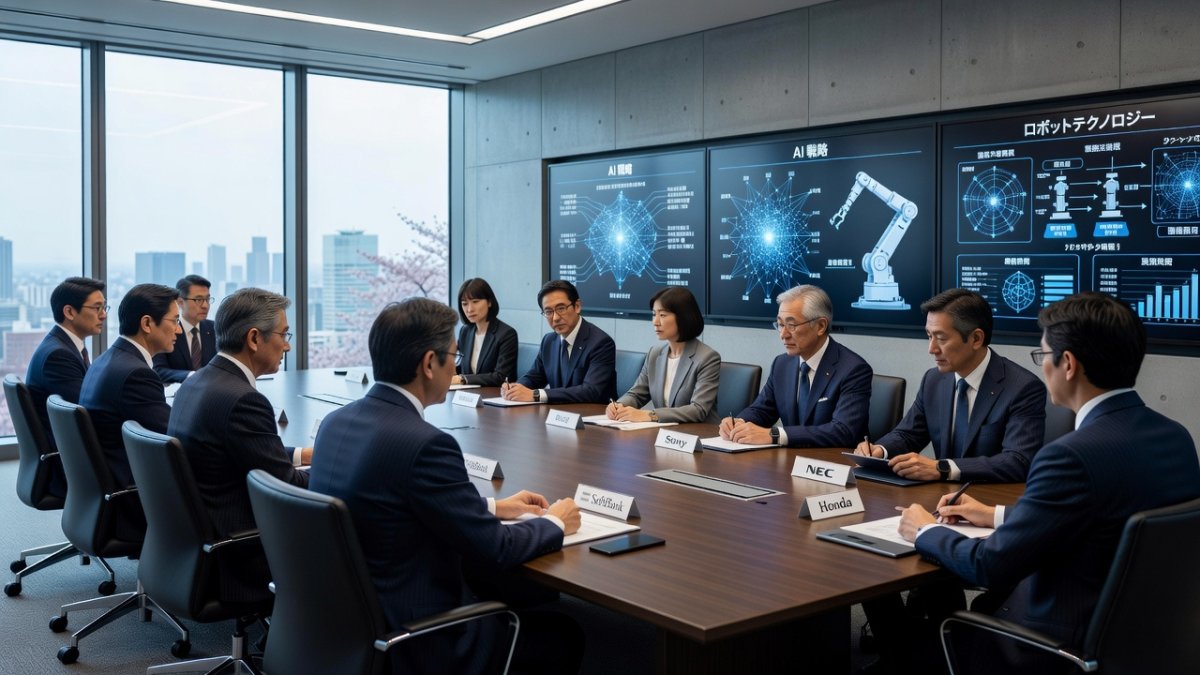
Physical AI, sometimes called embodied AI or robotics foundation models, represents a fundamental shift from the primarily digital, language-based models that have dominated US and Chinese development. While American companies have prioritized large language models for consumer applications, search, and content generation, and Chinese efforts have focused on surveillance, social control, and rapid commercialization, Japan is deliberately targeting AI systems that interact with the physical world. Physical AI requires models that can understand physics, spatial reasoning, force dynamics, and human movement. Japan’s demographic realities and industrial strengths give it distinct advantages here. With the world’s oldest population — 29% of citizens over 65 as of 2024 according to the National Institute of Population and Social Security Research — Japan faces acute labor shortages in healthcare and eldercare. AI systems that can safely assist elderly citizens represent both a massive domestic market and a potential export opportunity to other aging societies.
The Fukushima Daiichi nuclear decommissioning project provides another unique testbed for physical AI. The complex, high-radiation environment requires robots capable of sophisticated manipulation, navigation in unstructured spaces, and long-duration autonomous operation. Since the 2011 disaster, Japan has invested heavily in robotics for nuclear applications, creating datasets and real-world experience that few nations possess. Similarly, Japan’s frequent exposure to natural disasters — earthquakes, typhoons, and tsunamis — has driven development of disaster response robotics. The integration of these specialized datasets into a national multimodal foundation model could give Noetra significant advantages in “edge cases” where American and Chinese models typically underperform due to limited training data. Government data indicates Japan experienced 1,500+ earthquakes of magnitude 4.0 or greater between 2011 and 2023, creating an unmatched corpus of disaster-related visual, seismic, and operational data that can train more resilient physical AI systems.
This strategic focus differs markedly from US priorities, which remain centered on AGI race dynamics and commercial applications, and Chinese priorities emphasizing social harmony and military-civil fusion. Japan’s approach aligns with its comparative advantages in precision manufacturing, high-reliability engineering, and human-centered design. The Ministry of Economy, Trade and Industry has projected that the global market for physical AI and AI robotics could reach $1.2 trillion by 2035, with Japan aiming to capture 15-20% through early standardization and ethical frameworks. By embedding safety, reliability, and human dignity principles — areas where Japanese industry has historically excelled — Noetra seeks to create not just technological parity but normative leadership in responsible physical AI development. This represents a sophisticated understanding that in certain AI domains, quality, safety, and domain expertise may prove more decisive than raw scale.
Noetra President Stresses Sovereign AI Imperative
Hironobu Tanba, President of Noetra and a senior executive officer at SoftBank Corp., articulated the strategic necessity behind the project. “Being a sovereign AI becomes even more important when AI plays a core role in business,” Tanba stated.
He warned that reliance on overseas large language models (LLMs) presents dual risks: the unintentional transfer of confidential corporate information overseas and serious threats to business continuity. These concerns appear particularly acute for Japanese companies handling sensitive industrial, healthcare or infrastructure data.
Tanba’s comments reflect a growing consensus among Japanese policymakers and business leaders that control over foundational AI infrastructure is becoming as critical as control over energy or telecommunications networks.
The risks of depending on foreign AI for critical infrastructure have become increasingly apparent to Japanese policymakers. Critical sectors including energy grid management, financial market infrastructure, transportation control systems, healthcare records, and defense communications could be compromised if reliant on models developed by US or Chinese entities. These models are subject to foreign jurisdictions, potential backdoors, sudden policy changes, or “kill switches.” A 2023 report by Japan’s National Center of Incident Readiness and Strategy for Cybersecurity (NISC) highlighted that over 70% of Japanese critical infrastructure operators currently utilize some form of foreign cloud AI services. The vulnerability became particularly evident during the 2022-2023 global supply chain disruptions when access to certain US-based AI services was intermittently restricted for non-US customers. For a nation with limited natural resources and high technological dependence, ceding control of foundational AI infrastructure represents an unacceptable strategic risk comparable to depending on foreign powers for energy or food security.
Specific sectors most exposed include nuclear power plant operations, Shinkansen and urban rail signaling systems, financial trading platforms at the Tokyo Stock Exchange, and the nationwide medical records system. The aging of Japanese society further amplifies risks in healthcare, where AI diagnostic tools and elderly care robots could theoretically be manipulated or disabled through their underlying models. The Noetra President’s emphasis on sovereign AI echoes similar concerns raised by European leaders. France, for instance, has invested €2.2 billion through its “France 2030” plan specifically for sovereign foundation models. The UAE has established its own $100 billion AI company, MGX, while India has launched its IndiaAI Mission with $1.2 billion dedicated to domestic model development. Even South Korea has committed 9.4 trillion won through 2027 for its “AI Semiconductor Strategy” and national large language model initiatives. Japan’s 1 trillion yen commitment over five years positions it among the most ambitious democratic sovereign AI efforts globally, though still significantly smaller than China’s estimated annual state AI investment exceeding $20 billion.
Other nations approach sovereign AI through different models. The United States relies primarily on its private sector champions while using export controls and the CHIPS Act to maintain technological leads. China employs a state-directed ecosystem with heavy subsidies and explicit CCP oversight. European nations have emphasized regulatory frameworks and smaller-scale collaborative projects. Japan’s Noetra model — a government-funded but industry-led consortium with explicit focus on physical and industrial applications — represents a distinctive fourth approach that leverages Japan’s existing corporate strengths rather than attempting to replicate Silicon Valley or Shenzen models. The ultimate success of this strategy will determine whether Japan can maintain technological autonomy in the AI age or gradually slip into a position of digital vassalage. As geopolitical tensions in East Asia continue to rise, the strategic importance of Noetra extends far beyond economic competitiveness into fundamental questions of national resilience and sovereignty.
Private Sector Innovation Complements National Effort
While Noetra represents a government-backed national effort, Japan’s private AI sector continues to show dynamism. On June 22, Tokyo-based Sakana AI unveiled its Fugu LLM service, described as a “multi-agent orchestrator” that intelligently combines multiple existing large language models.
The company claims Fugu outperforms leading international models including Anthropic’s Claude 3.5 (referred to in the announcement as Fable 5), Google’s Gemini 1.5 Pro, and OpenAI’s GPT-4.5 in certain specialized applications. The release demonstrates that Japanese startups are pursuing innovative architectural approaches rather than simply attempting to replicate American models.
Another significant domestic player, Preferred Networks (PFN), has been active on multiple fronts. On June 2, PFN announced a strategic alliance with Mitsubishi Heavy Industries (MHI) to accelerate industrial AI applications.
Additionally, PFN released PLaMo 3.0 Prime, a Japanese-language optimized model that the company says delivers comparable performance to leading English-based models at less than half the cost. This focus on cost-efficient, language-specific models addresses a key practical concern for Japanese businesses seeking to deploy AI without massive computational overhead.
Prime Minister Takaichi’s Long-Term Economic Vision
The Noetra initiative sits within a broader strategic framework promoted by Prime Minister Sanae Takaichi. The government has identified 17 strategic economic sectors where Japan aims to maintain or achieve global leadership.
Among these ambitions is a target to mobilize 10.5 trillion yen ($64.5 billion) in combined public and private investment in physical AI technologies by 2040. This long-term commitment suggests that the current funding for Noetra represents only the opening phase of a sustained national effort to master AI-robotics integration.
Analysts note that Japan’s strategy differs markedly from those of the United States and China. Rather than focusing primarily on consumer internet applications or military uses, Tokyo is betting on the fusion of AI with its world-class manufacturing base, aging society challenges, and unique disaster-response requirements.
Success is far from guaranteed. Developing competitive foundation models requires enormous computational resources, world-class talent, and continuous access to high-quality training data. Whether Japan’s coordinated industry-government approach can overcome these barriers remains one of the most important questions in global technology competition.
Nevertheless, the scale of commitment demonstrated by the Noetra project and the surrounding policy announcements signals that Japan no longer intends to be a passive consumer of foreign AI technology. Instead, it is positioning itself as a serious contender in what many consider the defining technological race of the 21st century.
By Kenji Tanaka, Staff Writer
This article was produced with AI-assisted research and editorial support. Reporting is based on sources cited in the article.
What's Your Reaction?
 Like
0
Like
0
 Dislike
0
Dislike
0
 Love
0
Love
0
 Funny
0
Funny
0
 Wow
0
Wow
0
 Sad
0
Sad
0
 Angry
0
Angry
0

Japan Correspondent at Global1.News. Tokyo-based voice covering Japanese politics, technology, economy, and culture. Tracks the intersection of tradition and innovation in one of the world's most dynamic societies.














Comments (0)