
Is P.E.I. Breaking Federal Law by Making Some Residents Pay for Virtual Care?
A recent CBC News report by Steve Bruce examined whether Prince Edward Island is violating federal law by requiring some residents to pay for virtual care through the Maple platform. The investigation, published on June 18, 2026, highlights growing tensions between the province's healthcare policies and the requirements of the Canada Health Act. With roughly 30 per cent of Isla
A recent CBC News report by Steve Bruce examined whether Prince Edward Island is violating federal law by requiring some residents to pay for virtual care through the Maple platform. The investigation, published on June 18, 2026, highlights growing tensions between the province's healthcare policies and the requirements of the Canada Health Act. With roughly 30 per cent of Islanders lacking a family doctor, the question of who pays for virtual care has become a flashpoint in the national debate over medicare's future.
P.E.I.'s Virtual Care Dilemma: Is the Province Violating the Canada Health Act?
Charlottetown, Prince Edward Island – This week — Prince Edward Island finds itself at the centre of a national debate over virtual health services and the principles of medicare. The province paused plans to extend free virtual care to all residents more than a year ago, despite a 2023 election promise by the Progressive Conservatives to eliminate barriers for those who already have a family doctor. This development raises questions about compliance with federal rules and equitable access across the country.

Background on the Paused Virtual Care Initiative
During the 2023 provincial election campaign, the Progressive Conservatives committed to making virtual care free for everyone on Prince Edward Island. The promise extended beyond the existing program that was limited to residents without a family doctor, covering the roughly 35,000 Islanders — about 30 per cent of the province's 175,000 residents — who lack primary care. The pledge was broadly popular among voters who had experienced long waits and limited access to in-person appointments.
However, Health P.E.I. ultimately decided against proceeding with any proposals from virtual care companies that would have delivered free services to Islanders who already have primary care providers. This pause occurred more than a year ago, contradicting the election commitment and leaving a gap in accessible services. The decision reflects broader challenges in integrating new technologies into publicly funded systems while maintaining fiscal responsibility and navigating private-sector contracts.
Prince Edward Island has long struggled with primary care shortages, and the unfulfilled promise has drawn scrutiny from health advocates who argue that virtual options could alleviate pressure on walk-in clinics and emergency rooms. The province's approach contrasts with its earlier steps to fund virtual platforms, highlighting a shift in priorities after the election. Analysts note that such pauses can erode public trust in healthcare commitments, particularly when they involve services that align with the spirit of the Canada Health Act.
Current Access Through the Maple Platform
Maple serves as the virtual care platform funded by the province since 2020, primarily supporting Islanders without a family doctor. Under the current arrangement, those without a primary care provider can access the service at no direct cost. But individuals who already have a family doctor must pay out of pocket or rely on private work insurance for Maple consultations. This distinction creates a clear divide in how residents experience virtual care depending on their existing attachments to the healthcare system.
The arrangement means that roughly 35,000 people benefit from publicly supported access while others face financial hurdles for equivalent services. Maple's chief executive officer previously told CBC News that accepting payments for virtual care does not violate the Canada Health Act because the platform mostly uses nurse practitioners for paying patients. This distinction has become central to the debate following federal rule changes that took effect on April 1, 2026.
Health officials have maintained that the program targets those most in need, yet critics point out that family doctors often have limited availability for virtual follow-ups, pushing patients toward paid options. The result is a patchwork system where a resident's access to free virtual care depends on whether they have managed to secure one of the province's scarce family doctors, rather than on clinical need.
Advocates Raise Concerns Over Two-Tier System
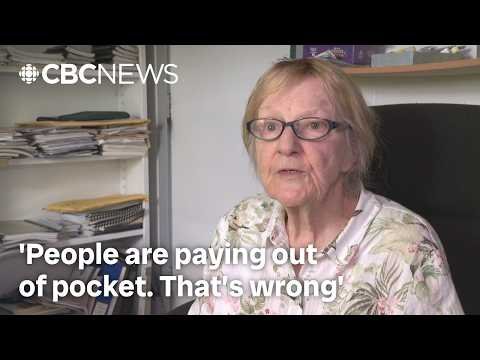
Mary Boyd, chair of the P.E.I. Health Coalition, has stated unequivocally that the province is violating the Canada Health Act by requiring out-of-pocket payments for virtual services. "You're not supposed to have to pay out of pocket for services in this country," Boyd said in the CBC News report. She emphasised that the Canada Health Act "does not have room for a two-tier health-care system" and does not accommodate people who "can afford to pay and jump the queue."
Boyd argued that everybody deserves equal access regardless of ability to pay. She proposed instead that the province build its own public virtual care infrastructure rather than relying on private companies like Maple. "We don't have to hire private companies and corporations," she said. "We can build our own public virtual care. We will have a system that people will have access to when they need it and it will be free of charge. They just have to take out their health card."
The coalition's position underscores longstanding debates about privatisation creeping into medicare. Advocates warn that incremental fees erode the foundational principles of Canada's single-payer system established decades ago. This stance has resonated with other health advocacy groups concerned about equity in rural and island communities, where access to in-person specialists is already limited.
Federal Rule Changes Effective April 2026
The Canada Health Act requires that medically necessary care provided by doctors must be publicly insured. That rule was expanded on April 1, 2026, to include nurse practitioners and anyone delivering physician-equivalent services. This change directly affects the Maple platform's business model, which had relied on the nurse-practitioner distinction to justify charging patients.
Steven Staples, national director of policy and advocacy with the Canadian Health Coalition, said the change should have been the end of private virtual care in P.E.I. "The provinces had lots of time, over a year, to bring this in, and so there's really no excuse for any province, including Prince Edward Island, to not have implemented this important policy," Staples said. He rejected suggestions that there is significant ambiguity around nurse practitioners' role. "I suspect there's not really any grey room with what nurse practitioners are doing. I think it's pretty clear that those are considered physician-equivalent services that are medically necessary and should be covered."
Staples pointed to the routine nature of the care in question. "What we're talking about is getting prescriptions filled, getting referrals done," he said. "That is run-of-the-mill, standard, uncontroversial, primary, medically necessary care." His comments underscore the view that the federal rule change was deliberately designed to close the loophole that private virtual care companies had been using.
Health Canada and Provincial Responses
Health Canada officials issued a statement offering a more nuanced interpretation of the policy change. "The policy does not explicitly include virtual care services provided by nurse practitioners, or services that are not considered medically necessary under the [Canada Health Act]," the statement reads. Provincial and territorial governments "have the flexibility to decide how best to fully integrate virtual care to deliver insured services provided by nurse practitioners into their health-care systems."
P.E.I.'s Department of Health and Wellness responded with a statement affirming the province's commitment to the Canada Health Act. "Prince Edward Island is committed to ensuring the accessibility of medically necessary services for residents," the statement reads. "The province continues to monitor federal guidance related to virtual care and will adjust provincial policies as needed to ensure ongoing compliance while improving access to care for Islanders."
Despite these assurances, the lack of concrete timelines for expanding free access has left many residents uncertain about future coverage. The response emphasises ongoing evaluation rather than immediate overhaul, reflecting the caution of a small province with limited fiscal resources navigating complex federal requirements.
Enforcement Timeline and Federal-Provincial Dynamics
Ottawa will begin enforcing the new rules in December 2028, giving provinces just over two years to bring their virtual care policies into compliance. Provinces found to be in violation could see their federal transfer payments affected — a significant financial lever given that federal health transfers account for a substantial portion of provincial healthcare budgets.
The delay until 2028 was built into the policy to give provinces and territories time to adjust their health insurance systems. Yet advocates argue that the extended timeline allows two-tier practices to persist unnecessarily. The P.E.I. case could become a test of Ottawa's willingness to enforce the Canada Health Act's principles, particularly when a small province with limited bargaining power is involved.
This federal-provincial dynamic illustrates the ongoing tension in maintaining national standards across diverse regional systems. Prince Edward Island, as Canada's smallest province, faces unique challenges in implementing large-scale healthcare reforms while managing a limited tax base and the higher per-capita costs of delivering services to a dispersed population.
Broader Implications for Canadian Medicare
This situation in Prince Edward Island carries significant weight for the national medicare system. It tests the boundaries of universality in an era of digital health expansion, where virtual care platforms have blurred the lines between public and private delivery. Other provinces such as Ontario, Quebec, and British Columbia have pursued varied strategies. Some have integrated virtual care more broadly into public insurance, while others maintain hybrid models involving private platforms and out-of-pocket payments.
These differences highlight the patchwork nature of implementation across Canada, where geography, population density, and political priorities influence policy choices. The P.E.I. case may set precedents for how the Canada Health Act applies to virtual care services nationwide. Labour groups and health coalitions across the country have watched similar virtual care arrangements emerge in other provinces, concerned that private platforms could become entrenched before federal enforcement begins.
As the December 2028 enforcement date approaches, provinces face pressure to eliminate any two-tier elements in virtual services or risk funding penalties. The debate centres on whether private involvement accelerates innovation or undermines equity. Many experts advocate for fully public platforms to preserve the single-payer model that has defined Canadian healthcare for more than five decades.
What Happens Next
The P.E.I. government has signalled that it continues to monitor federal guidance and will adjust policies as needed. However, no specific timeline has been announced for expanding free virtual care to all Islanders. The coming months will reveal whether the province moves toward a public virtual care model as advocated by Boyd and the P.E.I. Health Coalition, or continues its current approach of publicly funding care only for those without a family doctor.
The federal government's enforcement timeline adds a layer of urgency. With December 2028 as the deadline, provinces must decide how to structure their virtual care offerings to comply with the expanded definition of insured services. The outcome will determine whether Maple and similar platforms can continue charging patients for nurse practitioner consultations, or whether those services must be folded into provincial health insurance plans.
For the 35,000 Islanders without a family doctor, the current system provides a vital lifeline. For those with a doctor who still need after-hours or urgent virtual care, the costs remain a barrier. The resolution of this debate will shape not only how Prince Edward Island delivers virtual care, but how all Canadian provinces navigate the intersection of technology, private enterprise, and the foundational principles of medicare.
By Alex Thompson, Staff Writer
This article was produced with AI-assisted research and editorial support. Reporting is based on sources cited in the article.
What's Your Reaction?
 Like
0
Like
0
 Dislike
0
Dislike
0
 Love
0
Love
0
 Funny
0
Funny
0
 Wow
0
Wow
0
 Sad
0
Sad
0
 Angry
0
Angry
0

Canada Correspondent at Global1.News. Based in Toronto, covering Canadian politics, energy, trade, and US-Canada relations. Provides the Canadian perspective on North American and global affairs.














Comments (0)