
Iranian Singer Sentenced to 74 Lashes Over Concert
The Sentence On June 18 2026 the Qom court handed down a brutal verdict that shocked the world yet barely registered amid diplomatic fanfare. Nine individuals including singer Parastoo Ahmadi received 74 lashes each along with a two-year travel ban and a two-year artistic ban. The court labeled their work obscene and immoral a phrase that drips with the regime's fear of women w
The Sentence
On June 18 2026 the Qom court handed down a brutal verdict that shocked the world yet barely registered amid diplomatic fanfare. Nine individuals including singer Parastoo Ahmadi received 74 lashes each along with a two-year travel ban and a two-year artistic ban. The court labeled their work obscene and immoral a phrase that drips with the regime's fear of women who dare to sing without hijab. This punishment arrived the day after the United States and Iran signed a major peace deal creating a grotesque juxtaposition where handshakes in conference rooms overshadowed the cracking of whips in Iranian courtrooms.
The numbers tell a story of calculated cruelty. Seventy-four lashes repeated across nine lives means hundreds of strikes designed to break bodies and spirits. The two-year bans ensure these artists cannot flee or create leaving them trapped in a system that punishes creativity. The obscene and immoral label serves as both legal weapon and moral judgment aimed squarely at women who challenge theocratic control. While diplomats toasted the peace deal on June 17 2026 the Qom judges moved swiftly to remind everyone that internal repression remains untouched by foreign agreements. This sentence is not justice but a public flogging meant to deter millions from imagining freedom.
The Caravanserai Concert
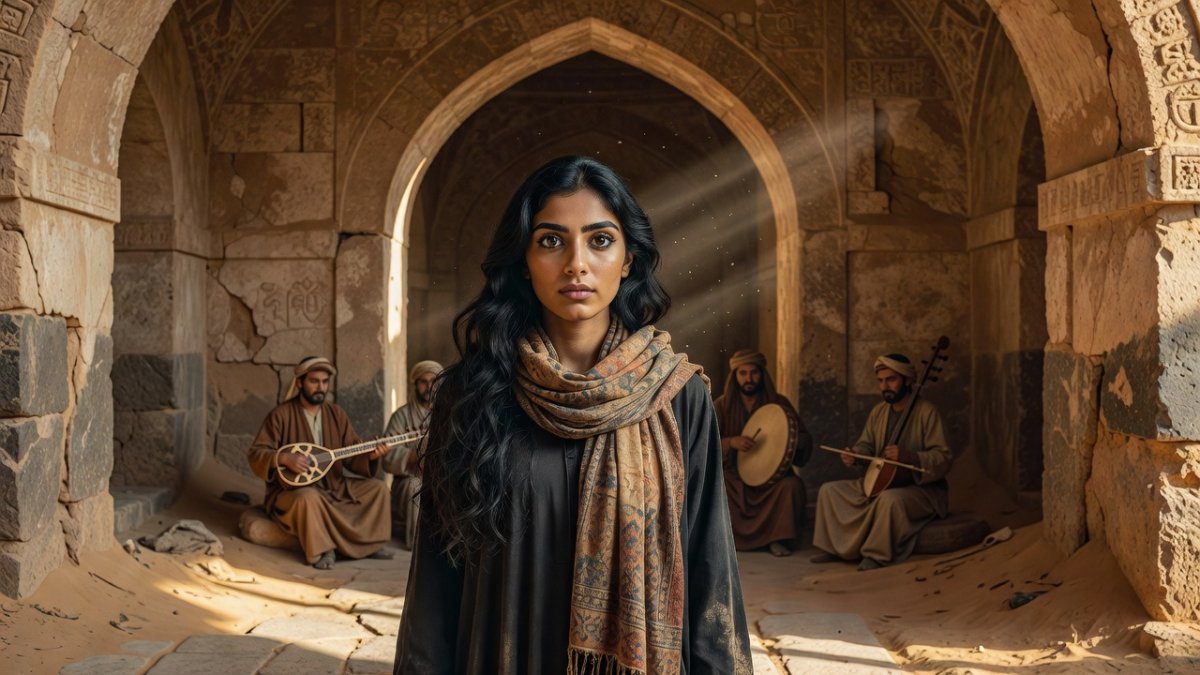
Everything began at the ancient Deir-e Gachin caravanserai a fifth-century Silk Road inn that once sheltered traders crossing deserts. In December 2024 Parastoo Ahmadi and her team staged a performance there without hijab surrounded by male musicians whose presence alone defied every rule. The footage spread across platforms racking up millions of views as viewers witnessed women singing openly in a historic site that symbolized connection rather than isolation. The regime branded it an imaginary concert dismissing the reality captured on camera yet the images refused to vanish from public memory.
That night at Deir-e Gachin transformed a crumbling inn into a stage of defiance. No hijab meant direct confrontation with morality laws while male musicians stood as equals breaking gender segregation codes. Millions watched and shared the video turning a single performance into a viral act of resistance. The regime's response came eighteen months later with lashes and bans proving how deeply one concert threatened their grip. The fifth-century walls witnessed both ancient commerce and modern courage yet the court in Qom chose punishment over progress. This event lives on as proof that art in forbidden spaces can ignite global attention even when authorities label it imaginary.
The People Behind the Verdict
Parastoo Ahmadi stands at the center twenty-eight years old from Nowshahr and trained at film school where she first learned to channel defiance into performance. Her fame grew through videos that rejected silence and now the Qom verdict targets her voice with seventy-four lashes plus bans that could silence her for years. Ehsan Beiraqdar and Soheil Faqih Nasiri joined her as key collaborators facing the same lashes and restrictions for their roles in the Deir-e Gachin production. Six additional production crew members complete the group of nine each carrying the weight of the June 18 2026 sentence that threatens their futures.
These individuals now navigate shattered lives under constant surveillance. Parastoo from Nowshahr built her career on refusing to hide yet the two-year artistic ban blocks every path forward. Ehsan Beiraqdar and Soheil Faqih Nasiri who helped shape the sound and vision face identical physical and professional penalties. The six crew members many of them young technicians and assistants must endure lashes while rebuilding careers in a country that criminalizes their skills. Their daily reality involves fear of further arrests and the slow erosion of hope. The verdict does not punish crimes but punishes the act of creating beauty without permission turning artists into targets and leaving nine lives marked by June 18 2026.
Iran's Legal War on Women
Iran's Islamic penal code explicitly forbids women from singing before mixed audiences turning every note into a potential crime. Hijab violations escalate from social pressure to criminal offense with morality police enforcing rules through arrests beatings and now lashings. Since the 2022 crackdown following nationwide protests the regime intensified its war on women deploying forces to patrol streets and monitor online content. Men face no equivalent restrictions allowing male musicians freedom while women endure asymmetric punishment that reveals the system's core obsession with controlling female bodies.
The legal framework weaponizes morality to maintain power. Under the penal code a woman singing without hijab receives the same treatment as serious offenders yet the offense remains artistic expression. Post-2022 the morality police expanded operations targeting performers like those at Deir-e Gachin and issuing verdicts such as the June 18 2026 Qom ruling. This asymmetry leaves women bearing the full brunt of repression while men collaborate without fear. The code does not protect society but protects patriarchy ensuring that every performance by Parastoo Ahmadi or her peers triggers state violence. The war continues daily in courts and on streets proving that diplomacy alone cannot dismantle laws designed to silence half the population.
The Peace Deal Paradox
The United States and Iran signed a memorandum of understanding on June 17 and 18 2026 promising reduced tensions and economic openings. Yet the very next day the Qom court delivered its sentence of lashes and bans against nine artists exposing the paradox at the heart of this diplomacy. The deal addresses nuclear issues and trade routes but contains zero provisions for human rights or women's freedoms. Timing reveals intent as officials celebrated agreements while judges in Qom moved to crush domestic dissent proving that peace on paper ignores the reality of repression on the ground.
Diplomacy here functions as theater that shields the regime from accountability. The MOU signed across those two days focuses on strategic interests leaving the Islamic penal code and morality police untouched. No clause demands an end to lashes for singers or lifts artistic bans for women like Parastoo Ahmadi. This selective engagement allows the regime to project moderation abroad while intensifying control at home. The peace deal paradox lies in its silence on gender apartheid where foreign powers prioritize stability over justice. By ignoring the June 18 2026 verdict the agreement becomes complicit in ongoing cruelty turning diplomatic success into moral failure.
Global Reaction Means Nothing Without Action
Amnesty International IranWire Hengaw HRANA the Guardian BBC RFE/RL Reuters JP and Ynet all published detailed reports on the June 18 2026 Qom verdict. Headlines highlighted the seventy-four lashes the two-year bans and the targeting of Parastoo Ahmadi yet coverage faded within days. These organizations documented the Deir-e Gachin concert the morality police crackdown and the peace deal timing but their words produced no immediate change in policy or pressure on Tehran. Reporting alone cannot halt the whips or reverse the artistic bans.
The pattern repeats across every case where international media and rights groups expose abuses without follow-through. Amnesty and HRANA issued urgent appeals while Reuters and the Guardian detailed the nine defendants' stories yet governments continued diplomatic engagement. BBC and RFE/RL broadcast interviews with activists but no sanctions tied to women's rights emerged from the June 17-18 MOU. Ynet and JP covered regional implications yet the regime faced no concrete costs for its actions. Global reaction creates noise that dissipates without sustained campaigns or economic consequences leaving the sentenced artists isolated and the system emboldened.
What This Reveals About the Regime
The June 18 2026 verdict exposes a regime that fears artists more than foreign enemies. Parastoo Ahmadi's performance at Deir-e Gachin triggered harsher punishment than many diplomatic disputes because her voice threatens the foundation of control through women's bodies. The Islamic penal code and morality police exist to police gender not security proving that internal dissent ranks higher than external threats. The peace deal signed the previous day served as perfect cover allowing the regime to project openness while lashing its own citizens behind closed doors.
Control through women's bodies remains the regime's primary tool for maintaining power. By banning women from singing before mixed audiences and enforcing hijab through violence the authorities reveal their deepest insecurity. Artists like Parastoo Ahmadi Ehsan Beiraqdar and the six crew members represent cultural resistance that no missile or negotiation can match. The timing with the US-Iran MOU shows how diplomacy provides breathing room for repression. This pattern demonstrates that the regime views creative women as existential dangers and will sacrifice international image to silence them proving that peace without rights is merely a pause before the next crackdown.
What You Can Do
Contact your elected representatives today and demand that any future US-Iran agreements include binding conditions on women's rights and an end to lashings for artists. Share the names Parastoo Ahmadi Ehsan Beiraqdar Soheil Faqih Nasiri and the six crew members across every platform to keep their stories visible beyond the June 18 2026 verdict. Support monitoring organizations such as Amnesty International HRANA Hengaw and IranWire with donations and amplification so they can document abuses in real time and pressure governments for accountability.
Keep this story alive by writing letters to newspapers and posting updates that tie the peace deal directly to the Qom sentence. Demand that diplomats refuse to ignore the Islamic penal code and morality police when negotiating with Tehran. Organize local events to educate communities about the Deir-e Gachin concert and the resulting bans ensuring that millions of views translate into sustained action. Refuse to let the two-year artistic bans fade from memory and insist that women's voices shape every discussion of Iran policy. Collective pressure remains the only force capable of challenging a regime that punishes song with lashes.
By Jessica Ali, Staff WriterThis article was produced with AI-assisted research and editorial support. Reporting is based on sources cited in the article.
What's Your Reaction?
 Like
0
Like
0
 Dislike
0
Dislike
0
 Love
0
Love
0
 Funny
0
Funny
0
 Wow
0
Wow
0
 Sad
0
Sad
0
 Angry
0
Angry
0

Editor-in-Chief at Global1.News. Atlanta-based journalist who cuts through the BS and tells it like it is. Lead anchor, host, and the voice you hear when the spin stops and the truth starts.











Comments (0)