
CUET UG 2026 Results Delayed: NTA's Fourth Failure in May
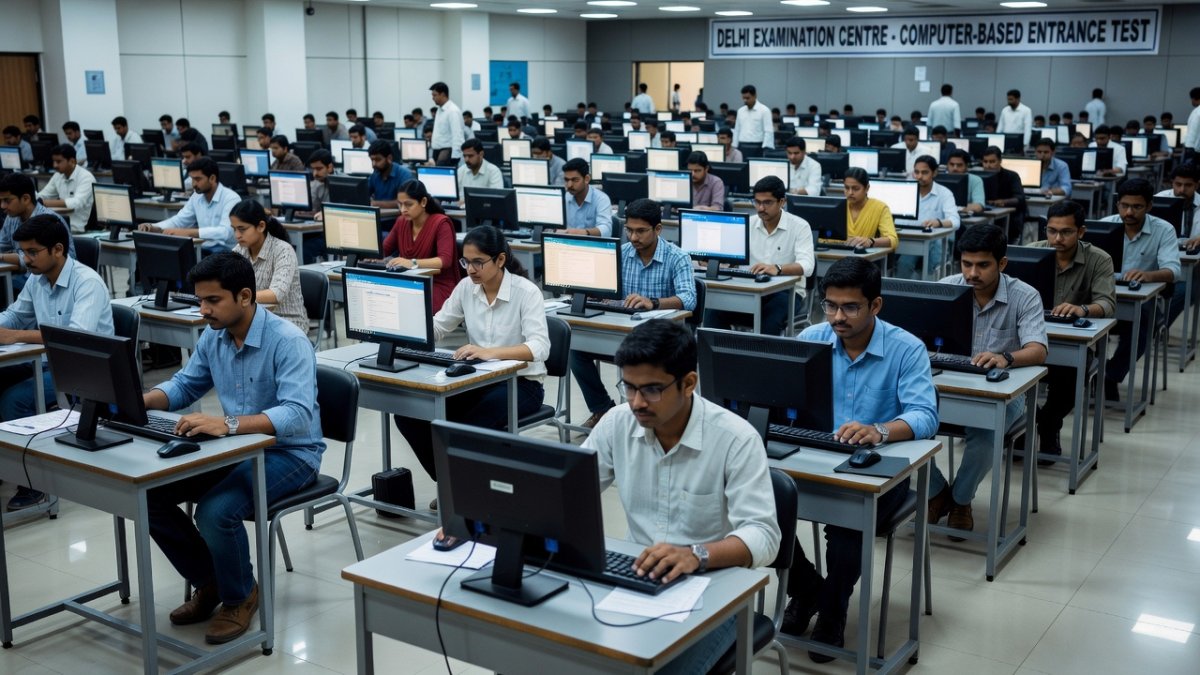
CUET UG 2026 Results Face Delays as NTA Grapples With Fourth Exam Failure in May New Delhi, Delhi – June 19, 2026 The National Testing Agency conducted the Common University Entrance Test Undergraduate 2026 across a 21-day window from May 11 to May 31, registering nearly 15.7 lakh candidates who generated 67,56,321 test instances through 12,906 distinct subject combinations in
CUET UG 2026 Results Face Delays as NTA Grapples With Fourth Exam Failure in May
New Delhi, Delhi – June 19, 2026 The National Testing Agency conducted the Common University Entrance Test Undergraduate 2026 across a 21-day window from May 11 to May 31, registering nearly 15.7 lakh candidates who generated 67,56,321 test instances through 12,906 distinct subject combinations in 35 shifts. Results remain scheduled between June 20 and 26, yet the timeline now carries the weight of repeated operational breakdowns that have already pushed back undergraduate admissions at 45 central universities, including Delhi University, Banaras Hindu University, Jawaharlal Nehru University and Aligarh Muslim University.The Scale of CUET UG 2026: 15.7 Lakh Candidates, 67.5 Lakh Tests
The examination spanned centres across India and 14 international cities in 13 countries, producing 67,56,321 individual test instances from 15.7 lakh registered candidates. These figures reflect the Ministry of Education’s decision to centralise undergraduate admissions through a single national test rather than separate university-level entrances. In Delhi alone, thousands of candidates from government schools in East Delhi and South Delhi districts competed alongside students from coaching hubs in Mukherjee Nagar and Rajinder Nagar. The 12,906 subject combinations required NTA to manage logistics at a scale previously unseen in Indian higher education testing. This volume directly affects seat allocation matrices at central universities, where normalised scores determine rank lists for programmes ranging from B.A. (Hons) History at Kirori Mal College to B.Sc. (Hons) Physics at Miranda House. Any slippage in result processing therefore cascades into delayed academic calendars for the 2026-27 session across the entire central university system.
Technical Glitch and NTA's Pattern of Systemic Failures
On May 30, 2026, a technical glitch disrupted examinations at multiple centres, affecting 3,765 students. NTA responded by scheduling re-examinations on June 6 and 7. This incident marked the fourth NTA exam failure recorded in May 2026 alone. The agency operates under the Ministry of Education and has previously faced criticism for similar disruptions in other national-level tests. The repeated failures raise questions about server capacity and quality-control protocols at a body responsible for high-stakes assessments that determine access to publicly funded higher education seats. Students from smaller towns in Uttar Pradesh and Bihar, who travelled to distant centres, bore additional travel and accommodation costs without guaranteed compensation. The pattern suggests structural under-investment in testing infrastructure despite the Ministry’s expansion of NTA’s mandate since 2019.
Answer Key Timeline and Result Timeline
NTA released the provisional answer key on June 9, 2026, opening a challenge window that has since concluded. The final answer key is now under internal review, with the agency projecting result declaration between June 20 and 26. This compressed window leaves little margin for further technical issues. Central universities require these scores to finalise admission calendars; Delhi University, for instance, has already postponed its undergraduate admission portal activation pending CUET data. The June 20-26 target therefore functions as a hard deadline for thousands of first-year students planning hostel allotments and course registrations in cities such as Delhi, Varanasi and Aligarh.
Impact on Delhi University and 45+ Central University Admissions
Teachers at Miranda House and Kirori Mal College have publicly flagged concerns that further delays will compress the admission cycle into an unmanageable period, leaving insufficient time for document verification and grievance redressal. With 45 central universities dependent on CUET scores, the ripple effects extend beyond Delhi to institutions in Aligarh, Varanasi and Hyderabad. State universities in Rajasthan and Madhya Pradesh that align their calendars with CUET also face downstream scheduling pressure. For students from economically weaker sections, delayed results translate into prolonged uncertainty over hostel accommodation and scholarship disbursal under schemes administered by the Ministry of Education. The equity dimension is stark: candidates from well-resourced urban coaching centres can absorb delays more easily than those from rural districts in Bihar or Odisha who rely on precise timelines to arrange travel and finances.
Supreme Court's Message and Institutional Accountability
The Supreme Court’s observation that NTA should “learn from UPSC” underscores the contrast between the two bodies’ operational records. While UPSC maintains a single annual cycle with minimal reported disruptions, NTA has expanded rapidly under the Ministry of Education without commensurate strengthening of its technical and administrative systems. The Court’s remark points toward the need for structural reforms, including independent audits of examination delivery and clearer accountability mechanisms. Without such changes, the credibility of scores used for admissions at 45 central universities remains vulnerable to future challenges in court or through RTI queries filed by affected candidates.
What This Means for India
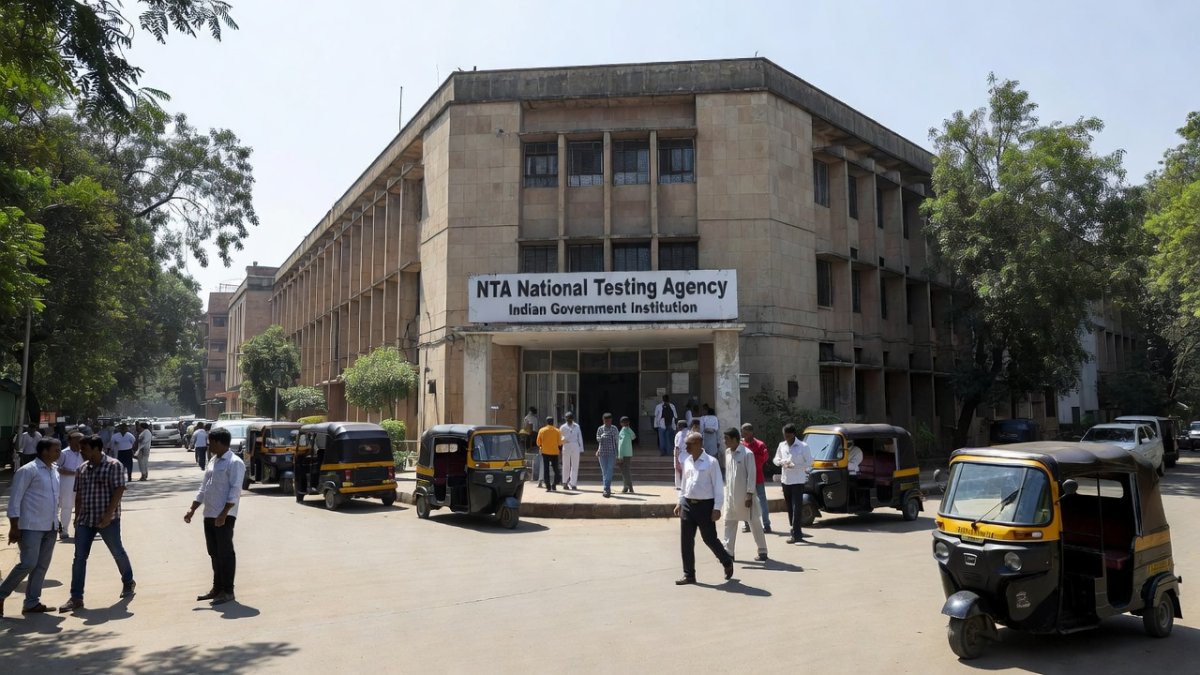
The CUET model was introduced to reduce the burden of multiple entrance examinations and promote standardisation across central universities. Yet the 2026 execution reveals gaps between policy intent and operational capacity. Taxpayers fund NTA through the Ministry of Education budget; repeated failures therefore represent an inefficient use of public resources. The coaching industry, concentrated in Delhi’s Mukherjee Nagar and Kota in Rajasthan, continues to profit from student anxiety generated by shifting timelines. Meanwhile, students from government schools in districts such as Nalanda or Bastar face structural disadvantages when result delays compress preparation time for subsequent processes like counselling and document verification. Policy analysts note that restoring confidence will require the Ministry to publish detailed post-examination audit reports and consider phased decentralisation of certain testing functions to IITs or other established institutions with proven logistical records.
The Bottom Line
With 15.7 lakh candidates, 67,56,321 test instances and a June 20-26 result window already under pressure from the May 30 glitch that affected 3,765 students, NTA’s performance in CUET UG 2026 will shape public trust in the centralised admission system for years. The Supreme Court’s call to emulate UPSC standards, combined with documented concerns from faculty at Miranda House and Kirori Mal College, signals that incremental fixes will no longer suffice. For Indian students and the 45 central universities awaiting data, the coming week will test whether the Ministry of Education can convert policy ambition into reliable execution. — By Dr. Raj Patel, Staff Writer
This article was produced with AI-assisted research and editorial support. Reporting is based on sources cited in the article.
What's Your Reaction?
 Like
0
Like
0
 Dislike
0
Dislike
0
 Love
0
Love
0
 Funny
0
Funny
0
 Wow
0
Wow
0
 Sad
0
Sad
0
 Angry
0
Angry
0

India/South Asia Correspondent at Global1.News. Analytical voice with a background in science and health journalism. Based in New Delhi, covering Indian politics, education, healthcare, technology, and policy. Breaks down complex data into clear, actionable reporting.















Comments (0)