
Iranian Diaspora Protests at the World Cup 2026: Where Does the Movement Go Next?
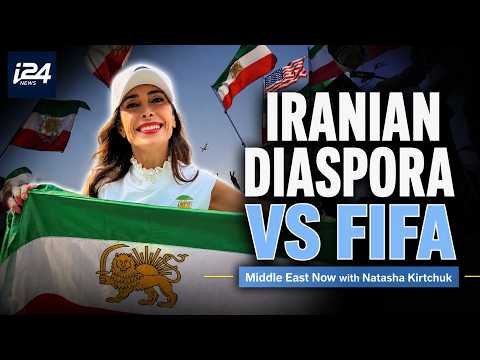
In a recent i24NEWS English YouTube video titled "Where do Iranian diaspora protests go next in the World Cup?", the report examines the hundreds of Iranian demonstrators who gathered outside Los Angeles Stadium in Inglewood, California, ahead of Iran's June 15, 2026, World Cup opener against New Zealand. The protests, which unfolded against the backdrop of a tentative US-Iran
In a recent i24NEWS English YouTube video titled "Where do Iranian diaspora protests go next in the World Cup?", the report examines the hundreds of Iranian demonstrators who gathered outside Los Angeles Stadium in Inglewood, California, ahead of Iran's June 15, 2026, World Cup opener against New Zealand. The protests, which unfolded against the backdrop of a tentative US-Iran ceasefire declared just 24 hours before kickoff, have raised questions about the future direction of the Iranian diaspora opposition movement as the tournament continues.
Where Do Iranian Diaspora Protests Go Next in the World Cup?
Tel Aviv, Israel — Iranian demonstrators assembled outside Los Angeles Stadium on June 15, 2026, carrying pre-1979 Lion and Sun flags while Israeli Prime Minister's Office officials monitored the event through Mossad channels for signs of regime weakness. The gathering coincided with the US-Iran ceasefire announcement on June 14, shifting focus from military exchanges to political signaling by opposition groups. Israeli intelligence assessments viewed the protests as indicators of sustained internal fractures within Iran that could affect proxy operations in Lebanon and Gaza.
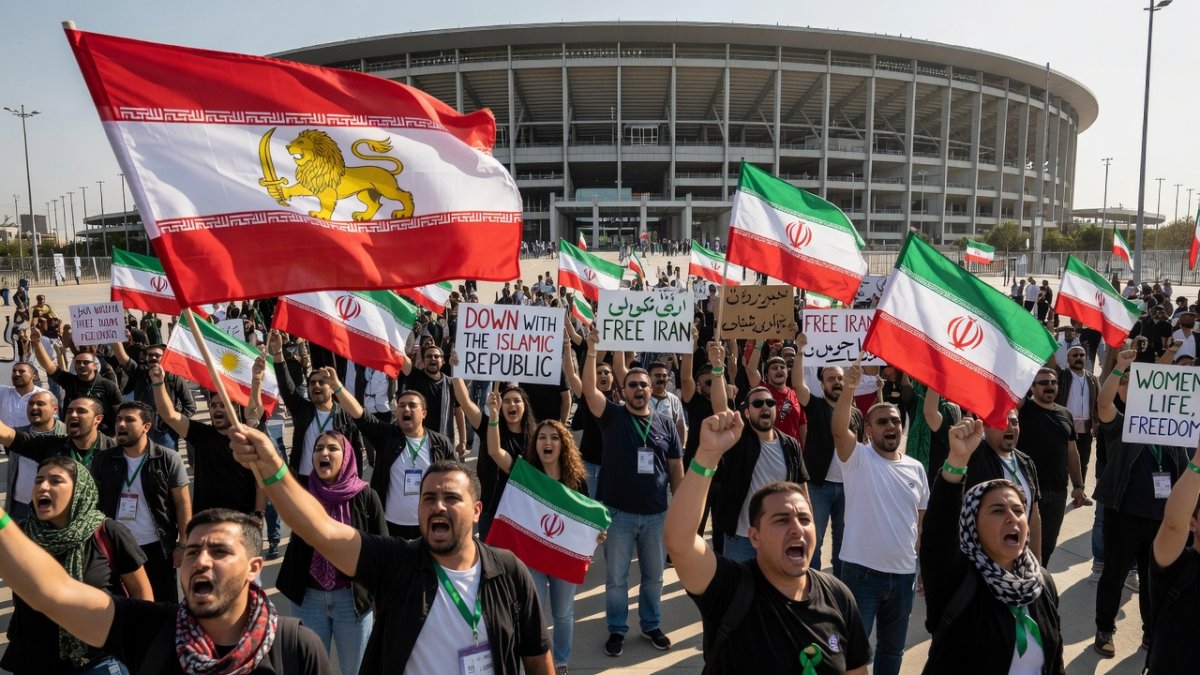
Diaspora Demonstrations at the June 15 Match
Between 200 and 500 protesters gathered at the Inglewood venue perimeter from 4 p.m. local time, waving Lion and Sun flags and chanting slogans against Supreme Leader Ali Khamenei. Organizers coordinated through WhatsApp groups linked to the National Council of Resistance of Iran, timing the action to the ceasefire's first day. Los Angeles Police Department units maintained a visible presence but reported no arrests during the four-hour demonstration.
Inside Los Angeles Stadium, Iranian fans booed the playing of the Islamic Republic anthem before the 8 p.m. kickoff against New Zealand. Several spectators displayed small Lion and Sun patches on clothing despite FIFA regulations. The booing lasted approximately 90 seconds and was captured on broadcast feeds reaching audiences in Tel Aviv and Riyadh.
Belgian-Iranian activist Darya Safai stood in the stands holding a large Lion and Sun flag during the 67th minute, prompting stadium security to approach but not remove her. Safai had arrived from Brussels on a tourist visa two days earlier and posted live updates tagging Iranian opposition accounts. Her action drew immediate coverage from i24NEWS and Israeli Channel 12.
The protest outside continued until midnight, with participants dispersing after the final whistle of Iran's 2-2 draw with New Zealand. Organizers announced plans to reconvene before the June 21 match against Belgium in the same stadium. Iranian state media later condemned the demonstrations as foreign-orchestrated without naming specific governments.
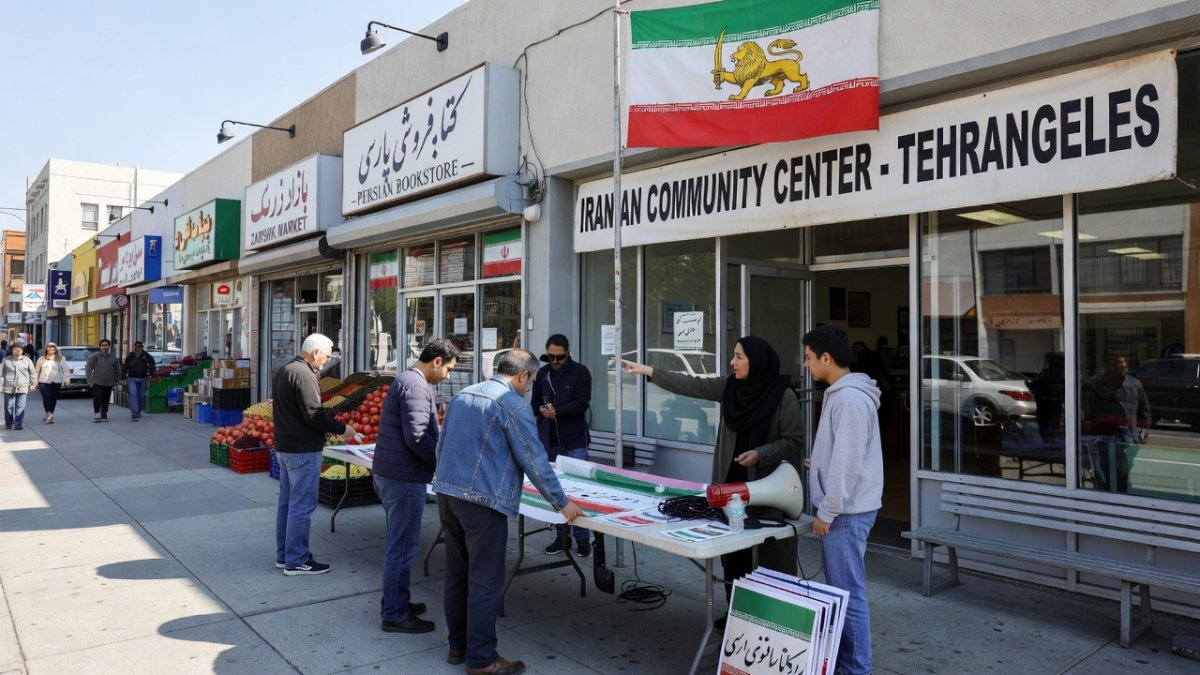
Tehrangeles as a Hub of Opposition Activism
Los Angeles County hosts an estimated 150,000 residents of Iranian origin, concentrated in areas known as Tehrangeles along Westwood Boulevard and in Beverly Hills. Community centers such as the Iranian American Jewish Federation coordinated logistics for the June 15 event, providing transportation from multiple pickup points. Local Persian-language outlets including Radio Farda and Iran International maintained live coverage from the stadium perimeter.
Tehrangeles-based groups have sustained weekly demonstrations since the 2025 Mahsa Amini anniversary protests that began in Tehran on September 16, 2025. These actions included petitions delivered to the US State Department on May 12, 2026, requesting expanded sanctions on Islamic Revolutionary Guard Corps commanders. The June 15 World Cup mobilization built directly on that infrastructure.
Media organizations operating from Los Angeles studios supplied opposition figures with broadcast time slots during the tournament. One program on June 14 featured former Iranian national team player Ali Karimi criticizing the regime's handling of the ceasefire negotiations. Such coverage reached viewers inside Iran through satellite dishes despite jamming attempts by authorities in Tehran.
Business networks in Tehrangeles funded the printing of 1,000 Lion and Sun flags distributed at the stadium entrance. Donors included owners of Persian supermarkets on Pico Boulevard who had previously supported 2025 protest logistics. This financial base allows sustained operations beyond single events.
Player Dilemma: National Pride vs. Political Symbolism
Iran's national team players sang the official anthem before the June 15 match, reversing the silent protest they staged during the 2022 Qatar World Cup. Captain Ehsan Hajsafi addressed reporters after the game, stating the squad focused on athletic performance amid the ceasefire. Several players later posted images of the match on Instagram without political commentary.
Diaspora activists had urged players via social media to repeat the 2022 gesture, citing ongoing executions in Iran. Forward Mehdi Taremi received direct messages from Los Angeles accounts before the match but did not respond publicly. The split in loyalties created visible tension within the squad according to team sources.
Pressure from Tehrangeles intensified after Darya Safai's flag display, with some supporters calling for a boycott of Team Melli matches. Players faced accusations of regime alignment from opposition accounts while receiving instructions from Iranian Football Federation officials to avoid political statements. This dynamic mirrors earlier tensions during the 2022 tournament in Qatar.
US Travel Restrictions and Logistical Barriers
The Iranian squad returned to a training base in Tijuana, Mexico, immediately after the June 15 match due to US visa restrictions tied to the ongoing ceasefire monitoring. Team members held B-1/B-2 visas valid only for match days, requiring departure within 24 hours. This arrangement limited contact with diaspora supporters in California.
Midfielder Mehdi Torabi was denied a visa extension on June 10, 2026, preventing him from attending community events in Los Angeles. Iranian officials cited the denial as evidence of US hostility despite the ceasefire. The team instead held a closed video call with supporters on June 16 from Tijuana.
Logistical constraints also affected preparations for the June 21 match against Belgium. The squad crossed the border twice daily for training sessions at a facility in San Diego, escorted by US Customs and Border Protection personnel. These movements reduced opportunities for unscheduled interactions with opposition figures.
Israeli Security Assessment of Iranian Fragility
Israeli Prime Minister's Office received Mossad reports on June 15 detailing the scale of diaspora protests and their potential to erode regime cohesion. Analysts assessed that visible opposition during the World Cup could weaken Iran's ability to project strength through proxies in Syria and Yemen. IDF intelligence units incorporated these observations into weekly threat evaluations.
The protests coincided with reduced Iranian missile activity along the Israel-Lebanon border in the days following the ceasefire. Israeli officials interpreted this lull as evidence that internal divisions were constraining operational decisions in Tehran. Mossad maintained monitoring of social media traffic between Los Angeles and Iranian cities.
Security assessments concluded that sustained diaspora visibility at sporting events could accelerate elite defections within Iran's security apparatus. Specific names of potential contacts were flagged in classified briefings circulated to the Israeli cabinet on June 16. These evaluations directly informed diplomatic messaging to European partners.
Gulf States Watch Iranian Divisions
Saudi Arabia and the United Arab Emirates tracked the Los Angeles demonstrations through their own intelligence channels, noting parallels to 2025 unrest inside Iran. Riyadh assessed that weakened regime control could reduce Houthi attack frequency in the Red Sea. UAE officials coordinated sanctions lists with US Treasury representatives on June 17.
The protests highlighted fractures that Gulf states believe limit Iran's capacity to sustain proxy networks in Iraq and Lebanon. Saudi Foreign Minister Faisal bin Farhan referenced regional stability in a June 16 statement without directly naming the World Cup events. Emirati media outlets carried detailed coverage of the Lion and Sun flag displays.
Coordination meetings between Gulf and Israeli security teams occurred in Abu Dhabi on June 18 to discuss implications for sanctions enforcement. Participants examined how diaspora activism might influence future nuclear negotiations. These discussions built on existing Abraham Accords frameworks.
The Movement's Trajectory After the World Cup
Organizers in Tehrangeles scheduled additional gatherings outside Los Angeles Stadium before Iran's June 21 match against Belgium and the June 25 group stage finale. Plans include coordinated online campaigns targeting FIFA sponsors over regime associations. Funding from local businesses is secured through July.
Activists aim to maintain momentum after the tournament concludes on July 19, 2026, by shifting focus to US congressional hearings on Iran sanctions. Darya Safai announced a return to Brussels with proposals for European Parliament resolutions. Long-term sustainability depends on continued media access and donor support.
Israeli assessments suggest the protests could contribute to measurable shifts in Iran's regional posture if opposition networks remain active beyond the World Cup. Gulf states are preparing contingency plans for potential proxy escalations should the regime seek to reassert control. The movement's next phase will test whether sporting-event visibility translates into lasting political pressure.
The June 15 demonstrations established a template for future actions at international venues. Community leaders in Los Angeles continue daily coordination calls with counterparts in Europe and Canada. Outcomes will shape Israeli and Gulf strategies toward Iran through the remainder of 2026.
By Hannah Berg, Staff WriterThis article was produced with AI-assisted research and editorial support. Reporting is based on sources cited in the article.
What's Your Reaction?
 Like
0
Like
0
 Dislike
0
Dislike
0
 Love
0
Love
0
 Funny
0
Funny
0
 Wow
0
Wow
0
 Sad
0
Sad
0
 Angry
0
Angry
0
Israel Correspondent at Global1.News. Based in Tel Aviv, covering Israeli politics, security, technology, and society. Provides balanced, deeply-sourced reporting on one of the most closely-watched regions in the world.









Comments (0)