
Iran-US Confrontation Exposes the Limits of Military Power in the Battle for Credibility
**Keywords:** Iran US confrontation, strategic communication, Gulf security, Iran nuclear program, Abraham Accords, great power competition, Sunni Shia dynamics, energy markets, Middle East credibility, Operation Midnight Hammer, Minab 168, NATO tensions, China Russia Middle East The recent Iran-US confrontation has laid bare a fundamental reality of modern conflict: military s
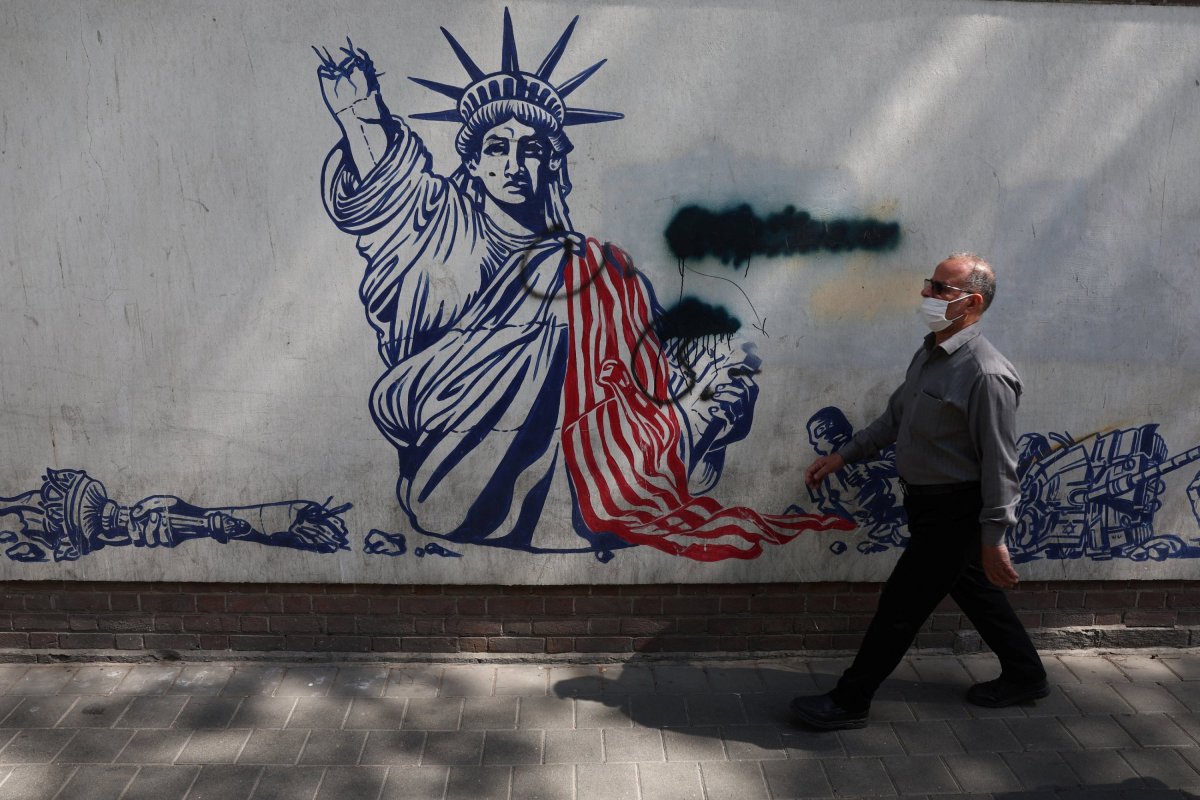
The recent Iran-US confrontation has laid bare a fundamental reality of modern conflict: military superiority does not automatically confer narrative dominance. While the United States brought overwhelming force to bear, Iran demonstrated that discipline, consistency, and symbolic resonance in strategic communication can offset material disadvantages. The outcome carries significant implications for how Middle Eastern states, Gulf security partners, and global powers assess the credibility of both Washington and Tehran in the post-conflict environment.
Iran-US Confrontation Exposes the Limits of Military Power in the Battle for Credibility
Beirut, Lebanon – July 2, 2026 — At the heart of this dynamic lies the principle that strategic communication succeeds when words, images, symbols and actions reinforce one another consistently over time. Iran achieved this alignment; the United States did not. The gap between American military capability and American narrative coherence created an opening that Tehran exploited with notable effectiveness, reshaping perceptions across the region and beyond.
The Core Principle: Credibility Over Messaging Tools
Credibility in strategic communication rests on the consistent alignment of official statements, visual imagery, and observable actions rather than sophisticated media platforms or reach. When these elements diverge, even advanced messaging campaigns lose traction among regional audiences who prioritize observable consistency over polished presentation. In the Middle East, where Sunni-Shia competition and historical grievances shape perceptions, audiences quickly detect inconsistencies that adversaries can amplify.
This principle carries direct consequences for how states manage nuclear-related tensions and alliance commitments. Iran’s approach demonstrated that disciplined framing around sovereignty and resilience can sustain support even among populations skeptical of its regional policies. Washington’s fluctuating rationales, by contrast, invited scrutiny from both adversaries and partners who track long-term policy coherence.
Regional actors such as Turkey and Gulf states have long observed this dynamic in disputes involving the Iran nuclear program. When external powers fail to maintain narrative alignment, local governments adjust their hedging strategies to protect core interests in energy markets and security arrangements. The recent episode reinforced that credibility functions as a force multiplier independent of conventional military metrics.
Iran's Narrative Discipline Across Channels
Iran maintained narrative discipline by ensuring political leadership, military spokesmen, diplomats, and state media projected identical themes of sovereignty, resistance, and national defense throughout the confrontation. Missile operations were paired with official statements emphasizing defensive necessity and followed by diplomatic outreach that echoed the same framing. This coordination prevented the contradictory signals that often undermine state messaging during crises.
State media outlets reinforced imagery of resilience while diplomats highlighted Tehran’s willingness to engage indirectly, creating a unified front that resonated across Shia communities and sympathetic audiences in the Levant. The approach proved effective in countering attempts to portray Iranian actions as aggressive expansion rather than responses to external pressure tied to the nuclear file.
Such discipline also allowed Iran to exploit divisions within the Abraham Accords framework, where some signatories questioned the durability of American security guarantees. By keeping messaging consistent, Tehran positioned itself as a reliable actor defending core principles amid shifting external coalitions.
The Minab 168 Mission: Symbolism as Strategy
The Minab 168 diplomatic flight to Islamabad in April 2026 for indirect talks with the United States illustrated how symbolic choices can amplify strategic messaging. The aircraft’s designation referenced reported civilian casualties from earlier operations, generating emotional resonance that traditional diplomatic channels rarely achieve. Images circulated widely across regional platforms, linking the mission to broader themes of sovereignty and protection of vulnerable populations.
Regional reception proved particularly strong in capitals where public opinion remains sensitive to perceived violations of national dignity. Pakistan’s facilitation role added legitimacy, while coverage in Arab media highlighted the contrast between Iranian persistence and American policy oscillations. The mission reinforced Tehran’s claim that it sought de-escalation on its own terms rather than under duress.
This episode also intersected with ongoing Israel-Palestine tensions, allowing Iranian messaging to draw implicit connections between different arenas of confrontation. The resulting narrative momentum complicated Washington’s efforts to isolate Tehran diplomatically and underscored how carefully chosen symbols can extend influence beyond immediate military outcomes.
Operation Midnight Hammer and the Credibility Dilemma
Operation Midnight Hammer, launched in June 2025, was presented as a decisive blow that neutralized critical elements of Iran’s nuclear infrastructure. American officials described the strikes as achieving strategic objectives that would alter the regional balance for years. Within months, however, renewed tensions over the same nuclear concerns undermined those assertions and exposed a widening credibility gap.
The discrepancy between initial claims of lasting success and the subsequent need for renewed confrontation created openings for Iranian counter-narratives. Regional observers noted that repeated cycles of escalation followed by incomplete resolution erode confidence in external security assurances, particularly among states balancing relations with both Washington and Tehran.
This pattern also affected calculations surrounding the Abraham Accords and Gulf diversification efforts. Partners questioned whether American military actions could deliver sustainable outcomes or merely reset the clock on familiar disputes. The resulting skepticism encouraged greater emphasis on autonomous defense capabilities and diversified partnerships.
US Domestic Opinion and Alliance Friction
A Quinnipiac University poll conducted during the confrontation revealed significant domestic constraints, with 48 percent of respondents stating the United States supports Israel excessively and 60 percent overall deeming the conflict not worth pursuing. Partisan divides were stark, with 93 percent of Democrats and 75 percent of Republicans expressing reservations. These figures limited Washington’s ability to sustain prolonged engagement.
Alliance friction compounded these challenges. Criticism of NATO partners over burden-sharing resurfaced at a moment when coordinated messaging was essential. European and Gulf allies expressed private concerns that fluctuating American priorities could leave them exposed in any future escalation involving Iran’s nuclear program or proxy networks.
Such domestic and alliance pressures restricted Washington’s narrative flexibility. Adversaries exploited these constraints by highlighting perceived American unreliability, while regional states accelerated hedging strategies to mitigate risks associated with over-dependence on a single security guarantor.
Gulf Security Architecture Under Pressure
Gulf states responded to the confrontation by accelerating diversification of security partnerships while maintaining core energy market stability. Saudi Arabia and the United Arab Emirates intensified talks with China on infrastructure and defense cooperation, reflecting a pragmatic response to questions about American staying power. This hedging occurs alongside continued participation in the Abraham Accords framework.
Energy markets absorbed immediate volatility but also revealed longer-term vulnerabilities. Disruptions tied to the nuclear standoff prompted renewed focus on alternative export routes and domestic production resilience. Sunni-Shia competition added another layer, as Gulf capitals weighed the risks of deeper entanglement against opportunities to shape outcomes through quiet diplomacy.
Turkey’s independent posture further complicated the picture, as Ankara pursued parallel channels with both Tehran and Western powers. The resulting security architecture appears more fragmented, with states prioritizing flexible arrangements over rigid alliance commitments in anticipation of future crises.
Great Power Competition: China and Russia's Opportunity
China and Russia positioned themselves as alternative interlocutors during the confrontation, offering mediation frameworks that avoided the credibility issues plaguing American messaging. Beijing leveraged its economic leverage in Gulf energy markets to present itself as a stabilizing force, while Moscow highlighted its established ties with Tehran and regional actors.
These moves intersected with existing great power competition over influence in the Middle East. Russia’s role in Syria and arms relationships provided additional avenues for narrative projection, whereas China’s Belt and Road investments offered tangible incentives for states seeking to reduce reliance on traditional security providers.
The episode demonstrated how narrative inconsistencies by one power can create openings for competitors. Gulf diversification strategies now incorporate greater engagement with Beijing and Moscow, altering the regional balance in ways that extend beyond the immediate Iran-US dispute.
Strategic Lessons for the Next Phase
Both sides face clear imperatives for future engagement. Iran must sustain the narrative discipline demonstrated during the recent crisis while navigating renewed nuclear negotiations. Any deviation between words and actions risks eroding the credibility advantage gained. Washington, meanwhile, requires greater internal coordination to prevent contradictory messaging that adversaries can exploit.
Regional dynamics will continue to shape outcomes. Sunni-Shia competition, Gulf energy interests, and the evolving status of the Abraham Accords all interact with great power involvement. States that maintain consistent alignment between policy and communication will hold advantages in managing these overlapping challenges.
Ultimately, the confrontation underscored that military operations alone cannot resolve underlying credibility deficits. Future phases of engagement will reward actors who treat strategic communication as an integrated element of statecraft rather than a secondary consideration.
By Malik Hassan, Staff WriterThis article was produced with AI-assisted research and editorial support. Reporting is based on sources cited in the article.
What's Your Reaction?
 Like
0
Like
0
 Dislike
0
Dislike
0
 Love
0
Love
0
 Funny
0
Funny
0
 Wow
0
Wow
0
 Sad
0
Sad
0
 Angry
0
Angry
0

Middle East Correspondent at Global1.News. Based in Beirut, covering politics, conflict, energy, and society across the Middle East. Brings context and depth to a region often reduced to headlines.















Comments (0)