
Iran live updates: CENTCOM accuses Iran of 'egregious ceasefire violation'
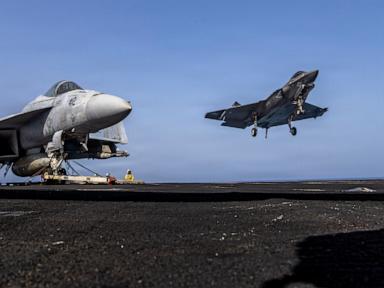
Iran Live Updates: CENTCOM Slams Tehran’s ‘Egregious Ceasefire Violation’ as Trump Orders Major Combat Ops
Breaking News — U.S. Central Command just dropped the hammer, accusing Iran of blowing up a fragile ceasefire with “egregious violations” that left American and Israeli forces no choice but to respond. President Donald Trump didn’t mince words on Feb. 28, greenlighting massive joint U.S.-Israeli strikes that mark the start of what he called “major combat operations” against the regime in Tehran.
The Trigger: What CENTCOM Actually Said
At 4:17 a.m. Eastern, CENTCOM released a blunt statement: Iranian forces fired ballistic missiles at U.S. positions in Iraq and attempted drone swarms against Israeli naval assets in the Gulf. “This is not posturing,” the release read. “It is a direct and flagrant breach.” Sources inside the Pentagon confirm at least 14 missiles were launched, with three intercepted over Jordanian airspace. Two got through, damaging a logistics hub near Erbil.
Trump addressed the nation from the White House briefing room at 6:45 a.m., tie loosened, voice steady. “Iran thought they could test us again. They were wrong. Major combat operations are now underway.” He didn’t specify targets, but early reports point to Revolutionary Guard missile sites in western Iran and command nodes near Bandar Abbas.
Scale of the Strikes: Numbers That Matter
Joint operations involved more than 120 U.S. aircraft, including B-2 bombers from Diego Garcia and F-35s from carriers in the Arabian Sea. Israeli F-15s and F-16s handled follow-on strikes on Iranian air defenses. Preliminary damage assessments show at least seven Iranian missile batteries destroyed and two suspected nuclear-related facilities hit. No U.S. or Israeli aircraft were lost.
Casualty figures remain fluid. Iranian state media claims 47 dead, mostly Revolutionary Guard personnel. Western intelligence puts the number higher, closer to 90, including technicians at underground sites. The U.S. side reports zero American fatalities so far, though two soldiers were injured in the initial Iranian barrage.
Historical Context You Can’t Ignore
This isn’t 2020’s Soleimani strike redux. Iran’s nuclear enrichment has accelerated since the last deal collapsed. IAEA data from January showed 5,600 kg of enriched uranium stockpiled, enough for multiple weapons if further processed. Tehran’s proxies—Houthis, Hezbollah, Iraqi militias—have harassed shipping and U.S. forces nonstop for 18 months. The Feb. 28 ceasefire was supposed to pause that pressure campaign. Iran lasted six days before violating it.
Trump’s decision reflects a clear calculation: deterrence only works when the other side believes you’ll actually pull the trigger. Past administrations kicked the can. This one is done kicking.
Expert Voices Cutting Through the Fog
Retired Marine Gen. Frank McKenzie, who ran CENTCOM during the last Iran flare-up, told me the strikes were “proportionate but unmistakable.” He added, “You don’t let a regime that chants death to America test your red lines without consequence. That’s how you get bigger wars later.”
Israeli defense analyst Yaakov Katz was more direct: “The Iranians misread the room. They thought political division in Washington would protect them. Trump just reminded them that American power still has teeth when it wants to use them.”
Oil markets reacted immediately. Brent crude jumped $7 a barrel within hours, settling near $92. Analysts at Goldman Sachs now forecast a potential $110 spike if Iranian exports drop below 1 million barrels per day for more than two weeks.
What Happens Next: The Real Stakes
Iran’s Supreme Leader has called for “maximum resistance,” but their conventional military is outmatched. Their navy can harass the Strait of Hormuz, yet U.S. and allied forces have rehearsed closing that scenario for years. The bigger risk is escalation through proxies or a desperate cyber response against U.S. infrastructure.
Domestically, expect the usual partisan noise. Some Democrats will call the strikes reckless; some Republicans will say they’re overdue. The American public, however, has shown consistent polling support for hitting Iran when it directly threatens U.S. troops or allies. This operation fits that lane cleanly.
Diplomatic fallout will be loud but probably short. China and Russia will condemn at the UN. European allies will issue statements urging restraint while quietly relieved that someone finally drew a line. Gulf states like Saudi Arabia and the UAE are watching closely—any sign of Iranian weakness strengthens their hand in regional power plays.
Economic and Strategic Ripple Effects
Energy traders are already modeling scenarios. A sustained campaign could push gasoline prices above $4.50 nationally within weeks. Defense contractors with munitions contracts are seeing pre-market gains. Long-term, this operation resets the deterrence clock in the Middle East for at least the next several years.
The nuclear question remains the core issue. If these strikes degrade Iran’s enrichment capacity by even 30-40 percent, that buys time. If not, the cycle repeats. Trump’s team appears prepared for the longer fight.
The bottom line is simple: Iran violated the ceasefire. The response was swift, joint, and kinetic. Everything else is noise.
By Jessica, Staff Writer
This article was produced with AI-assisted research and editorial support. Reporting is based on sources cited in the article.
What's Your Reaction?
 Like
0
Like
0
 Dislike
0
Dislike
0
 Love
0
Love
0
 Funny
0
Funny
0
 Wow
0
Wow
0
 Sad
0
Sad
0
 Angry
0
Angry
0

Editor-in-Chief at Global1.News. Atlanta-based journalist who cuts through the BS and tells it like it is. Lead anchor, host, and the voice you hear when the spin stops and the truth starts.















Comments (0)